Rorate Caeli

Secularism versus Religion (part II)

This is the continuation of a previous post about Secularism and the French Revolution (posted last week).
Historical facts


Throughout the XVIII century, the Catholic Church was mocked and criticized by the philosophers and free-thinkers (libertins). The social elites turned away from Faith. To give an example, when Madame Louise de France, one of the daughters of King Louis XV decided to be a Carmelite, it was a subject of mockery in the higher echelons of the State. yet France was still a catholic country and the great majority of the population remained attached to their religion. In the meantime, because of its ancient links with the Church, the French Monarchy was increasingly criticized. I would remind you that the King of France was not only crowned, but also anointed by the Catholic Church according to a rite which goes back to the year 496 when Clovis was baptized and anointed by Saint Rémy, Bishop of Reims. According to the tradition, God performed a miracle by sending a dove appeared carrying a phial of Holy oil (Sainte Ampoule) This phial of oil was used for the consecration of the Kings of France until it was broken by a revolutionary in 1793. Whether you believe in it or not, the fact is that phial was a strong symbol of the French Monarchy and of its alliance with the Catholic Church.

So the King of France became an enemy of the Revolution because he was a Catholic King – Le Roi Très Chrétien as he was officially named! Then, during the XVIII, he became for the free-thinkers a despot instead of the elected of God. The idea that the supreme power belongs to the nation gained ground in it’s following. Nevertheless in 1789, the French people didn’t want a Revolution but just expected some reforms, which were certainly necessary. But reforms are not a change of regime. Reforms are dictated by the incidentals and the necessities of the economic or/and social context. A change of regime is the result of an ideology. In our present case, the ideology was anti-Catholicism.

- August 4th 1789: abolition of the Privileges. The clergy was until this time an order of the French society. It is no longer recognized as a particular corps.

The Declaration of Human Rights of 1789 recognizes the liberty of conscience, which puts to the end the prevailing situation of the Catholic church in the country.

- August 11th 1789: suppression of the tithe (la dime). With this tax, the Church could provide hospitals, schools and sacraments.

- November 2nd 1789: The goods of the Church are confiscated (the patrimony of the Church was 15% of the lands). This measure contradicts the Declaration of Human Rights that recognizes the right of property! By the way, this spoliation was a financial disaster for the National Assembly which then had to administer the patrimony of the Church.

- February 13th 1790: The Assembly declares that religious vows are null because they are incompatible with individual liberty. Clerics are no longer considered as ministers of cult (public function).

- July 12th 1790: Constitution Civile du Clergé
This is a major event in the religious history of the country, because this constitution created a schismatic Church in France (like the Patriotic Church in China). This Church was created and controlled by the civil government of the Revolution. Bishops and pastors were appointed by electors (even non-Catholics electors) and all the clergy were now employees of the State, which means that they were under the authority of an anti-Catholic Government that wanted to control the Church. Very reluctantly King Louis XVI signed the new Constitution of the clergy. Though he had waited anxiously for the consent of the Pope, it arrived too late. The Assembly had already promulgated the text.

Later he would acknowledge that this was a mistake. Pius VI condemned this Constitution in March 1791. Such a document in a Catholic country had a great impact and has divided the French population into two sides. This division would have tragic repercussions, especially in 1792-1793, when many faithful paid for their fidelity to the Catholic Church with their lives. Persecution against the non-juring priest would begin. In fact, even many constitutional priests were also persecuted. The purpose was simply to destroy all of religion throughout France.

- The Revolution further intensifies in 1792 with the “Convention Nationale”. The King and thousands of people are arrested. During the first week of September 1300 are executed in the jails. It is the first Terror. The Republic is proclaimed on September 21st.

- January 21st 1793: King Louis XVI is beheaded. His last document, signed one month before on Christmas-day is a beautiful testimony of Faith, which ends with these words: I end here by declaring before God, and ready to appear before Him, that I do not reproach myself with any of the crimes with which I am charged.

- The Government of Robespierre had no cause to be envious of Hitler or Stalin. All the citizens were mobilized for the revolutionary cause under a strict control. They received certificates of civism. The country underwent a massive cultural revolution accomplish by an anti-Christian politic with the goal of establishing a new order of worship: the cult of goddess-Reason! A new calendar is promulgated. The enemies of the new regime were persecuted. A law passed in June 1794 said that a prisoner at the bar of the revolutionary tribunal couldn’t retain a lawyer’s defense; There was no longer any cross-examination; and the only sentence allowed would be the death penalty. The result is 50 executions a day in July of 1794. That same year 800.000 persons are in jails just for being suspects. For a country which proclaims Liberty, Equality and Fraternity, this is quite ironic.

The Catholic Church was persecuted as an enemy of the Revolution. Many priests, religious and lay people were arrested or killed just because they were Catholic. The pontoons of Rochefort became a concentration camp for priests where hundreds, the official number being 547, of them died in terrible conditions during the year of 1794. In 1995 Pope John Paul II beatified 64 of them along with 45 martyr of the Spanish Civil War (1936-1939).

Persecution continued along with the war in Vendee where an army named “Catholique et Royale” rose to defend their traditions and culture. The retort of the Convention to these brave soldiers who were just farmers was abrupt: “There will be sent in Vendée combustible materials of all kinds to set fire to wood, coppice and brooms. The forests will be cut down, the dens of the rebels will be destroyed, crops will be cut down and cattle will be seized. The race rebels will be exterminated, Vendée will be destroyed.

In December 1793, General Westerman could say: “There is no more Vendée. It died with its wives and its children by our free sabers. I have just buried it in the woods and the swamps of Savenay. According to the orders that you gave me, I crushed the children under the feet of the horses, massacred the women who, at least for these, will not give birth to any more brigands. I do not have a prisoner to reproach me. I have all exterminated.” Under the command of General Turreau, the “infernal columns” performed a genocide, killing women, children and old people. The victims of General Turreau are estimated to be 200.000. The most sadly famous are the inhabitants of Les Lucs sur Boulogne.
Martyrs of Les Lucs-sur-Boulogne
The Concordat of 1801
The Catholic Churhc recovered her rights

Paradoxically, it is a son of the Revolution who brought back religious peace. In 1799 Bonaparte assumed power as First Consul. He was not inspired by religious feelings but he was smart enough to recognize that persecuting the Church in a country who’s population was more than 90% Catholics was probably not the best thing to do in order to establish his supremacy. Concurrently, Pope Pius VII was impatient to find a solution to the situation of crisis caused by the schism. A treaty was signed on July 15th 1801 and ratified by the Pope one month later. This Concordat was in effect until 1905 and by the way, is still in effect in the North East part of France in Alsace and Lorraine because Germany took control of this territory in 1870. France resumed possession of this territory in 1918 at the end of World War I which was after the law of Separation of 1905.

And now it is the proper time for me to explain what a concordat is and to present the doctrine of the Church regarding her relations with secular Governments.

First Consul Bonaparte
To be continued....
The Pope wants "to move forward"

From today's Il Giornale, on the latest Vatican moves (Report by Andrea Tornielli).

In the past few weeks, several French bishops have sent to Rome their lamentations of protest against the "Motu proprio" which would liberalize the pre-Conciliar Mass, but, as it seems, Benedict XVI is decided to move forward, even if with due caution, to heal the mini-schism of archbishop Lefebvre and to assure to the Traditionalist faithful, with an act of liberality, the use of the old missal.

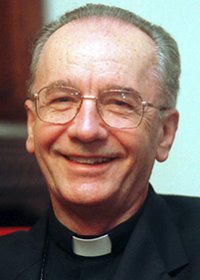
Hummes named to replace Castrillón
Castrillón remains at Ecclesia Dei

The Holy Father has accepted the resignation presented by Cardinal Castrillón Hoyos of his position as Prefect of the Congregation for the Clergy, and has named Cardinal Hummes, Archbishop of São Paulo, Brazil, to the position.

Cardinal Castrillón remains in charge of the Pontifical Commission "Ecclesia Dei", a position which is not linked to that of Prefect of Clergy.

Manifesto

By ten French bishops: a communiqué to the Pope against the creation of the Institute of the Good Shepherd and the eventual liberalization of the Traditional Latin Mass. (Tip: Le Salon Beige and Le Forum Catholique).

Scandal:
Cardinal Hummes takes good care of his clergy
Graphic counsels on the web


It seems the Archbishop of São Paulo, Brazil, Claudio Cardinal Hummes, cannot even take care of his own clergy.

For more than four years, our reader reveals, the parish priest of the Parish of Our Lady of Fatima in Imirim, in the archdiocese of Sao Paulo, has been offerring extremely graphic advice on the "prevention" of AIDS.

Father Valeriano Paitoni, a religious priest in the archdiocese of São Paulo, heads the "Foundation Father Costanzo Dalbesio", part of the work of the Parish ("Nossa Senhora de Fatima do Imirim"), which is the upkeeper of this public charity. The foundation, among other projects, helps children with AIDS -- and also helps others to "prevent" being contaminated by the HIV virus. The extremely graphic information (link: extremely graphic and offensive, not advisable for most; linked here for documentational purposes) which, beyond being offensive, infringes the clear teaching of the Church as portrayed in Casti Connubii, Humanae Vitae, and Evangelium Vitae, is offered by this Catholic foundation since the website was first established (the "Page Info" of the website in fact registers that it was "last modified" on "Wednesday, June 19, 2002, 14:23:47").

Naturally, if a Catholic foundation is willing to display this kind of information online, one can not fathom what kind of information they share on the spot with the children and with the parishioners who share this work.

Our reader tells us that, once again, the archbishop, Cardinal Hummes, was repeatedly warned of this grave problem, but chose to ignore it, as in other cases. Father Valeriano Paitoni was never removed from his parish.

Castrillón would remain at Ecclesia Dei

Andrea Tornielli confirms in today's Il Giornale the rumors first mentioned in La Repubblica, then confirmed with names by Marco Tosatti in La Stampa, that Cardinal Castrillón Hoyos would be replaced as Prefect of the Congregation for the Clergy by Cardinal Hummes, Archbishop of São Paulo, Brazil.

Tornielli, however, mentions what we had already affirmed: that Castrillón will remain in place at Ecclesia Dei for the moment "to manage the not easy negotiations with the Lefebvrists".

______
Another replacement mentioned by Tornielli is that of Cardinal Marchisano, as Archpriest of the Vatican Basilica, by Archbishop Angelo Comastri.

Scandal: Pro-death "Catholics for a Free Choice" in Church Building
From the land of Cardinal Hummes


We do not remember ever seeing this reported in English, so we thank the reader who pointed it to us. From the website of ACI (the Spanish and Portuguese version of the Catholic News Agency):

Sao Paulo, July 21 2006 (ACI) - The polemical feminist abortionist organization self-identified as "Catholics for a Free Choice" (CFFC) has rented an ample space in an ecclesiastical building owned by the Carmelite province of Saint Elias [of the Carmelite Fathers - see], fostering suspicion and discomfort among the faithful.

The Carmelites rented the entire sixth floor of the building to the group which identifies itself as Catholic, yet promotes open campaigns against the Catholic faith and hierarchy.

The CFFC are now neighbors to the South Regional [Branch] of the Brazilian Episcopal Conference (CNBB), which is based on the fifth floor, and of the headquarters of the Brazilian Religious Conference, based on the seventh [floor].

The false Catholics have recently announced the course "Deconstruction of the taboos of the Historically-built Catholic Thought", which openly attacks the teachings of the Church and which will be ministered in the Carmelite space.

The CFFC affirm that the course "will include questions which put in question Catholic thought regarding virginity, the use of contraceptive methods, maternity as fate, homosexuality, and abortion.["]

Curiously, university professors, leaders of feminist movements, homosexuals, and also pastoral agents of the Catholic Church were invited.

Well, we thought this piece of news was pretty incredible, so we contacted a dear reader from Sao Paulo (who gave us this report of animist ceremonies in the Cathedral of Cardinal Hummes, Archbishop of São Paulo, in the past) and he confirmed it.

In fact, it is pretty simple to check the facts. First, if one visits the webpage of Catholics for a Free Choice, the links to its International Partners include one to its Brazilian branch, with its postal address. In case they erase it, that is the postal address recorded in the CFFC website:

"CDD BRASIL
Rua Sebastião Soares de Faria, 57
60 Andar
01317-010 São Paulo SP
Brasil"
"6TH floor", exactly as the report mentions.

Then, if one googles the names "Sul", "Regional", and "CNBB" (which stand for "South", "Regional", and "Brazilian Episcopal Conference", as used in the original report), one finds the website for this regional episcopal conference, whose address is:

"Rua Prof. Sebastião S. de Faria, 57 5º andar
São Paulo / SP CEP: 01317-010"
Same address, "5th floor".

We can only say we are pretty impressed. We had thought we had seen almost any kind of abuse, but to see one of the main international pro-death organizations based in an ecclesiastical building is just beyond belief. Our reader tells us Cardinal Hummes, the Archbishop of São Paulo, was repeatedly informed of this scandalous situation, which has lasted for almost a year, but never uttered a word or did anything to stop it. The superiors of the Carmelite Fathers did not respond to complaints, either.

"His Kingdom is here until the end of the world"


Dixit Pilatus ad Iesum: "Tu es rex Iudæorum?" Respondit Iesus: "A temetipso hoc dicis, an alii dixerunt tibi de me?" Respondit Pilatus: "Numquid ego Iudæus sum? Gens tua et pontifices tradiderunt te mihi: quid fecisti?" Respondit Iesus: "Regnum meum non est de hoc mundo. Si ex hoc mundo esset regnum meum, ministri mei utique decertarent ut non traderer Iudæis: nunc autem regnum meum non est hinc."
(From the Gospel for the Feast of Our Lord Jesus Christ the King, John xviii, 33-36: " Pilate said to Jesus: Art Thou the King of the Jews? Jesus answered: Sayest thou this thing of thyself, or have others told it thee of Me? Pilate answered: Am I a Jew? Thine own nation and the chief priests have delivered Thee up to me: what hast Thou done? Jesus answered: My kingdom is not of this world. If My kingdom were of this world, my servants would certainly strive that I should not be delivered to the Jews: by now my Kingdom is not from hence.")

_____________________________________________________
Hear then, ye Jews and Gentiles! Hear, O circumcision! Hear, O uncircumcision! Hear, all ye kingdoms of the earth: I interfere not with your government in this world, "My kingdom is not of this world."

Cherish ye not the utterly vain terror that threw Herod the Elder into consternation when the birth of Christ was announced, and led him to the murder of so many infants in the hope of including Christ in the fatal number, made more cruel by his fear than by his anger: "My kingdom," He said, "is not of this world."

What would you more? Come to the kingdom that is not of this world! Come, believing, and fall not into the madness of anger through fear!

He says, indeed, prophetically, of God the Father, "Yet have I been appointed king by Him upon His holy hill of Zion;" but that hill of Zion is not of this world. For what is His kingdom, save those who believe in Him, to whom He says, "Ye are not of the world, even as I am not of the world"? And yet He wished them to be in the world: on that very account saying of them to the Father, "I pray not that Thou shouldest take them out of the world, but that Thou shouldest keep them from the evil." Hence also He says not here, "My kingdom is not" in this world; but, "is not of this world." And when He proved this by saying, "If my kingdom were of this world, then would my servants fight, that I should not be delivered to the Jews," He saith not, "But now is my kingdom not" here, but, "is not from hence."

For His kingdom is here until the end of the world [hic est enim regnum eius usque in finem sæculi...], having tares intermingled therewith until the harvest; for the harvest is the end of the world, when the reapers, that is to say, the angels, shall come and gather out of His kingdom everything that offendeth; which certainly would not be done, were it not that His kingdom is here! [...quod utique non fieret, si regnum eius non esset hic.]

But still it is not from hence; for it only sojourns as a stranger in the world: because He says to His kingdom, "Ye are not of the world, but I have chosen you out of the world." They were therefore of the world, so long as they were not His kingdom, but belonged to the prince of this world.

Of the world therefore are all mankind, created indeed by the true God, but generated from Adam as a vitiated and condemned stock; and there are made into a kingdom no longer of the world, all from thence that have been regenerated in Christ. For so did God rescue us from the power of darkness, and translate us into the kingdom of the Son of His love: and of this kingdom it is that He saith, "My kingdom is not of this world;" or, "My kingdom is not from hence."

Saint Augustine
In Evangelium Ioannis - Tractatus CXV

Castrillón Hoyos leaving Congregation for the Clergy?

According to a note published yesterday in La Repubblica:

The Cardinal "of the Lefebvrists" leaves
Ratzinger accepts his resignation

Vatican City - Pope Ratzinger would have accepted the resignation of Cardinal Dario Castrillon Hoyos (77), prefect of the Congregation for the Clergy and President of the Pontifical Commission "Ecclesia Dei", the structure which deals with the matter of the schism of the Lefebvrists. Hoyos had presented his resignation in 2004... It seems Castrillon Hoyos will preside "Ecclesia Dei" up to December, when the Pope will liberalize the use of Latin in the Mass [sic] to favor the return of the Lefebvrists to the Church.


The information was not confirmed in this Saturday's Bollettino and we find it very unlikely, for the moment. If true, however, this piece of news would only confirm one of the substitutions long predicted for this second year of the pontificate - here (December 2005): "freed from his duties at Clergy, Cardinal Castrillón Hoyos (who is past his age limit) would remain solely in charge of Ecclesia Dei issues (that is, relations with all traditional Catholics)."

Update (Sunday, October 29).

Secularism versus Religion

This is the first part of a lecture given yesterday at Saint Francis de Sales ( Mableton, GA)


Introduction


On November 5th 1880, the French army took the field and prepared to launch a battle that, today, nearly everyone has forgotten. It was a "great victory" for the French Republic, yet it never appears in the official History books at school unlike the great victories of the Nation such as Tolbiac, Marignan, Fontenoy or Austerlitz. Under the command of General Guyon-Vernier, one infantry regiment, five cavalry squadrons and a few artillery cannons began a three day siege. 2000 soldiers were ready to fight. The enemy was… the Abbey Saint-Michel de Frigolet, in the south of France, occupied by 37 good monks.

What was going on in France at this time, the eldest daughter of the Church and the Kingdom of Mary? Why did the Government send out its army to confront a little religious community?

It is important to note that the siege of Saint-Michel de Frigolet was not an isolated case, but only one episode among many. The Decree of October 16th 1880, three weeks earlier, ordered the eviction of all the religious communities in the country that were not authorized by the Government. When the superintendent mandated by the Government arrived at the monastery to read the notice of expulsion, the Superior of the Abbey, Reverend Father Boulbon informed him that his community, in all humility, would not be distinguished from all the other religious communities that had resisted the violence: the monks would stay! Thousands of faithful came to support the monks. It is by force that the police and the army entered the monastery. The monks were entrenched in the conventual church, when the forces’ orders arrived after having knocked down the doors and gates. Father Boulbon read a declaration of protest and finished with these words to the superintendent: “It is my duty to inform you that you and your constituents come within the provisions of a major excommunication reserved to the Pope.” Then the monks were escorted by the gendarmes while the dragons scattered the crowd as they sang the famous canticle of the Catholic Provence: Provençau e Catouli.

The same scene was repeated in 1903 when an infantry battalion and two dragon’s squadrons arrived to bolster the police forces and assist them in the expulsion of the Carthusian monks of la Grande Chartreuse. The entire local population came to defend their monks. They were 5000 in number praying the rosary and singing canticles during the night of April 28th. As the army arrived the crowd began to sing the Marseillaise and to shout: “Vive l’armée ! Vive les chartreux ! Vive la liberté !” (Cheers for the army! Cheers for the Carthusian monks! Cheers for freedom!) Yet again, the same scenario that had taken place at Saint-Michel de Frigolet was repeated. The judge ordered the monks to open their doors, calling out: “We are here in the name of the law!” A monk answered: “ There is no more law! ” The judge then ordered the police and the army to enter by force. The monks were found praying the Divine Office in the church. One by one, each was seized by two gendarmes. Their exile in Italy was about to begin.

These two events were not isolated ones but only two examples among many. When the proposal of separation between State and Churches was voted into law 1905, it was merely the result of many decades of anticlerical politics. The new law was yet, just another development, in a long, uninterrupted series of events that had taken place since 1789.
(d'après Jean Sévillia: Quand les catholiques étaient hors la loi)
Eviction of the Carthusian Monks
(La Grande Chartreuse, avril 1903)


Historical Background

The French Revolution

1789 is a date that everyone knows because it affected not only France, but the entire world. We call it the French Revolution because it took place in France and was accomplished by Frenchmen but the end results impacted and changed the entire world. The word ‘revolution’ comes from Latin and means ‘a turn around’. The dictionary gives us the following definition: A revolution is a drastic change that usually occurs relatively quickly. It can be social, political or economic. In fact these three are interconnected.

The books of History usually date the French Revolution from 1789 to 1799 when Bonaparte took power and became First Consul. Ten years is a short time and thus is in agreement with the previous definition: a drastic change that usually occurs relatively quickly.

Yet, in reality it is more complex. A revolution can be a permanent process according to the theory of Trotsky. The purpose of a revolution is to change a society and this change must be total and radical. So, as long as there remain some elements of the previous society, the very society that the revolutionaries intend to change or annihilate, the process of revolution continues.

What was the purpose of the French Revolution? The idea for the revolution seemed to be a good one. The idea was to bring justice and equality to all the citizens of the country. The 1789 Declaration of Human Rights, inspired by the American Declaration of Independence, also, seemed to be good. What a beautiful ideal! But reality is different than ideals. It is usually admitted that the French Revolution was a Revolution by the people against the ruling classes, in particular, the King and the nobility.

The truth is that the Revolution was not popular and was carried out by the liberal aristocracy, a part of the bourgeoisie and the clergy influenced by the philosophy of Lights.

The Revolution is first a certain philosophy and conception of the world. It is the political realization of naturalism. We can define it as such: “The Revolution is a set of doctrines and actions which want to replace the natural order of things and the natural order of societies wanted by the Creator in the civil, political and social institutions, by an organization elaborated by men themselves, and for that reason, in perpetual change.” [1]

According to the revolutionaries themselves, the Revolution is universal and permanent:
- Jacques Alexis Thuriot de la Rozière (1753-1829), deputy in the Estates-General of 1789 and member of the National Convention said : “The Revolution is not only for France; we are accountable for it to the entirety of mankind.”

- Gracchus Babeuf (1760-1797), precursor of communism said: “The French Revolution is only the forerunner of a greater and more solemn Revolution which will be the last one.”

- More recently, Jean-Pierre Chevènement, former member of the Socialist Party and founder of the Mouvement des Citoyens (Movement of Citizens) said a few years ago while he was Minister of Defense: “The French Revolution is not really completed and probably will never be.

The fact is that the Revolution didn’t end with Napoleon, who said of himself: “I am the Revolution!” The entire French political life in the XIX century was marked by the battle between the Revolution and the Counter-Revolution. Today this battle seems to have eased, but it is not finished.

[1] Revue “Permanences” n° 413-414
(Etats-Généraux, mai 1789)
The revolutionary ideology

It is fundamentally the dogmatic refusal of all notions of a pre-existing order which stands to men. Its underlying philosophy is Naturalism whose champion was Swiss philosopher Jean-Jacques Rousseau. It is not a coincidence that his book, le ‘Contrat Social’ (the Social Contract) is considered to be the founding text of the French Republic, even though Rousseau meant this work for small States. His model was Sparta.

Nature and reason became the warhorses of the Revolution and in their name, the old society had to change, or rather to disappear in order to make way for the new society which would be based upon a false notion of nature and reason. Now, there was an obstacle to pull down: Religion!

Religion is the enemy of the Revolution, because it proclaims the existence of an order above reason and nature. As such, it must be destroyed. The hatred of religion is a constant shared by all revolutionaries. In fact, contrary to a common opinion, the Revolution is religious in essence and political only by consequence. The Revolution can make the best of any political regime: Democracy, Monarchy, Socialist, Communist, Fascist or any other regime as long as it rejects the idea of a religious order.

Among all the Religions, one in particular is attacked by the Revolution: the Catholic Church. The hatred of God, of Jesus-Christ, of the Church and of the Christian order is a typical mark of the Revolution. The fact is that the ideas of the Revolution, inspired by the Philosophy of Light, contradict Catholic doctrine:
- liberty opposes order
- happiness opposes duty
- imprescriptible and sacred rights oppose obedience
- natural equality opposes hierarchy
- tolerance opposes the dogmas of the Church

Since the Catholic Church preaches order, duty, obedience, respect of hierarchy and teaches dogmas – without denying liberty, happiness, equality and tolerance – , She logically became the enemy of the Revolution. The war cry of the Revolution could be: Delenda est Ecclesia! (The Church must be destroyed)
Jean-Jacques Rousseau (1712-1778)
He inspired the French Revolution

To be continued...

La Nouvelle Vague:
the new wave of Gall-icanism

Le Figaro publishes today some other words spoken in the seminar for the 50th anniversary of the Superior Liturgical Institute of Paris. Among the guests, the Archbishop of Paris, Cardinal Arinze, and Archbishop Robert Le Gall:

Cardinal Arinze did not try to directly discuss the question of the Tridentine rite, rather choosing to denounce "the banalization, the desacralization, and the secularization in the liturgy", thus illustrating the will of Rome to strengthen its hand at the international level.

The right hand of Benedict XVI regarding [liturgical] issues also denounced "this openly egocentric mannerism which our Sunday assemblies are often forced to endure", as well as "the false humility"...[of] a priest [who] "shares his role with the lay faithful". For the Cardinal, "sacred liturgy is not a domain where free research reigns".

[The Archbishop of Toulouse and chairman of the liturgical commitee of the French Episcopal Conference, Robert Le Gall, OSB, ]... defended himself by regretting that Rome "is often too attentive to the letters sent from France which refer to real anomalies or irregularities in the liturgical practices, but [which are] removed from their context".

[He also] expressed his fear that, "by liberalizing the ancient ritual, the Pope gives rise to a front of defiance, of sadness, and of discouragement regarding the Holy See". Archbishop Le Gall expects that "all the reactions heard in France at this time shall lead Rome to adapt [moduler] the text under preparation".
The speech of the Archbishop of Paris, André Vingt-Trois, is available here (in French), with few surprises, except for assuring the listeners that "your bishops will continue to work calmly and serenely [sic] towards the necessary reconciliation [with Traditionalists not in full communion with the Holy See], in faithfulness to the Pope and in communion with him" and urging a future unity of the Traditional and new rites at least by "following the same liturgical calendar and the same lectionary".

Signs of desperation...

Many signs of desperation throughout the Old World: distortion, defamation, threats, pleas... Calm down, "progressives"! Nothing has happened. Not yet.

In fact, the papal schedule has recenly included audiences with Cardinals Martini, Lustiger, and Ricard (today): connect the dots.

___

Update: A reader asks me to connect the dots; La Croix (via Le Forum Catholique) does the job for him:

The President of the [French] Conference of Bishops, Cardinal Jean-Pierre Ricard, was received in person by Benedict XVI, on Thursday, October 26, in Rome. The archbishop of Bordeaux came to appraise him of the concerns which cut through the communities of the Hexagon [France] of seeing an exception [the Quattuor Abhinc Annos/Ecclesia Dei regime] being made into a rule according to which every priest would henceforth have the right to celebrate the Mass according to the rite said of Saint Pius V.

As it usually happens, nothing has leaked from this meeting, except that it referred to "the French situation", but last Friday Cardinal Jean-Marie Lustiger, archbishop [emeritus] of Paris -- though under the weight of a heavy medical treatment -- had been received by the Pope, ostensibly for the same reason.

Laughter is the best medicine

A more traditional and “Roman” translation of the Mass into English currently in the pipeline may dampen enthusiasm for wider use of the pre-Vatican II Mass, according to the executive director of the commission charged with preparing that translation. [John Allen]
Ha! One can just see the throngs of Traditional-minded Catholics rushing to new Masses because of "And with your spirit"... Allen had also said earlier that:

It is testament to Tornielli's stellar reputation that people by and large took his report on faith, ... [John Allen]

No, actually it is a testament to Allen's abysmal incompetence (or bias) that he could not follow the many clues regarding this eventual document. This is not the first time in recent months that Allen's ideological bias has prevented him from following up on great stories -- he virtually ignored the most important pronouncement of this pontificate, the Christmas Address to the Roman Curia, for weeks in a row.

People had been talking about this possible document for a while -- and not only Vaticanist Andrea Tornielli, but also Marco Tosatti, of La Stampa (see here and translation here), mentioned the same document on the same day, adding many important details to Tornielli's version. It wasn't Tornielli who gave the news of the document to the Archbishop of Winnipeg days before he wrote about it in Il Giornale... Tornielli was not the Vatican source who confirmed it to the news agency of the Italian Episcopal Conference; it wasn't Tornielli who told the French bishops' news agency that the document "is written".

Maybe it is about time Allen would change his sources... or tell us what else he knows. Or maybe John Allen still thinks that the Pope is trying to build "consensus"... Or is he? Last Monday, Benedict warned the students of the Pontifical Universities in Rome:

Our words can only have any value and usefulness if they come from the silence of contemplation, not falling prey to the proliferation of worldly discourse, which seeks the consensus of common opinion.

30 years of Inter Insigniores

Cardinal Šeper had a difficult job at the helm of the former Holy Office -- he had to try his best to balance the demands of Pope Paul VI and the wild waves of dissent which ravaged the Church in the most terrible of decades for orthodoxy in modern times, the 1970s.

Questions which would never have even been considered as admissible were asked, and the Holy See was forced to answer them, if only for ecumenical purposes. And, in October 1976, the Church of Rome had to make clear the only possible position regarding the possibility of the priestly ordination of women:

"The Church's tradition in the matter has thus been so firm in the course of the centuries that the Magisterium has not felt the need to intervene in order to formulate a principle which was not attacked, or to defend a law which was not challenged. But each time that this tradition had the occasion to manifest itself, it witnessed to the Church's desire to conform to the model left her by the Lord."
And this model was only one: an all-male priesthood, solemnly confirmed by Pope John Paul II in the Apostolic Letter Ordinatio Sacerdotalis.

"It is said"

From a news dispatch (October 21) of the French Episcopal Conference (CEF):

As for the eventual Motu Proprio, "its text is written" and it is "being re-read" by different Vatican congregations, because it elicits opposition, even amidst the Congregation for Divine Worship and the Discipline of the Sacraments. "It is necessary to let [things] mature, not to precipitate" things, it is said in Rome.
"It is said"...by whom? They do not say.

Granada

Congratulations to the Archbishop of Granada, Spain, for his decision to remove all his diocesan seminarians from the Granada Theological College (Facultad de Teología de Granada), the heresy-filled Jesuit academic institution in the ancient Andalusian land. It seems that the famous pastoral instruction of the Spanish Episcopal Conference (Theology and Secularization in Spain - Forty years after the end of the Second Vatican Council; excerpts in English here) has had at least its first practical result... The instruction states that:

...there exists a silent form of dissent that promotes and defends disaffection with the Church, considering this a legitimate critical attitude with respect to the hierarchy and its magisterium, justifying dissent within the Church itself as if a Christian could not be an adult without establishing a certain distance from the teachings of the magisterium. Behind this attitude there frequently lurks the idea that the Church at present is not obeying the Gospel, and that a struggle “from within” is necessary to arrive at a future, authentically evangelical Church. In reality, what is sought is not the conversion of the Church’s members, its constant purification, penance and renewal, but the transformation of the very constitution of the Church, to adapt it to the opinions and perspectives of the world. This position finds support among members of the Church’s academic centers, and in some cases among publishing houses and bookstores run by Catholic institutions. This way of proceeding causes great disorientation among the faithful.
Good -- may other bishops elsewhere have the courage to abandon institutions which have high "academic reputation", yet no commitment to the One True Faith. The archbishop, Francisco Javier [the irony...] Martínez Fernández, has also resigned his position as member of the "Supreme Council" of the Jesuit College.

_______
(Picture: Three-day "Renewal Course", some Jesuits of the Provinces of Spain - 2005)

The opinion of the most radical Council Father:
Freedom for the Traditional Mass

Among those Council Fathers who publicly expressed their opinion on Sacred Liturgy during the debates (First and Second Sessions) on the schema De Sacra Liturgia which led to Constitution on the Sacred Liturgy (Sacrosanctum Concilium), none was more radical than German-born bishop Wilhelm Josef Duschak, S.V.D., Vicar Apostolic of Calapan, in the Philippines.

He was the only bishop ever to propose, in the official Council discussions, an actual reform of the Canon of the Mass, a matter which was considered unthinkable for most Council Fathers -- even though it would be effected "ad experimentum" in many countries as soon as the Council ended, and, permanently, with the creation of the new Ordinary of the Mass, in 1969. Duschak was, thus, in the avant-garde of the most radical liturgical reformers -- the only bishop to voice openly what other bishops and especially many periti said and wrote in the Conciliar underworld:

Bishop Duschak [PDF file] from Mindoro was the first to suggest that Latin be completely eliminated from the Mass and that priests would face the people at all times; other bishops had encouraged a greater use of vernacular languages while still retaining some Latin. Duschak proposed a Missa Orbis or Mass of the World. Interviewed later, Duschak said: “I haven’t too much hope that my idea will be accepted any time soon. But, as a good Filipino, I say—paciencia!”

But even such a radical liturgical reformer as bishop Duschak displayed a demeanor towards the Traditional Latin Mass which would shame the most recalcitrant among his episcopal colleagues of our own age. As Father Ralph Wiltgen, S.V.D., the liberal-minded press coordinator for the Divine Word Missionaries' Conciliar News Service, recalled in his famous "The Rhine flows into the Tiber", regarding the memories of that first session of the Council (1962):

Bishop Duschak emphasized that he was not proposing the abolition of the existing form of the Latin Mass. He was merely proposing that an additional form or structure of the Mass be introduced.
___________
P.S. Interestingly, Duschak also answered reporters on the demand for a new form of the Mass among the native peoples of his Vicariate:
Asked whether his proposal originated with the people whom he served, he answered, "No, I think they would oppose it, just as many bishops oppose it. But if it could be put into practice, I think they would accept it."
And so they did: the liturgical revolution, as almost all revolutions, emanated from the "Enlightened Élite" to the ignorant people...

___________
And a most informative article in The Wall Street Journal: the Wymans and the obstacles they faced when they tried to get married the Traditional way -- in a presentaton of the "Traditionalist Question" to a wider audience.

Can the existence of two rites fracture unity?
Cardinal Ratzinger explains why not

We have already explained in a more "practical" level why the arguments of liberal critics of a possible papal document restoring the Traditional Latin Mass to its place of honor do not make much sense.

We now turn to the words of the then-Cardinal Ratzinger, the gloriously reigning Supreme Pontiff, answering these specific criticisms.

It is good to remember ... what Cardinal Newman affirmed when he said that the Church in all her history has never abolished or prohibited orthodox liturgical forms (forms which express the true faith) which would be totally foreign to the spirit of the Church.

The authority of the Church can define and limit the use of rites in different historical situations. She never prohibits them purely and simply! The Council, therefore, ordered a reform of the liturgical books, but it never forbade the previous books. The criterion which the Council enunciated is both vaster and more demanding. It invites everyone to self-criticism! ...

One must examine the other argument which pretends that the existence of two rites can fracture unity. One must distinguish, here, the [1] theological from the [2] practical side of the question.


[1] Theologically and fundamentally one has to realize that several forms of the Latin Rite have always existed and that they retreated but slowly only as Europe was unified. Up to the Council, there existed along side the Roman Rite, the Ambrosian Rite, the Mozarabic Rite of Toledo, the Rite of Braga, the Rite of the Carthusians and the Carmelites and the best known: the Dominican Rite; and perhaps other ones which I do not know. Nobody was ever scandalized that the Dominicans, often when present in parishes, did not celebrate like parish priests but rather had their own rite. We had no doubt that their rite was both Catholic and Roman. We were proud of the richness of having several rites.

[2] The free space which the new order of Mass gives to creativity, it must be admitted, is often excessively enlarged. The difference between the liturgy with the new liturgical books, as it is actually practiced and celebrated in various places is often much greater than the difference between the old and new liturgies when celebrated according to the rubrics of the liturgical books.

An average Christian without special liturgical formation would be hard-pressed to distinguish a Sung Mass in Latin according to the Old Missal from a Sung Mass in Latin celebrated according to the New Missal. The difference, by contrast, can be enormous between a liturgy faithfully celebrated according to the Missal of Paul VI and the concrete forms and celebrations in the vernacular with all the possible freedom and creativity! With these considerations we have already crossed the threshold between theory and practice where matters are naturally more complex ... .
...

If the unity of the faith and the unicity of the mystery appear clearly in the two forms of celebration, this can only be a reason for all to rejoice and thank God. In so far as we believe, live and act on these motives, we can also persuade the bishops that the presence of the ancient liturgy does not disorder or injure the unity of their diocese, but rather it is a gift destined to build up the Body of Christ of which we are all servants.

So, my dear friends, I would like to encourage you not to lose patience - to remain confident- and to exercise in the liturgy the necessary courage to bear witness for the Lord in our times.


Joseph Cardinal Ratzinger
Conference on the Tenth Anniversary of the Motu Proprio Ecclesia Dei
Rome, October 24, 1998.
(Translation made available by the FSSP website, with corrections; numbers in brackets not in original text)

Remembering Gamber - II


...when Luther and his followers first discarded the Canon of the Mass, this change was not commonly noticed by the people because, as we know, the priest spoke the Canon in a low voice, as a private prayer. But Luther purposely did not dispense with the elevation of the Host and Chalice, at least not initially, because the people would have noticed that change. Also, in the larger Lutheran churches, Latin continued to be used, as was Gregorian chant. German hymns existed before the Reformation and at times were sung during the liturgy, so they were not a major change. Much more radical than any liturgical changes introduced by Luther, at least as far as the rite was concerned, was the reorganization of our own liturgy — above all, the fundamental changes that were made in the liturgy of the Mass. It also demonstrated much less understanding for the emotional ties the faithful had to the traditional liturgical rite.

At this point, it is not entirely clear to what extent these changes were, in fact, influenced by dogmatic considerations — as they had been in Luther's case. ...

The truly tragic aspect of this development is that many of those involved in designing the new liturgical texts, among them especially bishops and priests who had come out of the Catholic Youth Movement [Jugendbewegung], were acting in good faith, and simply failed to recognize the negative elements that were part of the new liturgy, or they did not recognize them right away. To them, the new liturgy embodied the fulfillment of all their past hopes and aspirations for which they had waited so long.

One thing is certain: the new (liberal) theology was a major force behind the liturgical reforms. (A good example of this is the German hymnal, Praising God.) Yet to assert, as is sometimes done, that the Novus Ordo Mass is "invalid" would be taking this argument too far. What we can say is that ever since the liturgical reforms were introduced, the number of invalid Masses certainly has increased.

Neither the persistent entreaties of distinguished cardinals, nor serious dogmatic points raised about the new liturgy, nor urgent appeals from around the world not to make the new Missal mandatory could stop Pope Paul VI — a clear indication of his own, strong personal endorsement. Even the threat of a new schism — the Lefebvre affair — could not move him to have the traditional ritus Romanus at least coexist with the new rite — a simple gesture of pluralism and inclusiveness, which, in our day and age, certainly would have been the politic thing to do.

Klaus Gamber
The Reform of the Roman Liturgy
(Die Reform der römischen Liturgie: Vorgeschichte und Problematik)


Spring/Summer Trends

"Uniforms at School"
"Latin Mass"
-We're hip!
________________
From the Swiss paper "Le Temps"
Tip: Le Forum Catholique

Un seul rit

[Original version in English here]

Quelques évêques de par le monde, tout particulièrement dans le pays qui passait pour être la Fille aînée de l'Église, font part de leur émoi après l'annonce d'un probable document pontifical rétablissant le rit romain latin traditionnel à une place d'honneur. L'évêque d'Angoulême déclare aujourd'hui que le "biritualisme" ne peut pas être "imposé" de cette manière; quelques jours auparavant, l'évêque de Metz avait mis en garde contre une telle mesure qui pourrait "nuire à l'unité de l'Église catholique".

Dans le quotidien du Parti communiste français, L'Humanité, un des grands avocats sans doute de la "tolérance à tout prix", le Père Gilbert Caffin a finalement trouvé quelque chose qui ne saurait être toléré: la liberté pour les rits traditionnels de l'Église latine.

Une telle liberté, disent ses critiques, abolirait "l'unité du culte". Il serait impossible pour ces rits de cohabiter !


Je partage leur préoccupation, sincère et venue du coeur, pour l'authentique Unité de Foi et c'est pourquoi je présente le manifeste en images suivant :


L'instauration d'un biritualisme pernicieux ...


...est intolérable pour le peuple de Dieu !


L'unité de foi...


...dans l'Église catholique sera minée...


...par l'existence de rits parallèles !


L'Église latine doit se mobiliser...


...pour la défense de son unité rituelle,...


...pour la pureté de l'unique rit,...


...pour la participation active des fidèles,...


...contre les tentatives pleine de duplicité...


...qui veulent introduire des divisions au sein du peuple de Dieu!


Les fidèles ne peuvent être contraints de subir...


...une telle variété de célébrations sans aucun précédent historique.


Il est évident que la "libéralisation" de rits oubliés depuis longtemps...


....détruira le front uni des catholiques...


...par rapport à leurs ennemis!

One Holy Apostolic Rite

[En français]

A few bishops around the world, especially in the Eldest Daughter of the Church, are desperate with the possible papal document restoring the Traditional Latin Mass to its place of honor. The bishop of Angoulême said today that "biritualism" cannot be "forced" in such a way; a few days ago, the bishop of Metz had warned that any such measure would "endanger the unity of the Catholic Church".

In the daily newspaper of the Communist Party of France, L'Humanité, one of the greatest French Catholic advocates of "tolerance at all costs", Father Gilbert Caffin, has finally found something he will not tolerate: liberty for the Traditional Rites of the Latin Church.

The measure, its critics say, will "endanger unity of worship". It is impossible for these Rites to live together!


I share their sincere and heartfelt concern for the One True Faith and that is why I present the following pictorial manifesto:


The institution of this pernicious biritualism...


...is intolerable to the People of God!


The unity of faith...


....in the Catholic Church will be undermined...


...by the existence of parallel rites!


The Latin Church must stand ...


...in defense of its liturgical unity,...


...of its unitary ritual purity,...


...of the active participation of the faithful,...


...against duplicitous attempts...


...to introduce divisions within the People of God!


The faithful cannot be forced to cope...


...with such unprecedented variety in worship.


It is clear that a "liberalization" of the long-forgotten rites...


...will shatter the united front of Catholicism...


...as it faces its enemies!

Eighteenth Anniversary

Eighteen years ago,
The Priestly Fraternity of Saint Peter
was erected as an Institute of Pontifical Right.
DECREE

This Pontifical Commission "Ecclesia Dei", in virtue of the special faculties granted to it by the Sovereign Pontiff, and graciously accepting the petition of the Reverend Father Josef Bisig, by this selfsame Decree erects the Priestly Fraternity of St. Peter as a clerical society of Apostolic Life with Pontifical Right, according to the prescribed norms of Canon Law and with all the legal consequences involved. This same Fraternity of St. Peter proposes the sanctification of priests through the exercise of the pastoral ministry, particularly in conforming its life to the Most Holy Sacrifice of the Mass and by observing the liturgical and disciplinary traditions invoked by the Roman Pontiff in the Apostolic Letter Ecclesia Dei of 2 July 1988, given "Motu Proprio".
This erection brings with it the rights enumerated in Canon 611. The Priestly Fraternity of St. Peter is regulated by the norms of the Code of Canon Law, the prescriptions of this Decree, its own Constitutions and other appropriate laws.
The members of the Priestly Fraternity of St. Peter, as well as other priests who are guests in houses of the Fraternity or who exercise the sacred ministry in their churches, are conceded the use of
the liturgical books in force in 1962.
In order that the necessary unity of the Church might be better fostered, the members of the priestly Fraternity of St. Peter are with particular diligence to seek communion with the bishop and diocesan priests according to Canons 679-83. In the exercise of the pastoral ministry the prescriptions of the law are to be observed, particularly in what concerns the valid and licit celebration of the Sacraments of Penance and Marriage, as well as what is laid down in canon 535 concerning the transcription of these events in the parish registers.
The constitutions of the Priestly Fraternity of St. Peter, having been accepted by this Pontifical Commission, are approved for three years. The Reverend Father Joseph Bisig is named Superior General of the same Fraternity, equally for three years.
Bearing in mind what is set out in this decree, the Priestly Fraternity of St. Peter is under the authority of the Sovereign Pontiff as transmitted to this Pontifical Commission for all that concerns it, until otherwise provided for.
The Supreme Pontiff John Paul II, in an audience granted to the undersigned Cardinal president of the Pontifical Commission Ecclesia Dei on 18 October 1988, ratified and ordered the publication of this decree, erecting the Priestly Fraternity of St. Peter as a Society of Apostolic Life and approving its constitutions ad experimentum.
Anything to the contrary notwithstanding.
Given at Rome, from the seat of the Pontifical Commission Ecclesia Dei, this 18th day of October in the year 1988.

AUGUSTIN Cardinal MAYER President
Deo Gratias!


Father Bisig and Father Tournyol du Clos
with Pope John Pope II in 1999

Linz ( Austria )


Saint Martin de Bréthencourt (France)


Cardinal Castrillon Hoyos ( Wigratzbad 2000)


Cardinal Ratzinger (Wigratbad 1990)