Rorate Caeli

Towarzysz Wielgus: Update

_________________________________
Earlier post here.

Update (2130 GMT): Radio Polonia.


‘I did harm to the Church’ says Wielgus


Archbishop Stanislaw Wielgus has made an apology in a special statement to the Warsaw diocese, admitting, in effect, that he has lied in recent days over allegations of collaboration with the communist era secret services.

The Archbishop said that: “By the fact that I was involved [with the communist services] I did great harm to the Church and I harmed it again recently in the face of a heated media campaign when I denied the fact of this collaboration’.

The apology and admission comes just two days before Stanislaw Wielgus is scheduled to be formally sworn in as Archbishop of Warsaw.

In a statement given earlier in the day, however, he said he had talked to the communist secret police in order to be allowed to travel abroad but denied being a secret informer.

He said he had not carried out any spy missions and had not done any harm to anyone with his words or actions.

The Church commission, which studied secret police documents, acknowledged that the archbishop had spied for the communist-era secret services, saying that there was sufficient evidence to confirm that he was a willing informer.


_________________________________
Editorial note:

Are we supposed to believe this now, or are we suposed to wait for another apology? We must be clear: Archbishop Wielgus was a liar in the past, he has been a liar in the past few days, and he is a shame to Holy Mother Church and to the Polish Motherland he betrayed in the past and has betrayed even today.

Shame on him!
_________________________________
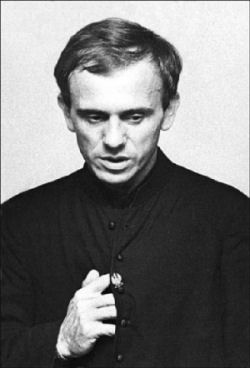
Father Jerzy Popiełuszko (1947-1984), Polish martyr under Communism

"Motu proprio" updates

We keep the record here.

From The Catholic Herald (tip: Fr. Zuhlsdorf):

"Pope picks up the phone in defence of the Old Rite"

BY MARK GREAVES

POPE BENEDICT XVI has spoken by telephone to a number of French bishops to persuade them to accept a wider use of the Tridentine Mass, it has been claimed.

The Pontiff brought French bishops who oppose the Tridentine Mass "to a reluctant but decisive change of view", according to the Priestly Fraternity of St Peter (FSSP), an organisation of Old Rite priests that the Pope strongly supports.

It is widely expected that a papal document will soon be released to allow priests to celebrate the Tridentine Mass - using the pre-Vatican II1962 Latin Missal - without the explicit permission of the local bishop, though probably only in the low-key setting of a "private" celebration. The document, which will be released motu proprio, or on the Pope's own initiative, has caused concern among bishops in France, where traditionalist groups are particularly active.

But efforts by the French episcopate to "torpedo" the initiative have failed, according to Videre Petrum, the FSSP's British newsletter.

"It is said that the mild but persuasive words of Pope Benedict, who personally spoke by telephone to many of the most intransigent enemies of tradition among the bishops of France, worked a sort of miracle, and brought them to a reluctant but decisive change of view, or at least to a recognition of the limits of disobedience," the newsletter said. Cardinal Jorge Medina Estevez, a former prefect of the Congregation for Divine Worship, said last month that the Vatican's Ecclesia Dei commission had discussed the document and would pass on its conclusions to the Pope.

The cardinal added that he did not expect the commission, set up in 1988 to oversee Vatican relations with traditionalists, to discuss the document any further.

Commentators say priests will be allowed to celebrate the Tridentine Rite without permission at "private Masses" that would be nevertheless be open to the public.

The proposed reform would put pressure on the bishops of England and Wales to adopt a more welcoming stance towards the FSSP, which currently has only two priests based in London.
_______________________

From Le Figaro (translation and tip provided by The New Liturgical Movement):

by Sophie de Ravinel

The pontifical document is awaited with a certain fear in France, where the bishops expressed their reservations. Ardently desired by Pope Benedict XVI and begun in the autumn, the reconciliation of the Catholic Church with the Lefebvrists should take a decisive step at this beginning of the year 2007 with the awaited publication of a papal decree freeing up the Mass of St. Pius V. We could thus see the appearance in the parishes of France Masses according to the Latin rite in force before the 2nd Vatican Council.

How many churches exactly will adopt the Old Mass, in parallel with the actual rite? It is impossible to foresee. But the pressure of the minority traditionalists, active and demanding, should be strong in certain places, in particular in Paris. The Pope for a long time has thought of putting an end to the schism of 1988. Why leave separated from the Church hundreds of priests and thousands of faithful, while at the same time we preach dialogue with other religions?

It is without doubt in France, where mistrust in regard to the traditionalists remains strong, where Benedict XVI's plans have the most barriers to overcome. ...

The Wielgus affair: Communist spy turned Archbishop of Warsaw

The fallout from the appointment of a former source of the secret services of the Polish Communist government as Archbishop of Warsaw continues to rock Poland and the Vatican two days before his installation.

One of the documents unearthed by Rzeczpospolita

From Andrea Tornielli (Rome), in Il Giornale's Friday edition (Italian):

The position of the new archbishop of Warsaw, Stanislaw Wielgus, 67 years old, appointed last December 6 as successor to Cardinal Glemp and who will enter the diocese in two days worsens: new documents from the archives seem to demonstrate, as the authoritative Polish daily Rzeczpospolita affirms, that the prelate was "a secret agent of the Communist services for twenty years".

...

Now, thanks to a microfilm, new and graver elements emerge. "I, Grey-Stanislaw [one of the supposed pseudonyms used by Wielgus] agree to collaborate with the secret services of the Polish Popular Republic during my time abroad. The collaboration will be based in an offer of intelligence services from Federal Germany and other hostile nations, according to the instructions of the Center for Intelligence Services. The services shall make available all means and eventual legal help for the development of the aforementioned activities." This is the text of the document reported in unabridged format by Rzeczpospolita.

...

It is probable that the circumstances were not [known to the Vatican] in all their consistency and extent. Anonymous sources from the Polish Church do not hide the embarrassment which this situation is causing, a few hours before the installation of the new archbishop: "It is a grave affair, a sad and delicate story, it is not a pleasant thing."


"The new archbishop of Warsaw was a secret and conscious collaborator with the SB [Security Service] for more than 20 years. Documents confirm this," the well-respected Rzeczpospolita newspaper wrote yesterday of Mr Wielgus, who was chosen by Pope Benedict XVI last month to fill one of the most important roles in the Polish church.

...

Mr Wielgus is accused of spying for the SB from 1967, when he was a philosophy student at Lublin University, until the collapse of communist rule in 1989, and of operating under at least three pseudonyms: "Adam", "Grey" and "Adam Wysocki".

Rzeczpospolita claimed to have unearthed Mr Wielgus' signed agreement to work for the SB, along with documents showing that he gathered information about church matters and students whom he taught, and even papers suggesting that he received "special training" for agents and was given a grant to study in Germany as reward for his collaboration.


More from Rzeczpospolita (in Polish).

The New Christ

From this Wednesday's General Audience:

In the prologue to his Gospel, frequently proclaimed in the past few days, the Evangelist John writes, "the light shineth in darkness, and the darkness did not comprehend it" (i,5). It is the drama of the rejection of Christ, which often manifests itself even today, as in the past, in so many different ways. The forms of the rejection of God in the contemporary age are perhaps more insidious and dangerous: from clear rejection to indifference, from scientific Atheism to the presentation of a Jesus considered "modernised", or rather, post-modernised. A man-Jesus, reduced to [the position of] a simple man of his age, a "master of wisdom" and deprived of his divinity, that is, a Jesus so idealized as to resemble a fable character. Yet, Jesus, the true Jesus of History, is true God and true man, and he does not grow weary of proclaiming his Gospel to all ...
Benedict XVI

From the news agency...

...of the United States Conference of Catholic Bishops, on the "promises of 2007":

Before then, other papal documents are expected to arrive; they include a post-synodal apostolic exhortation on the Eucharist and, according to Vatican sources, a document issued "motu proprio" (on his own initiative) that would expand permission to use the pre-Vatican II Tridentine Mass.

The first CNS mention of this document appeared in October.

Thanks to the readers who sent us this note.

Franck-Marie Quoëx
1967-2007

Requiem æternam dona ei, Domine,
et lux perpetua luceat ei.

Requiescat in pace.

(picture: courtesy of Orbis Catholicus)
In nomine Iesu omne genu flectatur, cælestium, terrestrium, et infernorum. (From the Introit for the Feast of the Holy Name of Jesus: Philippians ii, 10)

The name of Jesus is the glory of preachers, because the shining splendor of that name causes his word to be proclaimed and heard. And how do you think such an immense, sudden and dazzling light of faith came into the world, if not because Jesus was preached? Was it not through the brilliance and sweet savor of this name that God called us into his marvelous light? ...

So this name must be proclaimed, that it may shine out and never be suppressed. But it must not be preached by someone with sullied mind or unclean lips, but stored up and poured out from a chosen vessel. That is why our Lord said of Saint Paul: "He is a chosen instrument of mine, the vessel of my choice, to carry my name before the Gentiles and kings and the sons of Israel." In this chosen vessel there was to be a drink more pleasing than earth ever knew, offered to all mankind for a price they could pay, so that they would be drawn to taste of it. Poured into other chosen vessels, it would grow and radiate splendor. For our Lord said: "He is to Carry my name."

When a fire is lit to clear a field, it burns off all the dry and useless weeds and thorns. When the sun rises and darkness is dispelled, robbers, night-prowlers and burglars hide away. So when Paul's voice was raised to preach the Gospel to the nations, like a great clap of thunder in the sky, his preaching was a blazing fire carrying all before it. It was the sun rising in full glory. Infidelity was consumed by it, false beliefs fled away, and the truth appeared like a great candle lighting the whole world with its brilliant flame.

By word of mouth, by letters, by miracles and by the example of his own life, Saint Paul bore the name of Jesus wherever he went. He praised the name of Jesus at all times, but never more than when bearing witness to his faith. Moreover, the Apostle did indeed carry this name before the Gentiles and kings and the sons of Israel as a light to enlighten all nations. And this was his cry wherever he journeyed: "The night is passing away, the day is at hand." Let us then cast off the works of darkness and put on the armor of light; let us conduct ourselves honorably as in the day. Paul himself showed forth the burning and shining light set upon a candlestick, everywhere proclaiming Jesus, and him crucified.

And so the Church, the bride of Christ strengthened by his testimony, rejoices with the psalmist, singing: "O God, from my youth you have taught me, and I still proclaim your wondrous deeds." The psalmist exhorts her to do this, as he says: "Sing to the Lord, and bless his name, proclaim his salvation day after day." And this salvation is Jesus, her savior.
Saint Bernardine of Siena
De glorioso Nomine Iesu Christi

Sanctum Domino vocabitur...


Postquam consummati sunt dies octo, ut circumcideretur puer: vocatum est nomen eius Iesus, quod vocatum est ab Angelo priusquam in utero conciperetur. (Gospel for the Octave of the Nativity, Luke ii, 21: "And after eight days were accomplished, that the Child should be circumcised: His Name was called Jesus, which was called by the Angel, before He was conceived in the womb.")

And so the Child was circumcised. Who is this Child, unless He of Whom it was said: "a child is born to us, and a son is given to us" (Isaias ix, 6). "He was made under the Law, that he might redeem them who were under the Law" (Galatians iv, 4-5). ... For He was circumcised with the "vices" (Galatians v, 24), and is judged worthy to be looked upon by the Lord: "The eyes of the Lord are upon the just" (Psalm xxxiii, 16). You see how every practice of the Old Law was a figure of that to come; for circumcision was a sign of the forgiveness of our sins.

But since by reason of a certain base inclination to sin, the fragility of the human body and soul is enfolded in a neverending maze of evil, the cleansing from all guilt that shall be at the time of the resurrection was prefigured by the circumcision on the eighth day. This was because of the saying: "Every male opening the womb shall be called holy to the Lord". By the words of the Law the Child of a Virgin was promised. And He was holy, because immaculate. Then, that it was He that was signified in the Law, the words that were spoken by the angel make clear: "The Holy which shall be born of thee shall be called the Son of God."

He alone of all that are born of woman is Holy: the Lord Jesus Who, in the immaculate newness of His Birth, has received no contagion of our earthly corruption; nor has He put off his celestial might. For if we adhere to the letter: how would every male be holy, since it is plain that there have been many who were very wicked? Was Achab holy? Were the false prophets holy whom, at the prayer of Elias, the Avenger of offence against heaven consumed by fire? But He is Holy Whom the sacred precepts of the divine law presignified in the figure of the Mystery that was to come; in that He alone would open the hidden womb, of unblemished fruitfulness, of the Holy Virgin Church, so as to bring to life the people of God.

He alone therefore opened the womb, for Himself. Nor is that a wonder in Him Who had said to the prophet: "Before I formed thee in the bowels of thy mother, I knew thee: and before thou comest forth out of the womb, I sanctified thee" (Jeremias i, 5). He who sanctified another's womb, that a prophet might be born, He it is Who came forth out of the womb of His own Mother, that He might come forth Immaculate.
Saint Ambrose

A former Swedish Lutheran tells his story

From the December 2006 issue of "The Angelus"

In October 2006, The Angelus covered the conversion of a Lutheran pastor (Sten Sandmark) and his associate (Joacim Svensson) in Sweden. Joacim is now studying at St. Mary's College in St. Mary's, Kansas, ... in preparation to enter the seminary. We asked him some questions about his conversion and his thoughts and impressions about the Faith.

Joacim, the story of a conversion in our days of crisis is so extraordinary, I hardly know where to begin. Tell us about your family background and religious upbringing.
I had no religion in my upbringing whatsoever. I was confirmed in the Lutheran Church when I was 14, and that was a path to belief in Christ.

What led you to getting "confirmed"?
I just felt it was the right thing to do–and it was almost a calling. There were about 200 of us that were confirmed that year. And I was the only one of 200 who remained…Lutheran.

How does Sweden fare in religious practice?
Among the 9 million Swedes, 7 million are Lutherans. It was a National Church for 500 years (from c. 1520) until 2000. In reality, about 700,000 Lutherans are practicing their faith.

Why did it stop being a national church?
There was a separation that was agreed to by both Church and State. The Church wanted to be more liberated because the politicians, the Social Democratic party, ruled the Church. In 1958, the Lutheran Church decided to have women priests. All the professors, bishops, etc., were against it, but the politicians forced it.

Was there a schism?
No, there wasn't a problem; the "hard-liners" were marginalized. In the beginning they allowed those priests who didn't want to work with women priestesses to be left alone. Now, not anymore. Now every priest has to work with a woman priestess, and so now you have to sign a paper that you accept working with women priests. Homosexual couples will soon follow.

So five years ago there was resistance, at least token, to these reforms–and now?
Well, the bishops are all Social Democrats. If a bishop said he didn't want to ordain a woman, he was removed; and they would find a priest willing to ordain women, and so they would consecrate him. Remember, 500 years of Church and State joined meant that the political influence in the hierarchy was (and is) enormous. Most of the bishops and priests are Freemasons. In the population of the Lutheran Church, there has been a drop of one million members in the last 15-20 years, and there will be more and more as time goes on.

How have your parents reacted?
Well, that I wanted to join a monastery was quite a thing. So they don't care–whatever makes you happy. It's the typical Swedish mentality.

So why are you now in St. Mary's?
I was put here by Fr. Schmidberger so that I could learn English better, and so that after awhile I can join the seminary–perhaps in one or two years from now.

Well, for the readers who can't hear you speak, I can testify that you're making great progress! Can I ask you a bit more about the former Pastor Sandmark?
Well, for starters, he is now a seminarian at Zaitzkofen [the Society's German seminary– Ed.].

How long will he study?
As of right now, one to two years, and then he will be ordained. I have been told that he makes great progress in Zaitzkofen. I am not surprised; he is a Swede made of iron!

It must be quite a thing to go from being a pastor for 31 years to going back to the seminary.
Yes, indeed. We had a very large parish–a town of 25,000, with a parish of 12,500.

Twelve thousand! So St. Mary's is really a "small parish" compared to what you came from?
Yes, that's true. Pastor Sandmark was the chief "priest" of our parish. We had a common life together–much like Catholic religious. We didn't have wives or children–our monastery was always open to people who wanted to come. We often had people for dinner and were often invited to dinner. We were very "popular" because the people perceived that they could come to us anytime and we would make time for them. Whereas for most Lutheran pastors, the big goal is to have a big salary, and a wife, and lots of children–so they do not care as much about the faithful, honestly.

We, of course, wanted to save souls, and we wanted a more ascetic religious life.

I can't imagine relations were good with your fellow pastors…
We had some disagreements. It was very hard for them to accept that we wanted to live a religious life, and this was a problem because Pastor Sandmark was a beloved pastor of many faithful–people would go to his "mass," but not to the others.


To clarify for our readers, when you say "mass," you mean of course the Lutheran service.

Yes; however, what is interesting is that it is far more traditional than the Novus Ordo. We still have grand altars, and communion rails...

The [...] Catholic bishop in Sweden some years back rejected Sten Sandmark's desire to be Catholic in favor of ecumenism. How do you view this bishop now that you are Catholic, and what do you think of ecumenism?

Well, about 12 years ago, five people went to the Catholic Bishop saying they wanted to be Catholic. He told us to "hold our horses," and said that we could be "Catholic in our hearts." The highest Catholic authority told us this, and hence we assumed this was a right thing to do. So instead of founding an Augustinian Catholic monastery, these five founded the monastery within the Lutheran Church. Some died, some left, so he was alone until I came almost three years ago.
So the only "support" the bishop gave us in becoming Catholic was sending a Christmas card every year.

That's very sad–to hear that some people wanted to become Catholic but were barred by those who should have welcomed them in. I'm sorry.

We had been studying Catholic doctrine, and we were afraid because we thought that "outside the Catholic Church there is no salvation"–and we did not want to be outside! But it seems that these Catholic bishops today think it's not true. It's a really strange behavior. There are 80,000 Catholics in Sweden; most of them are from the Eastern countries, but with a climate like this, of course there are no conversions.

As a convert, what's your perspective on ecumenism?
Well, there is false ecumenism and real ecumenism; we see false ecumenism all the time. But real ecumenism is to belong to the real Church of Christ founded on St. Peter. To take another view of ecumenism, while we were Lutherans, we invited the Bishop to our house seven times. He did come to the town once, but he did not stop by. Instead, he went to celebrate Mass at the parish of a priest who was the chaplain of the Freemasonic lodge in the town. We warned him about it, but he did not care. He was shaking hands with them and laughing with them.
We said to him afterwards that we thought that the Catholic Church, which has the eternal truths, cannot deal with Freemasons. He said that the Lutheran Church has another opinion, that is that Freemasonry is "okay," and so out of respect for Lutherans, we should obey that guideline of the Catholic bishop.

That's really unbelievable. He put up obstacles to your conversion. What do you think are the biggest obstacles that are put up to the convert these days?
Ecumenism, of course–that you are free to belong to any sect. The Catholic Church has abandoned its supremacy and its teaching " extra ecclesiam nulla salus." It seems as though the Church is doing everything to keep people out of her. They allow adherence to heresy. It used to be that they would fight against the heresy, but now they are friends with the heresy. As a former heretic, it seems so strange to me that the Church wants to be friendly and go down the road of heresy, especially with Vatican II, the ecumenical meeting in Assisi, and the joint declaration on the doctrine of justification with the Lutherans 1999.

What compounds this is our attitude in Sweden. We are very secularized and westernized–we want the newest car, television, movie, etc. There are some movements in Sweden that want spirituality, that want to go back to their "roots," but all over Sweden it is very bad and anti-Christian.

There was an exhibition not too long ago, which the Lutheran Church was paying for, called " Ecce Homo." It was composed of portraits of Christ as naked–terrible, blaspheming pictures. This was terrible, and at least the Catholic bishop spoke up against it, and the Pope took back his invitation to the Swedish Lutheran "Archbishop" to come to Rome that year. Yet this is what Lutheranism does. It is trying to attack Christianity even in its roots of respect for Christ.

Are there any articles of Faith you found particularly difficult to understand?
Not at all. We always had table readings or lectures about Catholic teachings and dogma. I "ate it up," as you might say. I had no hesitation whatsoever. We have seen the heresy and worked with the heresy, so for us the Catholic Faith is eminently logical and full of sense. We really love and are attached to the Catholic doctrine and dogmas.

Were there any that struck you as particularly beautiful?
Mary was really the most important thing in our life, especially her Immaculate Conception and her Assumption. She was our guidance. We really loved her; it was something we tried to introduce into the parish. We bought statues of Mary, and it was acceptable to some parishioners. It was a chance to proclaim the truths we knew. But I have to tell you that the reason we survived in the Lutheran Church all these years was the daily rosary. Without it, we would not have been able to persevere to our conversion.

How do you view Confession now, especially coming from a sect that was born (among other reasons) from a fear and misunderstanding of it?
We had "confession," but later on we discovered that it was not valid. Luther had confession, the Lutheran "orthodox" took it away. Very old German parishes that are Lutheran still have confession; there were confessions for the first 100 years of the Protestant Revolt.
We certainly had good intentions in administering it, but it is very jarring to discover, as Pastor Sandmark did after 31 years, that he was never a priest.

Both former Pastor Sandmark in his last sermon to your parish [See The Angelus, October 2006, p.44] and Bishop Tissier de Mallerais in his sermon receiving you into the Church mentioned priestesses and blessings of homosexual unions.Can you give us a little bit of background to the progression of this in Europe?


To be honest, it has just come to a head in the last five years. Ten years ago, even if you mentioned the question, people would shake their heads no. But now we have to be "kind and nice" to everybody, and the highest Lutheran Church council in Sweden, which is made up of a majority of Social Democrats, voted yes.

What is the Faith like in Europe? How does it compare with America?
To believe in God is very natural in America. In Europe, you cannot say that. The definition of God in Europe is that maybe he is a woman, maybe he is whatever–whatever you might want him to be. But in America, it is natural to have a "faith" here; we believe in a God. If you said "Jesus Christ is my personal Lord and Savior" in Europe you would be considered crazy.
What is worse, again, is that the Lutheran Church is abandoning Christ. They thought they were following Christ by leaving the Catholic Church in 1517, but now they are abandoning Christ more than ever.

So I don't like Lutherans, you might say. I was in Wittenberg. You can still see the gate above which Luther nailed his 95 Theses; there is a crucifix there, and they took out Our Lady and St. John, and there you find Luther and Melancthon instead. That should tell you a lot about the Lutheran mentality.

What is your take on the Muslims?
Well, of course, Europe was founded by monasteries, not mosques, that's first of all. Now they are sneaking into society, building mosques all over Europe. They are infiltrating schools and our society. It's terrible, I think. The most terrible thing is that the Conciliar Church is accepting all of this. They have totally forgotten about Lepanto…

Or John Sobieski, or Charles Martel…
Yes. Indeed, the crime rate has gone up dramatically when we started accepting Muslims in Europe. In Paris there is an area called Montmartre…

Where Sacré-Coeur is?
Yes. They say that when you go to Montmartre you are "leaving Europe."

Because of the Muslim population?
Yes. It is terrible, really. Europe was founded by monasteries, not mosques or synagogues. And now we see the Pope has to keep excusing himself just for quoting the old emperor. So instead of this conversation of conversion which is necessary for your soul–perhaps being out amongst them, discussing the Faith–instead, we want to have this nice get-together and drink champagne and eat cheese and laugh and joke. I think it is terrible. The Conciliar Church is refusing to tell the truth about the Faith. It does not dare to talk about the truth.

So here you are now as a college student, after having lived as an Augustinian monk for two and a half years. What are your plans?
First, I have to say it was a great shock for me to leave a monastery and cross the Atlantic and end up in America. I must say that I am not used to the American lifestyle; it is something I also have to learn from my visit here.

We (Pastor Sandmark and myself) currently plan to be SSPX priests.

And as for the Augustinian order? Does Pastor Sandmark wear his habit or a cassock at Zaitzkofen?


No, a cassock. As I said, he will be an SSPX priest first. Whether we will reconstitute the Augustinians in Sweden is an open question (but I personally do not think so), but I certainly hope to continue my apostolate there eventually.
St. Dominic was my confirmation saint because I want to fight against heresy–because we lived in it for so long. So it is our (seminarian Sandmark's and my) vocation to fight against heresy and save souls.

Yes, and he had a special devotion to Our Lady, as you mentioned earlier was so important to you.

Ah, yes, the love for Our Lady. There is not love anywhere in the Lutheran Church for Mary, a mother who takes care of her children. We have turned to her many times. Look, the history of our monastery is not isolated. To go back for a moment: do you know of Taizé?

Yes.
Taizé was like us, in a way. Some of them wanted to be Catholic, but they were told not to be, and so they made this weird, strange "protestant monastery." There are nine monasteries of the Lutheran Church in Sweden that wanted to become Catholic but were refused. There were more convents and monasteries in the Lutheran Church than the Catholic Church. It's crazy, right is wrong and wrong is right…
Well, it sounds like Sweden needs you…

Yes, hopefully I will have a chance to do go back. Two hundred years ago we sent missionaries to Africa, now Africa is sending "missionaries."

"Muslimmaries"?
Yes. They are sending them to Europe. And we must rechristianize Europe.

Monasteries, not mosques.

Joacim, it has been a distinct pleasure.
Mine as well.

Conducted by Stephen L.M. Heiner, in St. Mary's, Kansas, October, 2006. Email for Joacim can be directed to TrueRestoration@gmail.com, c/o Stephen Heiner.
_________________________________
Rorate Cæli Disclaimer: "Dear Readers: We are in no way associated with The Angelus magazine or with Angelus Press, and have never received nor will ever receive any kind of monetary benefit from them."

Cardinal Castrillón's response to Una Voce

This is not exactly breaking news, but we publish it here also for the record.

Following the very public statements of the bishops of eastern France in October and the comments of certain German bishops after their ad limina visits to Rome in November it appeared imperative that the FIUV made its voice heard in Rome to speak on behalf of the laity and those many faithful parish priests who wished to celebrate the traditional Mass with greater freedom.

On November 24th, the President, Jack Oostveen, Secretary Leo Darroch, and Treasurer Mrs Monika Rheinschmitt visited Rome and had meetings in the Congregation for the Clergy, The Pontifical Commission Ecclesia Dei, the Congregation for Divine Worship, and the Congregation for the Doctrine of the Faith. In order to restore the balance of the inaccurate picture presented in Rome by various prelates, the FIUV delegates presented a dossier of the reality of life in many countries under the restrictions on the celebration of the traditional Mass imposed by the bishops’ conferences. The dossier included initial comments and then individual reports from many countries. In addition to copies of the dossier being presented in those congregations visited, a copy was also sent to Cardinal Bertone at the Secretariat of State. [...]

An encouraging response to this dossier was received from Cardinal Castrillon Hoyos. On the first of December, the FIUV President, Jack Oostveen, received a letter from his Eminence in which he said:

“Thank you for the documentation regarding the situation of the Mass celebrated according to the 1962 missal in several countries, produced by you. I assure you, the Holy See is labouring with regards to the priests and faithful to find a solution that will do justice to all who it concerns.

“Therefore several options are being examined in view of the good of the whole Church.”

The leadership of the Una Voce Federation will continue at every opportunity to represent the views of its members with the appropriate authorities in Rome.

Jack P. Oostveen – President.
Leo Darroch – Acting Secretary.
Mrs Monika Rheinschmitt – Treasurer. [Edited]
Website of the International Federation Una Voce: http://www.ifuv.org/

Polish intellectuals sign "Tridentine" manifesto


Read the Polish original, also undersigned by several important Polish politicians, including the Speaker of the Lower House of the National Parliament, here (or here).
We are with you, Holy Father!

Declaration on the use of the Traditional Liturgy

In light of ever more frequent statements of close associates of the Holy Father, who confirm his intention of restoring the right and freedom of use of the traditional liturgy in the Latin rite, as faithful laymen of the Roman Catholic Church we wish to express our hope and gratitude.

We would also like to affirm our solidarity with the Pope, mindful that for many years prior to taking up his seat as the Apostolic Successor of Saint Peter, he took up efforts to ensure that reverent liturgical forms passed on in a long tradition and confirmed officially by Saint Pius [V] "according to the rites and customs of the Roman Church" (Apostolic Constitution Quo Primum, Pope St. Pius V, July 14th 1570) were preserved so as to "hand on this treasure for the Church of today and tomorrow" (Cardinal Ratzinger, Prefect of the Congregation for the Doctrine of the Faith, addressing liturgical conference, held over 22 to 24 July 2001, convened under the patronage of the Abbey of Fontgombault).

We understand the expected promotion of the traditional liturgy, otherwise termed the classical Roman rite, to involve the affirmation of the principle which is mentioned in the Catechism of the Catholic Church, ratified by the Servant of God Pope John Paul II, which quotes the words of the Second Vatican Council: "that Holy Mother Church holds all lawfully recognized rites to be of equal right and dignity, and that she wishes to preserve them in the future and to foster them in every way." (CCC, 1203; Sacrosanctum Concilium, 4). The then-Cardinal Ratzinger also reminded us of this principle, stating that "the Council ordered a reform of the liturgical books, but it did not prohibit the former books." (Ten Years of the Motu Proprio Ecclesia Dei, by Joseph Cardinal Ratzinger).

Everything indicates that today we are progressing towards solutions which will bring these words into full daylight.

3. We dearly thank the Holy Father for all his gestures of understanding, openness, and respect regarding "the feelings of all those who are attached to the Latin liturgical tradition".

These gestures underscore and continue the line of action of John Paul II, who appealed to the Bishops and those exercising a pastoral ministry in the Church twenty years ago for "measures to guarantee respect for [the] rightful aspirations" expressed by "all those Catholic faithful who feel attached to some previous liturgical and disciplinary forms of the Latin tradition" (John Paul II, motu proprio Ecclesia Dei, 5 c).

Mindful of all the difficulties and cares which are associated with the service of the shepherds of the Church, we expect that the regulations annouced by the Holy See will also serve to break the specific order of intolerance, which hinders the crucial internal unity in the Church. (See: Cardinal Joseph Ratzinger, God and the World).

4. Moreover, we hope that the response to this endeavor by Benedict XVI in the current discourse within the Church will include "every effort to avoid expressions, judgments and actions which do not represent with truth and fairness" the condition of those Catholics who are tied to the traditional liturgy (Vatican Council II, Decree on Ecumenism, Unitatis Redintegratio, 4).

We also hope that the granting of full rights of the use of the liturgy of Saint Pius V will improve the prospects of healing the rift which also took place in this context in 1988 and which lasts until this day, and for which, perhaps, "men of both sides were to blame" (Vatican Council II, Decree on Ecumenism, Unitatis Redintegratio, 3), partly due to the marginalization, within the Church, of "certain truths and certain values of the Christian faith" which "are no longer lived and loved" (Cardinal Joseph Ratzinger, Speaking as the Prefect of the Congregation for the Doctrine of the Faith, addressing the National Conference of Chilean Bishops in Santiago). Let us pray that this wound be healed and that all Catholics who are already united by faith in the same dogmas will henceforth be able to enjoy the visible communion of the life of the Church.

5. In these days of expectation we therefore wish to join those voices of support and gratitude, which are already being directed toward the Holy Father by public figures in the Christian community, and we willingly hereby declare our support and gratitude to the Holy Father Benedict XVI for his will to remove the practical discrimination of the traditional liturgy, which has served throughout the ages as a worthy instrument for the sanctification of many and as a great monument of our spiritual culture.


Przemysław Alexandrowicz, senator

Prof. Jacek Bartyzel, political scientist

Dr Sławomir Cenckiewicz, historian

Prof. Jan Dzięgielewski, historian

Marcin Gugulski, journalist

Lech Jęczmyk, translator

Marek Jurek, Marshall of the Sejm (Speaker of the Parliament)

Bogusław Kiernicki, president of the Fundacja Św. Benedykta (St. Benedict Foundation)

Wojciech Kilar, composer

Aleksander Kopiński, historian and literary critic, editor of "Fronda"

Dr Jacek Kowalski, art historian, singer

Prof. Grzegorz Kucharczyk, historian

Jan Filip Libicki, MP (Member of Parliament)

Marcin Libicki, MEP (Member of the European Parliament)

Paweł Lisicki, writer

Prof. Roman Michałowski, historian

Andrzej Mikosz, lawyer

Dr Paweł Milcarek, philosopher and journalist, editor in chief of "Christianitas"

Paweł Nowacki, deputy director of TVP1, author of documentaries

Dr Justyn Piskorski, university teacher

Ewa Polak-Pałkiewicz, journalist

Tomasz Raczkiewicz, artist of the Poznan Opera

Prof. Marcin Sompoliński, conductor, Akademia Muzyczna in Poznan

Dr Piotr Sosiński, lawyer

Konrad Szymański, MEP

Prof. Kazimierz Świrydowicz, mathematician

Dr Tomasz P. Terlikowski, philosopher, journalist at Polskapresse

Jacek Tomczak, MP

Prof. Piotr Tryjanowski, biologist

Artur Zawisza, MP
______________________
In other news, the "anti-Tridentine" manifesto set up by radical "Progressive" Genoese priest Paolo Farinella a couple of months ago has been a complete failure, according to the Italian news agency ANSA.

We thank our reader Filip Lajszczak, of Christianitas.pl, for the news from the very dear Catholic Poland, as well as for the translation he provided; and several readers for the news from ANSA.

Not exactly urgent...

...but we will mention it, anyway, just for the record, which we like to keep here.

It was mentioned by some in early October that the Secretary of the Pontifical Commission "Ecclesia Dei", Monsignor Camille Perl, had said that a measure "favoring" the Traditional Latin Mass would be taken by the Pope. This was finally confirmed in the recently-released periodical newsletter of the Abbey of Sainte-Madeleine du Barroux, where Perl spent a few days in October and where he "confirm[ed]the will of the Holy Father to make something soon to ease the access to the ancient form of the Roman Rite" (p. 3).

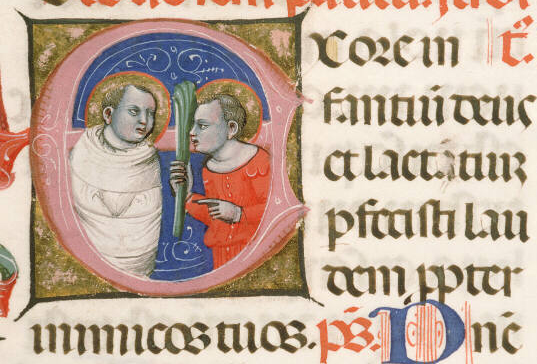
Ex ore infantium, Deus, et lactentium
perfecisti laudem propter inimicos tuos.

Merry Christmas!

Christmastide Recess
Urgent news may be posted at any time

The liturgy under Benedict
One year of Rorate Cæli

This blog was started in December 2005, on Rorate Sunday (the Fourth Sunday of Advent, after whose Introit, Rorate cæli desuper, the blog was named). Since we follow the liturgical year of the Roman Rite as our own calendar, today, the Fourth Sunday of Advent (which will not be commemorated this year, since it falls on December 24, the Vigil of the Nativity of Our Lord Jesus Christ), marks our first anniversary.

We would like to thank our many visitors for their kindness to this work, which we try to accomplish purely out of love for Holy Mother Church, with no wish for any material benefit whatsoever. We apologize for any inconvenience it may have caused to any reader.

As we begin this new liturgical year, approaching Christmastide, it seems appropriate to remember what the year has brought, recalling the first text published here in 2006: "Will the Liturgical Mess go on in 2006?". In that text, we made some references to scandalous liturgical practices in a Brazilian Jesuit Youth House.

As we once again peruse their website, from which we have taken these pictures, the answer to that question is clear: the mess did go on; nothing has changed in the Liturgy of the Latin Church under Benedict. "Nothing so far", some would say. Others would point to the relevant admonition by the Congregation for Divine Worship on the correct translation of the words of consecration in the new rite -- which was more doctrinal necessity than actual liturgical action. In the liturgical lives of Roman Catholics who attend the New Mass, nothing has improved -- and "Contra factum non datur argumentum". Could this stark reality be clearer than these painful images?

For Traditionalists ("the true friends of the people are neither revolutionaries, nor innovators: they are traditionalists", Notre Charge Apostolique), the year was full of unfulfilled hope. Especially for those who go to Mass at churches and chapels run by Ecclesia Dei or diocesan priests, it was a bitter year: so many of these places of worship have been shut down and persecuted, especially in the two largest "Traditionalist Nations", France and the United States.

From Lyon and Bordeaux (where even the nascent Institute of the Good Shepherd is still despised by diocesan authorities) to Cleveland and Los Angeles, from Germany to the Philippines, from the smallest hamlet to the Eternal City, Traditionalists have been ignored, antagonized, harassed, persecuted, and expelled in the Year of the Lord of 2006. In the Eldest Daughter of the Church, so many bishops of dioceses in collapse tried (and are still trying) to deter any improvement of the "Traditionalist Question"...

The foundation of a small new society of priests (hated by so many prelates) could not offset this rosary of misfortunes. How could any advance in negotiations with groups not in regular communion with the Holy See be expected when there is so much ill-treatment?

The burden on the Supreme Pontiff in our age is unbelievable; there is, in fact, so much that he cannot do; there is so much he cannot say plainly, lest he jeopardizes the lives of Christians all over the world.

Yet, there is so much he can do, especially in the field of the liturgy. And there is so little time to do it. Precious little time.


Merry Christmas. Iacta alea est.

Traditional Christmas Schedule in Rome

At Santa Maria della Pace (Via della Pace, near Piazza Navona)

Christmas Midnight Mass
In the Roman Rite ("Tridentine")
Celebrated by the Priestly Fraternity of St. Peter
Polyphonic Choir FESTINA LENTE (Directed by Michele Gasbarro)
Mass for eight voices (Victoria)
____________________________

At San Gregorio dei Muratori

From December 21, 2006, to January 7, 2007, there will be no 0700 (a.m.) Mass at S. Gregorio. There will be no 1830 Mass on December 24 or 25, 2006.

There will be exposition of the Blessed Sacrament on December 31, 2006 (Evening), followed by Mass at midnight and Te Deum.

On January 1 and 6 (Epiphany) there will be 0900, (Solemn) 1030 (a.m.), and 1830 Masses.
____________________________
Posted on request. More information: 06-68192286 (or here; or in Italian).

Aperiatur Terra


Ego Dominus, et non est alter; formans lucem, et creans tenebras; faciens pacem, et creans malum: ego Dominus faciens omnia hæc. Rorate, cæli, desuper, et nubes pluant iustum: aperiatur terra, et germinet Salvatorem: et iustitia oriatur simul: ego Dominus creavi eum. (From the fourth Lesson for the Ember Saturday in Advent, Isaias xi, 6-8: "I am the Lord, and there is none else: I form the light, and create darkness, I make peace, and create evil: I the Lord that do all these things. Drop down dew, ye heavens, from above, and let the clouds rain the just: let the earth be opened, and bud forth a savior: and let justice spring up together: I the Lord have created him.")


...Mary is in very truth full of the riches of a good life. Of this plenitude we can truly say: "The earth is the Lord's." By the earth is signified Mary, of whom we read in Isaias: "Let the earth be opened, and bud forth a savior!"

What more lowly than the earth? What more useful? We all tread the earth under our feet, and draw from it the nourishment of our life. Whence have we food and clothing, bread and wine, wool and thread, flax, and all the necessities of life, except from the earth, and from the fullness of the earth? What, therefore, is more lowly, what more useful than the earth?

In like manner, what is more humble, what more useful than Mary? She, by her humility, is the very least of all; by her fullness of grace, the most useful of all. For we have all that is needful for our spiritual life through Mary.

Well therefore doth St. Bernard say: "Let us look more deeply and see with how great a depth of devotion He wishes Mary to be honored by us who hath placed the fullness of all good in Mary, so that if we have any ground for hope, or for salvation, we should know that it is from her it springs." ("Serm. de Aquæductu.")

Hear now the Psalmist: "The earth is the Lord's and the fullness thereof." The fullness of the earth consists in fruits and divers riches, according to the Psalmist: "The earth is filled with Thy riches." The fruits and the riches of this most full earth, Mary, are the works, the examples, and the divers merits of the most holy life of Mary.

The Lord filled her with such riches and with so great gifts that it is said: "The Lord looked upon the earth, and filled it with his goods" (Ecclesiasticus XVI, 30. ). Saint Jerome, speaking of this fullness, says: "It was fitting that the Virgin should be pledged with such gifts, that she should be full of grace, she who gave glory to the heavens, God to the earth, who restored peace, who gave faith to the nations, put an end to vices, brought back order to life, and discipline to manners."
Conrad of Saxony,
Speculum Beatæ Mariæ Virginis

Ecce Dominus veniet


Hæc dicit Dominus Deus: Egredietur virga de radice Iesse, et flos de radice ejus ascendet. Et requiescet super eum spiritus Domini: spiritus sapientiæ et intellectus, spiritus consilii et fortitudinis, spiritus scientiæ et pietatis: et replebit eum spiritus timoris Domini. (From the Propers for the Ember Friday in Advent, Isaias xi, 1-3: " Thus saith the Lord God: And there shall come forth a rod out of the root of Jesse, and a flower shall rise up out of his root. And the spirit of the Lord shall rest upon him: the spirit of wisdom, and of understanding, the spirit of counsel, and of fortitude, the spirit of knowledge, and of godliness. And he shall be filled with the spirit of the fear of the Lord.")

Orthodoxos —Then let us pass on to another prophetic testimony and let us hear the same prophet saying, "There shall come forth a rod out of the root of Jesse, and a flower shall rise up out of his root."

Eranistes —I think this prophecy was delivered about Zerubbabel.

Orthodoxos —If you hear what follows, you will not remain in your opinion. The Jews have never so understood this prediction, for the prophet goes on, "and the spirit of the Lord shall rest upon him: the spirit of wisdom, and of understanding, the spirit of counsel, and of fortitude, the spirit of knowledge, and of godliness" This would never be attributed by any one to a mere man, for even to the very holy the gifts of the Spirit are given by division, as the divine apostle witnesses when he says, "To one is given by the Spirit the word of wisdom, to another the word of knowledge by the same Spirit," and so on. The prophet describes Him who sprang from the root of Jesse as possessing all the powers of the spirit.

Eranistes —To gainsay this were sheer folly.

Orthodoxos —Now hear what follows. You will see some things that transcend human nature, he goes on. "He shall not judge according to the sight of the eyes, nor reprove according to the hearing of the ears, but he shall judge the poor with justice, and he shall strike the earth with the rod of his mouth, and with the breath of his lips he shall slay the wicked." Now of these predictions some are human and some divine. Justice, truth, equity, and rectitude in giving judgment exhibit virtue in human nature.

Eranistes —We have so far clearly learned that the prophet predicts the coming of our Saviour Christ.

Orthodoxos —The sequel will show you yet more plainly the truth of the interpretation. For he goes on, "The wolf shall dwell with the lamb," and so on, whereby he teaches at once the distinction of modes of life and the harmony of faith; and experience furnishes a proof of the prediction, for they that abound in wealth, they that live in poverty, servants and masters, rulers and ruled, soldiers and citizens and they that wield the sceptre of the world are received in one font, are all taught one doctrine, are all admitted to one mystic table, and each of the believers enjoys an equal share.

Eranistes —It is thus shown that God is spoken of.

Orthodoxos —Not only God but man. So at the very beginning of this prediction he says that a rod shall grow out of the root of Jesse. Then at the conclusion of the prediction he takes up once more the strain with which he began, for he says, "In that day the root of Jesse, who standeth for an ensign of the people, him the Gentiles shall beseech, and his sepulchre shall be glorious." Now Jesse was the father of David, and the promise with an oath was made to David. The prophet would not have spoken of the Lord Christ as a rod growing out of Jesse if he had only known Him as God. The prediction also foretold the change of the world, for "the earth" he says "is filled with the knowledge of the Lord, as the covering waters of the sea."
Theodoret of Cyrus
Dialogues

Fellay in Argentina: "already signed"


From the lecture given by Bishop Bernard Fellay, Superior-General of the Priestly Fraternity of Saint Pius X (FSSPX/SSPX) in Martínez, in the Province of Buenos Aires, on December 16, 2006 (WAV file in the website of the South American District of the FSSPX).

We present the main snippet below, as we gather some more information. The Bishop's somewhat broken Spanish (the main words should read, "el documento ya ESTÁ firmado") is kept as faithfully as possible in the following translation:

"What is interesting is that Cardinal Ricard told the Assembly of French Bishops, that was in early November, that 'the motu proprio is not signed', and that now is the time to make notes, to define what is thought, what should be corrected.

"[01:38:30]Well, the document is already signed [emphatic] and the Cardinal who spoke to the French Bishops knows it. There are curious things. And, also, after the signing, the matter is once again discussed, on December 12. That is why I say that the [motu] proprio is not really 'proprio' [play with words, the Pope's 'own' document, is not really his 'own']

"Well, there are very curious things. We know, from someone high up, that the publication was predicted for November 11. However, the Pope fears the bishops’s reaction, and... (sic) that is why ... (sic) it takes long... (sic) -- and, now, don’t ask me when ... (sic) the day of this motu proprio [the date in which it will be published]. I don’t know. What I can say is that, last year, a secretary of the Synod of the Eucharist, a week before the end of the Synod, was absolutely certain of the publication of the permission for the Mass by the end of the Synod. This was over one year ago. [emphatic]"

...

"...it seems like that in this text, motu proprio, there isn’t only the Mass, there’s something else, there’s another thing, and this other thing is for the Society of Saint Pius X. But, I don’t know what. I ask myself if it’s the matter of the excommunications, if it’s the question of the juridical structure. I don’t know. They haven’t told me ! (laughter) and, then… (sic) but what I see is that, it’s like an expectation by Rome that, if they give us the Mass, they think that we are going to change and end the battle. And that, you can be certain, it’s not true. Not for anything!"


*"Lo que es interesante es que el Cardenal Ricard dijo a la asamblea de los obispos, fue al inicio de noviembre, que 'el motu proprio no está firmado' y que ahora es el tiempo para hacer notas, para definir lo que piensa, lo que hay que corregir... (sic) [01:38:30] Bueno, el documento ya es [emphasis] firmado y el Cardenal que ha hablado con los obispos franceses lo sabe. Hay cosas curiosas. Y también, después de la firma, el 12 de diciembre, se ha tratado de nuevo del tema. Es por eso que digo que 'proprio' no es tan 'proprio' ... (sic).

"Bueno, hay cosas muy curiosas. Sabemos de muy alto que era previsto (sic) la publicación en el 11 de noviembre. Pero el papa teme la reacción de los obispos y ... (sic) es por eso que es... (sic) es demorado ... (sic) y ahora no me preguntan (sic) cuando ... (sic) el día de este motu proprio. No lo sé. Lo que puedo decir es que el año pasado un secretario del sínodo sur (sic) la Eucaristía, una semana antes de, de la fin, del fin del sínodo, era absolutamente cierto de la publicación de la permisión de la misa al fin de este sínodo. Hace más de un año. [emphasis]"

...

"...parece que en este texto, motu proprio, no hay solamente la misa, hay otro, hay otra cosa, y otra cosa que es para la Fraternidad San Pío Décimo. Pero no sé qué. Me pregunto si es la cuestión de las excomunicaciones, si es la cuestión de una estructura jurídica. No sé. No me (sic) han dicho! (laughter) Y entonces...(sic) pero lo que veo es que, es como una espera de parte de Roma que se van a dar a nosotros la misa y entienden que nosotros vamos a movernos y terminar la batalla. Y eso, pueden ser (sic) ciertos que no es verdad. Por nada!"


A fructibus eorum cognoscetis eos

Exactly one year ago, the reigning Roman Pontiff made the most important (though not his most famous, after the "Regensburg affair"...) speech in his pontificate: his Christmas address to the Roman Curia.

We are quite glad that this blog was the very first English-language medium to report the speech, minutes after it was pronounced, an address which was at the time mostly ignored by the mainstream Catholic media for weeks. "Progressive" Catholic journalists and bloggers would ignore it for almost one month... Our first series of articles was dedicated to it, which we called the "Epoch-making Speech", a definition which we uphold.

Its main thrust: to establish the basis for a "hermeneutics of continuity", that is, of continuity between the bimillenial Tradition of the Church before 1962 and the complex content of the Vatican II documents themselves and their confusing aftermath. We still believe that a good foundation was laid with that speech, but nothing was conspicuously built on it in the past 12 months (maybe this year's address to the Curia, to be delivered in the Roman morning of this December 22, will give us some clue of what may happen).

The bitter fruits of the Council cannot be denied by an impartial observer based on their effects on the Church, and two interesting pieces of news published this Thursday confirm this fact once again.

In France, the pollsters of the CSA Institute have just announced that 23% of French Catholics believe that Our Lord was "a man like any other"...

And John Allen (one of those who ignored the December 22, 2005 speech for several weeks) mentions the not very well known conclusion by Philip Berryman (but self-evident to any superficial observer of Latin-American Catholicism) that one of the main causes of the Pentecostal explosion in Latin America in the past forty years was the "alienation from recent trends in Catholicism (such as the relaxation of tradition, for example Mass in the vernacular)".

May we never forget to pray for the Holy Father.

__________________
P.S. One correspondent reminds us that the Holy Father received the Secretary of the Congregation for Divine Worship, Archbishop Ranjith, in a previously unannounced audience this Thursday.

Fellay: "I am sure of a 'happy ending'"

From an interview with the Superior-General of the Priestly Fraternity of Saint Pius X (FSSPX/SSPX), Bishop Bernard Fellay, published on December 11 by the French regional daily Nice-Matin (via Le Forum Catholique). Due to copyright limitations, the following relevant excerpts are translated:

Nice-Matin: Isn't this division among Catholics an offense against the love of Christ?

-Mgr Fellay: It is true, love is the authentic sign of the Church. But Saint Paul also says, "Opportet haereses esse," there shall always be divisions and oppositions. The Church has as its aim saving souls, and for that it should remove them from a situation of war against God, related to Original Sin.

...

What do you ask for?

-For that which is the principle: that the ancient Mass be truly allowed. For a practical application [of the principle]: that all act in good faith. That we do not see, beforehand, the arrival of the ancient rite as a problem.

It is said you are on the verge of asking, in writing, for the removal of the excommunication against the Fraternity of Saint Pius X?

That is inaccurate. After the year 2000, we have already asked for it several times, including in writing.Cardinal Castrillón, in charge of the dossier, has publicly recognised that we were not schismatics.

Since your audience with Benedict XVI on August 29, 2005, what has happened?

-Last spring, the terms of an agreement were discussed at various times by the Cardinals and the officers of the Curia. The Fraternity has not returned to Rome in an official fashion, but contacts take place, we exchange letters.

An agreement with Rome, when?

-It is impossible to say. It had been assured to us that the text "liberalizing" the Tridentine Mass would be published in October 2005 [sic]. That has still not happened. The Pope wishes to proceed fast. We say to him: softly. It is an atomic bomb, which must not be exploded! Before landing, we make the effort of preparing the runway. We have proposed a roadmap. We do not set conditions for Rome, but the shattered confidence must be regained. The "liberalization" of the Mass and the removal of the excommunication would be a sign which would open a phase of doctrinal discussion. Efforts by Rome to remove the Church from its current situation of paralysis would also be a sign. I am sure of a "happy ending". But when? We pray. For us, the Church is supernatural. What is essential is of the order of grace.

Traditionalists of the world, unite! - Follow-up

Il Foglio published today ("Latinismi 2") the first small list of signatories of the Manifesto in favor of the Traditional Rites of the Latin Church, and I see several of our dearest readers among them. It is good to see such widespread international support for the Mass.

The paper also publishes, in a different column ("Latinismi 1") the information on the 1982 Ratzinger meeting (published last week by Le Figaro), and concludes: "The next weeks will be decisive to ascertain if this greater determination [of Benedict XVI, as compared to John Paul II] will be sufficient to [ensure] the publication of the expected motu proprio, ...".

"First list":

Camillo Langone; Thomas Scaramastra, Greensboro, Usa; Paola Manghi, Desenzano; Bart Crowell, Lakeland, Tennessee Usa; Pamela Dieter, Usa; Brad Nygaard, Madison, Wisconsin Usa; Javier Echanove, Madrid, Spagna; Daniela Borroni; Paul Waddington, Yorkshire England; Alessandro Madruzza, Perugia; Anna Caffi Forentini; Nick Lowry, Ireland; Raymond Van De Moortell, Winthrop, Massachusetts Usa; Carol Long, University of Scranton; Catia Ricci; Giorgio Crotti, San Donato Milanese; Stefano Priarone; Luigi Moretti, Roma; Pawel P. Wroblewski, University of Wroclaw Poland; Fabio Buchicchio; Philip Blosser, Lenoir-Rhyne College Hickory, North Carolina; Mario Aleppo; John L. Stehn, Port Washington, NY, Usa; Angelika Blum e tutta la famiglia; Massimiliano Fiorin, Bologna; Milan Krajniak; Antonio Protopapa, La Spezia; José Carlos Neves Lima, Portugal; Brian J. Coyne, Usa; Carmen Damiano; Jo-Anne Ruff, New Jersey, Usa; Thomas Warlick, Vienna, Austria; Claudia Carceri; Mauro Barberio; Domenico Caponi, Trevi (Fr); Paolo Salvestrini Colle di Val d’Elsa (Si); Ben Whitworth, Leeds, England; Jorge Ferraz, Recife, Brasil; Jorge Ferraz de Oliveira Filho; Miriam Balbo, Vallecrosia (Im); Stefano Testa; Assuntina Morresi, Perugia; don Giuseppe Veronelli; Cristina Cannoni; Franco Derencin Teolo (Padova); Sormani Zodo; Anna Maria Derencin Teolo (Padova); Marco Rizzo; Vittorio Salvarani; Alessio Caramaschi; Antonella Bagno; Claudio Giuriceo, Adriana Ceolin Giuriceo, Bruna Sdrigotti Ceolin, Sabrina Giuriceo (Udine); Pietro Dri Trieste; André Roncolato Siano; Domenico Bartolini; Anna Rita Prioretti Civitanova Marche; Luca Moschini Ravenna; Cesare De Rosis (Cosenza); Fábio Garcia Durante, São José dos Campos, São Paulo, Brasil; Enzo Castagna; Mino Garzia Trento; Marcela Garbiarova, Bratislava, Slovakia; Matteo Piccin; Davide Brazzale; Gioacchino Cuomo Sorrento (Na); Giulio Menichini, Orvieto; Laura Carloni; Claudia Costanzo, Milano; Claudio Berti; Vincenzo Cammarata, Roma; Domenico Torchetti; Jane S. Elliot, Scranton, Pennsylvania,Usa; Timothy D. Whitney, Portland, Maine, Usa; Eva L. Sturchio, Jersey City, New Jersey, Usa; Cathy Conwill Carlton, Oregon, Usa; Paulo Renato Ghetti Frade, Medford, Usa; Gianmaria Leotta, Torino; William Redic, Pittsburgh, Pennsylvania, Usa; Geraldine Redic, Pittsburgh, Pennsylvania, Usa; John Heavrin, Louisville, Kentucky, Usa; Jewell J. M. Morow, Indianapolis, Usa; Lawrence J. Petkovsek, Cleveland, Ohio, Usa; Alexander D. Begin, Bloomfield Hills, Michigan, Usa; David Smith, Philadelphia, Usa; Benjamin Mercado, Chicago, Usa; Leonardo Azzarita; Christopher and Diane Paulitz, Alexandria, Virginia, Usa; Peter La-Pietra, Rochester, NY Usa; Marshall Kinsey, Louisville, Kentucky Usa; Kim Tomasi, New Brighton, PA, Usa; Samuel Copper, Usa; Antonino Trunfio, Cernusco Sul Naviglio (Mi); Alex Sepkus, Ossining, NY, Usa; Beryl C. Hartley, Manchester, UK; Robert Nicholas Bérard, Halifax, Nova Scotia, Canada; Dorothy Sewing Carteret, NJ, Usa; Emilio Tettamanti e famiglia; James R. Lothian Distinguished, Fordham University, New York, NY, Usa; Judith A. Lothian, South Orange, NJ, Usa; Robert and Margaret Walker, Cincinnati, Ohio; Ramón Fernado López Imizcoz, Buenos Aires, Argentina; Rubén Villasboa, Asunción, Paraguay; Marty Martins, San Diego, California, Usa; Eileen Anderson, Toronto, Ontario, Canada; Fr. Michael Schneider, Eskilstuna, Sweden. ...


If you did not write, please do so. And there is still time to send a Christmas (or Epiphany) Card to the Holy Father, with a message of personal support for the liberalization of the Traditional Mass.

The enemies

Ongoing series

Why is Modernism such a grave heresy, why has its influence been so profound? There are objective motives for that: it is the "synthesis of all heresies". Yet, its imprint in the history of the Church in the 20th century (and also in the present century...) is mostly related to the Modernists themselves and to their shameless use of the traditional ecclesiastical structures and offices to further their views and widen the number of their followers. As we prepare for the Centennial Year of the great Encyclical, let us recall the warnings of Pope Saint Pius:

... the partisans of error are to be sought not only among the Church's open enemies; they lie hid, a thing to be deeply deplored and feared, in her very bosom and heart, and are the more mischievous, the less conspicuously they appear.

We allude, Venerable Brethren, to many who belong to the Catholic laity, nay, and this is far more lamentable, to the ranks of the priesthood itself, who, feigning a love for the Church, lacking the firm protection of philosophy and theology, nay more, thoroughly imbued with the poisonous doctrines taught by the enemies of the Church, and lost to all sense of modesty, vaunt themselves as reformers of the Church; and, forming more boldly into line of attack, assail all that is most sacred in the work of Christ, not sparing even the person of the Divine Redeemer, whom, with sacrilegious daring, they reduce to a simple, mere man.

Though they express astonishment themselves, no one can justly be surprised that We number such men among the enemies of the Church, if, leaving out of consideration the internal disposition of soul, of which God alone is the judge, he is acquainted with their tenets, their manner of speech, their conduct. Nor indeed will he err in accounting them the most pernicious of all the adversaries of the Church. For as We have said, they put their designs for her ruin into operation not from without but from within; hence, the danger is present almost in the very veins and heart of the Church, whose injury is the more certain, the more intimate is their knowledge of her. Moreover they lay the axe not to the branches and shoots, but to the very root, that is, to the faith and its deepest fires.

...having struck at this root of immortality, they proceed to disseminate poison through the whole tree, so that there is no part of Catholic truth from which they hold their hand, none that they do not strive to corrupt. Further, none is more skilful, none more astute than they, in the employment of a thousand noxious arts; for they double the parts of rationalist and Catholic, and this so craftily that they easily lead the unwary into error; and since audacity is their chief characteristic, there is no conclusion of any kind from which they shrink or which they do not thrust forward with pertinacity and assurance. ...

Expressio Veritatis


Benedixisti, Domine, terram tuam: avertisti captivitatem Iacob: remisisti iniquitatem plebis tuæ. (Offertory for the Third Sunday of Advent, Psalm lxxxiv, 2-3: "Lord, thou hast blessed thy land: thou hast turned away the captivity of Jacob: thou hast forgiven the iniquity of thy people."; cf. Introit for the same Sunday.)


The Prophet sings to Him of the future, and uses words as it were of past time: he speaks of things future as if already done, because with God that which is future has already taken place: "Lord, You have been favourable unto Thy land" (ver. 1); as if He had already done so; "You have turned away the captivity of Jacob"; His ancient people of Jacob, the people of Israel, born of Abraham's seed, in the promise to become one day the heir of God.

That was indeed a real people, to whom the Old Testament was given; but in the Old Testament the New was figured: that was the figure, this the truth expressed [hæc expressio veritatis]. In that figure, by a kind of foretelling of the future, there was given to that people a certain land of promise, in a region where the people of the Jews abode; where also is the city of Jerusalem, whose name we have all heard.

When this people had received possession of this land, they suffered many troubles from their neighbouring enemies who surrounded them; and when they sinned against their God, they were given into captivity, not for destruction, but for discipline; their Father not condemning, but scourging them. And after being seized on, they were set free, and many times were both made captives, and set free ... .

What then are we to understand by the words, "You have turned away the captivity of Jacob"? This Psalm has prophesied in song. "You have turned away the captivity of Jacob." To whom did it speak? ... To Christ; for it said, "unto the end ..."; for He has turned away the captivity of Jacob. Hear Paul himself confessing: "O wretched man that I am, who shall deliver me from the body of this death?" He asked who it should be, and straightway it occurred to him, "The grace of God through Jesus Christ our Lord." [Romans vii, 24-25]

Of this grace of God the Prophet speaks to our Lord Jesus Christ, "You have turned away the captivity of Jacob." Attend to the captivity of Jacob, attend, and see that it is this: You have turned away our captivity, not by setting us free from the barbarians, with whom we had not met, but by setting us free from bad works, from our sins, by which Satan held domination over us. For if any one has been set free from his sins, the prince of sinners has not where to hold domination over him.


Saint Augustine
Enarrationes in Psalmos (In Psalmum LXXXIV)

Traditionalists of the world, unite!

In defense of Christian Civilization


If you wish to join the thousands who want to lend their support to the Socci Manifesto (click), write to:

lettere@ilfoglio.it

Subject: Appello di Antonio Socci

Text:
“Esprimiamo il nostro plauso per la decisione di Benedetto XVI di cancellare la proibizione dell’antica messa in latino secondo il messale di san Pio V, grande patrimonio della nostra cultura da salvare e riscoprire”. [English: "We express our praise for the decision of Benedict XVI to cancel the prohibition of the ancient Mass in Latin according to the Missal of Saint Pius V, a great legacy of our culture, which must be saved and rediscovered."]

Sign: Name, Profession (optional), City (optional) and Country of Residence


Italian intellectuals sign "Tridentine Manifesto"


The Italian daily Il Foglio publishes today a manifesto signed by great Italian intellectuals, including Antonio Socci and Franco Zeffirelli (and also René Girard, of the Académie Française, who published with other French intellectuals a manifesto published today at Le Figaro), in defense of the liberation of the Traditional Roman Mass, the Missa Piana, and remembering the Petition of 1966 and the great British Petition of 1971, of venerable memory.

Our English version of the "Socci Manifesto" (from the Italian original):

I wish to launch an appeal to the world of culture.

In support of a decision of Benedict XVI.

The announcement was given by Cardinal Arturo Medina Estevez, a member of the Ecclesia Dei commission which met to discuss the liberalization of the Latin Mass. The prelate said, "The publication of the Motu Proprio by the Pope which will liberalize the celebration of the Latin Mass according to the Missal of Saint Pius V is close." It is an extraordinarily important event for the Church and even for the culture and history of our civilization. Historically, lay intellectuals were actually those to realize more and better the disaster, the actual cultural destruction, represented by the "prohibition" of the liturgy of Saint Pius V and the disappearance of Latin as sacred language of the Catholic Church.

When, 40 years ago -- in contravention to the documents of the Council -- the prohibition of the ancient liturgy of the Church (that which had been celebrated even during the Council) was imposed, there was a great and meritorious protest by very important intellectuals who considered this decision as an attack on the roots of our Christian Civilization (the liturgy has always been a center and a fountain of the most sublime art). Two appeals were published in defense of the Mass of Saint Pius V, in 1966 and 1971. These are some of the names which undersigned them: Jorge Luís Borges, Giorgio De Chirico, Elena Croce, W. H. Auden, the directors Bresson and Dreyer, Augusto Del Noce, Julien Green, Jacques Maritain (who indeed was the favorite intellectual of Paul VI, the one to whom the Pope had given the letter to intellectuals at the end of the Council), Eugenio Montale, Cristina Campo, François Mauriac, Salvatore Quasimodo, Evelyn Waugh, Maria Zambrano, Elémire Zolla, Gabriel Marcel, Salvador De Madariaga, Gianfranco Contini, Giacomo Devoto, Giovanni Macchia, Massimo Pallottino, Ettore Paratore, Giorgio Bassani, Mario Luzi, Guido Piovene, Andrés Segovia, Harold Acton, Agatha Christie, Graham Greene, and many others, incuding the editor of the “Times”, William Rees-Mogg.

They are largely lay intellectuals because the cultural and spiritual value of the ancient Latin liturgy is a legacy of all, as is the Sistine Chapel, as is the Gregorian [chant], as the great cathedrals, Gothic sculpture, the Basilica of Saint Peter also are. Even more so today, when our entire European Civilization risks to cut off and deny its own roots.

Curiously, even "progressive Catholics", who made the dialogue with the world and with modern culture their banner, did not give any regard and fought for forty years to keep this incredible prohibition. An unprecedented arbitrariness. In April 2005, at the eve of the election of Benedict XVI, it was a lay writer, Guido Ceronetti, who writes, in La Repubblica, an open letter to the new Pope, in which he asked "that the sinister suffocating gag on the Latin voice of the Mass be removed". When he was a cardinal, Ratzinger declared that the prohibition of the Mass of Saint Pius V was unprecedented: "throughout her history, has never abolished nor forbidden orthodox liturgical forms, which would be quite alien to the very spirit of the Church". In one of his books, he retold dramatically how he had viewed the publication of the missal of Paul VI: "I was dismayed by the prohibition of the old missal, since nothing of the sort had ever happened in the entire history of the liturgy. The impression was even given that what was happening was quite normal," but, Ratzinger wrote, "the prohibition of the missal that was now decreed, a missal that had known continuous growth over the centuries, starting with the sacramentaries of the ancient Church, introduced a breach into the history of the liturgy whose consequences could only be tragic ... the old building was demolished, and another was built."

The effects were disastrous. The road to incredible abuses in the liturgy was opened. Ratzinger writes, "I am convinced that the crisis in the Church that we are experiencing today is to a large extent due to the disintegration of the liturgy, which at times has even come to be conceived of etsi Deus non daretur: in that it is a matter of indifference whether or not God exists and whether or not He speaks to us and hears us. But when the community of faith, the world-wide unity of the Church and her history, and the mystery of the living Christ are no longer visible in the liturgy, where else, then, is the Church to become visible in her spiritual essence?"

That same Ratzinger, now Pope Benedict XVI, who prepares to cancel the prohibition, will find opposition even inside the Church (already pre-announced by the French bishops) and he deserves an answer from the world of culture which, forty years ago, made its voice heard. I ask intellectuals and whomever may wish to do so to sign this synthetc manifesto:

"We express our praise for the decision of Benedict XVI to cancel the prohibition of the ancient Mass in Latin according to the Missal of Saint Pius V, a great legacy of our culture, which must be saved and rediscovered."
_____________________

Latin Version:

Venite missa rediit


Homines doctos atque eruditos cunctos et universos hortari velim, ut faveant Benedicto XVI Summo Pontifici, quippe Qui lautum copiosumque cultus et humani et divini patrimonium tuendum praedicandum esse censuerit. Digna est enim Eius sententia ut prodatur memoriae, quamvis greges eorum, qui rationis lucem reformidant atque aliorum de re divina repudiant opiniones, in Pontificem acerbissime invehantur. Nuper Arturus Medina S.R.E. Cardinalis, e delectis viris Ecclesiae Dei tuendae, qui disputarunt num sacri ritus Latina lingua impune fieri possent, omnium admiratione: “Mox Summus Pontifex – nuntiavit – motu proprio concedet ut Missa Latina, iuxta Sancti Pii V missale, iterum celebretur”. Quod quidem haud leve habebit momentum non modo Ecclesiae sed civitati quoque et cultui constabiliendis. Etenimvero intellegentes laici omnium primi senserunt quid detrimenti etiam cultus humanus esset accepturus, si aboleretur liturgia Piana atque ipsa Ecclesiae lingua sacra exolesceret.

Quum vero, abhinc XL annis, contra Concilii decreta, ne vetus Ecclesiae liturgia, qua quidem Patres in Concilio ritus celebrarunt, amplius fieri liceret sancitum est, maxima doctorum pars merito hoc sunt criminati, quod Civitatis Christiane velut radix excideretur: fuisse enim liturgiam fontem et originem operum politissima arte factorum. Itaque binae litterae pro Missa Piana sunt in publicum editae, priores anno post Christum natum MCMLXVI, alterae anno MCMLXXI, quas litteras inter alios subsignarunt Georgius Aloisius Borges, Georgius de Chirico, Helena Croce, W. H. Auden, Bressonius et Dreyerus scenarum artifices, Augustus del Noce, Iulianus Green, Iacobus Maritain (vir apprime doctus et a Paulo VI quam maxime dilectus, cui Pontifex decretum eruditis destinatum tradiderat); tum Eugenius Montale, Christina Campo, Franciscus Mauriac, Salvator Quasimodo, Evelyna Waugh, Maria Zambrano, Elemirus Zolla, Gabriel Marcel, Salvator de Madariaga, Ioannes Franciscus Contini, Iacobus Devoto, Ioannes Macchia, Maximus Pallottino, Hector Paratore, Georgius Bassani, Marius Luzi, Vido Piovene, Andrea Segovia, Haroldus Acton, Agatha Christie, Graham Green, aliique quam plurimi, quibus annumerandus Vilelmus Rees-Mogg, moderator ille ephemeridis Britannicae, cui titulus “Tempus”.

Quorum plerique saeculares fuerunt, quoniam omnibus hereditate contigit prisca liturgia Latina, quae est eius praestantia in re civili et divina, haud secus ac Sacellum Xystinum, Cantus Gregoriani, aedes cathedrales, Gothorum statuaria, Basilica Petriana; quin etiam huius liturgiae patrimonium eo diligentius est hisce temporibus tuendum, quo magis Europaeorum Civitas radices velut suas excidere ac deserere periclitatur.

Singulariter autem accidit ut ipsi Catholici novatores, qui dialogi momentum cum mundo saeculari et nostrae aetatis hominibus, quasi vexillum, proposuerant, nihil curarent opiniones eruditorum et XL annis linguae Latinae servarent interdictum: o arbitrium non prius auditum! Mense autem Aprili anni MMV, paulo ante quam Benedictus XVI ad pontificatum eligeretur, Vido Ceronetti, scriptor idemque laicus, epistulam ad novum pontificem edidit, qua rogat ut “detrahatur triste capistrum, qua vox Latina in ritu suffocatur”. Ceterum Iosephus Ratzinger, cardinalis quum esset, apertis verbis fatens Missam Pianam contra omnia vetustatis exempla vetitam esse: “Numquam – inquit – Ecclesia post hominum memoriam ritus orthodoxos abolevit aut vetuit: hoc enim ab ipsa Ecclesiae indole alienum fuisset!”. Idem libro quodam concitate narravit quid de missali a Paulo VI modo publicato sentiret: “Quod Missalis Piani usus vetabatur – ait – percussit me et perturbavit, quandoquidem quippiam simile nullo vetustatis exemplo in liturgiae vicibus confirmabatur; contra autem callide effecerunt ut prohibitio tanquam mos usque adhuc retentus haberetur. Praeterea, vetantes missalis usum, quod inde a priscis Ecclesiae sacramentalibus saeculorum decursu coaluerat, liturgiae gradus et aetates velut interciserunt, ex quo nihil erat oriturum nisi calamitas… aedibus antiquis dirutis, novae sunt exstructae!”.

Quid inde consecutum est nisi damnum magnum? Etenim in re liturgica inita est via licentiae atque intemperantiae. Iosephus Ratzinger cardinalis: “Mihi – ait – persusum est Ecclesiae discrimen, in quo versamur, plerumque ex liturgiae dissolutione proficisci, quae interdum putatur, etsi Deus non daretur, quasi nihil referret utrum Deus sit, audiat nos, nobiscum colloquatur, necne. At si in ritibus iam non apparent fidei communio, universalis unitas Ecclesiae eiusque historiae, mysterium Christi viventis, ubinam Ecclesia iterum appareat cum sua natura spiritali?”.

Nunc vero Deo volente accidit ut cardinalis ille Ratzinger, pontifex creatus, interdictum de prisca liturgia sit aboliturus, cultus libertatem instauraturus, Ecclesiae atque hominum societati redditurus uberrimum copiosumque thesaurum. Itaque Iosephus Ratzinger certis argumentis probatur inter sapientissimos quosque horum temporum merito referri; iis autem qui illiberaliter acerbeque in Eum intra ipsa Ecclesiae moenia invehentur, quemadomodum iam praenuntiarunt Galliae episcopi, oportet ut refragetur turba cultior, quae abhinc XL annis opinionem suam de re aperuit. Quae quum ita sint, rogo homines laicos eruditosque ut coram populo assentiantur. En igitur habeatis tabulam, quam suadeo ut subsignetis:

Nos apertis verbis assentimur Benedicto XVI, quod interdictum de prisca missa, iuxta Sancti Pii missale celebranda, quae missa quasi copiosum cultus humani patrimonium tuenda est et consideranda, abolere statuerit.

Guido Ceronetti, René Girard, Antonio Socci, Vittorio Strada, Franco Zeffirelli
_____________________

Italian version:

Vorrei lanciare un appello al mondo della cultura. A sostegno di una decisione di Benedetto XVI. L’annuncio l’ha dato il cardinale Arturo Medina Estevez, membro della commissione Ecclesia Dei che si è riunita per discutere della liberalizzazione della messa in latino. Il prelato ha detto: “La pubblicazione del Motu Proprio da parte del Papa che liberalizzerà la celebrazione della messa in latino secondo il messale di San Pio V è prossima”. Si tratta di un evento straordinariamente importante per la chiesa e anche per la cultura e la storia della nostra civiltà. Storicamente furono proprio gli intellettuali laici a percepire di più e meglio il disastro, lo scempio anche culturale, rappresentato dalla “proibizione” della liturgia di san Pio V e la sparizione del latino come lingua sacra della chiesa cattolica.

Quando 40 anni fa – contravvenendo ai documenti del Concilio – fu imposta la proibizione dell’antica liturgia della chiesa (quella peraltro con cui si era celebrato anche durante il Concilio) vi fu una grande e meritoria protesta degli intellettuali più rappresentativi che consideravano questa decisione come un taglio alle radici della nostra civiltà cristiana (la liturgia è stata da sempre centro e sorgente dell’arte più sublime). Due appelli furono pubblicati in difesa della Messa di san Pio V, nel 1966 e nel 1971. Ecco alcuni dei nomi che li sottoscrissero: Jorge Luís Borges, Giorgio De Chirico, Elena Croce, W. H. Auden, i registi Bresson e Dreyer, Augusto Del Noce, Julien Green, Jacques Maritain (che pure era l’intellettuale prediletto di Paolo VI, colui a cui il Papa consegnò, alla fine del Concilio, il documento agli intellettuali), Eugenio Montale, Cristina Campo, François Mauriac, Salvatore Quasimodo, Evelyn Waugh, Maria Zambrano, Elémire Zolla, Gabriel Marcel, Salvador De Madariaga, Gianfranco Contini, Giacomo Devoto, Giovanni Macchia, Massimo Pallottino, Ettore Paratore, Giorgio Bassani, Mario Luzi, Guido Piovene, Andrés Segovia, Harold Acton, Agatha Christie, Graham Greene e molti altri fino al famoso direttore del “Times”, William Rees-Mogg.

Si tratta perlopiù di intellettuali laici perché il valore culturale e spirituale dell’antica liturgia latina è un patrimonio di tutti, come lo è la Cappella Sistina, come lo è il gregoriano, come lo sono le grandi cattedrali, la scultura gotica, la Basilica di San Pietro. Tanto più oggi che tutta la nostra civiltà europea rischia drammaticamente di recidere e rinnegare le proprie radici.

Curiosamente proprio i “cattolici progressisti”, che facevano del dialogo col mondo e con la cultura moderna la loro bandiera, non ne tennero alcun conto e s’impuntarono per quarant’anni per mantenere questa incredibile proibizione. Un arbitrio senza precedenti. Nell’aprile 2005, alla vigilia dell’elezione di Benedetto XVI, sulla Repubblica, fu uno scrittore laico, Guido Ceronetti, che scrisse una lettera aperta al nuovo Papa nella quale chiedeva “che sia tolto il sinistro bavaglio soffocatore della voce latina della messa”. Già da cardinale Ratzinger dichiarò che la proibizione della Messa di san Pio V era senza precedenti: “Nel corso della sua storia la chiesa non ha mai abolito o proibito forme ortodosse di liturgia, perché ciò sarebbe estraneo allo spirito stesso della chiesa”. In un suo volume raccontò con drammaticità come assistette alla “pubblicazione del messale di Paolo VI: “Rimasi sbigottito per il divieto del messale antico, dal momento che una cosa simile non si era mai verificata in tutta la storia della liturgia. Si diede l’impressione che questo fosse del tutto normale”, ma, scriveva Ratzinger “la promulgazione del divieto del messale che si era sviluppato nel corso dei secoli, fin dal tempo dei sacramentali dell’antica chiesa, ha comportato una rottura nella storia della liturgia, le cui conseguenze potevano essere solo tragiche… si fece a pezzi l’edificio antico e se ne costruì un altro”.

Gli effetti furono disastrosi. Si aprì la strada ad abusi incredibili nella liturgia. Ratzinger scrisse: “Sono convinto che la crisi ecclesiale in cui oggi ci troviamo dipende in gran parte dal crollo della liturgia, che talvolta viene addirittura concepita ‘etsi Deus non daretur’: come se in essa non importasse più se Dio c’è e se ci parla e ci ascolta. Ma se nella liturgia non appare più la comunione della fede, l’unità universale della chiesa e della sua storia, il mistero di Cristo vivente, dov’è che la chiesa appare ancora nella sua sostanza spirituale?”.

Quello stesso Ratzinger, oggi Papa Benedetto XVI, che si prepara a cancellare la proibizione, troverà opposizione anche dentro la chiesa (già preannunciata dai vescovi francesi) e merita una risposta dal mondo della cultura che già quarant’anni fa fece sentire la sua voce. Per questo chiedo agli intellettuali e a chiunque lo voglia di sottoscrivere questo sintetico manifesto:

“Esprimiamo il nostro plauso per la decisione di Benedetto XVI di cancellare la proibizione dell’antica messa in latino secondo il messale di san Pio V, grande patrimonio della nostra cultura da salvare e riscoprire”.
_____________________

Sources (PDF): Latin - Italian.
___________________________________________________
___________________________________________________