Rorate Caeli

The Christian God: Sermon for Trinity Sunday


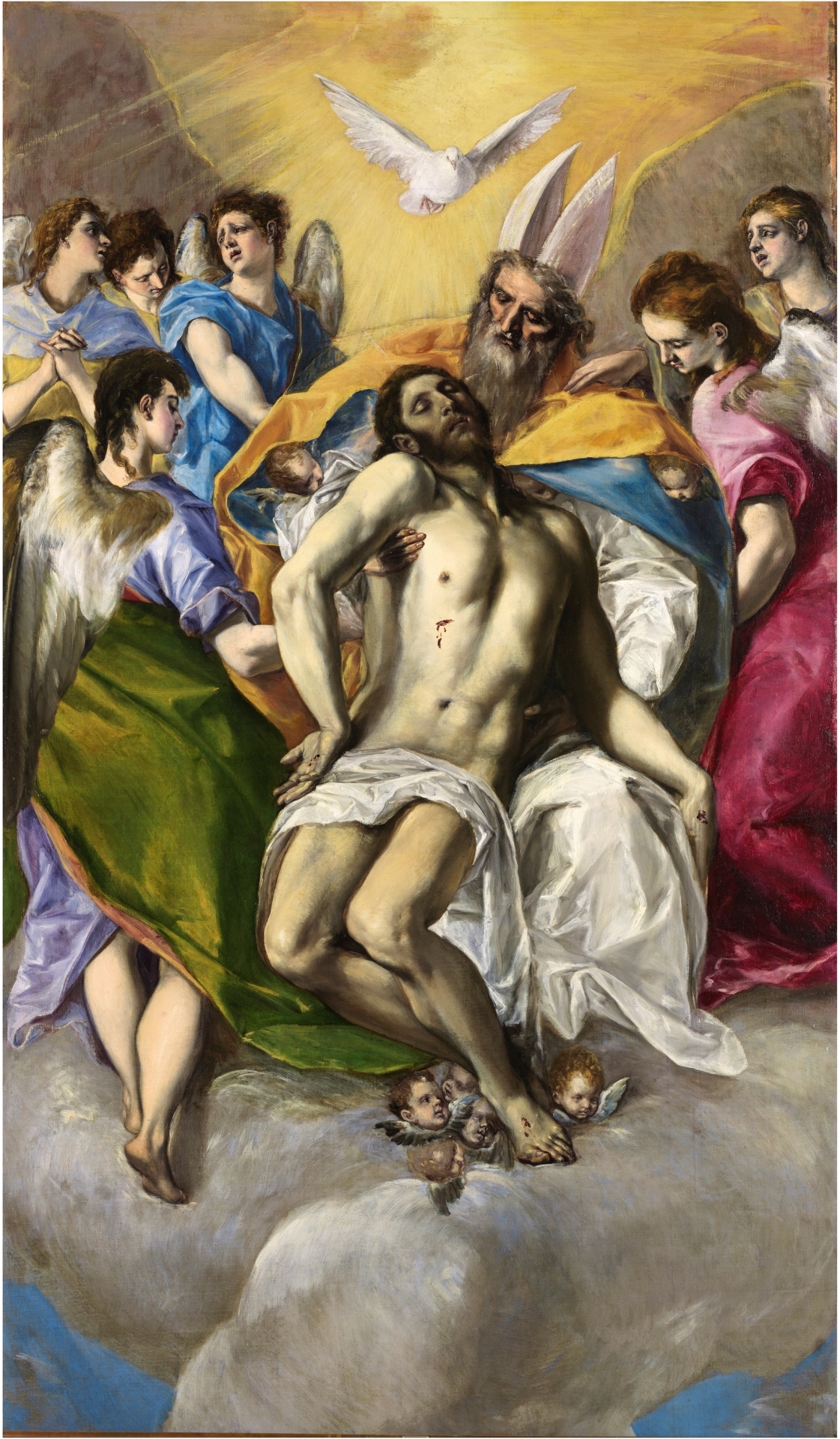
What can this Sunday mean, what should we be thinking about, saying. Trinity Sunday. The only Sunday dedicated to a doctrine, a teaching of the Church.  All the other feasts are commemorations of an event: Christmas, Epiphany, Good Friday, Easter, the Ascension, Pentecost.  But this feast is different: this is a celebration of the God we believe in, not in some abstract and idealistic way, but as who God is.  How many times have we said the Gloria Patri, Glory be to the Father and to the Son and to the Holy Spirit?  We say it automatically, without thinking, but this brief prayer of praise contains our understanding of God as Father, Son and Holy Spirit.  This is the doctrine of the Trinity, the teaching about God, but where did this come from?  It did not come from a Council or from a theology book. It came from the early Church’s experience of God.  God as the Father, the one who created all things, the one who made us in the image of God, the Father who tends and loves his children:  this we inherited and affirm with our Jewish brethren.  This is indeed the God of the Old Testament.

New scientific article on the the risk of Covid infection at Mass

Cross-posted from the FIUV.

Sergey Budaev, "Safety and Reverence: How Roman Catholic Liturgy Can Respond to the COVID-19 Pandemic" Journal of Religion and Health (2021), published 24th May 2021.

Among many interesting observations of this article, which cites a great many studies, is that while reception on the tongue does not appear to be more dangerous than reception in the hand, reception kneeling is clearly preferable to reception standing. We reproduce a key passage below; the whole article can be read here (or download the pdf here).

The Holy Species used in the Latin Rite is nearly dry and therefore is likely to have low adhesion of outside particles, further reducing the infectious risk. While receiving the Holy Bread, the communicant normally extends the tongue forward, requiring to hold breath for a while. This reduces possible respiratory output. The traditional manner of receiving Communion on the tongue is therefore unlikely to incur a high risk of infection transmission.

The Wonderful FSSP Community in Phoenix, Arizona (Updated)


In the past few days, some readers have asked us about the spiritual health of the Fraternity of Saint Peter's community in Phoenix, Arizona. 


The FSSP has been in Phoenix since 2004, where they have created with so many local faithful and the support of successive bishops the Mater Misericordiae parish.


Unfortunately, as in all religious communities, there is the occasional disgruntled parishioner -- and if such a parishioner has many followers online, he or she can give the wrong impression about the congregation. That has recently happened with Mater Misericordiae, and we reached to our readers to send their testimonies of life in that community. What we gather from what we received is that this is a spiritually healthy and strong congregation of people deeply devoted to Almighty God, His Church, His Mother, and His Sacraments.


***


From a Catholic couple:


My family and I have been parishioners at Mater Misericordiae in Phoenix for over 3 years. In that time Fr. Passo has been a true spiritual father to our family. 

THE COUNCIL AND THE ECLIPSE OF GOD - PART X - by Don Pietro Leone : THE CHURCH AND THE NON-CATHOLIC CHRISTIANS


If one wishes to understand more fully the Catholic doctrine “Extra Ecclesiam Nulla Salus” and the death of the authentic Catholic missionary spirit in the subsequent decades after the Council,  this installment from Don Pietro Leone’s  The Second Vatican Council and the Eclipse of God” is a must read and well worth the effort of following his painstaking argumentation, which uncovers the insidious false piety, sentimentality and deceit of language found in the documents regarding the Church’s ecumenical association with  non-Catholic Christian denominations, in decrees such as Lumen Gentium and Unitatis Redintegratio.                    F.R.


THE COUNCIL AND THE ECLIPSE OF GOD 


by 


Don Pietro Leone 


PART X


II  THE CHURCH AND THE NON-CATHOLIC CHRISTIANS


     Historical Background [1]


Ecumenism was born in Protestant missionary circles, where the multiplicity of confessions created grave problems for proselytism. In 1919 the Holy Office enforced the prohibition of Bl. Pius IX (of 1864) to participate in ‘public and private talks organized by non-Catholics that propose to promote the union of all groups calling themselves Christian’ [2]. Despite this prohibition, Ecumenism began to infiltrate the Catholic Church through the initiatives of various groups and individuals, the more important of which we shall proceed briefly to sketch.


Lord Halifax 

Between 1921-6, at the instigation of Lord Halifax and one Father Portal, a series of meetings between Catholics and Anglicans known as ‘The Conversations of Malines’ were held in the house of Cardinal Mercier in Belgium. One of the participants in these colloquies was Dom Lambert Bauduin, who, after having promoted the Liturgical Movement, now threw himself into that of Ecumenism, founding the Monastery of Chevetogne in Belgium in 1925. His monks were to ‘de-Romanise’ themselves and open up to ‘dialogue’ with the Anglicans and Orthodox.  One Father Paul Couturier, after visiting the community, introduced into his own community a prayer intention, not for bringing dissident Christians back to the One True Church, as had hitherto been the Catholic practice, but rather for creating a new spiritual ‘unity’ between the different Christian confessions in the name of a ‘convergence towards Christ’. 


URGENT: Pope tells Italian Bishops he plans to abolish the motu proprio Summorum Pontificum (Updated)

Update (May 26): Rorate's additional sources in Rome have confirmed this Wednesday that Francis has indeed a text on Summorum Pontificum lined up, which has been developed for months, but what is not known at this point is if the text is just about a more limited take on the Summorum application questionnaire (first revealed by us in the spring of 2020) or about an overhaul of Summorum Pontificum in general: drafts could be dealing with both matters. It is also not impossible for a text to come out of calculated ambiguity, in the general denial/non-denial terms favored by this pontificate.

 ***


An urgent news item by our friends at Messa in Latino, the Pope spoke on the matter yesterday to the Italian bishops during the portion of the Italian Conference of Bishops' meeting in which the assembly was closed to the media:


It is, for the moment, still fragmentary news, coming from our multiple sources within the CEI [Italian Conference of Bishops] and bishops, but it seems that yesterday (May 24, 2021) the Pope, addressing the Italian bishops at the opening of the annual assembly of the CEI ( and in a subsequent meeting with a group of them), announced the imminent reform for the worse of the Motu proprio Summorum Pontificum.


...

From what is known, it would be a return to the indult -- with a prior authorization of the bishop [as under the motu proprio Ecclesia Dei], or of the Vatican -- with all that it entails, that is, a reintroduction of the prohibition of the celebration according to the Missal of St John XXIII, so many denials of authorizations, and the ghettoization, in practice, of the priests and faithful attached to the old rite. After Moses, the Liberator, Pharaoh returns. [Source]

Fontgombault Sermon for Pentecost: If God rests in a heart, then this heart rests in God, and it is at peace.


Homily of the Right Reverend Dom Jean Pateau
Abbot of Our Lady of Fontgombault
Fontgombault, May 23rd, 2021
Illumina cor hominum.
Illuminate men’s hearts.
(Hymn of Wednesday Vespers)


Dear Brothers and Sisters,

My dearly beloved Sons,


The feast of Pentecost, through the great richness of its texts, and the outstanding beauty of its melodies, evokes with a great liturgical simplicity the coming of the Holy Spirit on the Apostles, gathered in the Cenacle with Mary. A mighty wind fills the whole house. Tongues as of fire appear, part themselves, and sit upon the head of each of the disciples. These begin to speak with different tongues, according to what the Holy Spirit gives them to speak.

Obviously, these phenomena are not limited to the sole room of the Cenacle. A crowd gathers outside, drawn by the noise, and curious to see what is happening. Inhabitants of Jerusalem, devout Jews coming from all the nations, are bewildered because all of them can hear the words of the disciples in their own tongue. They bear witness to what the disciples are proclaiming, “the wonders of God.”

After having meditated on the Lord’s resurrection, the cause of our salvation, the events taking place this morning in the Cenacle should lead us to desire a new Pentecost. The liturgy, for that matter, urges us to call for it, “Veni, Come.”

The Demographic End of Catholic Europe

 Slow, and then sudden, as all great demographic changes in history. The post-war generations' war on morals, marriage, and unborn babies has reached breaking point:


In Capracotta, a small town in southern Italy, a sign in red letters on an 18th-century stone building looking on to the Apennine Mountains reads “Home of School Kindergarten” — but today, the building is a nursing home.

Residents eat their evening broth on waxed tablecloths in the old theater room.

“There were so many families, so many children,” said Concetta D’Andrea, 93, who was a student and a teacher at the school and is now a resident of the nursing home. “Now there is no one.”

The population in Capracotta has dramatically aged and contracted — from about 5,000 people to 800. The town’s carpentry shops have shut down. The organizers of a soccer tournament struggled to form even one team.

About a half-hour away, in the town of Agnone, the maternity ward closed a decade ago because it had fewer than 500 births a year, the national minimum to stay open. This year, six babies were born in Agnone.

“Once you could hear the babies in the nursery cry, and it was like music,” said Enrica Sciullo, a nurse who used to help with births there and now mostly takes care of older patients. “Now there is silence and a feeling of emptiness.”

In a speech last Friday during a conference on Italy’s birthrate crisis, Pope Francis said the “demographic winter” was still “cold and dark.” [Source]


It's over. But a new beginning will rise from the faithful Catholic families we see all around us. Veni, Creator Spiritus!

"On the Marian Nature of the Extraordinary Form" - Guest op-ed by Fr. Matthew MacDonald

Fr. Matthew MacDonald
Archdiocese of New York

As COVID precautions slowly change across the United States, many bishops are beginning to reinstitute the obligation to attend Sunday Mass in their dioceses and encourage the faithful to return. Some are indeed returning with longing to receive Our Lord in the Eucharist. Still, the suppression of Mass accelerated a certain ecclesiastical decay and liturgical distortion that was already happening within the life of the Church. With not only a loss of belief in the Real Presence but also a pre-existing crisis of faith brought about by various liturgical, theological, and ecclesial abuses, as well as a failure to evangelize; many younger people raised Catholic may not indeed return to the Church. Many pastors and bishops wonder where to start in this storm to reach out to the disaffected Catholics and help bring them back to the Church.

The Eastertide Collects in the Post-Vatican II Missal: A Problematic Reform

One obvious difference between the two Eastertides of the usus antiquior and usus recentior is the size of each of them. The 1962 Missal has proper Masses for each Sunday after Easter, as well as each day in the Octave of Easter and for the Ascension. In the 2008 Missal, however, all the Sundays and weekdays within Eastertide have proper Masses assigned to them, with collects unique to each day. [1]

Given this, one might have thought that the corpus of Eastertide orations in the older Missal would have been carried over directly into the newer Missal, and supplemented with other Eastertide prayers from the vast repository of the Church’s liturgical tradition. However, as seems to be the case with so much of the post-Vatican II reforms, this is at best only half-true. Some prayers have been edited in ways completely unknown in their manuscript history; others with a long tradition of use in particular times of the liturgical year have been moved to where they have never been used before; still others have been freely combined with one or more other prayers to create novel and original texts.

REPOST: For the Feast of Our Lady of Fatima May 13, 2021: Don Pietro Leone: The Council and the Eclipse of God – PART IX: how the Minimalists sought to ‘minimize’ Our Lady’s role in the Church and the outcome of the battle that ensued to consecrate the world to Her Immaculate Heart.


N.B. This is a repost of the article published May 13  which ‘disappeared’   from the site by some strange technological act, unknown to us at RC, which I modified by taking out some images and the Italian Medieval hymn to Our Lady.    F.R.


Detail of a mosaic on the façade of Il Duomo in Siena


D.    Our Blessed Lady


Our Blessed Lady is, as we have noted above, at the same time the most glorious member of the Church, and Her model.


i) ‘To Us it seems that we should resolutely dissent from those prophets of doom (profeti di sventura), who always announce the worst, as though the end of the world was coming. In the present state of human events, in which humanity appears to be entering into a new order of things, there are to be seen rather the mysterious plans of Divine Providence’ (Gaudet Mater Ecclesia, opening speech of the Council by Pope John XXIII).

Cardinal Burke interview to Paix Liturgique: In the U.S., Catholic blogs have contributed to the success of Summorum Pontificum


Paix Liturgique: The poll we commissioned indicates that the number of practicing American Catholics who are aware of the motu proprio [Summorum Pontificum] is higher than 72%, which is an important number.


Cardinal Burke: I would say that, in the US, the knowledge that there are now two forms of the rite of the Mass is very high. This is explained by the fact that, when the motu proprio Summorum Pontificum was published in 2007, this document was widely presented and commented in the press. Additionally, there are numerous Catholic blogs with a very important audience in the United States. I think of Rorate Caeli, or Father Z, or OnePeterFive. These very active blogs are very favorable to the Traditional liturgy, which has had great relevance in the popularization of the ancient liturgy, even outside "traditionalist" circles. Therefore, I am not surprised that 72% of practicing [Catholics] are aware of the existence of the motu proprio Summorum Pontificum.


From the interview granted by Cardinal Raymond Burke to the venerable French association in defense of the liturgy "Paix Liturgique", published this week (we will publish a full translation shortly). 

 We would just like to thank Cardinal Burke for the kind words: we are humbled by them, and we thank Almighty God and the Blessed Lady for any contribution we may have made for the greater glory of God. We could say "nunc dimittis" and be happy with what was accomplished.

130th Anniversary of RERUM NOVARUM: "Laws only bind when they are in accordance with right reason, and, hence, with the eternal law of God."

One year into the turmoil set in place by the irresponsibility of the Communist Party of China, at a moment in time in which governments are destroying common sense and employment more violently than ever witnessed in the history of mankind (with the best of intentions, as is always the case...), it is urgent to remember the lessons of Pope Leo XIII on the 130th anniversary of the most influential encyclical ever published: Rerum Novarum. 


It is surely undeniable that, when a man engages in remunerative labor, the impelling reason and motive of his work is to obtain property, and thereafter to hold it as his very own. If one man hires out to another his strength or skill, he does so for the purpose of receiving in return what is necessary for the satisfaction of his needs; he therefore expressly intends to acquire a right full and real, not only to the remuneration, but also to the disposal of such remuneration, just as he pleases. Thus, if he lives sparingly, saves money, and, for greater security, invests his savings in land, the land, in such case, is only his wages under another form; and, consequently, a working man's little estate thus purchased should be as completely at his full disposal as are the wages he receives for his labor. But it is precisely in such power of disposal that ownership obtains, whether the property consist of land or chattels. Socialists, therefore, by endeavoring to transfer the possessions of individuals to the community at large, strike at the interests of every wage-earner, since they would deprive him of the liberty of disposing of his wages, and thereby of all hope and possibility of increasing his resources and of bettering his condition in life.

Freedom: Secular and Catholic. The Crisis and Where do we go from here?


To read and re-read St. Augustine’s Confessions is not only to confront the intensely personal story of a conversion to God and to the Catholic Church It is always as well a reminder of the messiness of human freedom.  No one else, at least for me, has portrayed with greater clarity and insight the war that goes on in the human heart, not only between the will and reason, but also the war that goes on in the will itself.  Few others have been able to show clearly the complexity of desire, will and reason that makes up the human mind, soul and heart.  If one follows Augustine all the way to the City of God, one sees him struggle mightily with the question of free will and human freedom.  Even at this point in his life, one is always aware that human freedom, whether defined in a secular or religious way is messy. If one looks at human history one sees  attempt after attempt to get rid of the messiness that is part of human freedom in a fallen world.  And all those attempts have failed, for they deny the reality that is man.

‘The Council and the Eclipse of God’ - PART IX. On this Feast of Our Lady of Fatima, Don Pietro Leone describes how the ‘minimalists’ sought to ‘minimize’ Our Lady’s role in the Church as well as addressing the battle that arose to consecrate the world to Her Immaculate Heart.


Detail of a mosaic on the facade of the Cathedral in Siena, Italy


D.    Our Blessed Lady


Our Blessed Lady is, as we have noted above, at the same time the most glorious member of the Church, and Her model.


 i) ‘To Us it seems that we should resolutely dissent from those prophets of doom (profeti di sventura), who always announce the worst, as though the end of the world was coming. In the present state of human events, in which humanity appears to be entering into a new order of things, there are to be seen rather the mysterious plans of Divine Providence’ (Gaudet Mater Ecclesia, opening speech of the Council by Pope John XXIII).


The phrase ‘the prophets of doom’ in text (i) refers, as the Pope had explained a little before, to those who take a pessimistic view of contemporary society, amongst whom it is reasonable to understand those who upheld the message of Fatima. Pope John had read the third secret of Fatima in 1959. It contained three parts: in the first a vision of Hell into which many souls were seen to fall; in the second the end of the First World War was prophesied, as well as the outbreak of a Second World War and the diffusion of communism if the world did not convert. The remedy was also given, that is the devotion to the Immaculate Heart of Mary; the third part contained a vision of the death of the Pope, of the hierarchy, clergy, and faithful [1].


The Pope commented: ‘It does not concern the years of my pontificate’ [2]. Professor de Mattei gives as the Pope’s motive for not publishing the third secret: ‘the strident contrast between ‘the prophets of doom’ of the message of Fatima, and the optimistic, prophetic stance of the new Pontiff who inaugurated the Second Vatican Council.’


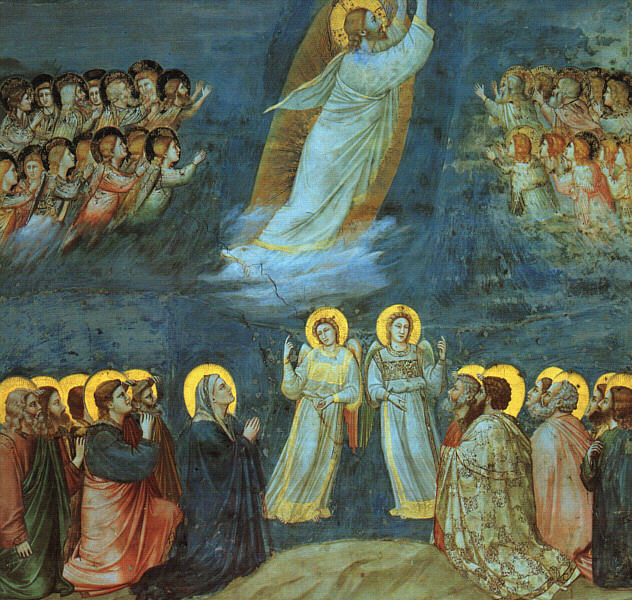
Fontgombault Sermon for the Ascension: "In the name of pseudo-synodal approaches, members of the Church stray away from the One True Shepherd"


Sermon of the Right Reverend Dom Jean Pateau 
Abbot of Our Lady of Fontgombault
Fontgombault, May 13, 2021

Dear Brothers and Sisters, 
My dearly beloved Sons, 

When we entered the Paschal mystery’s celebration, on Maundy Thursday evening, we heard the last, intimate words the Lord addressed to His disciples, as all of them were going to forsake their Master and leave Him to His passion and death. 

Today, we are witnessing another separation. The times have changed. The guards have receded. The disciples would like to remain with their Master, and keep Him with them. The fact that they are gazing intently into the sky as He goes away bears witness to that. Yet, the Lord now has to depart. 

Benedict XVI: The prophetic mission of Fatima is not complete


In seven years you will return here to celebrate the centenary of the first visit made by the Lady “come from heaven”, the Teacher who introduced the little seers to a deep knowledge of the Love of the Blessed Trinity and led them to savour God himself as the most beautiful reality of human existence. This experience of grace made them fall in love with God in Jesus, so much so that Jacinta could cry out: “How much I delight in telling Jesus that I love him! When I tell him this often, I feel as if I have a fire in my breast, yet it does not burn me”. And Francisco could say: “What I liked most of all was seeing Our Lord in that light which Our Mother put into our hearts. I love God so much!” (Memoirs of Sister Lúcia, I, 42 and 126).


Brothers and sisters, in listening to these innocent and profound mystical confidences of the shepherd children, one might look at them with a touch of envy for what they were able to see, or with the disappointed resignation of someone who was not so fortunate, yet still demands to see. To such persons, the Pope says, as does Jesus: “Is not this the reason you are wrong, that you know neither the Scriptures nor the power of God?” (Mk 12:24). The Scriptures invite us to believe: “Blessed are those who have not seen and yet have come to believe” (Jn 20:29), but God, who is more deeply present to me than I am to myself (cf. Saint Augustine, Confessions, III, 6, 11) – has the power to come to us, particularly through our inner senses, so that the soul can receive the gentle touch of a reality which is beyond the senses and which enables us to reach what is not accessible or visible to the senses. For this to happen, we must cultivate an interior watchfulness of the heart which, for most of the time, we do not possess on account of the powerful pressure exerted by outside realities and the images and concerns which fill our soul (cf. Theological Commentary on The Message of Fatima, 2000). Yes! God can come to us, and show himself to the eyes of our heart.

Francis' motu proprio "Antiquum Ministerium", instituting the "ministry of Catechist"

APOSTOLIC LETTER

ISSUED "MOTU PROPRIO"
BY THE SUPREME PONTIFF

FRANCIS

"ANTIQUUM MINISTERIUM"

INSTITUTING
THE MINISTRY OF CATECHIST


1. The ministry of Catechist in the Church is an ancient one. Theologians commonly hold that the first examples are already present in the writings of the New Testament. The service of catechesis may be traced back to those “teachers” mentioned by the Apostle in writing to the community of Corinth: “Some people God has designated in the Church to be, first, apostles; second, prophets; third, teachers; then, mighty deeds; then, gifts of healing, assistance, administration, and varieties of tongues. Are all apostles? Are all prophets? Are all teachers? Do all work mighty deeds? Do all have gifts of healing? Do all speak in tongues? Do all interpret? Strive eagerly for the greatest spiritual gifts. But I shall show you a still more excellent way” (1 Cor 12:28-31).

Don Pietro Leone: The Council and the Eclipse of God – PART VIII: THE CHURCH: Holy, Catholic, Apostolic


In this installment we see how the Modernists attack the supernatural dimension of the Church, treating Her as a purely natural society prone to sin, being no more than the sum of its parts, having no claim to possess more truth than any other human society and no claim moreover to possess truth which is immutable, let alone a Divine Mandate to proclaim it to the whole world, so that the whole world might be saved.        F.R.                                                                                                                  


 2.     THE CHURCH IS HOLY


Catholic Tradition teaches that the Church is holy in:


-         Her Founder and invisible Head that is Christ;

-         Her Soul that is the Holy Spirit;

-         Her origins in the open side of Our Blessed Lord on the Cross;

-         Her possession of all the means of sanctification (i.e. the whole Faith and all Sacraments)

-         Her Goal: the glorification of God through the sanctification of mankind;

-        The Faith, Hope, and Charity of Her members.


The Council opposes Tradition in regard to the last of these doctrines, namely the holiness of the members of the Church. It teaches:

Reminder: Rorate Caeli Purgatorial Society


This is our monthly reminder to please enroll Souls of the Rorate Caeli Purgatorial Society.  The Society now stands at 110 priests saying weekly or monthly traditional Latin Masses for the Souls. 

** Click here to download a "fillable" PDF Mass Card in English to give to the loved ones of the Souls you enroll (you send these to the family and/or friends of the dead, not to us). It's free for anyone to use. CLICK HERE to download in Latin and CLICK HERE to download in Spanish

Priests: The Souls still need more of you saying Mass for them! Please email me to offer your services. There's nothing special involved -- all you need to do is offer a weekly or monthly TLM with the intention: "For the repose of the Souls enrolled in the Rorate Caeli Purgatorial Society." And we will always keep you completely anonymous unless you request otherwise. 

How to enroll souls: please email me at athanasiuscatholic@yahoo.com and submit as follows: "Name, State, Country." If you want to enroll entire families, simply write in the email: "The Jones family, Ohio, USA". Individual names are preferred. Be greedy -- send in as many as you wish and forward this posting to friends as well.

From Gregorian Chant to Alleluia of the Lightbulbs: The "Notes" of Modern Churches

 On what “Notes” do Modern Churches Arise?


By Stefano Chiappalone   (From Alleanza Cattolica)


A society that is incapable of lyricism can only build edifices that are ascetic.  But a letter written by the author of The Little Prince offers the starting point to reawaken that lost spiritual sense from which sprung abbeys and cathedrals in the light of the nexus between music and architecture.

Walking Pilgrimages: July in Spain, August in England

Although the Chartes Pilgrimage will not be taking place as normal in 2021, a victim in part of its taking place relatively early in the year as we emerge from epidemic restrictions, I'm delighted to bring to a wider public information about a traditional walking pilgrimage in northern Spain, 24th to 26th July, 2021, which everyone should be able to join.

I should also mention that the the Latin Mass Society's annual walking pilgrimage to Walsingham is also open for booking. The dates for this are 26th to 30th August. See here for information and registration.

Nothing will make you feel like a human being and a Catholic again quite like participation in a three-day walking pilgrimage!

Here is more information about the Spanish pilgrimage, which has the support of Una Voce Seville.

The Republic of Ireland: the Anti-Catholic Tyranny removes children from Traditional Catholic Man who filmed their invasion of Church during Mass

 Just last week, we retweeted this astounding event: the Police of the Irish Republic, the Garda, invaded a church (Society of St. Pius X) while Holy Mass was being celebrated, with a handful of people inside.


No respect for the Blessed Sacrament, for the building, for anything:


As if that absurdity, under the banner of "health", were not enough, the Garda this past weekend paid a visit to the man who filmed their tyrannical action, our fellow traditional Catholic Pat Sweeney, and took away his children. Yes, you read that correctly. See below:


That is it: all Catholics worldwide must do all they can: contact embassies, Irish authorities, and the Garda itself. This anti-Catholic dictatorship must end now.

May, a Very Special Month:
EGO FLOS CAMPI
ET LILIUM CONVALLIUM


IESUS - MARIA - IOSEPH

Jesus, Lily of the Valleys
Mary, Queen of May
Joseph, Patron of Laborers

Orate pro nobis!

***

Chalice - Lily. The chalice is the lily, stylized and adapted to our use, and which, born from water, is proper for us to take to our lips.

The lily, and especially the water-lily, also called lotus or nenuphar, has always had a peculiar place in the symbolism of all religions. It projects its roots to substantial and deep regions, separated from our sight by these fluid, contemplative, mirror-like layers which are the domain of that which is contingent, unstable, of illusion and of this "time", of this reflection which relates to several circumstances.

William Shakespeare and the Heart of His Mystery - PART II - by Elizabetta Sala


SHAKESPEARE:   THE HEART OF HIS MYSTERY - PART II


by


Elizabetta Sala


'The Plot Thickens'


(Or How More Pieces Fit Into The "Shakespeare Was Catholic" Puzzle) 


Sir John Gilbert's 1849 painting: The Plays of William Shakespeare -  420 scenes and characters from several of William Shakespeare's plays.


Let’s examine some other clues of dissidence in his works. For example: why does Shakespeare fill his classical plays with anachronistic elements such as abbeys, churches, bell-towers and monasteries? In the Comedy of Errors, to cite one, an abbey right next to  “graves” makes topical reference to a place of execution. It has a definite importance because in the 1930s it was discovered that the setting was exactly the same as that next to the first theatre Shakespeare worked in: there, following the defeat of the Armada, a Catholic priest was executed for the mere fact  that he was one. Could Shakespeare be paying tribute to a martyr? 


Robert Southhall,  a martyr  Saint under the Elizabethan regime. Shakespeare was influenced by his writings.


Priests were hunted by the regime and automatically guilty of high treason simply for their presence on English soil: this is what happens to the unfortunate merchant in the Errors: in this sense it is of  distinct importance that “merchant” was a code-word for “missionary”. Obviously, the references were more explicit for those knowing how to identify them, while they could pass almost unnoticed by inattentive eyes and ‘untrained ears’. 


The Comedy of Errors:  Duke Solinus, ruler of Ephesus, presides over the trial of the unfortunate merchant,  Egeon of Syracuse. Syracusians were not allowed in Ephesus, so Egeon has been detained. (engraving)


*****

What do the unanswered criticisms of Amoris Laetitia teach us today?

(Roberto de Mattei) Five years ago, on 8 April 2016, the post-synodal Apostolic Exhortation Amoris Laetitia, the most controversial document of Pope Francis’ pontificate, was published. This document is the outcome of a process initiated by Walter Cardinal Kasper’s intervention in the February 2014 consistory. Cardinal Kasper’s thesis on how the Church should renew its marriage praxis formed the leitmotif of the two synods on the family in 2014 and 2015. Unfortunately, the final exhortation Amoris Laetitia turned out to be even worse than Cardinal Kasper’s report. While the German cardinal had asked some questions, Amoris Laetitia offered the answer, opening the door to remarried divorcees and implicitly authorising more cohabitations. This is why, in 2017, philosopher Josef Seifert went so far as to say that Amoris Laetitia “has the logical consequence of destroying the entire Catholic moral teaching”.

Don Pietro Leone: The Council and The Eclipse of God - PART VII : The Four Notes of the Church


In this installment, Don Pietro addresses the Council’s attack on the Four Notes of the Church.  Here he looks at the Church’s Oneness or Unity and explains how the Council attacked this Dogma in four ways.                                                                             F.R.


THE COUNCIL AND THE ECLIPSE OF GOD


By

DON PIETRO LEONE


PART VII


A.  The Four Notes of the Church


The Four Notes, or defining characteristics, of the Church are Her Oneness, Holiness, Catholicity and Apostolicity, infallibly professed in the Creed as follows: ‘I believe in one Holy, Catholic and Apostolic Church.’ We shall show how the Council casts doubt on each of these Notes in turn.


The Four Notes of the Church

EVENT: Ars Celebrandi, World's Largest Traditional Liturgy Workshop, to take place in 2021

 The Shrine of Our Lady of Lichen, in Poland, is to host once again this year* ARS CELEBRANDI, the largest global workshop for the Traditional Roman Liturgy. (Registrations available here.)


As in previous editions, Ars Celebrandi should include the following events:

In Memoriam: William Shakespeare: April 23 , 1564 - April 23, 1616 - The Heart of His Mystery by Elizabetta Sala


Shakespeare: The Heart of His Mystery 


by


Elizabetta Sala


Part I 


 The Elusive Catholic


Coleridge coined the adjective “myriad-minded” to describe Shakespeare, since his genius is not completely comprehensible, neither explicable nor inscribed to the scheme of a culture or an age. Like the smile of the Mona Lisa, from whatever angle you view it, there is always something elusive.


In a famous excerpt from Hamlet, his two ‘traitor-friends’, Rosencrantz and Guildenstern, are trying to induce the Prince into revealing his secret: he, being much smarter than both of them, evades their enquiries with great nonchalance and says openly that they will never be able to pluck out “the heart of his mystery” (Hamlet 3.2,):  is the playwright speaking here in the first person, challenging a too simplistic interpretation?  If so, who are Rosencrantz and Guildenstern?


Government as an Occupying Force - Guest Article by John Andra

When I read the following article in the March 31, 2021, issue of The Remnant, I knew that it had to be shared with a wider audience online. Editor Michael Matt kindly gave his permission to republish it at Rorate Caeli, for which we thank him very much.—PAK


Government as an Occupying Force
by
John Andra


SARS-CoV-2, like other respiratory viruses, lives in the human environment. It does not live in the natural environment—in lakes, trees, mountains, etc. On the rationale of protecting us, the government has moved into the spaces where the virus lives. The government is thus an occupying force in the human environment

Good Shepherd Sunday Sermon: "When you want to go to a given place, the difficulty of the road cannot divert from this desire." (St. Gregory the Great)


Sermon of Gregory, Bishop of Rome
Saint Peter's Basilica
February 7, 591*

John 10: 11-16


You have heard, dear brothers, the instruction which is addressed to you by the reading of the Gospel; you have also heard the danger that we run. Here indeed is he who is good, not by accidental grace, but by essence, declares, "I am the Good Shepherd." And giving us the pattern of goodness that we must imitate, he adds: "The Good Shepherd gives his life for his sheep. "He did what he taught us; he showed what he commanded us. The Good Shepherd gave his life for his sheep to the point of changing his body and blood into a sacrament for us, and to satiate with the food of his flesh the sheep he had redeemed.

He has traced us the path of contempt for death, so that we may follow it; he has set before us the model to which we must conform: first to spend our external goods in all charity for the sheep of the Lord, and if necessary, to give even in the end our life for them. The first form of generosity, which is less, leads to the latter, which is higher. But since the soul, by which we live, is incomparably superior to the earthly goods we possess abroad, how can one who does not give his goods to his sheep be willing to give his life for them?

Don Pietro Leone: The COVID 19 Vaccination Debate: Chains of Evil


Today, Rorate would have been posting the next installment of the series from the book “The Council and the Eclipse of God” had Don Pietro not sent us his contribution to the ongoing debate on the CoronaVirus vaccination. It’s not too short and not too long and as usual beautifully written from the perspective of moral theology. Don Pietro’s love for God, Souls and Truth are paramount, as is evident in this article,  a 'must read' for those seeking guidance in this important matter of  the Covid 19 vaccines.   Devastating  is his list  of the 10 evils behind the production of these vaccines.           

"THE ROMAN SPIRIT: This is what we need!" - by Roberto de Mattei

Lateran Basilica


The Roman Spirit is something that one breaths in only in Rome.  The “sacred city” par excellence, the center of Christianity, the eternal fatherland of every Catholic, who is able to repeat with Cicero, “civis romanus sum”, claiming a spiritual citizenship that has as its geographical boundaries not that of a city but that of an Empire:  not the Empire of the Caesars, but that of the Church, Catholic, apostolic, and Roman.

Jesuit calls for ban on young Catholics at Latin Mass

It is always an eye-opener to read the latest thoughts from the Catholic left, who are often pro-choice as a matter of principle unless the choice runs contrary to their ideology.

Jesuit Father Thomas Reese, former editor-in-chief of America magazine (until Pope Benedict helped resolve the situation) has remained an often-quoted source for (dare I say, lazy) mainstream media reporters, and has written a column for Religion News Service. He is pictured below with the rest of the Jesuit community at Gonzaga High School in Washington, D.C. (yes, this is actually their website's group photo) seated, second from the left.


In his latest manifesto, Reese not only calls for overturning Summorum Pontificum, he states: