Rorate Caeli

God is Love, in past papal documents. III - Pius XI

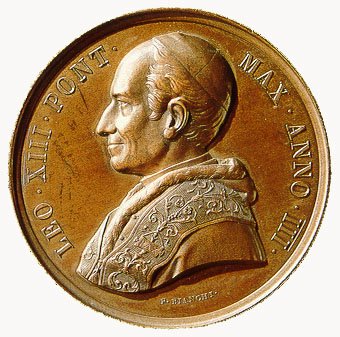
After having read about the mystery of Divine Love in the person of Our Lord (I - Saint Pius X) and active through His Only Church (II-Leo XIII) in this special series of texts on Divine Love and Christian Charity as seen by the Popes of the past, it would be negligent not to mention the duty of every Christian towards the needy, a sign of justice but, above all, a sign of love. How many problems in the world are not caused by the excess of self-indulgence of all kinds?
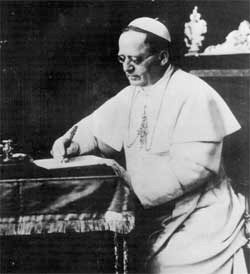
In his brilliant Encyclical against atheistic Communism, Divini Redemptoris, Pius XI reminded Christians that the advance of anti-Christian ideologies is also caused by our own dereliction of the duty of Charity, a love that must be lived as the incarnate King of the Universe Himself lived, loving His friends even unto death; Divine Love acting, thus, through the members of Christ's Mystical Body.

How many of us shall be cast among the damned for failing to heed the Divine call of charity?


...When on the one hand We see thousands of the needy, victims of real misery for various reasons beyond their control, and on the other so many round about them who spend huge sums of money on useless things and frivolous amusement, We cannot fail to remark with sorrow not only that justice is poorly observed, but that the precept of charity also is not sufficiently appreciated, is not a vital thing in daily life.

We desire therefore, Venerable Brethren, that this divine precept, this precious mark of identification left by Christ to His true disciples, be ever more fully explained by pen and word of mouth; this precept which teaches us to see in those who suffer Christ Himself, and would have us love our brothers as Our Divine Savior has loved us, that is, even at the sacrifice of ourselves, and, if need be, of our very life.

Let all then frequently meditate on those words of the final sentence, so consoling yet so terrifying, which the Supreme Judge will pronounce on the day of the Last Judgment: "Come, ye blessed of my Father . . . for I was hungry and you gave me to eat; I was thirsty and you gave me to drink . . . Amen, I say to you, as long as you did it to one of these my least brethren you did it to me." And the reverse: "Depart from me, you cursed, into everlasting fire . . . for I was hungry and you gave me not to eat; I was thirsty and you gave me not to drink . . . Amen, I say to you, as long as you did it not to one of these least. neither did you do it to me."


To be sure of eternal life, therefore, and to be able to help the poor effectively, it is imperative to return to a more moderate way of life, to renounce the joys, often sinful, which the world today holds out in such abundance; to forget self for love of the neighbor. There is a divine regenerating force in this "new precept" (as Christ called it) of Christian charity. Its faithful observance will pour into the heart an inner peace which the world knows not, and will finally cure the ills which oppress humanity.

"Mirror, Mirror on the Wall"

What is the matter with Andrew Sullivan??? Can Andrew "Snow White" Sullivan only see himself reflected on the wall? It seems too much vice eventually turns into viciousness.

A Pope under siege - and the Silent Revolt of 2005-2006

From all sides, worrying signs of a Pope solemnly ignored -- this is the opinion expressed by Sandro Magister in his latest article for L'Espresso, transcribed here (in English).

Two main examples are set forth to argue for the existence of such a situation, both of which have been extensively covered in this blog: the dismissal, by the Neocatechumenal Way ("The Way") of the direct liturgical corrections demanded by the Congregation for Divine Worship, which caused the Pope to ask them for their obedience in the recent audience granted to the group; and the fact that the most important writings, including the epoch-making speech to the Curia of December 22, 2005, have taken weeks to appear in the Vatican website (only yesterday was the last translation in a major language, Portuguese, included in the website, ONE MONTH after the speech, when it can be safely ignored in view of the upcoming encyclical).

A more practical and profound aspect of this complete irrelevance to which the Roman Pontiff has been consigned by many of those who resist him (including many in positions of power inside the Church) seems to be, in my opinion, the Silent Revolt of 2005-2006, as it happened to another Pontiff who was subjected to this same kind of "Rebellion" (though not so silent) when Humanae Vitae was issued in 1968.

Well, perhaps a witch hunt was not exactly to be expected, at least immediately, after the release of the Protection of the Honor of the Priesthood Act, 2005 (known officially as Instruction concerning the criteria for the discernment of vocations). But, regardless of the intentions of Cardinal Grocholewsky and of the Pope, it seems clear that the reception of the Instruction among the Particular Churches has been just as resounding a failure as the rejection of Humanae Vitae in 1968.

While many orthodox Catholics were disillusioned with some aspects of the document (for instance, the three-chaste-years waiver), I was somewhat more confident; however, we are now supposed to believe that there were no problems whatsoever with seminaries around the world and that the much publicized "Apostolic Visitation" in America has found mostly good news. And, on the "reception" field, it seems Timothy Radcliffe's official version of the instruction has become the norm (gone are the days when champions of orthodoxy and orthopraxis headed the Dominicans, such as the great Cardinal Browne). Cardinal George has even revealed this week that "the United States bishops asked the Vatican to delay release of the long-awaited document on homosexuality and the priesthood".

Now, Truth does not depend on popularity or on "reception". The deeply disordered nature of the condition whose presence the Instruction was meant to bar from seminaries is still deeply disordered -- not the imaginary sin of "homophobia". And despite my confidence, I always knew that a document whose success depended mostly on the sincerity of problematic applicants and on the orthodoxy of vocation directors, spiritual directors, and seminary rectors would most likely be a resounding failure. That is how deep the crisis goes. A document without "teeth" was bound to be ignored.

And so the disastrous situation remains unchanged, not only in North America, but in Europe and in Latin America as well. The sickness and perversion which pervade many seminaries in South America and Southern Asia, according to trustworthy sources, would surprise most of us. I have learned from two trustworthy sources that, a few months after the election of Pope Benedict, a considerably large group of bishops of a certain Latin American country met to consider open revolt, a move which had to be appeased by a certain progressive German Cardinal (unfortunately, nothing else can be revealed, let the official Vaticanists search for the clues).

Will the Holy Father wither away, seemingly lost amidst the ruins, as Paul VI? I doubt it. Those who "resist" him shall not prevail and he really does have a plan for action -- not raucous action, but action nonetheless, and the fact that there is so much resistance to this pope and so much anger directed at him shows that he is on the right track.

-----------------
Update (9:35 AM GMT): First Things' Editor-in-chief has just released a long analysis of the question of the seminaries and the ignored Instruction (of which I had no knowledge when writing this post), part of the print magazine's February issue. I absolutely disagree with the word "Truce" (coined by Weigel) to characterize 2005 and especially 1968. There was no "truce" in 1968, when only one side gave up the fight... There was open and wide revolt, in America and elsewhere, by many faithful, by many priests, and by a considerable number of bishops and Episcopal Conferences (including the most vocal revolts in Canada, in France, in the Netherlands), open and guerrilla warfare which has never completely ceased (hence, no truce).

The fact that the author also mentions a possible "Lefebvrism of the left" indicates a deep misunderstanding of the nature of "progressive" dissent and, indirectly, an incorrect politicization of the complex Traditionalist situation (as if it were "of the right"), besides showing a fondness for stigmatization towards those who are the utmost Church-pacification priority of the Pope -- compare it with the carefulness the author shows towards the Evangelical sects ripping the Church apart in Latin America (see here, last item).

Subverting the law of nature

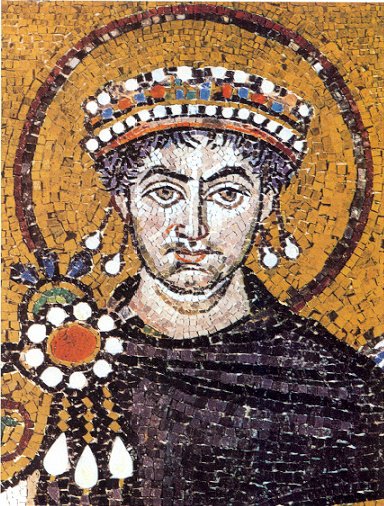
On November 23, 533, Emperor Justinian signed in the capital of the Empire, Constantinople, and ordered the publication of the introductory book to his Corpus Iuris Civilis (the basic text for most of Western Law), known as "The Institutes" (Institutiones).

The Institutes are not a legal code, but a textbook introduction to Roman Law, filled with important definitions. Though issued by a Catholic Emperor, the Institutes explain traditional, pre-Christian, concepts of Roman Law. As a textbook, the Institutes provide practical examples next to the legal definitions. For instance, this is its definition of Natural Law, illustrated by an example:

The law of nature is that law which nature teaches to all animals. For this law does not belong exclusively to the human race, but belongs to all animals, whether of the earth, the air, or the water. Hence comes the union of the male and female, which we term matrimony; hence the procreation and bringing up of children. We see, indeed, that all the other animals besides men are considered as having knowledge of this law.
The main example of Natural Law provided by those eminent Roman legal scholars charged by Justinian to write the Institutes is matrimony, the union of male and female. One must, therefore, go to the roots of Western Law to understand why it is so important for the most influential groups of the current age to subvert the foundations of common sense. For instance, as seen yesterday, when the European Parliament strongly urged the European Union's 25 member states to "ensure that same-sex partners enjoy the same respect, dignity and protection as the rest of society".

As the pope said last June:

Today, the various forms of the erosion of marriage, such as free unions and "trial marriage", and even pseudo-marriages between people of the same sex, are instead an expression of anarchic freedom that are wrongly made to pass as true human liberation. This pseudo-freedom is based on a trivialization of the body, which inevitably entails the trivialization of the person. Its premise is that the human being can do to himself or herself whatever he or she likes: thus, the body becomes a secondary thing that can be manipulated, from the human point of view, and used as one likes. Licentiousness, which passes for the discovery of the body and its value, is actually a dualism that makes the body despicable...

The Official Anti-"Homophobia" Resolution - Let the Persecution begin

While dechristianized Europe aborts and contracepts itself to death, the European Parliament has decided that its real priority is to combat "homophobia". A resolution against "homophobia", which has an advisory nature to all 25 national parliaments, was overwhelmingly approved yesterday, in one of its Strasbourg plenary sessions.

Some excerpts:

...A. whereas homophobia can be defined as an irrational fear of and aversion to homosexuality and of lesbian, gay, bisexual and transgender (LGBT) people based on prejudice, similar to racism, xenophobia, anti-Semitism and sexism,
B. whereas homophobia manifests itself in the private and public spheres in different forms such as hate speech and incitement to discrimination, ridicule, verbal, psychological and physical violence as well as persecution and murder, discrimination in violation of the principle of equality, and unjustified and unreasonable limitations of rights, which are often hidden behind reasons of public order, religious freedom and the right to conscientious objection,
C. whereas recently a series of worrying events have taken place in a number of EU Member States, as widely reported by the press and NGOs, ranging from banning gay prides or equality marches to the use by leading politicians and religious leaders of inflammatory, hat or threatening language, police failing to provide adequate protection or even breaking up peaceful demonstrations, violent demonstrations by homophobic groups, and the introduction of changes to constitutions to explicitly prohibit same-sex unions,
...
2.Calls on Member States to ensure that lesbian, gay, bisexual and transgender people are protected from homophobic hate speech and violence and ensure that same-sex partners enjoy the same respect, dignity and protection as the rest of society;

3.Urges Member States and the Commission to firmly condemn homophobic hate speech or incitement to hatred and violence, and to ensure that freedom of demonstration – guaranteed by all human rights treaties - is respected in practice;
4. Calls on the Commission to ensure that discrimination on the basis of sexual orientation in all sectors is prohibited ...
5. Urges Member States and the Commission to step up the fight against homophobia through education...
8. Calls on all Member States to take any other action they deem appropriate in the fight against homophobia and discrimination on grounds of sexual orientation and to promote and implement the principle of equality in their society and legal order;

9. Welcomes steps taken in several Member States recently to improve the position of LGBT people and resolves to organise a seminar for the exchange of good practice on 17 May (International Day against Homophobia);

10. Reiterates its request that the European Commission put forward proposals guaranteeing freedom of movement for Union citizens and their family members and registered partners of either gender...

11. Calls on the Member States concerned to finally fully recognise homosexuals as targets and victims of the Nazi regime;

12. Instructs its President to forward this resolution to Commission and to the Governments of the Member States and candidate and applicant countries. ...
More information in the Brussels Journal; (link here, provided by Le Salon Beige).

God is Love, in past papal documents. II - Leo XIII

The series begun with Saint Pius X is continued today with an excerpt from the encyclical of Pope Leo XIII on Our Lord Jesus Christ as Redeemer, the much-neglected Tametsi Futura Prospicientibus.

The kingship of the Lord is love; His Law is charity towards all; His Way is peace and justice -- His Way is His Church, the one and only Church. The anti-way, the way of selfishness, is absolutely devoid of charity.

The rule of Jesus Christ derives its form and its power from Divine Love: a holy and orderly charity is both its foundation and its crown. Its necessary consequences are [a] the strict fulfilment of duty, [b] respect of mutual rights, [c] the estimation of the things of heaven above those of earth, [d] the preference of the love of God to all things.

But this supremacy of man, which openly rejects Christ, or at least ignores Him, is entirely founded upon selfishness, knowing neither charity nor self-devotion. Man may indeed be king, through Jesus Christ: but only on condition that he first of all obey God, and diligently seek his rule of life in God's law.

By the law of Christ we mean not only the natural precepts of morality and the Ancient Law, all of which Jesus Christ has perfected and crowned by His declaration, explanation and sanction; but also the rest of His doctrine and His own peculiar institutions. Of these the chief is His Church. Indeed whatsoever things Christ has instituted are most fully contained in His Church. Moreover, He willed to perpetuate the office assigned to Him by His Father by means of the ministry of the Church so gloriously founded by Himself.

On the one hand He confided to her all the means of men's salvation, on the other He most solemnly commanded men to be subject to her and to obey her diligently, and to follow her even as Himself: "He that heareth you, heareth Me; and he that despiseth you, despiseth Me" (Luke x, 16). Wherefore the law of Christ must be sought in the Church. Christ is man's "Way"; the Church also is his "Way"-Christ of Himself and by His very nature, the Church by His commission and the communication of His power. Hence all who would find salvation apart from the Church, are led astray and strive in vain.

Traditionalists: "We WILL reach a conclusion"

Reuters and AFP (France Presse) have reported on it, but they have not transcribed the exact words. Below is a translation of the interview (French)which the Superior-General of the Fraternity of Saint Pius X, Bishop Bernard Fellay, granted at Radio-France to the [French] Association of Religious Information Journalists.

For copyright reasons, I present only excerpts (those I consider the most important) of the interview.
---


Jean-Claude Noyé, Apic journalist in Paris
A conclusion for the conflict under the pontificate of Benedict XVI

Paris, January 13, 2006 (Apic). The Superior-General of the Fraternity of Saint Pius X has wished to minimise the oppositions between the latter and the Vatican. Bishop Bernard Fellay has expressed the certainty that the conclusion of the conflict begun in 1988 between John Paul II and Archbishop Lefèbvre will be reached under the reign of the new pope.

...

Question: Where is your dialogue with Rome after August 29, date of your meeting with Benedict XVI?

Bernard Fellay: It continues slowly. In fact, it takes time to overcome the reciprocal mistrust. But I am convinced, for my part, that we will reach a conclusion. We have had a long discussion, the most fruitful of all of them, and have discussed the deep issues. Rome wishes to settle the problem quickly and the papal audience, for which we had asked last May, was rapidly granted to us. The Magisterium privileges a pragmatic approach. We are slowing things down because we do not wish a superficial solution. The pope has charged Cardinal Castrillón Hoyos to dialogue with us. The latter has explained, in an interview to an Italian television, that we are not heretics, but that we must, both sides, reach for a more perfect communion. It is a new language.
...

Q.: Differently from you, Benedict XVI defended, on his speech to the Curia of December 22, 2005, that the Church has been constant in this question... [of religious liberty]
B.F.: Not at all, for he introduces a distinction between a rupture in the action and a continuity in principle. In any case, the pope has the will to re-read the Council, to present it otherwise.

Q.: Has this papal speech pleased you?

B.F.: Yes, because of its clarity, its precision, and the will to propose true questions. Though, in my opinion, it does not go today far enough.

...

Q.: Do you ask for a peculiar [canonical] position inside the Catholic Church?
B.F.: Rome will probably grant it to us. [...]

...

Q.: What will be the [canonical] status which Rome could grant you?
B.F.: That of an Apostolic Administration. Regarding the authority of the bishop, we would have a regime of exemption, as it is the case in the diocese of Campos, Brazil. Rome would allow the faithful of the Fraternity Saint Pius X to enjoy the benefit of a parallel authority, but still under the local bishop.


Deus caritas est, the problems of a text

Update (Jan. 26): See our series on "God is Love, in past papal documents"; and, after the release of the official text on January 25, check TRANSLATION PROBLEMS OF THE LATIN TEXT OF DEUS CARITAS EST and its mistranslations.

The great Vaticanist Andrea Tornielli reports today in Il Giornale that the last corrections to the [Latin] text of the encyclical Deus caritas est were made last Monday and that the translations were finished only yesterday -- which is why the text will not be released this weekend, but really only on January 25, as the Pope himself confirmed today. This is just one aspect of the embarrassing Latin language problems in the Vatican staffs, highlighted by Alessandro Renzo in this other article (the low point of this was, of course, the Synod of Bishops, whose final propositions had to be issued in Italian, for fear of grave errors if the texts were made known in the language of the Church).


Tornielli reports that the first part of the encyclical, on the theology of Divine Charity, has been written by the Pope himself; the second part, dedicated to "charity" in a broader sense and to the charitable activities of the Church is a recycling of an old project of an encyclical on charity which had been planned for John Paul II but which had been considered unsatisfactory and whose text had been archived.


This double authorship has apparently been the reason for the translation problems, since both texts had to be "harmonised" before the Latin text was considered apt for translation. The last revision, this very week, was naturally also verified by the Pope.

God is Love, in past papal documents. I - Saint Pius X

I believe that the first Encyclical of the current Roman Pontiff will hardly be more relevant than his epoch-making speech to the Roman Curia (more details here)-- parts of which, be sure of that, will be included in a future edition of the Denzinger.

Nonetheless, whether we like it or not, Deus Caritas Est will be the center of Catholic news and discussions in the following weeks. Therefore, is there a better time than this to read the many interesting words written on Divine Love by the past Pontiffs? Many will compare the words of the new document, to be issued next Friday, to doctrines of theologian de X or von Y; but the words shall be those of a Pope first, and not just "interesting musings of a bright theologian" -- which is why the document has taken such a long time for its preparation, as several Roman Congregations, different translation teams, among other details must be involved so that what is issued is not a mere work of theology, but an apt expression of the Magisterium.

The words of past Pontiffs, therefore, provide firm instruction and make us reflect deeply on the heritage of our Faith, which was not founded in 1965, and which faces today greater dangers than one could not have easily predicted a few decades ago. "These dangers, with the new possibilities and new power of man over matter and over himself, did not disappear but instead acquired new dimensions: a look at the history of the present day shows this clearly." (Benedict XVI, Address of December 22, 2005).

I begin today with an excerpt of one of my favorite papal documents, the Apostolic Letter Notre Charge Apostolique (August 25, 1910 - alternative link here), of Pope Saint Pius X:

Jesus has loved us with an immense, infinite love, and He came on earth to suffer and die so that, gathered around Him in justice and love, motivated by the same sentiments of mutual charity, all men might live in peace and happiness. But for the realization of this temporal and eternal happiness, He has laid down with supreme authority the condition that we must belong to His Flock, that we must accept His doctrine, that we must practice virtue, and that we must accept the teaching and guidance of Peter and his successors.

Further, whilst Jesus was kind to sinners and to those who went astray, He did not respect their false ideas, however sincere they might have appeared. He loved them all, but He instructed them in order to convert them and save them.

[1]Whilst He called to Himself in order to comfort them, those who toiled and suffered, it was not to preach to them the jealousy of a chimerical equality.

[2]Whilst He lifted up the lowly, it was not to instill in them the sentiment of a dignity independent from, and rebellious against, the duty of obedience.

[3]Whilst His heart overflowed with gentleness for the souls of good-will, He could also arm Himself with holy indignation against the profaners of the House of God, against the wretched men who scandalized the little ones, against the authorities who crush the people with the weight of heavy burdens without putting out a hand to lift them.

[4]He was as strong as he was gentle. He reproved, threatened, chastised, knowing, and teaching us that fear is the beginning of wisdom, and that it is sometimes proper for a man to cut off an offending limb to save his body.

[5]Finally, He did not announce for future society the reign of an ideal happiness from which suffering would be banished; but, by His lessons and by His example, He traced the path of the happiness which is possible on earth and of the perfect happiness in heaven: the royal way of the Cross.

These are teachings that it would be wrong to apply only to one's personal life in order to win eternal salvation; these are eminently social teachings, and they show in Our Lord Jesus Christ something quite different from an inconsistent and impotent humanitarianism.

--

P.S. I thank the gentle Iosephus at The Cornell Society for the reference regarding the Pope's epoch-making speech of December 22.

Chutzpa!

A word to our dear blogger in Recta Ratio: this is not the best time to use harsh words. The signs are clear for all to see, there is no standoffishness, as the clear pieces of the puzzle show (Qui habet aures audiendi, audiat.). Calm down and be joyful: ecumenism begins within the Church.

The first paragraph of the first Encyclical

According to Ansa:

"'God is love, and whoever remains in love remains in God and God in him.' These words of the letter of Saint John express with singular clarity the center of the Christian faith, the Christian image of God, and even the consequent vision of man and of his path."

Saints Berard, Otho, Peter, Accursius, and Adjutus - Proper of the Mass

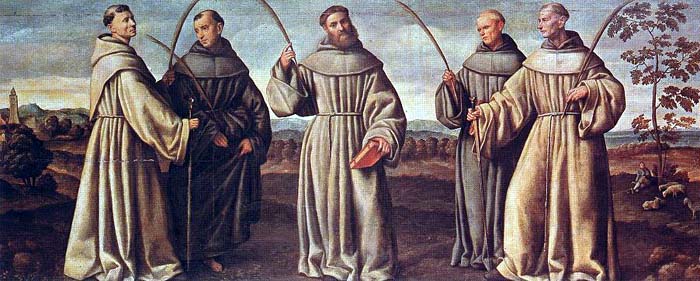
Today is the glorious feast of the Franciscan Protomartyrs, the main patrons of this page. An introduction to their beautiful life and martyrdom has been given here as well as the first part of the account of their martyrdom. The other parts will be posted throughout the week.


Below is given the Proper of the Mass of these illustrious saints.

Introit


Multæ tribulationes justorum et de his omnibus liberavit eos Dominus: Dominus custodit omnia ossa eorum unum ex his non conteretur.Ps. Benedicam Dominum in omni tempore: semper laus ejus in ore meo. V. Gloria Patri... (The just suffer many tribulations, but the Lord shall free them from all. The Lord shall keep all of their bones; not one of them shall be broken. Ps. I will praise the Lord in all times: His praise shall always be in my lips. Glory be...)

Collect

Deus, qui sanctorum Martyrum tuorum Berardi, Petri, Accursii, Adjuti atque Othonis glorioso certamine ordinis Minorum initia consecrasti: concede nobis famulis tuis ; ut quorum lætamur triumphis, eorum virtutes imitemur. Per Dominum... (God, who has consecrated the beginnings of the Order of Friars Minor with the glorious struggle of your holy Martyrs Berard, Peter, Accursius, Adjutus, and Otho; make us, your servants, imitate the virtues of those in whose triumph we rejoice. Through Our Lord...)

Epistle


Lectio Epistolæ beati Pauli Apostoli ad Corinthios. Fratres: Puto enim quod Deus nos Apostolos novissimos ostendit, tamquam morti destinatos : quia spectaculum facti sumus mundo, et angelis, et hominibus. Nos stulti propter Christum, vos autem prudentes in Christo : nos infirmi, vos autem fortes : vos nobiles, nos autem ignobiles. Usque in hanc horam et esurimus, et sitimus, et nudi sumus, et colaphis cædimur, et instabiles sumus, et laboramus operantes manibus nostris : maledicimur, et benedicimus : persecutionem patimur, et sustinemus : blasphemamur, et obsecramus : tamquam purgamenta hujus mundi facti sumus, omnium peripsema usque adhuc. Non ut confundam vos, hæc scribo, sed ut filios meos carissimos moneo. (I Cor.4, 9-14 - Brethren: For I think that God hath set forth us apostles, the last, as it were men appointed to death: we are made a spectacle to the world, and to angels, and to men. We are fools for Christ's sake, but you are wise in Christ; we are weak, but you are strong; you are honourable, but we without honour. Even unto this hour we both hunger and thirst, and are naked, and are buffeted, and have no fixed abode; And we labour, working with our own hands: we are reviled, and we bless; we are persecuted, and we suffer it. We are blasphemed, and we entreat; we are made as the refuse of this world, the offscouring of all even until now. I write not these things to confound you; but I admonish you as my dearest children.)


Gradual

Vindica, Domine, sanguinem Sanctorum tuorum qui effusus est.V. Posuerunt morticina servorum tuorum, Domine, escas volatilibus cæli: carnes Sanctorum tuorum bestiis terræ. (Vindicate, O Lord, the spilled blood of your Saints. V. The bodies of your servants were given as food to the birds of the skies; the flesh of your Saints to the beasts of the earth.)

Alleluia

Alleluia, Alleluia. V. Hæc est vera fraternitas, quæ vincit mundi crimina: Christum secuta est, inclyta tenens regna cælestia. Alleluia. (Alleluia, Alleluia. V. This is true brotherliness that overcame the wickedness of the world: it followed Christ, holding fast to the glorious kingdom of Heaven. Alleluia.)


Gospel

Sequentia Sancti Evangelii Secundum Matthæum. In Illo tempore: Dixit Iesus discipulis suis: Ecce ego mitto vos sicut oves in medio luporum. Estote ergo prudentes sicut serpentes, et simplices sicut columbæ. Cavete autem ab hominibus. Tradent enim vos in conciliis, et in synagogis suis flagellabunt vos : et ad præsides, et ad reges ducemini propter me in testimonium illis, et gentibus. Cum autem tradent vos, nolite cogitare quomodo, aut quid loquamini : dabitur enim vobis in illa hora, quid loquamini : non enim vos estis qui loquimini, sed Spiritus Patris vestri, qui loquitur in vobis. Tradet autem frater fratrem in mortem, et pater filium : et insurgent filii in parentes, et morte eos afficient : et eritis odio omnibus propter nomen meum : qui autem perseveraverit usque in finem, hic salvus erit. (Matthew, 10, 16-22: At that time Jesus said to His disciples: Behold I send you as sheep in the midst of wolves. Be ye therefore wise as serpents and simple as doves. But beware of men. For they will deliver you up in councils, and they will scourge you in their synagogues. And you shall be brought before governors, and before kings for my sake, for a testimony to them and to the Gentiles: But when they shall deliver you up, take no thought how or what to speak: for it shall be given you in that hour what to speak. For it is not you that speak, but the Spirit of your Father that speaketh in you. The brother also shall deliver up the brother to death, and the father the son: and the children shall rise up against their parents, and shall put them to death. And you shall be hated by all men for my name's sake: but he that shall persevere unto the end, he shall be saved.)


Offertory


Justorum animæ in manu Dei sunt, et non tanget illos tormentum malitiæ: visi sunt oculis insipientium mori,illi autem sunt in pace, Alleluia. (The souls of the just are in the hand of God, and the torment of death shall not touch them: In the sight of the unwise they seemed to die, but they are in peace.)

Secret

Pro pretiosa, Domine, tuorum morte Sanctorum sacrificium istud offerimus: quo opem tuam nostris temporibus clementer impendas, et gratiam nobis veræ devotionis exhibeas. Per Dominum... (We offer this Sacrifice, o Lord, for the precious death of your Saints: that you may mercifully give your aid to our time, and that you may show us the grace of true devotion. Through Our Lord...)

Communion

Dico autem vobis amicis meis: ne terreamini ab his, qui vos persequuntur. (But I tell you, my friends: fear not those who persecute you)

Postcommunion

Cælestia, Domine, dona quæ sumpsimus, vitam nobis tribuant sempiternam; quam cum beatorum Martyrum tuorum Berardi,Petri, Accursii, Adjuti atque Othonis gloriosis meritis imploramus. Per Dominum... (Lord, may the heavenly gifts which we have consumed bring us everlasting life; this we implore by the glorious merits of your blessed Martyrs Berard, Peter, Accursius, Adjutus, and Otho. Through Our Lord...)

They will regret

It is not a surprise that the ruling coalition's candidate was elected President in Chile. The Concertación (the center-left coalition) has ruled Chile since the fall of Pinochet and has become a sort of "default choice", as the Liberals in Canada (whose reign will probably end before the end of this month). El Mercurio, the largest Chilean daily, says that probably any candidate of the Coalition would have won -- and I think they are right.

The difference between the candidates, however, was not great: less than 500,000 ballots. One force could have prevented the election of an Atheist, divorced Socialist: the Catholic Church. Actually, as this report says, the Episcopal Conference made clear that it did not care when it said that "Christianity does not identify itself with any particular political party" -- which is true, though the Church must take a stand when the values of life and the freedom of the Church may be in great risk. As this blog reminds us, the great dream of the Death Forces (including Planned Parenthood, the Ford Foundation, the European Union) is to destroy the pro-life bastion of Latin America, especially in the most pro-life nations, such as Chile.

The Church in Chile WILL regret its silence.

The epoch-making speech: a summary of comments


This blog was the very first online outlet to issue any comments on the Pope's epoch-making speech of December 22, just minutes after it was published. It has been extensively commented here (parts 2, 3, 4, 5, and also here) and the purpose has always been to make this papal text widely known and discussed.

I am very pleased that many people I deeply admire concur with my original view of the speech. For the friends of this blog, I highly recommend this summary of comments on the speech (in French). The first commentator even uses my same expression ("ce texte fera date dans l’histoire de l’Eglise") and I truly believe, one month onwards, that it is a text to be read, and re-read, and kept with great care. It brings with it the seed for the pacification of Holy Mother Church.

I would also like to emphasize once more (as I did on that very first message on the speech) the notion of the Church as an anti-Constitutional-Convention entity. For many reasons, this is the central point of the speech to me:

In a word: it would be necessary not to follow the texts of the Council but its spirit. In this way, obviously, a vast margin was left open for the question on how this spirit should subsequently be defined and room was consequently made for every whim. The nature of a Council as such is therefore radically misunderstood. In this way, it is considered as a sort of Constitutional Convention which abolishes an old constitution and creates a new one. However, the Constitutional Convention needs a mandator and then confirmation by the mandator, in other words, the people the constitution must serve. The Fathers had no such mandate and no one had ever given them one; nor could anyone have given them one because the essential constitution of the Church comes from the Lord and was given to us so that we might attain eternal life and, starting from this perspective, be able to illuminate life in time and time itself.

The heart of this paragraph is the notion of a Constitutional Convention as an unlimited power (or one could recall Hamilton's defense of the proposed Constitution as necessary because the old Constitutional order, the Articles of Confederation, did not "admit...amendment but ... an entire change in its leading features and characters" - Federalist 22).

The Church can never and will never suffer "an entire change in its leading features and characters"; the Fathers of Vatican II had no such power and no Council could ever wield such power. Moreover, while the Church is sine macula et sine ruga, "all the constitutions with which we are acquainted are faulty" (Aristotle, Politics, B.II, p. 1), which is just as true today as it was then.

Mea culpa - Why it is important to directly read mistranslated texts/ The wrong Judas article in The Times

A few days ago, The Times [of London] published a story of a "campaign" to "rehabilitate" Judas. I myself mentioned it here as soon as a friend sent me the link. Naturally, I should rather have checked the story in the Italian daily which had published it, La Stampa, since The Times is known to have botched Catholic news before.

The problematic Times' quotes are the following:

Vatican moves to clear reviled disciple's name

JUDAS ISCARIOT, the disciple who betrayed Jesus with a kiss, is to be given a makeover by Vatican scholars.

...

Now, a campaign led by Monsignor Walter Brandmuller, head of the Pontifical Committee for Historical Science, is aimed at persuading believers to look kindly at a man reviled for 2,000 years.

Mgr Brandmuller told fellow scholars it was time for a "re-reading" of the Judas story. He is supported by Vittorio Messori, a prominent Catholic writer close to both Pope Benedict XVI and the late John Paul II.

--

Now, The Times is mostly correct in its portrayal of Messori. Both Messori and Brandmüller are quoted by La Stampa in a sidebox of an article about a "new finding" (not that new, actually) in Italy of an apocryphal text of the 4th century called "The Gospel of Judas" (mostly unknown and which had been mentioned only by St. Irenaeus of Lyon) -- but Brandmüller is horribly mistranslated by The Times, in a very serious error, which has had great repercussion in the past few days.

Brandmüller is quoted in the beginning of the sidebox, commenting on the finding. These are the words published in La Stampa (Edition of January 11, 2006, p. 25) -- the words in black are mine:

[The writings of the "Gospel of Judas"] "Are testimonies which are useful only to historically frame the Christianity of the origins, but their impact should not be emphasized," explains Monsignor Walter Brandmüller, who presides the Pontifical Committee of Historical Sciences in the Vatican. "The relevance of such a text is not in the historical level and it seems to me at least uncalled for to expect some novelties on what is known about the dawn of the Christian age, even more so as it has no pertinence whatsoever [non c'é alcuna attinenza] to religious worship or [to a religious] level", Brandmüller details. "It means rather an addition which may serve to rebuild the circumstances and the context in which the initial preaching of the teaching of Christ developed."
The text may be found here(it may become unavailable shortly). That's it. No "Vatican scholars", no "campaign", but very sound, historically precise and theologically orthodox words by Mgr. Brandmüller, whose opinions on St. Pius V I had already highly commended here and who has written extremely important texts on the correct interpretation of Vatican II.

We have no problem in recognizing our mistakes here, even those caused by The Times -- which should better hire a couple of fact checkers.

The "progressives" are fuming! The Pope must be doing something right...

One of the most famous "progressive" Vaticanists, Marco Politi, attacks the Pope from all sides in this article (in Italian) printed yesterday in one of the leading Italian dailies, La Repubblica.

The object of his rage? The pope's quite mild words to the administrators of the Latium and of the Province and City of Rome, who came to the Vatican to pay him a visit (excerpts here).

Politi, among other niceties, says:

"...the Pontiff has crossed the line which marks the just and respectful distinction between Church and State.

"From yesterday, Benedict XVI has crossed the border of that sane secularism [laicità]... The pope spoke to institutional representatives. He has pronounced his veto on the use of the RU-486 pill and to the recognition of [extra-matrimonial] partnerships to those who have been elected to govern a city, a province, a region. It is a wound for every citizen...

"It is fair that the ecclesiastical Magisterium give indications, but it may not intend to be binding. Because the majority prefers to regulate itself according to flexible and subjective criteria. In the end, the conscience must be the one to decide. ... "
Quite a rage for a professional Vaticanist. Are the "progressives" losing their patience? By the way, a huge group of 40 (!!!) people protested today near St. Peter's. It seems Politi has quite a following.

La Repubblica says that 40,000 (that is, half of what the Pope gets in a poorly attended Angelus -- update: now, they claim 100,000, 60,000 according to the "security forces"...) protested in Milan in defense of the Abortion Law (Act 194) and in favor of the proposed PACS (the civil partnerships). Well, I guess they deserve their demographic numbers in collapse. When minarets fill the skyline in the Ambrosian city, these folks will see what tough religious leaders really think about them.

The Pope in black cassock visits his old apartment


Curious report of The Daily Telegraph:

"What has the Pope been doing on a spate of night-time missions to his old cardinal lodgings?
...
"The Pope gets out of the car disguised in the plain black priest's robes he wore when he was the Catholic Church's senior theologian.

"Wearing a black hat and with his head down, he opens the wooden door himself, as he did for all those years, and tiptoes inside followed by Don Georg [Gänswein, his secretary]."
My guess is that he is just resting... Or maybe he needs some distance from the large ears and thin walls inside the Apostolic Palace.

Saints Berard, Otho, Peter, Accursius, and Adjutus - I


Saints Berard, Otho, Peter, Accursius, and Adjutus
Holy Martyrs of Morocco
Protomartyrs of the Order of Friars Minor

Sent by Saint Francis

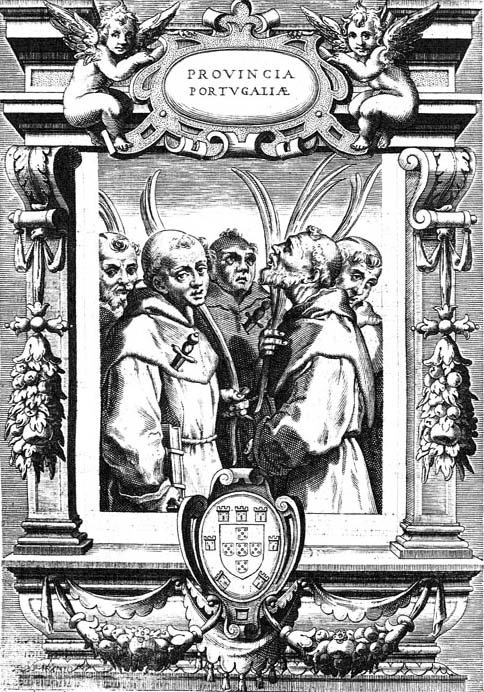
In 1219, Saint Francis of Assisi sent six of his most passionate Friars Minor to mission in Morocco; they were the predecessors of all Franciscan and of all Portuguese missionaries, obeying the Brother of Assisi and serving the King of Kings, Our Lord Jesus Christ.

"My sons," said Francis, "the Lord has told me to send you amidst the Saracens, to preach them the Faith and to struggle against the law of Mohammed. Also I shall go to strange lands to work for the salvation of the infidels. Be ready to fulfill the will of the Lord. Preserve among yourselves peace, and concord, and charity. Remain humble in tribulation and follow Jesus Christ in poverty, in chastity, and in obedience. Place your hopes in God, and He will support and guide you. He Who sends you will Himself watch over you and will inspire whatever you need to say."

They all kneeled and Saint Francis concluded: "May the blessing of God the Father descend upon you, as it descended upon the Apostles. May He join you and strengthen you in tribulation. Do not fear, for God is with you. Go forth, in the name of the Lord."

And so they went: Otho (Otone), priest; Berard (Berardo), subdeacon; Vital (Vitale), Peter (Pietro), Accursius (Accursio), and Adjutus (Adiuto), brothers.


Welcomed by the monarchs of Spain and Portugal

When in the Kingdom of Aragon, Spain, Brother Vital fell ill and stayed behind, but the valiant friars, now only five and led by Berard, went on their way and arrived in Portugal, where they were welcomed, in Coimbra, by queen Urraca, wife of king Alphonsus II.

Surprised by the will of these friars to go to Saracen lands to preach the Holy Name of Jesus, the Queen welcomed them with great care and, impressed by the holiness of the poor friars, asked them to reveal her the hour of her death and also who should die first, she or the king.

They told her that she would die when their dead bodies returned from the lands of the infidels, slain for the name of Jesus, and that the first member of the royal couple who saw their bodies would die first. (And it so happened that Urraca died first, for she was the first to see the relics of the holy martyrs.)

The holy friars also went to Alenquer, where they presented themselves to Princess Sancha, daughter of King Sancho I and sister of king Alphonsus II, founder of the first Franciscan convent in Portugal (whose first superior was Brother Zacharias, companion of Francis).

The Princess gave them regular clothes so that they would be able to enter the land of the Moors; otherwise, in their habits, not even the Christian merchants would allow them to proceed, for fear that they might disturb commerce with the Mohammedans.

--

Read introduction here.

Behold the handmaid of Annibale

No man had greater power in the liturgy during the 20th century than Annibale Bugnini -- actually, make that "in the 20 centuries of the Church". He fell in disgrace in 1975 and was soon sent as a pro-nuncio to the moribund regime of the Shah, though the reasons Paul VI, the man who gave him more power than any pope had ever given to any "liturgical expert", had to send him to the wilderness were never made clear.

Thankfully, he never returned to any position of liturgical responsibility, though it is hard to fathom what else he could have done to destroy the Roman Rite.

He left, however, many important disciples in the Roman Curia, the most important of whom was his own personal secretary, Piero Marini, the master of Pontifical Ceremonies since 1987: 19 long years in which the worst aspects of the new Mass were prominently displayed in the Papal Masses, in Rome and abroad.

So what exactly does Marini think of the liturgy? He has written and spoken extensively, and some of his best comments are these:


In the old liturgy, in use before the Second Vatican Council, the role of the master of ceremonies consisted in applying a series of rigid norms which could not be changed. Today one cannot organize a celebration without first having thought: who is celebrating, what is being celebrated, where is it being celebrated. The celebration is the point toward which converge diverse and reciprocally coordinated elements under the guide of that spirit of adaptation that is the soul of post-conciliar reform. Thus it´s a matter of foreseeing and planning the celebration with a view toward the result one wishes to obtain. For example, one cannot think of a liturgical action without taking account of the spaces in which it will take place, the chants which will be performed. All that is thought out and planned in view of a celebration may be considered real and proper direction. One finds oneself acting, in a certain way, upon a theatrical stage [palcoscenico]. Liturgy is also a show [spetacollo].
(Virgilio Fantuzzi SJ, in: La Civiltà Cattolica 1999 III, pag. 168-180, "Celebrazioni liturgiche pontificie, radio e tv"; sources here and here).

Marini has been facetiously called a "traditionalist" by progressive bloggers because he is in the habit (as his master, mentor, and inspiration Annibale "Hannibal" Bugnini) of picking things from the past which he likes and fashioning them in a modern "liturgical collage" -- the very antithesis of Tradition, as Saint Vincent of Lérins reminded: "Let there be no innovation--nothing but what has been handed down."

Now, compare Marini's words to these:

The liturgical reform, in its concrete realisation, has certainly distanced itself from its origin. The result has not been a reanimation, but a devastation. On one hand, there is a degenerate show-style liturgy, in which religion is rendered interesting with the aide of fashionable stupidities and seductive moral rules, with temporary success in the gang of liturgical fabricators and with an attitude of very pronounced rejection by those who search in the liturgy not the spiritual "showmaster", but an encounter with the living God for whom all 'making' becomes insignificant, an encounter itself capable of allowing us to climb the true riches of the being.
(J. Card. Ratzinger, Preface to the French Edition of Klaus Gamber's "The Reform of the Roman Rite").


Benedict and Marini: the Marini "stage" seems to be too small for both actors. Who will leave the stage?

Pope says to "The Way": You'd better obey

Just last week, the spokesman of the "Neocatechumenal Way", which calls itself "The Way", said that the liturgical rules ordered by the Congregation of Divine Worship were no different from a preparatory document for the Synod of Bishops, and just as non-authoritative (does "The Way" consider itself a permanent Synod?).

In a letter distributed to Jimmy Akin, the same spokesman said about the liturgical letter:

This is a private letter whose real contents are known only by Cardinal Arinze, Kiko Arguello, Carmen Hernandez and Father Mario Pezzi. Any use of a private document to enforce a public policy is completely illegitimate and improper.


Well, someone did not tell the Holy Father about this detail, because, when he met "the Way" and its leaders earlier today, he said:

"....to help the Neocatechumenal Way ...recently the Congregation for Divine Worship and Discipline of the Sacraments has given to you, in my name, some rules regarding the Eucharistic Celebration, during the experimental period accorded to you by the Servant of God John Paul II. I am positive that these rules, which restate what is predicted in the liturgical books approved by the Church, will be strictly observed by you."

Ah, those nice Turks!


Once upon a time, the heart of Western civilization was in the lands of Asia Minor, Thrace, and Pontus. From Tarsus to Byzantium, from Nicaea to Antioch, no place could be more Greek, more Roman, more Christian than Anatolia and Eastern Thrace.

But then the largest population-replacement program in History began in the early second millennium and the final ethnic-religious cleansing was completed in the early 20th century.


Today, the man who tried to murder the Bishop of Rome was released from prison, and his countrymen threw him flowers. This is what is left of a once glorious land...

Saving Judas Iscariot: Vexilla Inferni Prodeunt


Well, the defenders of "Universal Salvation" are pulling no punches! First, limbo is abolished. Now, the "official" Vatican historian himself, Monsignor Walter Brandmuller, is defending the "rehabilitation" of Judas.

Naturally, Judas has probably been saved, since "Christ died for all", right?

Father Allen Morris, Christian Life and Worship secretary for the Catholic Bishops of England and Wales, said: “If Christ died for all — is it possible that Judas too was redeemed through the Master he betrayed?”


Exactly... The Times has more information here.

Catholic Church Conservation had already announced a few months ago that the veneration of Judas Iscariot had been established in the Diocese of Linz, Austria.

Hoofin' for the Spirit in Ohio

Not exactly "Sweatin' With the Oldies", but Richard Simmons might just like it! Take your blood pressure pills, and click:

http://faculty-l.slis.kent.edu/~tfroehli/leaven/about.html

Limbo under siege

From Zenit:

A Call for Rediscovery of Sacrament of Baptism


Father Cantalamessa Comments on This Sunday's Gospel


"Moreover, no one today says that, by the simple fact that a person is not baptized, he will be condemned and go to hell. Children who die without baptism, as well as people who have lived, through no fault of their own, outside the Church, can be saved (the latter, it is understood, if they live according to the dictates of their conscience).

"Let us forget the idea of limbo as the place without joy or sadness in which children who are not baptized will end up. The fate of children who are not baptized is no different from that of the Holy Innocents, which we celebrated just after Christmas. The reason is that God is love and 'wants all to be saved,' and Christ also died for them!"

--
Europe is dechristianized, the proper and dignified Worship of God has collapsed, the vocations' crisis is still as strong as ever -- and the great issue of the day is abolishing Limbo?... Give me a break!

Why this sudden concern with the concept of the Limbo of the Infants? Perhaps because it is a thorn in the side of Universalism? From what we read today, it seems almost as if it is a cruel place made up by evil theologians, when it is just the opposite: it is the best possible place serious theologians could fathom based on what was revealed by God.

An ORTHODOX Catholic simply cannot say that the fate of an unbaptized baby is THE SAME as that of the Holy Innocents, whom Apostolic Tradition has always considered as martyrs for the sake of Christ and as saints (that is, surely in Heaven), because he does not know that; he cannot know that, as that is beyond what God has revealed to His Church.

An orthodox Catholic may hope, through the mercy of God (as the Catechism of the Catholic Church states), but not more than that. Limbo was never a place "without joy or sadness" in Catholic doctrine, but a place of perfect natural happiness, without pain of loss (i.e. those who are there do not feel the absence of the beatific vision as a loss), because, as Garrigou-Lagrange reminds us, "they do not know that they were supernaturally destined to the immediate possession of God".

Why search for an artificial universalism when Tradition provides us with so many answers? As Réginald Garrigou-Lagrange taught (Life Everlasting):


Theologians in general are inclined to fill out what Scripture and tradition tell us by distinguishing the means of salvation given to Catholics from those that are given men of good will beyond the borders of the Church.

Restricting the question to Catholics, we find the doctrine, generally held especially since Suarez, that, if we consider merely adults, the number of the elect surpasses that of the reprobate. If adult Catholics do at one time or another sin mortally, nevertheless they can arise in the tribunal of penance, and there are relatively few who at the end of life do not repent, or even refuse to receive the sacraments.

But if we are treating of all Christians, of all who have been baptized, Catholic, schismatic, Protestant, it is more probable, theologians generally say, that the great number is saved. First, the number of infants who die in the state of grace before reaching the age of reason is very great. Secondly, many Protestants, being today in good faith, can be reconciled to God by an act of contrition, particularly in danger of death.
Thirdly, schismatics can receive a valid absolution.

If the question is of the entire human race, the answer must remain uncertain, for the reasons given above. But even if, absolutely, the number of the elect is less great, the glory of God's government cannot suffer. Quality prevails over quantity. One elect soul is a spiritual universe; Further, no evil happens that is not permitted for a higher good. Further, among non-Christians (Jews, Mohammedans, pagans) there are souls which are elect. Jews and Mohammedans not only admit monotheism, but retain fragments of primitive revelation and of Mosaic revelation. They believe in a God who is a supernatural rewarder, and can thus, with the aid of grace, make an act of contrition. And even to pagans, who live in invincible, involuntary ignorance of the true religion, and who still attempt to observe the natural law, supernatural aids are offered, by means known to God. These, as Pius IX says, [n. 679: Denz., no. 1677. Cf. St. Augustine, De nature et gratia chap. 43, no. 50.] can arrive at salvation. God never commands the impossible. To him who does what is in his power God does not refuse grace. [n. 680: Children who die without baptism go to limbo. They do not suffer, since they do not know that they have been called to see God face to face. They know Him with a natural knowledge and have a certain natural beatitude, though they cannot, by reason of original sin, attain an efficacious love of God, author of nature. This truth shows indirectly the glory and the grandeur of baptism.]

The Eternal Roman Missal - Epiphany

Is there something more sublime in this earthly pilgrimage than when those introductory words of the most venerable of all anaphoras, the glorious Canon of Rome, are pronounced? The Canon is a permanent reminder to us all of the awesome perenity of the Roman Mass. It is terrifying to see 1000-year-old, and older, pieces of paper which guided generations of priests in the celebration of the most elevated of Mysteries. Dignum et Iustum est... the preface is about to be said and, after (or during) the Sanctus and Benedictus the deepest of all silences will begin.

As the silence which preceded the first Fiat of the Creation and the silence which preceded the Fiat of the Incarnation, the silence of the Canon prepares the soul of the faithful to the most awe-inspiring event. The House of God is truly a place which terrifies us with its incomprehensible dignity and justice. Terribilis est locus iste. As in Bethel, angels go up to lift our prayers, and angels come down to worship Him who made them.

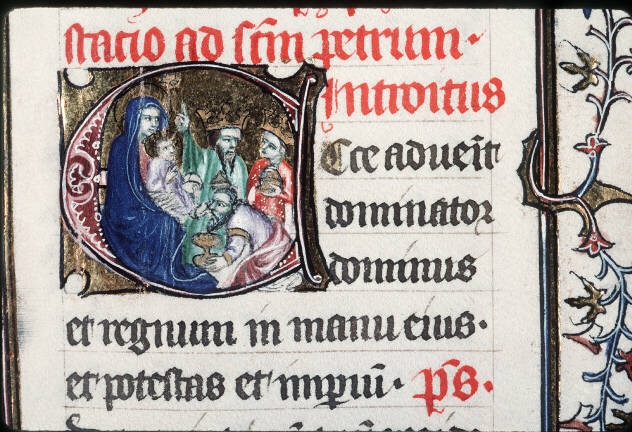
Today's special picture of "The Eternal Roman Missal" series is from a Missal made for the chapter of the Cathedral of Orléans, France, circa 1392 (nearly 200 years before Trent or the so-called "Missal of St. Pius V"). It is believed the artwork was made in Provence. The beautiful illumination of the Adoration of the Magi forms the letter E, the first letter of the Introit of the Mass of the Epiphany of the Lord, as it is until today in the traditional Missal:

Ecce advenit dominator Dominus: et regnum in manu ejus, et potestas, et imperium. -[the fragment ends here]-Ps.: Deus, judicium tuum regi da: et justitiam tuam Filio regis. V.: Gloria Patri [Behold the Lord the Ruler is come: and the Kingdom is in His Hand, and power, and dominion. -- (Ps.71. 2). Give to the king Thy judgment, O God: and to the king's Son Thy justice. V.: Glory be to the Father].


See the first post of "The Eternal Roman Missal" and the purpose of the series here.

Eric Voegelin on Modern Gnosticism

Hans Jonas’ taxonomy of ancient gnosticism may seem to be little more than an intellectual curiosity, a description of an ancient heresy that has long since disappeared from sight. But old heresies never die; they simply metastasize. Jonas’ colleague, Eric Voegelin, has tracked the gnostic metastasis through twenty centuries. Better than anyone else, he has illuminated the gradual transformation of this ancient presumption into the motley, blood-soaked ideologies of the last century. His effort is beginning to be appreciated only now, as scholars plug away at organizing his massive output for publication by the University of Missouri Press. What follows is a wispy attempt to gather into a semi-coherent bundle a few of his leading ideas, taken mostly from a volume of essays entitled Science, Politics, and Gnosticism. Voegelin is a demanding read, but a very rewarding one; this volume is a good place to start.

In an essay entitled “Ersatz Religion”, Voegelin lists “six characteristics that, taken together, reveal the nature of the gnostic attitude”:

(1) It must first be pointed out that the gnostic is dissatisfied with his situation. This, in itself, is not especially surprising. We all have cause to be not completely satisfied with one aspect or another of the situation in which we find ourselves.

(2) Not quite so understandable is the second aspect of the gnostic attitude: the belief that the drawbacks of the situation can be attributed to the fact that the world is intrinsically poorly organized. For it is likewise possible to assume that the order of being as it is given to us men (wherever its origin is to be sought) is good and that it is we human beings who are inadequate. But gnostics are not inclined to discover that human beings in general and they themselves in particular are inadequate. If in a given situation something is not as it should be, then the fault is to be found in the wickedness of the world.

(3) The third characteristic is the belief that salvation from the evil of the world is possible.

(4) From this follows the belief that the order of being will have to be changed in an historical process. From a wretched world a good one must evolve historically. This assumption is not altogether self-evident, because the Christian solution might also be considered – namely, that the world throughout history will remain as it is and that man’s salvational fulfillment is brought about through grace in death.

(5) With this fifth point we come to the gnostic trait in the narrower sense – the belief that a change in the order of being lies in the realm of human action, that this salvational act is possible through man’s own action.

(6) If it is possible, however, so to work a structural change in the given order of being that we can be satisfied with it as a perfect one, then it becomes the task of the gnostic to seek out the prescription for such a change. Knowledge – gnosis – of the method of altering being is the central concern of the gnostic. As the sixth feature of the gnostic attitude, therefore, we recognize the construction of a formula for self and world salvation, as well as the gnostic’s readiness to come forward as a prophet who will proclaim his knowledge about the salvation of mankind.

If one goes back to Jonas’ summary, then reads Voegelin's right after, the nature of the gnostic metastasis begins to seep through. The principle difference, I would argue, is that, whereas the ancient gnostic sought to escape the tyranny of the cosmos, the modern gnostic seeks to transform it. The salvific knowledge of the ancient gnostic, that the dysfunctional cosmos of the Archons must be transcended, transforms into knowledge of “the method of altering being”. The hidden gnostic god, the unknowable god beyond the cosmos, has been quietly dispatched, a deific Jimmy Hoffa. The new god is man, and the new knowledge is that the world belongs to the powerful.

So easy – a nip here, a tuck there, and suddenly, the timid gnostic lost soul bestrides the world like a jackbooted colossus. The death of God is, Voegelin notes sardonically, “not an event, but the feat of a dialectician”. Still, as hoaxes go, it has been enormously effective. Hegel, Nietzsche, Marx, and their more literalist progeny, Hitler, Stalin, and Mao, pass in review. One after another, the God-slayers rise and fall, and take many innocent lives, born and unborn, with them.

Father Jaguar?


Well, another fun picture from South America. The article (in Portuguese) says:

"In the neighborhood of Lapinha[, Salvador, Archdiocese of São Salvador da Bahia, Brazil], the Feast of Kings [Epiphany] is on the streets. Inside the church, though, each mass is a spectacle.

"Father Pinto is a ballet dancer ... This year, he used colorful clothings to honor the different races.

...

" 'The Church knows,' he says. 'Dom Geraldo´[Majella Cardinal Agnelo, Archbishop of São Salvador da Bahia] knows, the CNBB [National Episcopal Conference] knows,' he assures. 'The faithful are the ones who get scared'.


...

"During the sermon, Father Pinto answered a letter from a group of faithful who asked for his resignation "I do not want to leave, I want to die at the altar!", yelled Father Pinto."


Another article (in Spanish) mentions that Father José Souza Pinto, 57, better know as Padre Pinto, was driven away from celebrations in the weekend ... The President of the National Conference of Brazilian Bishops (CNBB) and Archbishop of Salvador, Geraldo Majella [Cardinal] Agnello...explained that the behavior shown by the priest deserved therapeutical care.

Our source tells us that the decision by the Cardinal happened only after the bizarre images were broadcast in national television.
This is certainly an unexpected consequence of liturgical mayhem: therapy!

The Papal epoch-making Speech: what to think of it?

One speech, two views.

I am pretty confident that the pope's epoch-making speech of December 22, in which he opened a new era for the Church, was greeted with great distress by the "progressives" -- which is why it has been a non-event for them. Liberal newspapers, websites, and blogs have simply IGNORED the speech, as if it had never happened. It is certainly not in their interest to further the knowledge of those crucial papal words.

Is my optimism (see 1, 2, 3, 4, 5, and this) regarding the text excessive? Maybe. However, my intention never was to give an "official" version of this speech, but to make those words read and known, to undo the "progressive" boycott of this essential text.

In the past few days, two very important traditional Catholic outlets on both sides of the Atlantic have published the views of two men on this speech. In France, the great Jean Madiran, this hero of Tradition, published three articles on the speech in the only orthodox Catholic French daily, Présent. He seems to agree with my assessment and is actually more optimistic than I ever was; his series of articles is titled "Benedict frees the Faith" and is available here (in French).

In America, Christopher Ferrara has written a very interesting and thorough article on the events (or lack of events...) of this pontificate so far in The Remnant, and he even makes a reference to this blog and its comments on the papal Christmas Address to the Roman Curia (which we have called an "epoch-making speech"). I agree with much of what he writes (I thank him for writing that we are "actually spot-on concerning many issues"), but I believe I agree much more with Madiran.

I would just like to stress that the expression "Holy Revolution", mentioned by Ferrara, was coined by the Italian newsweekly Panorama (see here) and is unrelated to the speech of December 22.

2006: the year of action for Benedict


I see that many blogs, friendly or unfriendly, have been issuing long analyses of the Pontificate (here is a significant example).

I perfectly understand the impatience, though we must keep in mind that there will be no "restoration". This is not the style of this pragmatic pope.

Will there be anything for those Catholics particularly attached to the traditional rites of the Latin Church? I am pretty sure there will be and there are several bright indications of this. The famous Panorama article on the "Holy Revolution" confirmed the many sources who had indicated that the fall/promotion of Abp. Sorrentino from the position of secretary of the Congregation for Divine Worship ("promoted" to Assisi) was directly related to the internal memo (revealed by Andrea Tornielli in Il Giornale right after the Synod of Bishops) which had declared that the Traditional Missal had been "abolished".

As is widely known, the Pope nominated to his place a man considered at least friendly to traditionalists. The move was significant because it was the only important dismissal of any name in the Congregations since the Pope was elected. This is not all: there are also signs from all different places, inside and outside the Vatican, which show there will be interesting news in this field -- "he that hath ears to hear, let him hear"...

That there is a large-scale reform of the Curia (and, therefore, of the central administration of the Church) being planned is something which can be considered certain. This reform is being spearheaded by two men: Archbishop Comastri and Cardinal Nicora, President of the Patrimony of the Holy See. Comastri, already referenced here earlier, is almost certainly the "administrative" planner of the "New Curia", while Nicora is the "financial" planner.

Everything is eerily calm in the Holy See. The silence will probably be broken in the next few days with the publication of the first encyclical (eight months into the pontificate, Benedict's is the most delayed inaugural encyclical of all modern popes); but it seems that the administrative calm will not be changed until the slim version of the Roman Curia is finally announced. This much-neglected article (dated December 13, 2005) mentions the current "ecclesiastical acedia" in which most curial officers have nothing to do; and that Cardinal Nicora (who has had the longest audience with the Pope so far) has received the "charge to elaborate a project to 'slim down' the various offices and projects which grew like mushrooms during the Wojtyla pontificate".

So a long year ahead awaits the Catholic Church. Will Benedict content himself with being a mere "transition pope"? Will he, the one who bravely, in less than one month, diagnosed the deep crisis through which the Church is going (Via Crucis 2005) and proposed a program for reform (Pre-Conclave Speech) be known simply as "the shy pope"? Do not bet on this. He hates "rupture" and upheaval, but he knows he has a job to do -- a job to which he has been called.

Enthusiasm and Its Opposite

Recently I offered an extended quotation from Ronald Knox’s classic, Enthusiasm. The import of it (which I state far less delicately than did Knox), was that enthusiasts tended to be somewhat presumptuous in their apprehension of the Holy Spirit in their personal interpretations of holiness. It occurred to me that there are those who would be puzzled, if not downright irritated, with Knox’s polite criticism, more so with my blunt restatement. What, they might say, could possibly be wrong with, as Knox wrote, “trying . . . . to be more attentive to the guidance (directly felt, they would tell you) of the Holy Spirit”?

Everything and nothing.

Nothing: certainly the world would be a better place if all men strove to exemplify in their conduct the lessons of Christ.

Everything: the first lesson, that which necessarily precedes all the others, is humility, the opposite of presumption. Surely, if the Holy Spirit guides us anywhere, it guides us first toward humble acceptance. Of what? I would suggest, of the teachings and the tradition of His Church, as opposed to the novelties, exaggerated gestures, and staginess of performance worship. The following prayer explains the differences beautifully, and contrasting it with the attitude described by Knox is instructive:

Litany of Humility

by Rafael Cardinal Merry del Val, secretary of state to Pope Saint Pius X from the prayer book for Jesuits, 1963

O Jesus, meek and humble of heart, Hear me.
From the desire of being esteemed, Deliver me, O Jesus.
From the desire of being loved, Deliver me, O Jesus.
From the desire of being extolled, Deliver me, O Jesus.
From the desire of being honored, Deliver me, O Jesus.
From the desire of being praised, Deliver me, O Jesus.
From the desire of being preferred to others, Deliver me, O Jesus.
From the desire of being consulted, Deliver me, O Jesus.
From the desire of being approved, Deliver me, O Jesus.

From the fear of being humiliated, Deliver me, O Jesus.
From the fear of being despised, Deliver me, O Jesus.
From the fear of suffering rebukes, Deliver me, O Jesus.
From the fear of being calumniated, Deliver me, O Jesus.
From the fear of being forgotten, Deliver me, O Jesus.
From the fear of being ridiculed, Deliver me, O Jesus.
From the fear of being wronged, Deliver me, O Jesus.
From the fear of being suspected, Deliver me, O Jesus.
That others may be loved more than I, Jesus, grant me the grace to desire it.
That others may be esteemed more than I, Jesus, grant me the grace to desire it.
That, in the opinion of the world, others may increase and I may decrease, Jesus, grant me the grace to desire it.
That others may be chosen and I set aside, Jesus, grant me the grace to desire it.
That others may be praised and I go unnoticed, Jesus, grant me the grace to desire it.
That others may be preferred to me in everything, Jesus, grant me the grace to desire it.
That others may become holier than I, provided that I may become as holy as
I should, Jesus, grant me the grace to desire it.