Rorate Caeli
Showing posts with label Benedict XVI Addresses. Show all posts

"My Lord and my God!" - This Faith Continues because the Risen Lord dies no more

From the Gospel for the Sunday in Albis: "My Lord and my God!"


“My Lord and my God!” We too renew that profession of faith of Thomas. I have chosen these words for my Easter greetings this year, because humanity today expects from Christians a renewed witness to the resurrection of Christ; it needs to encounter him and to know him as true God and true man. If we can recognize in this Apostle the doubts and uncertainties of so many Christians today, the fears and disappointments of many of our contemporaries, with him we can also rediscover with renewed conviction, faith in Christ dead and risen for us. This faith, handed down through the centuries by the successors of the Apostles, continues on because the Risen Lord dies no more. He lives in the Church and guides it firmly towards the fulfilment of his eternal design of salvation.

“My Spiritual Testament” - Benedict XVI

My spiritual testament


When, at this late hour of my life, I look back on the decades I have wandered through, I see first of all how much reason I have to give thanks. Above all, I thank God Himself, the giver of all good gifts, who has given me life and guided me through all kinds of confusion; who has always picked me up when I began to slip, who has always given me anew the light of his countenance. In retrospect, I see and understand that even the dark and arduous stretches of this path were for my salvation and that He guided me well in those very stretches

Pope Benedict XVI on the Life and Accomplishments of Saint Pius X

Dear Brothers and Sisters,

Today I would like to reflect on my Predecessor, St Pius X whose liturgical Memorial we shall be celebrating next Saturday and to underline certain features that may be useful to both Pastors and faithful also in our time.

Giuseppe Sarto, that was his name, was born into a peasant family in Riese, Treviso, in 1835. After studying at the Seminary in Padua he was ordained a priest when he was 23 years old. He was first curate in Tombolo, then parish priest at Salzano and then canon of the Cathedral of Treviso with the offices of episcopal chancellor and spiritual director of the Diocesan Seminary. In these years of rich and generous pastoral experience, the future Pontiff showed that deep love for Christ and for the Church, that humility and simplicity and great charity to the needy which characterized his entire life. In 1884 he was appointed Bishop of Mantua, and in 1893, Patriarch of Venice. On 4 August 1903, he was elected Pope, a ministry he hesitated to accept since he did not consider himself worthy of such a lofty office.

Pius X's Pontificate left an indelible mark on the Church's history and was distinguished by a considerable effort for reform that is summed up in his motto: Instaurare Omnia in Christo, "To renew all things in Christ".

"The Pope is not an absolute monarch whose thoughts and desires are law"

Everything about the annulment reforms that led to what is now being overwhelmingly called "Catholic Divorce" was done by Pope Francis in an untraditional and authoritarian manner. Rather - it was untraditional precisely because it was so authoritarian. A Church in which such a foundational Sacrament as Matrimony is affected by a mere pen-stroke by such "changes in usage" as those proposed by the new motu proprio is a Church "torn to pieces".

It was precisely the opposite of the exercise of papal authority as defined by his immediate predecessor in his memorable homily of May 7, 2005:


[S]cience alone cannot provide us with a definitive and binding interpretation; it is unable to offer us, in its interpretation, that certainty with which we can live and for which we can even die. A greater mandate is necessary for this, which cannot derive from human abilities alone. The voice of the living Church is essential for this, of the Church entrusted until the end of time to Peter and to the College of the Apostles.

This power of teaching frightens many people in and outside the Church. They wonder whether freedom of conscience is threatened or whether it is a presumption opposed to freedom of thought. It is not like this. The power that Christ conferred upon Peter and his Successors is, in an absolute sense, a mandate to serve. The power of teaching in the Church involves a commitment to the service of obedience to the faith. The Pope is not an absolute monarch whose thoughts and desires are law. On the contrary: the Pope's ministry is a guarantee of obedience to Christ and to his Word. He must not proclaim his own ideas, but rather constantly bind himself and the Church to obedience to God's Word, in the face of every attempt to adapt it or water it down, and every form of opportunism.

"The human genome is profoundly imprinted with the Trinity"


Following Eastertide, which culminates with the feast of Pentecost, the liturgy foresees these three solemnities of the Lord: today, the Most Holy Trinity; on Thursday, that of Corpus Domini, which, in many countries, Italy among them, is celebrated next Sunday; finally, on Friday in two weeks, the feast of the Sacred Heart of Jesus. Each one of these liturgical observances manifests a perspective from which the whole mystery of the Christian faith is embraced: respectively, the reality of God one and three, the sacrament of the Eucharist and the divine-human center of the Person of Christ. They are in truth aspects of the one mystery of salvation, which, in a certain sense, summarize the whole path of the revelation of Jesus, from the incarnation to the death and resurrection to the ascension and the gift of the Holy Spirit... 
***
The Trinity does not live in a splendid solitude, but is rather inexhaustible font of life that unceasingly gives itself and communicates itself.

We can in some way intuit this, whether we observe the macro-universe: our earth, the planets, the stars, the galaxies; or the micro-universe: cells, atoms, elementary particles. The “name” of the Most Holy Trinity is in a certain way impressed upon everything that exists, because everything that exists, down to the least particle, is a being in relation, and thus God-relation shines forth, ultimately creative Love shines forth. All comes from love, tends toward love, and is moved by love, naturally, according to different grades of consciousness and freedom. “O Lord, our Lord, / how wondrous is your name over all the earth!” (Psalm 8:2) -- the Psalmist exclaims. In speaking of the “name” the Bible indicates God himself, his truest identity; an identity that shines forth in the whole of creation, where every being, by the very fact of existing and by the “fabric” of which it is made, refers to a transcendent Principle, to eternal and infinite Life that gives itself, in a word: to Love. “In him,” St. Paul says, on the Areopagus in Athens, “we live and move and have our being” (Acts 17:28). The strongest proof that we are made in the image of the Trinity is this: only love makes us happy, because we live in relation, and we live to love and be loved. Using an analogy suggested by biology, we could say the human “genome” is profoundly imprinted with the Trinity, of God-Love.

Benedict XVI
Angelus Address
June 7, 2009


- A very happy Month of the Sacred Heart of Jesus to all our readers -

Ten Years Ago Today: Pope Benedict's First Message

Ten years ago today, on April 20, 2005, Pope Benedict XVI delivered the first message (that is, formal address) of his pontificate, after he celebrated Mass with the Cardinals. Notably, his message was delivered in Latin -- in retrospect, a significant symbol of his intention to promote a "hermeneutic of continuity" and to restore some measure of gravitas and auctoritas to the Apostolic See and to the Roman Church in general. It is worthwhile, especially in these very different days of 2015, to ponder what he had to say on that occasion.

* * *

FIRST MESSAGE
OF HIS HOLINESS BENEDICT XVI
AT THE END OF THE EUCHARISTIC CONCELEBRATION
WITH THE MEMBERS OF THE COLLEGE OF CARDINALS
IN THE SISTINE CHAPEL

Wednesday, 20 April 2005

1. “Favour and peace be yours in abundance” (I Pt 1:2)! At this time, side by side in my heart I feel two contrasting emotions. On the one hand, a sense of inadequacy and human apprehension as I face the responsibility for the universal Church, entrusted to me yesterday as Successor of the Apostle Peter in this See of Rome. On the other, I have a lively feeling of profound gratitude to God who, as the liturgy makes us sing, never leaves his flock untended but leads it down the ages under the guidance of those whom he himself has chosen as the Vicars of his Son and has made shepherds of the flock (cf. Preface of Apostles I).

A Study in Contrasts: Francis, Benedict, Augustine

In the speech delivered at the end of the Synod, Pope Francis said something puzzling. It was another one of those invocations of “the God of surprises,” this time in the midst of a stark opposition between “the letter” and “the spirit”:

One, a temptation to hostile inflexibility, that is, wanting to close oneself within the written word (the letter) and not allowing oneself to be surprised by God, by the God of surprises (the spirit); within the law, within the certitude of what we know and not of what we still need to learn and to achieve. From the time of Christ, it is the temptation of the zealous, of the scrupulous, of the solicitous and of the so-called—today—“traditionalists” and also of the intellectuals.

When I read this, I scratched my head, recalling the quite different way in which the Pope’s predecessor, Benedict XVI, had spoken of the spirit and the letter of the Second Vatican Council, in the address he delivered only nine years ago today, December 22, 2005:

They owe Benedict XVI an apology

IL FOGLIO
12 August 2014
  by Camillo Langone
 
Manuel Paleologus, they owe you an apology. They also owe an apology to Benedict XVI, whom they attacked after he quoted you at Regensburg: 
 
Show me just what Mohammed brought that was new, and there you will find things only evil and inhuman, such as his command to spread by the sword the faith he preached.”
 
Today, when the news from ex-Iraq is once more making history, and is showing to anyone who has eyes to see what the Koran translated into action truly is, they need to apologize to both of you.  But they won’t do it: because they don’t believe in sacred texts. They are Europeans and a European doesn’t believe in the Gospel not even if he’s a Catholic. Not even if he’s a priest (at Mass on Sundays the only words about Faith are those written in the Missal, while the ones from  the priest -- homilies, admonitions,  casual chatter --  are melancholic manifestations of  unbelief). 
 
It is impossible for a European to think that someone could actually believe in their own religion.   And as for the Italians: according to their vocabulary the word Religion is defined as “a good and human thing”, so they will never apologize to you nor to Benedict.
 
Those who are not able to believe in God are not even able to believe in reality: they are not able to recognize a sword -- not even when it goes into their neck.
 
Translation by Rorate's Francesca Romana.

Ratzinger: Hierarchy, Theologians must not scandalize "the little ones":
- Primary good of the Church is protecting Faith of Ordinary People
- Those in authority cannot abuse the Faithful's readiness to listen

_______________________________________

"Whosoever shall scandalize even one of these little ones that believe in me, it would be better for him that a millstone were hanged around his neck and he were cast into the sea." (Mk 9:42).
_______________________________________

In April 1986, during a visit to Ontario, Cardinal Joseph Ratzinger, Prefect of the Congregation for the Doctrine of the Faith, gave a keynote address to the community of Saint Michael's College, Toronto -- it was later published in the Toronto Journal of Theology under the title "The Church as an Essential Dimension of Theology." This became widely known as the Cardinal's "Toronto Lecture."

What is less known is that the address had originally been written and delivered in a language in which the future Pope Benedict XVI reasons and writes much more comfortably, Italian, in a visit to the Diocese of Brescia: it was on March 22, 1986, in a gathering organized by the Communio journal. Based on this original text of the address, our contributor Francesca Romana brings one of the most precious pearls of theological wisdom in the post-conciliar years.

It was a thought that had been clear in the Cardinal's mind, and that would be increasingly part of his concern: those in authority in the Church -- theologians, certainly, but priests and bishops as well -- must realize the immense responsibility they bear in preserving the faith of the most unprotected, the believers themselves, those who have no power, sheep in a world of wolves, hens in a world of foxes.

In other words: in a worldly setting, usually someone has to work hard to be heard. In the Church, there is certainly quite a lot of hard work, but the reason we give more relevance to, for instance, what a pope speaks than to what a cardinal says; to what a cardinal says more than to what a regular bishop says; to what a regular bishop says than to what a priest says; the reason is that the person is in that position, not that the person is particularly bright, particularly enlightened, superior in a gnostic/initiated or pagan sense (that is not the sense of the ministerial priesthood and hierarchy in Christianity), or proved himself necessarily worthy of that position. That was the Cardinal's main point.

Therefore, in order to honor the position of authority God allowed him to have, and the trust we, the "little ones", are willing to give him in faith, the man in an ecclesiastical position of teaching authority has the obligation not to abuse this trust by speaking error, scandal, or nonsense. That is, it is not a one-way street of "pay, pray, and obey, and I'll say what I want": believers must respect, but they deserve respect as well from popes, bishops, priests, and theologians, who cannot abuse their positions. If they breach the trust they did nothing to earn, they should not be astonished that the faithful suddenly notice the emperor's new clothes, and think accordingly.

_______________________________________

Cardinal Ratzinger in 1986

A separation of the sort between proclamation and doctrine is in profound conflict with the essence of the Biblical Word. Such a separation does nothing other than revive that division between the psychists and gnostics, with which the so-called historic Gnosis attempted to create a free area for itself, and de facto expelled itself from the Church and from the Faith. That separation [between proclamation and doctrine], in fact, presupposes the relationship there is in paganism between myth and philosophy, religious symbolism and enlightened reason; the religious criticism effected by Christianity was directed against that separation; as such, it was also critical of class-based religious thinking.

This resulted in the emancipation of ordinary [unlearned] people and also claimed for them the right to be  in the true sense of the word– philosophers; which means to say, having the knowledge of that which is characteristic and peculiar to man just as much as the academics have this knowledge; or, rather even more than the academics. The words of Jesus about the foolishness of the wise and the wisdom of the little ones (in particular Matt. 11:25 and parallels) have exactly this aim: to establish Christianity as the people’s religion, as a religion without a two-class system.

70th Anniversary:
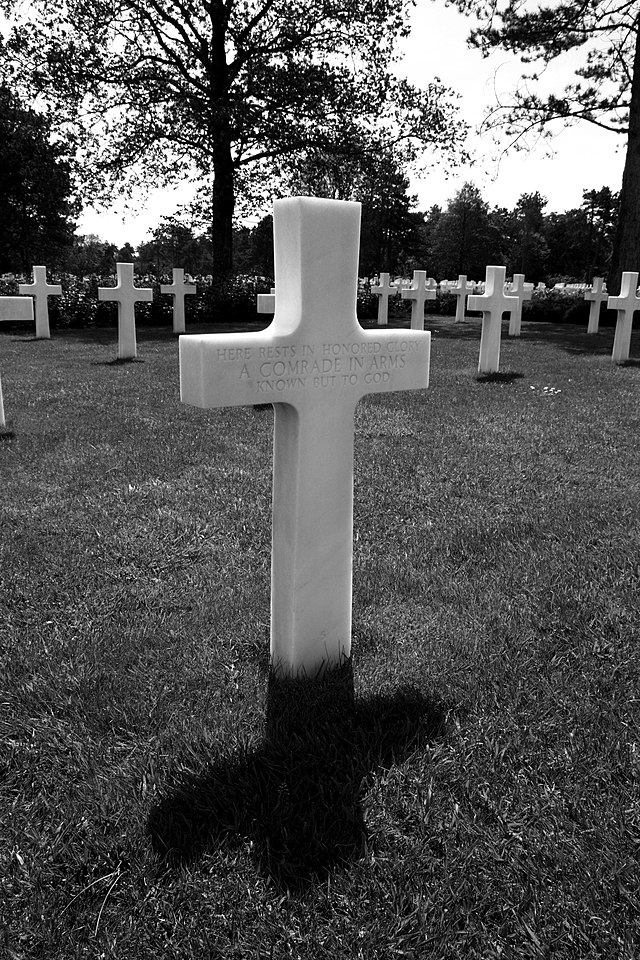
Cardinal Ratzinger on the Normandy Landings
"Total Pacifism is unsustainable"


When the landings of allied troops began in France, occupied by the German Wehrmacht, in June 1944, it was for the peoples of the entire world, but also for a very large proportion of Germans, a sign of hope: may peace and liberty come to Europe soon. What had happened? A criminal and his henchmen had succeeded in taking the power of the State in Germany. And that had created a situation in which, under the domination of the Party, law and injustice became embedded one within the other, and often transformed, almost inseparably, one into the other. Because the regime led by a criminal also exercised the classic functions of government and its procedures. He could then, in a certain sense, demand legal obedience from the citizens and respect regarding the authority of the State (Romans 12, 1ss !), while at the same time making use of the instruments of law as instruments of his criminal goals.

The rule of law itself, which kept functioning partly under its ordinary forms in daily life, had become at the same time a power for the destruction of the law: the perversion of the procedures that should serve justice, yet at the same time consolidated the domination of iniquity and rendered it impenetrable, meant, at its most profound, a domination of falsehood, which obscured consciences.

At the service of this domination of falsehood, there was a regime of fear, within which no one could trust anyone else, because each one had to, in a certain sense, protect oneself under the mask of falsehood. Such a mask allowed one to protect oneself, but also served to reinforce the power of evil. It was thus necessary for the whole world to intervene to implode the circle of criminal action, to re-establish freedom and law. Because this was so, we give thanks at this hour, and it is not only the countries occupied by German troops and left at the mercy of Nazi terror that give thanks. Also we Germans, we give thanks that, with the aid of this engagement, we recovered freedom and law.

If there ever was in history a bellum justum, it was certainly this one, the engagement of the Allies, because the engagement also served the good of those against whose country war was waged. Such a finding seems important to me, because it shows, based on a historical event, the unsustainable character of an absolute pacifism. This takes nothing away, naturally, from the obligation of considering very strictly the question of if and under what conditions it is possible still today to have something such as a just war, that is, a military intervention at the service of peace and obeying moral criteria, against established unjust regimes. Above all, that which has been said allows for a better understanding, let us hope, that peace and the law, that peace and justice, are inseparably linked one with the other. When the law is destroyed, when injustice takes over, it is always peace that is threatened and already, partly, weakened. Concern for peace is, in this sense, above all a concern for a form of law that ensures justice to the individual and to the community as a whole.
Cardinal Ratzinger
Address on the 60th Anniversary of the Normandy Landings (introduction) [en français]
 Abbaye aux Hommes (St-Étienne), Caen, June 5, 2004

Islam's Ring of Fire is a consequence of a God beyond all reason

Copts pray inside the Church of St. Moses (Moussa),
destroyed by Muslim rioters in Minya, Egypt,
Aug. 14-15, 2013

A ring of fire seems to surround and cross right through the Islamic world, as if some violent power were inherent to the Islamic mind, and this once again is made clear - well, it is made clear week after week - by the current situation in Egypt, where the weakest links, Christians, are suffering the most.

Why is there such violence in the Muslim spirit that seems to inflame everything and everyone it touches? One hundred years ago, Fr. Gabriel Oussani (no stranger to Islam, as someone born and raised in Turkish Baghdad and Mosul in the late 19th century) penned this concluding paragraph to his Catholic Encyclopedia article on Mohammed and Mohammedanism that we have already posted here, and that should remain in the memory of Christians at all times:

In matters political Islam is a system of despotism at home and of aggression abroad. The Prophet commanded absolute submission to the imam. In no case was the sword to be raised against him. The rights of non-Moslem subjects are of the vaguest and most limited kind, and a religious war is a sacred duty whenever there is a chance of success against the "Infidel". Medieval and modern Mohammedan, especially Turkish, persecutions of both Jews and Christians are perhaps the best illustration of this fanatical religious and political spirit.

The central point and the origin of such despotism and agression is, of course, the understanding of God in Islam. That was the open wound that a great Pope dared to touch seven years ago. As Oussani was right a century ago, Benedict XVI was right in September 2006: a God that is beyond reason is a God that demands and sanctions unreasonableness, disorder, and violence. In Regensburg, Pope Ratzinger spoke truth.

The university [of Bonn] was also very proud of its two theological faculties. It was clear that, by inquiring about the reasonableness of faith, they too carried out a work which is necessarily part of the "whole" of the universitas scientiarum, even if not everyone could share the faith which theologians seek to correlate with reason as a whole. This profound sense of coherence within the universe of reason was not troubled, even when it was once reported that a colleague had said there was something odd about our university: it had two faculties devoted to something that did not exist: God. That even in the face of such radical scepticism it is still necessary and reasonable to raise the question of God through the use of reason, and to do so in the context of the tradition of the Christian faith: this, within the university as a whole, was accepted without question.

I was reminded of all this recently, when I read the edition by Professor Theodore Khoury (Münster) of part of the dialogue carried on - perhaps in 1391 in the winter barracks near Ankara - by the erudite Byzantine emperor Manuel II Paleologus and an educated Persian on the subject of Christianity and Islam, and the truth of both. It was presumably the emperor himself who set down this dialogue, during the siege of Constantinople between 1394 and 1402; and this would explain why his arguments are given in greater detail than those of his Persian interlocutor. The dialogue ranges widely over the structures of faith contained in the Bible and in the Qur'an, and deals especially with the image of God and of man, while necessarily returning repeatedly to the relationship between - as they were called - three "Laws" or "rules of life": the Old Testament, the New Testament and the Qur'an. It is not my intention to discuss this question in the present lecture; here I would like to discuss only one point - itself rather marginal to the dialogue as a whole - which, in the context of the issue of "faith and reason", I found interesting and which can serve as the starting-point for my reflections on this issue.

In the seventh conversation (διάλεξις - controversy) edited by Professor Khoury, the emperor touches on the theme of the holy war. The emperor must have known that surah 2, 256 reads: "There is no compulsion in religion". According to some of the experts, this is probably one of the suras of the early period, when Mohammed was still powerless and under threat. But naturally the emperor also knew the instructions, developed later and recorded in the Qur'an, concerning holy war. Without descending to details, such as the difference in treatment accorded to those who have the "Book" and the "infidels", he addresses his interlocutor with a startling brusqueness, a brusqueness that we find unacceptable, on the central question about the relationship between religion and violence in general, saying: "Show me just what Mohammed brought that was new, and there you will find things only evil and inhuman, such as his command to spread by the sword the faith he preached.” The emperor, after having expressed himself so forcefully, goes on to explain in detail the reasons why spreading the faith through violence is something unreasonable. Violence is incompatible with the nature of God and the nature of the soul. "God", he says, "is not pleased by blood - and not acting reasonably (σὺν λόγω) is contrary to God's nature. Faith is born of the soul, not the body. Whoever would lead someone to faith needs the ability to speak well and to reason properly, without violence and threats... To convince a reasonable soul, one does not need a strong arm, or weapons of any kind, or any other means of threatening a person with death...".

The decisive statement in this argument against violent conversion is this: not to act in accordance with reason is contrary to God's nature. The editor, Theodore Khoury, observes: For the emperor, as a Byzantine shaped by Greek philosophy, this statement is self-evident. But for Muslim teaching, God is absolutely transcendent. His will is not bound up with any of our categories, even that of rationality.

For the record: Benedict XVI on doctrinal issues and ecumenism


This celebration is part of the Year of Faith, which began on 11 October, the fiftieth anniversary of the opening of the Second Vatican Council. Communion in the same faith is the basis for ecumenism. Unity is given by God as inseparable from faith; St. Paul expresses this effectively: "There is one body and one Spirit, just as you were called to the one hope of your calling, one Lord, one faith, one baptism,  one God and Father of all, who is above all and through all and in all"(Eph. 4:4-6). The baptismal profession of faith in God, the Father and Creator, who revealed himself in his Son Jesus Christ, pouring out the Spirit who gives life and holiness, already unites Christians. Without faith - which is primarily a gift of God, but also man's response - the whole ecumenical movement would be reduced to a form of "contract" to enter into out of a common interest. The Second Vatican Council reminds Christians that "the closer their union with the Father, the Word, and the Spirit, the more deeply and easily will they be able to grow in mutual brotherly love"(Decr. Unitatis redintegratio, 7). Doctrinal issues that still divide us must not be overlooked or minimized. They should rather be faced with courage, in a spirit of brotherhood and mutual respect. Dialogue, when it reflects the priority of faith, can open to the action of God with the firm conviction that we cannot build unity alone: it is the Holy Spirit who guides us toward full communion, who allows us to grasp the spiritual wealth present in the different Churches and ecclesial communities.
 - Pope Benedict XVI

 (Official Italian text on Vatican website: link)

Photo source: link.

Benedict XVI on the task of bishops in our own time

How can we not think, in this context, of the task of a Bishop in our own time? The humility of faith, of sharing the faith of the Church of every age, will constantly be in conflict with the prevailing wisdom of those who cling to what seems certain. Anyone who lives and proclaims the faith of the Church is on many points out of step with the prevalent way of thinking, even in our own day. Today’s regnant agnosticism has its own dogmas and is extremely intolerant regarding anything that would question it and the criteria it employs. Therefore the courage to contradict the prevailing mindset is particularly urgent for a Bishop today. He must be courageous. And this courage or forcefulness does not consist in striking out or in acting aggressively, but rather in allowing oneself to be struck and to be steadfast before the principles of the prevalent way of thinking. The courage to stand firm in the truth is unavoidably demanded of those whom the Lord sends like sheep among wolves. “Those who fear the Lord will not be timid”, says the Book of Sirach (34:16). The fear of God frees us from the fear of men.  It liberates.

Here I am reminded of an episode at the very beginning of Christianity which Saint Luke recounts in the Acts of the Apostles. After the speech of Gamaliel, who advised against violence in dealing with the earliest community of believers in Jesus, the Sanhedrin summoned the Apostles and had them flogged. It then forbade them from preaching in the name of Jesus and set them free. Saint Luke continues: “As they left the council, they rejoiced that they were considered worthy to suffer dishonour for the name of Jesus. And every day… they did not cease to teach and proclaim Jesus as the Messiah” (Acts 5:40ff.).  The successors of the Apostles must also expect to be repeatedly beaten, by contemporary methods, if they continue to proclaim the Gospel of Jesus Christ in a way that can be heard and understood. Then they can rejoice that they have been considered worthy of suffering for him. Like the Apostles, we naturally want to convince people and in this sense to obtain their approval. Naturally, we are not provocative; on the contrary we invite all to enter into the joy of that truth which shows us the way. The approval of the prevailing wisdom, however, is not the criterion to which we submit. Our criterion is the Lord himself. If we defend his cause, we will constantly gain others to the way of the Gospel. But, inevitably, we will also be beaten by those who live lives opposed to the Gospel, and then we can be grateful for having been judged worthy to share in the passion of Christ.


Benedict XVI
January 6, 2013

Photo source: Reuters.

Pope to bishops: "Cultivate the ars celebrandi"

As the Council recalls, the liturgical action of the Church is also a part of her contribution to the civilizing task (cf. Gaudium et spes n. 58, 4). The liturgy is indeed the celebration of the central event of human history, the redemptive Sacrifice of Christ. By this, it testifies to the love with which God loves mankind, it testifies that human life has a meaning and that [man] is called by vocation to take part in the glorious life of the Trinity.

Mankind needs this testimony. It needs to perceive, by way of the liturgical celebrations, that the Church is conscious of the Lordship of God and of the dignity of man. It has the right to be able to discern, beyond the limitations that will always characterize her rites and ceremonies, that Christ "is present in the sacrifice of the Mass, and in the person of the minister" (cf. Sacrosanctum Concilium, n. 7).

Aware of the concern which you have surrounding your liturgical celebrations, I encourage you to cultivate the art of celebration, to help your priests in this sense, and to work ceaselessly in the liturgical formation of seminarians and faithful. Respect for the establishes norms expresses love and fidelity to the Church's faith, to the treasure of grace that she protects and passes on; the beauty of the celebrations, much more than innovations and subjective adaptations, is what makes the work of evangelization durable and efficacious.
Benedict XVI
November 17, 2012


In related news: the reorganization of the Congregation for Divine Worship, following the transferal of several of her former disciplinary competences to the Roman Rota, was completed (see La Stampa).

The Pope to future papal diplomats: be faithful and trustworthy

From today's papal speech to the community of the Pontifical Ecclesiastical Academy, alma mater to the Vatican's diplomatic corps, a corps whose sympathies and loyalties have not escaped scrutiny in the aftermath of the Vatileaks scandal as well as of previous controversies during this pontificate:


God’s faithfulness is the key to, and the source of, our own faithfulness. I would like today to remind you of precisely this virtue, which well expresses the unique bond existing between the Pope and his direct collaborators, both in the Roman Curia and in the Papal Representations: for many, it is a bond grounded in the priestly character that they have received, which is then specified in the particular mission entrusted to each in the service of the Successor of Peter.

Benedict XVI: "Trinitarian monotheism ... is the source of personal and universal peace"

From the blog of the Vatican Information Service:


TRINITARIAN MONOTHEISM IS THE SOURCE OF PEACE


VATICAN CITY, 2 DEC 2011 (VIS) - Today in the Vatican, the Holy Father received participants in the annual plenary session of the International Theological Commission, which has just completed its work under the direction of its president, Cardinal William Joseph Levada, prefect of the Congregation for the Doctrine of the Faith.

The Pope speaks to the bishops of India


Consistory Hall
Monday, 16 May 2011


Dear Brother Bishops,

It gives me great joy to welcome you as you make your visit ad Limina Apostolorum during this Easter season. Through you I extend my greetings to all the faithful in your care, and I thank Cardinal Telesphore Placidus Toppo for the gracious sentiments of communion with the Successor of Peter which he has expressed on your behalf.

The Risen Christ’s presence among his disciples was a source of deep consolation for them, confirming them in their faith and deepening their love for him; and at his Ascension, he commissioned them, saying, “Go therefore and make disciples of all nations, baptizing them in the name of the Father and of the Son and of the Holy Spirit, teaching them to observe all that I have commanded you” (Mt 28:19-20). This command impelled your own great patron Saint Thomas, the other Apostles and those who followed them, to preach the Gospel among the nations; and through the preaching of the word and the celebration of the sacraments, the divine life of the Blessed Trinity has been passed on to many Christian souls.