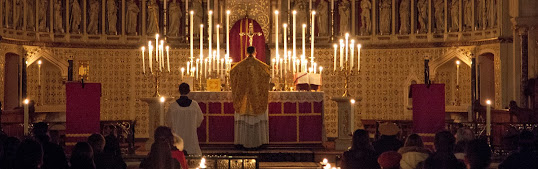
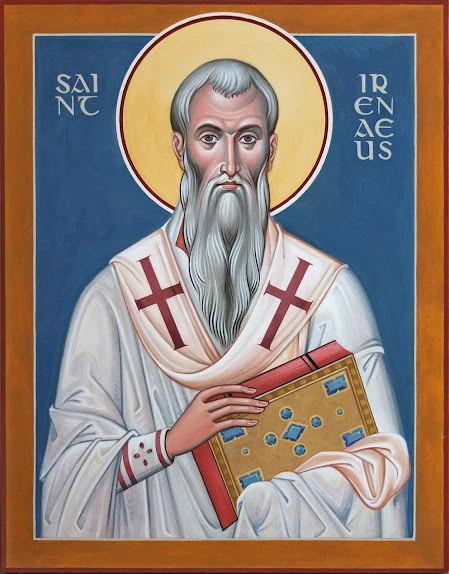
Reminder: Rorate Caeli Purgatorial Society

What Next for the FSSP & Co?
Bishop Athanasius Schneider’s New Book on the Mass — A Masterful Doctrinal and Devotional Synthesis
Bishop Athanasius Schneider. The Catholic Mass: Steps to Restore the Centrality of God in the Liturgy. Manchester, NH: Sophia Institute Press, 2022. Hardcover $21.95. Ebook $9.99. Available from Amazon.com or directly from publisher.
Francis as “the synthesis of extreme ultramontane centralization with progressive revolutionary content”: Chessman Replies to Ureta
José A. Ureta responded here on Rorate Caeli to my “Ultramontanism: Its Life and Death.” What follows are my comments on his response.
On the Meeting with the Pope - Interview granted 2/21/22 to Anne le Pape by Fr. Paul-Joseph, Superior of the FSSP district of France
Canon Lawyer Fr. Gerald Murray: The content of the Responsa “goes beyond what is canonically possible”
The Council and the Eclipse of God by Don Pietro Leone – SECTION II – CHAPTER VI - MAN– second part– Man’s Choice of Life – The Priesthood
In addressing the Council’s teaching on the priesthood, Don Pietro examines the Council documents PRESBYTERORUM ORDINIS, SACROSANCTUM CONCILIUM, INTER MIRIFICA and OPTATAM TOTIUS, exposing how they have gradually led to a demeaning of the priesthood, by subtly emptying this sacred calling of its divine nature as Alter Christus, and the priest as a man set apart principally to offer the Holy Sacrifice of the Mass and forgive sins in the Sacrament of Confession. The Council teaching emphasizes the role of teacher and brother as the focus of his ministry, in this way overshadowing his traditional role as a Father who feeds his children the divine food of the Sacraments. In this installment, Don Pietro also highlights how the teaching of Philosophy in seminaries has been debased by being put on the same level as the modern human sciences of sociology and psychology, always in flux, in contrast to traditional Thomist philosophy which focuses on objective truth and falsehood. F.R.
THE PRIESTHOOD
B. The Priesthood
In this section we shall consider:
IMPORTANT II - Decree of Pope Francis confirming the use of the 1962 liturgical books
[First post on the matter: Meeting with FSSP superiors.]
[Original: Latin and Spanish]
The Holy Father Francis, grants to each and every member of the Society of Apostolic Life “Fraternity of Saint Peter”, founded on July 18, 1988 and declared of “Pontifical Right” by the Holy See, the faculty to celebrate the sacrifice of the Mass, and to carry out the sacraments and other sacred rites, as well as to fulfill the Divine Office, according to the typical editions of the liturgical books, namely the Missal, the Ritual, the Pontifical and the Roman Breviary, in force in the year 1962.
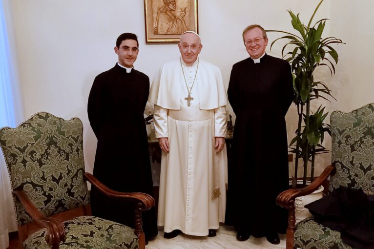
IMPORTANT - Pope meets FSSP superiors - Official communiqué of the Priestly Fraternity of St. Peter
Fribourg, February 21, 2022
On Friday, February 4, 2022, two members of the Priestly Fraternity of St. Peter, Fr. Benoît Paul-Joseph, Superior of the District of France, and Fr. Vincent Ribeton, Rector of St. Peter’s Seminary in Wigratzbad, were received in private audience by the Holy Father, Pope Francis, for nearly an hour.
“Obviously knitted with a hot needle”: Pope Francis’s rush of legal changes
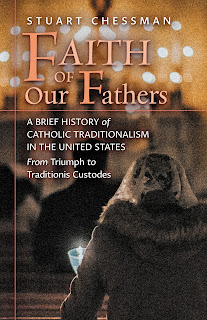
New Book Tells the Dramatic Story of Traditionalist Movement in the USA
Ukraine: roots and consequences of the crisis -- by Roberto de Mattei
Will the media “show” between Biden and Putin result in a real war between Russia and Ukraine, destined to involve Europe as well? Everything is possible, in the era of the unforeseeable. In this case it would be a matter not of a civil war within Ukraine but of an international conflict that would see Russia face off against the West. However, the two contenders have no interest in a military confrontation of this kind, unless the overdone bluster gives way to an unexpected event that changes strategies on the ground.
A Traditional Catholic Father’s Responses to a Diocesan Synod Questionnaire
Solemn Requiem Mass for Cardinal Kung in D.C.
In the Archdiocese of Washington there has been a growing number of traditional Latin Masses in recent years, including seven (public) TLMs offered every Sunday. Near the Catholic University of America in Northeast is the parish of Saint Anthony of Padua, which has graciously accommodated dozens -- hundreds -- of CUA students who desire the old Mass on Sundays, holy days and occasional feasts.
Saint Anthony's, with guest clergy, will host a traditional Latin Requiem High Mass on Saturday, February 26th, at 11 a.m. for Ignatius Cardinal Kung. The celebrant of the Mass, a priest of the Diocese of Hong Kong, has shared the following for our readers:
There will be a Solemn High Requiem Mass for Ignatius Cardinal Kung, in solidarity with the persecuted Church in China on Saturday, February 26th at 11:00 AM at Saint Anthony of Padua Church in the Brookland neighborhood of Washington, D.C.Ignatius Cardinal Kung was consecrated Bishop of Shanghai in 1950 and in 1955 was imprisoned by the Chinese Communist Party for 33 years as punishment for refusing to join the Patriotic Association. In 1986 he was named a cardinal in secret by St. John Paul II. In 1986 he was released from prison and settled in America.
SEPTUAGESIMA: In The Beginning
The reality of Original Sin ("I am the Immaculate Conception") and the great need for penitence in our times ("Penance! Penance! Penance!") were also the messages of the memorable events which began on February 11, 1858:
Meditations for Septuagesima
Papolatry and Ultramontanism are not the same: Why I am proud to be an ultramontane - by Roberto de Mattei
The Mass That Was Never Forbidden: Key Dates in the Old Missal’s Rehabilitation
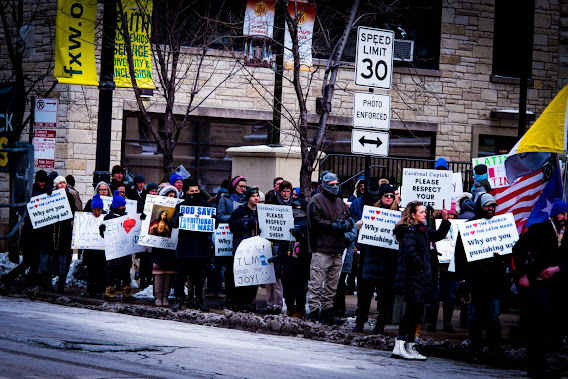
Chicago’s Fight for the Mass of the Ages
Francis Equates the Traditional Liturgy with “Abuse” While Continuing to Tolerate an Abusive Rite— Crucial article by French priest
The Woke Pope Epitomizes Liberal Illiberalism
Confirmations, the SSPX, and Alessandro Manzoni
![]() |
| Photo by John Aron |
One of the greatest Catholic works of literature, of any age and language, is Alessandro Manzoni's novel I Promessi Sposi: the Betrothed. Among the characters is Frederick, Cardinal Borromeo, of Milan, the nephew of St Charles Borromeo; the simple village parish priest, Don Abbondio, and the engaged couple, Renzo and Lucy.
In the opening pages of the book a powerful local landowner threatens Don Abbondio with death should he marry the young couple; he has designs on Lucy. The couple attempt to force the issue, by contracting marriage before the priest as an unwilling witness. This would be recognised by the Church, under the canon law of the day, as valid but illicit.
Eventually, Cardinal Borromeo hears of the case and confronts Don Abbondio. The latter protests:
“But these persons who have told your lordship these things, have they not also told you that they introduced themselves treacherously into my house, for the purpose of compelling me to perform the marriage ceremony, in a manner unauthorised by the church?”
“They have told me, my son; but what afflicts and depresses me, is to see you still seeking excuses; still excusing yourself by accusing others; still accusing others of that which should have formed a part of your own confession. Who placed these unfortunates, I do not say under the necessity, but under the temptation, to do what they have? Would they have sought this irregular method, if the legitimate way had not been closed to them?”
The strategy of slow strangulation: Will the new Mass be required of old-rite priests and communities?
(source)
ARTICLE: Saint John Bosco, the Educator -- by Fr. Konrad zu Loewenstein
NON POSSUMUS! - Enough is Enough: "We Reject the New Mass because it is not Traditional" -- by Yves Daoudal
Non Possumus
Thanks to Traditionis custodes, we have seen a resurgence of the discourse according to which, on the one hand, the Pope had to crack down because there are Trads who reject the new Mass, and on the other hand, the protests of Trads who affirm that of course they do not reject the new Mass, but only ask that they be allowed to keep the old Mass as well, for reasons of... of what? personal preference? sensitivity? Of "nostalgia"?
Let us be clear. No, we do not "prefer" the traditional Mass for reasons of "sensitivity," aesthetics, or "nostalgia" (a very large majority of us were not adults at the time of the liturgical revolution). We reject the new Mass because it is not traditional, because it is no longer the full expression of the Catholic liturgy.
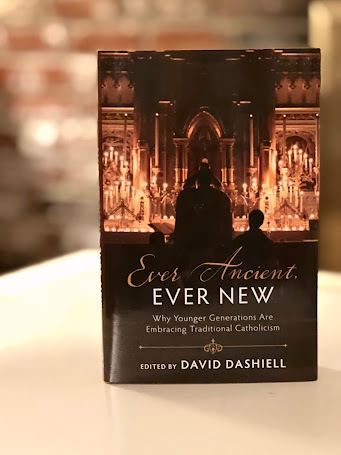
New Book: “Ever Ancient, Ever New: Why Younger Generations are Embracing Traditional Catholicism”
“Authority cannot change the essential patrimony and purpose” of religious institutes: Fr de Blignières’ incisive canonical demonstration
| Visit of Cardinal Sarah to the Fraternity of Saint Vincent Ferrer (the founder is second from the left) |
Father Louis-Marie de Blignières, founder and Prior of the Fraternity of Saint Vincent Ferrer in Chémeré-le-Roi, France, offers here a reflection on the “Proper Law of Religious,” in the context of the publication of Traditionis Custodes and of the CDW’s Responsa, which render almost impossible the celebration of all the sacraments according to the preconciliar liturgical books (except Mass, with certain limits).
This failure to understand the notion of proper law has led to the following objection being put to us: “The Pope is perfectly able to modify the Constitutions of communities or associations, and may even suppress them, if he deems it prudentially right: these communities emanate from him, since it is either he or one of his predecessors who erected them when they deemed it right.”
A Poem in Honor of St. Agnes
On January 28th, the traditional “second feast” of St. Agnes (see here to learn more about this ancient and beautiful feature of the calendar), we publish the following poem by Christian Browne, author of The Pearl of Great Price: Pius VI and the Sack of Rome (Arouca Press).—PAK
Upon St. Agnes’ Day
Andrea Riccardi, the influential liberal messenger between the Vatican and Italian politics - by Roberto de Mattei
Andrea Riccardi, between the Quirinale and the Apostolic Palaces
Between January 22 and 23 the main Italian news agencies and blogs reported that the center-left parties had selected professor Andrea Riccardi as candidate for the presidency of the Republic. News that surprised many, because Riccardi’s name is of no great repute in the university world and his political experience is modest, having been minister for international cooperation in the Monti government from November 2011 to April 2013. Yet his influence is far greater than one might imagine, if one considers that Time magazine, back on April 21 1997, placed him at the top of the ten persons who matter most on our peninsula. His strength does not come from his academic or political merits, but from the powerful lobby he founded and directs: the Community of Sant’Egidio.
Debunking Dialogue in the Pontificate of Pope Francis — A Response to Austen Ivereigh’s article “The Limits of Dialogue”
| Traditional Latin Mass in Kampala, Uganda (Photo: New Vision, Uganda) |
The author of this guest post, Michael Kakooza, is a Ugandan Catholic who discovered the Traditional Latin Mass while studying in the UK (see Una Voce Scotland Newsletter, 19th April 2019, pp. 5-6). He is a member of the Traditional Latin Mass Community in Kampala which is ministered to by the Institute of the Good Shepherd. Dr. Kakooza holds a PhD in Communication and Ideology from the University of Wales; his doctoral thesis was on the topic of ideological anti-Catholicism in modern English identity.
The Council and the Eclipse of God by Don Pietro Leone – SECTION II – CHAPTER VI - MAN– second part– Man’s Choice of Life - MARRIAGE
At the end of this second part addressing the effects of the Council’s teaching on Catholic Marriage, Don Pietro highlights ten points of variance between Traditional and Council teaching, placing the former teaching in first place and the latter in second place.
Una Voce International: Guide to taking part in the Synod
| Votive Mass of Our Lady, Oxford Oratory, England |
Modernism, Not Ultramontanism, Is the “Synthesis of All Heresies” — A Response to Stuart Chessman
The following article was submitted to Rorate Caeli by José Antonio Ureta, co-founder of Fundación Roma (Chile) and advisor of its pro-life and pro-family project Acción Familia, a senior researcher at Société Française pour la Défense de la Tradition, Famille et Propriété (Paris), and author of Pope Francis’s Paradigm Shift: Continuity or Rupture in the Mission of the Church? (Spring Grove, PA, 2018). We publish it in the interests of open discussion of topics of grave importance in the Church.
“The Sacrament of Confirmation: What Should Be Done After the Responsa?” - a canonical response, by Father Pierre Laliberté, Doctor of Canon Law
Sacramentum Confirmationis: Quid Sit Faciendum Post Responsa?
“The Sacrament of Confirmation: What Should Be Done after the Responsa?”
by Fr. Pierre Laliberté, J.C.L.
Upon hearing the most distressing news of His Eminence, Vincent Cardinal Nichols, attempting to ban confirmations according to the traditional rites in England and Wales, a few remarks are necessary from a canonical viewpoint.
The New Doctor of the Church, or, Does Pope Francis Know What He Is Doing? — Guest Article by Tomasz Dekert
The Joy of the Traditional Roman Mass: They can't take that away from us.
Last week at Mass we heard the gospel from St. John that recounts Jesus’ first miracle, the changing of water into wine. Today on the Third Sunday after the Epiphany we hear of two more miracles performed by our Lord: the healing of the lepers and the healing of the centurion’s servant. The gospels in the season of the Sundays after Epiphany concentrate on the miracles of Jesus as the answer to the seminal, the basic question asked and answered in the gospels: who is this man Jesus? These miracles are not offered as proof to the gospel answer to this question, that he is the Son of God, the Word of God the Savior of the world. But they are offered—and they are offered in a historical sense, not in some sort of symbolic sense—to point to the answer to the seminal question. Many who call themselves Christians have been having problems with these miracles for a long time, and they have done so because they have succumbed well over a century ago to a rationalistic and moralistic understanding of the person of Jesus Christ. And they are locked into a totally outdated and false understanding of the physical world: they live in an imaginary Newtonian world in which surprise is absent. It is absent by decree, since there can be no surprises in a clock world understanding of the physical universe. One does not have to be conversant with the ins and outs of contemporary physics to know that physical reality is full of surprises and that these surprises happen with alarming frequency. The irony is that in an age in which science is seen to be the basis and the touchstone of what is real, most people, certainly including theologians, are locked into a view of reality that corresponds in no way to the mysterious and in a way crazy picture of physical reality that contemporary physics paints for us. And the verb paints is very apt, for physical reality is much more like a painting whose meaning can never be fully grasped than the rather boring view of reality that is like a Patek Phillipe watch: expensive, keeps good time, but in the end not very interesting.
A reply: the unforgivable sin of Traditionalism
![]() |
| Mass of Reparation, celebrated in response to clerical abuse revelations in 2018. |