Rorate Caeli
Showing posts with label History of the Church. Show all posts

De Mattei: How St. Charles Borromeo braved the epidemic of his time

Roberto de Mattei 
Corrispondenza Romana
March 4, 2020

St. Charles Borromeo (1538-1584), Cardinal of the Holy Roman Catholic Church and Archbishop of Milan from 1565 to 1583, was described in the decree for his canonization, as “a man, even while the world smiles on him with the utmost flattery, he lives crucified to the world, spiritually, trampling earthly things, seeking continuously the things of heaven, emulating the life of the Angels on earth, in his thoughts and actions. (Paolo V, Bolla « Unigenitus » del 1 Nov. 1610).

Devotion to the angels accompanied St. Charles throughout his life.  Count Enrique de Guzmán, Philip II’s Ambassador to Rome, described him as “more of an angel than a man” (Giovanni Pietro Giussano, Vita di San Carlo Borromeo, Stamperia della Camera Apostolica, Roma 1610, p. 441).  Many artists, such as Teodoro Vallonio in Palermo and Sebastien Bourdon in Fabriano, depicted Charles Borromeo in their paintings while contemplating an angel re-sheathing his bloodied sword into its scabbard, signifying the cessation of the terrible plague of 1576.

Everything began in the month of August that year. Milan was celebrating joyfully the arrival of Don John of Austria, on his way to Flanders, where he had been appointed governor. The city authorities were abuzz with excitement in their desire to bestow the highest honours on the Spanish prince, but Charles, who had been Archbishop of the diocese for six years,  was following with concern the news coming from Trento, Verona and Mantua, where the plague had begun claiming victims. The first cases exploded in Milan on August 11th, right at the moment when Don John of Austria arrived. The victor of Lepanto, followed by the governor, Antonio de Guzmán y Zuñiga, departed the city, while Charles, who was in Lodi for the Bishop’s funeral, returned in haste.

The significance of Cardinal Brandmüller's latest condemnation of the Amazon Synod: "A situation never before seen in the Church's history"

By now (6th September 2019), many media outlets (among them Catholic Herald and Catholic News Agency) have reported on the latest broadside against the upcoming Amazon Synod (and its Instrumentum Laboris) by Cardinals Raymond Burke and Walter 

This is not the first time that either Cardinal has denounced this horrid document. What is new is Brandmüller's declaration that the current crisis surpasses even the Arian Crisis in severity: 

"'We must face serious challenges to the integrity of the Deposit of the Faith, the sacramental and hierarchical structure of the Church and its Apostolic Tradition. With all this has been created a situation never before seen in the Church’s history, not even during the Arian crisis of the fourth and fifth century,' Brandmüller added.

Video: Vatican City under Pius XII

A traditional seminarian shared with us this historic footage from 1941, starring Fulton Sheen. Take a look when you have time. And, if you can, this seminarian is from Malaysia where it's not exactly easy to get benefactors to help offset seminary training costs. CLICK HERE to check out his fundraising page.

Dr. John Rao lecture: “Even Now the Devastation Is Begun"


Dr. John Rao (shown in the video above reading the Lake Garda Statement) will be delivering the customary Roman Forum Lecture Series in New York this year. The Program will be as follows:

De Mattei - Completeness or not of Fatima message is beside the point: what matters is that what is known is unfolding


Church Crisis in light of the Fatima secret

Roberto de Mattei
Corrispondenza Romana
May 25, 2016


The centenary year of Fatima was opened on Pentecost Sunday to news that caused quite a sensation.

Roberto de Mattei: "The Synod of Adultery: the Church has been here before”

St. Theodore the Studite, and the “Synod of Adultery”
Roberto de Mattei
Corrispondenza Romana
26th August 2015

 “The Synod of Adultery” an assembly of Bishops in the 9th century, made history when they wanted to approve the praxis of  a second marriage after the repudiation of a legitimate wife.  St. Theodore the Studite, (759-826) was the one who opposed it the most vigorously and for this was persecuted, imprisoned and exiled three times.

It all started in January 795, when the Roman Emperor of the East (Basileus) Constantine  VI (771-797) had his wife Maria of Armenia locked up in a monastery and began an illicit union with Theodora, the lady-in-waiting to his mother, Irene.  A few months later the Emperor had her proclaimed “Augusta”  Theodora, but being unable to convince the Patriarch Tarasios (730-806) to celebrate the new wedding, he finally found a minister willing to do so in the priest Joseph, hegumen (head) of the Monastery of Kathara on the Island of Ithaca, who officially blessed the adulterous union.

John Rao to Lecture on “Splendors and Miseries of the Tridentine Life”


Dr. John Rao (shown in the video above reading the Lake Garda Statement) will be delivering the customary Roman Forum Lecture Series in New York this year on the glories of Baroque Catholicism and their demolition in the Enlightenment. The Program will be as follows:

The Roman Forum
New York City Church History Program
2015-2016

Splendors and Miseries of the Tridentine Life:
The High Baroque and the Architects of Demolition: 1689-1748

Lecturer: John Rao, D. Phil., Oxford University
Associate Professor of History, St. John's University

Video Suggestion: "Archbishop Lefebvre - A Documentary" online

From a reader:

Many are aware of the role of French Archbishop Marcel Lefebvre as the consecrator of bishops in the events that took place in Écône, Switzerland, on June 30, 1988, in a climate of extreme tension with the Holy See. What is less well known is his work as the most important character of the Church in the continent where its growth is truly explosive in our age -- Africa -- in the crucial decades of deconolization, and that he set in place around forty dioceses in the continent, before being a leading figure during the Second Vatican Council.

"The ralliement of Leo XIII: a pastoral experience that moved away from doctrine" - by Roberto de Mattei

Roberto de Mattei
Corrispondenza Romana
March 18, 2015

The 1905 Separation, the complete failure of Leo XIII's policy of ralliement:
"The Separation: 'Let us separate - I will keep your assets.' "

Leo XIII(1878-1903) was certainly one of the most important Popes in modern times, not only for the length of his pontificate, second only to  Blessed Pius IX’s, but above all for the extent and richness of his Magisterium. His teaching includes encyclicals of fundamental importance, such as Aeterni Patris (1879) on the restoration of Thomist philosophy, Arcanum (1880) on the indissolubility of marriage, Humanum genus (1884) against Masonry, L’Immortale Dei (1885) on the Christian constitution of the States and Rerum Novarum (1891) on the question of work and social life.

The Magisterium of Pope Gioacchino Pecci appears as an organic corpus, in continuation with the teachings of his predecessor Pius IX as well as his successor Pius X. The real turning point and novelty of the Leonine pontificate, by contrast, is in regard to his ecclesiastical politics and pastoral approach to modernity. Leo XIII’s government was characterized in fact, by the ambitious project of reaffirming the Primate of the Apostolic See through a redefinition of its relationship with the European States and the reconciliation of the Church with the modern world. The politics of ralliement, that is, of reconciliation with the French, secular, Masonic Third Republic, formed its basis.  

A Christmastide Gift for our Readers:
- Attacks on Thomism: a special historical and theological essay

Attacks on Thomism

a special essay for Rorate Caeli by John Lamont


Thomism and neomodernism 
I: Progressives, 'manualism', and Thomism

Anyone who has any familiarity with the clerical and intellectual scene in the Catholic Church will have encountered the received 'progressive' wisdom concerning Thomism and its role in the Church before the Second Vatican Council, and concerning the preconciliar state of theology in general. Its claims and slogans are continually reiterated in theological and clerical circles, with little change since the era – the first half of the twentieth century – in which they were first elaborated. Unlike 'progressive' positions on moral questions, this received wisdom has virtually attained the status of a pseudo-orthodoxy within the Church, with some of its components being central to 'conservative' Catholicism. Its acceptance by neoconservatives is indicated by a favourable presentation of it by Fr. Brian van Hove in the Homiletic and Pastoral Review,1 a journal that is one of the oldest pillars of conservative Catholicism. Fr. Van Hove's exposition of this received wisdom takes the form of an attack on Pius XII's encyclical Humani Generis, an embarrassing document for neoconservative Catholics. His exposition is a naïve one, lacking the nuances that would be introduced by a clever apologist for his outlook, but it is valuable for that very reason. It is the naïve version of an idea, the simplified and readily accessible one, that gets widely adopted and that determines events; this fact is known by the clever apologists, who are aware that the nuances they introduce to disarm criticism and conceal their intentions will fall by the wayside once their position has triumphed. Together, these points make up the ideology that justified the destruction of preconciliar Catholic theology, and that is an essential underpinning of the progressive hegemony that now controls the Church. Seeing through this ideology is crucial to overcoming this hegemony; this article and its two sequels are devoted to the task of exposing it.

'Manualism'.

An important component of this ideology is an attack on 'manualism'. This attack claims that preconciliar Catholic theology largely consisted in 'manualist theology'. Allegedly, this theology was conveyed in theological manuals, and suffered from legalism, dogmatism, anti-modernism (presumed to be a fault), abstraction, and ahistoricism.

The very idea of 'manualist theology' is however a fiction. Theological manuals were indeed in wide use before the Second Vatican Council, for the purposes that manuals exist for; the education of theological students.2 The best of them were excellently designed for that purpose, as any educator who looks at them can see. But there was no such thing as a school of theology based on these manuals, let alone a dominant school. Theology before the council was carried on by the same means as other scholarly enterprises; monographs, learned journals, extensive treatises. These works, not the theological manuals, were the venues for preconciliar theology. If we were to identify a characteristic product of theology in the period that preceded the council, it would not be the manuals, but the great works of reference such as the Dictionnaire de théologie catholique or the Dictionnaire de spiritualité. The articles in these works often amounted to book-length treatments in excess of 100,000 words. They include outstanding monuments of scholarship that could never be replaced today; the depth of theological learning that went into their composition no longer exists – so much for the weakness of preconciliar theology. The idea of 'manualist theology' was a fiction aimed at priests whose theological formation did not go much farther than the manuals they had studied in seminary. Such priests were in the majority, especially in the English-speaking world where academic theology was weak. Convince them that what they had learned in the seminary was flawed and obsolete 'manualist theology', and the road to leading them away from the Catholic doctrine they had been taught was open.

Thomism.

Another article of the postconciliar creed has to do with the character of the Thomism that was promoted by popes from Leo XIII to Pius XII. The substantive accusations made against this Thomism are that it unjustifiably limited theology to a particular philosophical system, that theology was forced to conform to it, and that it was not the true thought of St. Thomas. These claims play a subordinate role in the criticism of preconciliar Thomism, whose main thrust lies in accusations that Thomism was 'abstract', 'rationalist', 'ahistorical', 'arid', 'frozen', 'immobile', 'obsessed', 'encouraging pure secularity', 'sclerotically hardened and furred theologically, spiritually and ecclesially', 'causing a rupture between theology and life', a 'wax mask', a 'straightjacket' that 'reduced theological speculation to sterility'. The essence of this villainous form of Thomism is supposed to be given by the 24 Thomistic theses developed by leading scholars and endorsed by the Sacred Congregation of Studies in 1914, as containing the principles and main pronouncements of St. Thomas's philosophy.3

Advent is coming: it's time to prepare
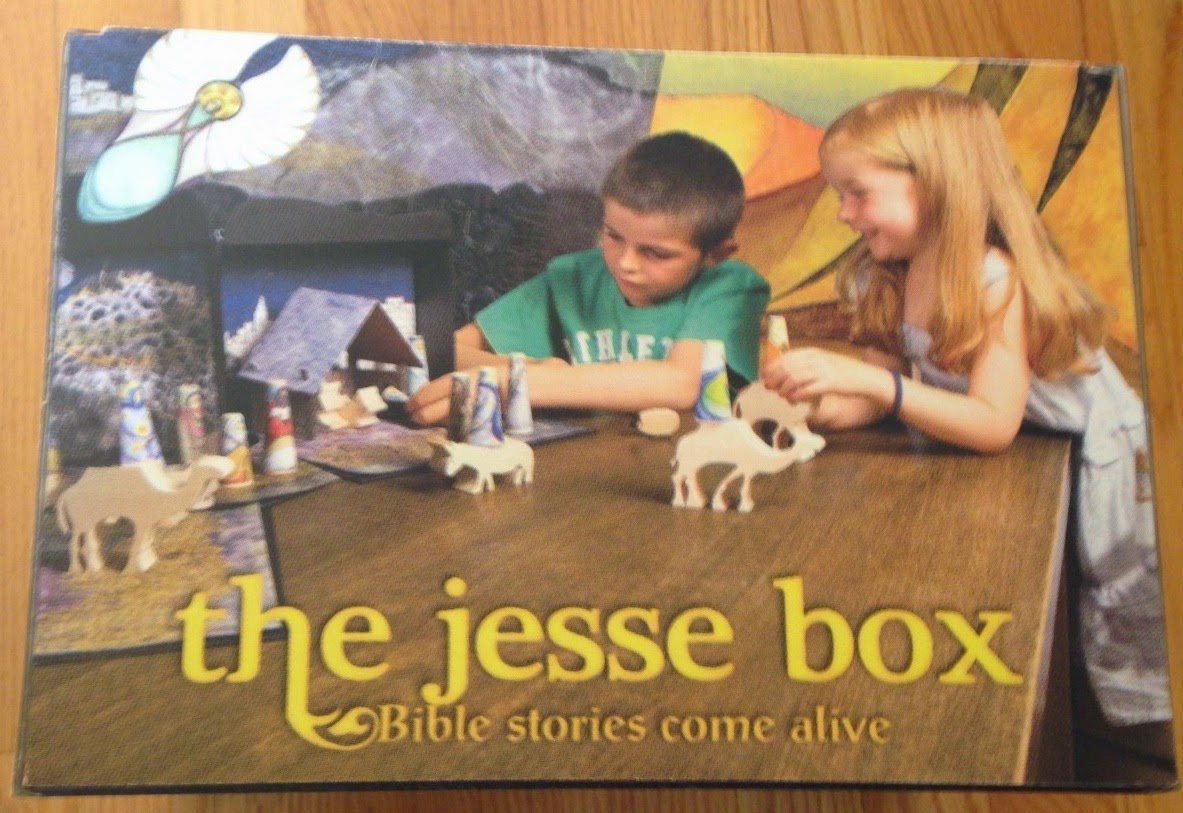
A review of "The Jesse Box"

Once in a while, Rorate reviews books, calendars and other items for our readers we believe will be beneficial to them or their families, helping them grow in the Faith. We have no agreements with any publisher and receive no compensation whatsoever.

For today's review, we think back to the Advent seasons of the past, and trying to figure out how to instill the beauty of Advent in our children by teaching the ancestry of Jesus. For our family, it means going out to the yard, finding an awkwardly-shaped branch, then trying to figure out how to stand it upright for our children to create their Jesse Tree. Then, how to keep it low enough for the older children to adorn it, yet high enough for the little ones not to destroy it!

Now, Angelus Press has sent us a much-needed solution: The Jesse Box.

Ten tips on how to survive a calamitous Pope and remain Catholic


Italy, France, Spain... Our readers must have noticed we are quite fond of bringing you news and opinion pieces by Catholic writers from these very ancient Catholic lands, and there is a very important reason for it.