Rorate Caeli
Showing posts with label New Cardinals. Show all posts

THE UPCOMING CONCLAVE: A Close Look at the College of Cardinals (Exclusive for Rorate)


 by Serre Verweij
for Rorate Caeli


Pope Francis has just named twenty new cardinal electors. Another important step in ensuring that the next Pope will be an ‘inclusive progressive’ like Pope Francis, so many say. The reality, however, seems to be quite different. 


Of the 110 current cardinal electors named by Pope Francis, almost half (53) have been named in the last three consistories. These were held after the Pope’s colon surgery that caused him to be hospitalized for over ten days; and induced a wave of rumours that he’s terminally ill. Some Vaticanists think the Pope has been trying to secure his legacy during the last few years of his pontificate. Yet this legacy, and the cardinals representing it, are a mixed and contradictory bag. As such, Francis’ cardinals are actually quite representative of his near twelve year pontificate.

New Cardinals created by Francis
UPDATE: Initial notes on the Cardinals-elect and their leanings

(Scroll down this post to see the full list of Cardinals-elect.)

Our initial notes on the Cardinals-elect:

Liberals, Bergoglians, and a Climate Change Warrior

Three of the new Cardinal electors are prominent liberals: Cupich of Chicago, De Kesel of Mechlin-Brussels, and Tobin of Indianapolis. Two of the three are from the U.S., signalling the Pope's clear intention to move the U.S. Church sharply leftward. 

Enough has been written about Cupich (67) and we will not devote more space to him here. 

Abp. Joseph Tobin (64) was Secretary of the Congregation for Institutes of Consecrated Life and Societies of Apostolic Life (CICLSAL) from 2010 to 2012 and is widely credited with using his position to greatly weaken the "visitation" launched by CICLSAL into U.S women's religious congregations. As Archbishop of Indianapolis he was outspoken in calling for the USCCB to "reflect" the "newness that Pope Francis is bringing to the church universal" in its agenda. Only this weekend -- literally hours before the announcement of his elevation to the cardinalate -- he reportedly expressed his support for women deacons and women preaching at Mass. 

Abp. Jozef De Kesel (69), protege of Cardinal Danneels and prominent Kasperite, was appointed less than a year ago as Archbishop of Mechlin-Brussels. In that short period he has made himself notorious for his suppression of the flourishing -- and conservative -- Fraternity of the Holy Apostles, which was founded by no less than his more orthodox predecessor, Archbishop Leonard, whose marginalization is now complete. 

As for Cardinal-elect Farrell (69), the following tweet -- which he has not deleted -- should give us an idea as to where the "Dicastery for Laity, Family and Life" is headed under him:


Abp. John Ribat (59) of Port Moresby is known for his advocacy of a low-carbon lifestyle and his outspoken opposition to the death penalty. Since 2014 he has been the President of the Federation of Bishops’ Conferences of Oceania. (CathNews has various articles about him.)


Conservatives

Abp. Dieudonné Nzapalainga (49) was one of the Synod Fathers in the Extraordinary Synod on the Family in 2014. Although not particularly outspoken or prominent, he was part of the African bloc of prelates that resolutely resisted innovations in moral doctrine. He was appointed apostolic administrator of Bangui in 2009 in the midst of the rebellion of the Central African Republic's clergy over the Holy See's attempts to enforce the law on clerical celibacy. After three years as apostolic administrator, Pope Benedict XVI appointed him Archbishop of Bangui in 2012. 


The Cardinals elect and the Traditional Latin Mass.


Of the 13 future Cardinal electors, three have either attended or presided at at least one liturgical ceremony celebrated according to the Traditional Latin Rite in the post-Summorum era. These are Bp. Farrell, who blessed the Mater Dei (Irving, TX) parish church of the FSSP in 2010; Abp. Tobin, who celebrated Confirmation (followed by Benediction) according to the Traditional form in Holy Rosary Church in Indianapolis in 2013, and again earlier this year; and Bp. Maurice Piat (75), who attended a Traditional Latin Mass in choro last month. 

Among the 13, in addition to Bp. Piat (who invited the Institute of Christ the King to set up a presence in his diocese this year), three others provided for the implementation of Summorum Pontificum in their sees: Kevin Farrell during his time as Bishop of Dallas; Abp. Osoro Sierra (71), who, as Archbishop of Valencia in 2014, designated a church for regular celebrations of the TLM; and Abp. Sergio da Rocha (56), who in 2014 granted  the establishment of large IBP-run, fully traditional Catholic chapel in Brasilia. 

A special mention goes to Cardinal-elect Ernest Simoni (88), who was imprisoned by the Albanian communists for 27 years (1963 - 1990). He continued to celebrate the Traditional Latin Mass from memory and to give communion in secret during his long incarceration.  

Another "special mention" -- for all the wrong reasons -- goes to Cardinal-elect Renato Corti (80), emeritus of Novara. Our long-time readers might remember him for his role in the "Novara affair" of 2007-2008 (see this and this) that directly led to the formation of the Traditional Catholic community in Vocogno. He was close to the late Cardinal Martini. 


*****************
Original post (Oct. 9, 2016, 10:34 AM GMT):

Titles in Italian, but perfectly understandable, including three Americans:

1- Mons. Mario Zenari, che rimane Nunzio Apostolico nell’amata e martoriata Siria (Italia)
2- Mons. Dieudonné Nzapalainga, C.S.Sp., Arcivescovo di Bangui (Repubblica Centrafricana)
3- Mons. Carlos Osoro Sierra, Arcivescovo di Madrid (Spagna)
4- Mons. Sérgio da Rocha, Arcivescovo di Brasilia (Brasile)
5- Mons. Blase J. Cupich, Arcivescovo di Chicago (U.S.A.)
6- Mons. Patrick D’Rozario, C.S.C., Arcivescovo di Dhaka (Bangladesh)
7- Mons. Baltazar Enrique Porras Cardozo, Arcivescovo di Mérida (Venezuela)
8- Mons. Jozef De Kesel, Arcivescovo di Malines-Bruxelles (Belgio)
9- Mons. Maurice Piat, Arcivescovo di Port-Louis (Isola Maurizio)
10- Mons. Kevin Joseph Farrell, Prefetto del Dicastero per i Laici, la Famiglia e la Vita (U.S.A.)
11- Mons. Carlos Aguiar Retes, Arcivescovo di Tlalnepantla (Messico)
12- Mons. John Ribat, M.S.C., Arcivescovo di Port Moresby (Papua Nuova Guinea)
13- Mons. Joseph William Tobin, C.SS.R., Arcivescovo di Indianapolis (U.S.A.).

---

Plus 4 non-voting Cardinals:

1 - Mons. Anthony Soter Fernandez, Arcivescovo Emerito di Kuala Lumpur (Malaysia)
2- Mons. Renato Corti, Arcivescovo Emerito di Novara (Italia)
3- Mons. Sebastian Koto Khoarai, O.M.I, Vescovo Emerito di Mohale’s Hoek (Lesotho)
4- Reverendo Ernest Simoni, Presbitero dell’Arcidiocesi di Shkodrë-Pult (Scutari – Albania).
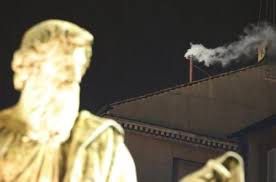
New cardinals coming in February

From Vatican Information Service:

A press conference was held today during which the director of the Holy See Press Office, Fr. Federico Lombardi, S.J., announced the Holy Father's wish to convene a Consistory for the creation of new cardinals on 14 and 15 February 2015. He also announced two other important appointments: a meeting of the Council of Cardinals for the reform of the Roman Curia (9 to 11 February) and a meeting of the College of Cardinals (12 to 13 February) to discuss matters relating to the reorganisation of the Holy See.

Very Relevant: Exclusive for La Stampa:
- What exactly happened in the February Consistory, anyway?
Majority of Cardinals against Kasper Doctrine
- And Müller's strong words on "public opinion"

The Kasper controversy (with the attempt by Cardinal Kasper, invited by the Pope as the keynote speaker, to undermine and destroy the Catholic dogma of the indissolubility of the matrimonial bond) dominated the consistory discussions of February. Some had given the impression that all were quite pleased with the views presented by Cardinal Kasper - Cardinal Müller (see notes at the end) had been quite clear about the issue since the second half of 2013, but the first member of the College of Cardinals to speak up clearly in public following the consistory was Cardinal Caffarra, followed by Cardinal Burke.

Marco Tosatti explains, however, that from day one the College of Cardinals was in its majority against the "Kasper Doctrine", whose practical effect would be the complete destruction of the edifice of the Sacramental Theology of Matrimony and Penitence, a disregard for the Most Holy Sacrament, and a frontal assault to the words of Christ Himself, maintained by the Catholic Church without interruption and even in grave adversities (e.g. the Henry VIII schism or the ongoing struggle against polygamy in Africa) for 2000 years.

The Secret Consistory: what happened

In the Secret Consistory where the divorced/remarried and the Eucharist were discussed, “Kasper’s theorem” received little consensus and a lot of criticism. Here is a reconstruction of some of the most significant and important statements. “It would be a fatal mistake” someone said, to follow the pastoral approach without referring to doctrine.

Marco Tosatti, for LA STAMPA

The Consistory on the 22nd February to discuss the family, was supposed to be secret. Instead a decision came from the top that it was opportune to publish Cardinal Kasper’s long report on the theme of the Eucharist for the divorced and remarried. In all probability [this] to open the way in prospect of the October Synod on the Family. However half of the Consistory remained secret: [that half] concerned observations from Cardinals. And maybe not by chance, as, after Cardinal Kasper had presented his long report (and as it seems it was not very light when given ,) rather a lot of voices were raised in criticizing it. So much so, that in the afternoon when the Pope gave him the job of responding, the German Cardinal’s tone appeared piqued, even angry to the many [present].

The current opinion is that “Kasper’s theorem” tends to allow permission in general for the divorced and remarried to receive communion, without the previous marriage being recognized as null. At present this does not happen, based on Jesus’ words which were very severe and explicit on divorce. People who live a full matrimonial life without the first union being regarded as invalid by the Church, find themselves in a situation of permanent sin, according to present doctrine.

In this sense, Cardinal Caffarra of Bologna as well as German Cardinal Mueller (Prefect of the Congregation of the Faith) spoke clearly. Equally explicit was Cardinal Walter Brandmuller (“ Neither human nature nor the Commandments nor the Gospel have an expiry date[…]Courage is needed to enunciate the truth even against current customs. Whoever speaks on behalf of the Church must possess courage if he does not want his vocation to be a failure.[…] The desire to obtain approval and applause is a temptation which is always present in the transmission of religious teaching.” Afterwards he made his words public). Also the President of the Italian Bishops, Cardinal Bagnasco expressed himself in a critical manner with regard to “Kasper’s theorem”; the same went for the African Cardinal Robert Sarah, Head of “Cor Unum” who at the end of his comments, recalled that in the course of the centuries even on dramatic questions controversies and divergences had existed inside the Church, but that the role of the Papacy had always been the one of defending doctrine.

Cardinal Re who was one of Bergoglio’s greatest electors, gave a very short statement, which can be summarized thus: “I will speak for just a moment, because there are future new cardinals here and perhaps some of them do not have the courage to say it, so I will: I am completely against this report.” Also the Prefect of the Penitentiary, Cardinal Piacenza said he was against it and more or less said: “we are here now and we will be here again in October for a Synod on the Family, and so since we want to have a positive Synod, I don’t see why we have to touch only on the matter of Communion for divorcees.” He added: “Since we want to have a debate on pastoral care it seems to me that we should have to take note of a widespread pan-sexualism and the attack of the “ideology of gender” which tend to demolish the family as we have always known it. It would be providential if we were lumen gentium so as clarify the situation we find ourselves in, as well as the things that can destroy the family.” He concluded by exhorting a re-reading of the catecheses by John Paul II on corporeity, since they contain many positive elements about sex, being a man and a woman, procreation and love.

Cardinal Tauran, (of Inter-Religious Dialogue) returned again to the attack on the family, also in light of relations with Islam. Likewise Cardinal Scola of Milan raised theological and doctrinal perplexities .

Cardinal Ruini was also very critical. He [also]added: “I don’t know if I understood well, but at this moment, about 85% of the Cardinals have expressed opinions apparently contrary to the layout of the report.” He added that among those who did not say anything - therefore could not be classified - he took from their silence that: “I believe they are embarrassed”.

Cardinal Ruini then cited the Good Pope. In essence saying: “when John XXIII gave his opening speech at the Second Vatican Council, he said a pastoral council could be held as fortunately doctrine was accepted peacefully by everyone and there were no controversies; so a pastoral approach could be presented without fear of misunderstandings because doctrine remained very clear. If John XXIII had been right then, the Cardinal commented, God alone knew, but apparently it was true to a large extent. This could absolutely not be said anymore today, because doctrine is not only not shared, but it is contested. “It would be a fatal mistake” to follow the pastoral approach without referring to doctrine.

So it is understandable that Cardinal Kasper seemed a little piqued in the afternoon when Pope Bergoglio allowed him to respond, without permitting, however, the start of a real debate: only Kasper spoke. To add to the criticisms aired about “Kasper’s theorem” during the Consistory, these are also building up - in a private way - towards the Pope [along with ] other public criticisms by cardinals from all over the world.

German Cardinals who know Kasper well, say that he has had a passion for this subject since the 1970s. The problem raised by many critics is that on this point the Gospel is very clear. And by not taking this into account – which is the fear – any other point of doctrine based on the Gospel would be rendered very instable, and modifiable at will.


(Source: LA STAMPA, March 24, 2014. Translation: Contributor Francesca Romana.)

________________________ 

Notes:

- 1. Cardinal Müller was clear, in an interview posted by Vatican Radio on Monday, that when he speaks on the marriage debate (as he has done forcefully and clearly since 2013), he is the one who speaks for the Church and her doctrine, as the man named by the Pope to do this job: "I am not involved [in the Kasper debate] as a private theologian, but in the function of the Congregation for the Doctrine of the Faith, which is indeed the only one of the Roman Congregations which has the duty to inform, wihout mediation, the Magisterium of the Pope, while others who take part, even if they have the cardinalatial rank, speak personally, only for themselves, and do not make official statements."

"The Congregation for the Doctrine of the Faith," the Cardinal adds, "has a clear mandate to promote the Catholic faith, but also to protect it. But that includes no other task than the one the Pope himself received from Jesus Christ, and here I must mention that I do not just sit back in comfort and ease to flirt with public opinion. It is quite fine when you have the wind on your back and are then inflated perhaps excessively. But I believe that this temptation must be resisted by every bishop and by every priest, whether one wants to hear it or not." (In German.)

- 2. Abp. Georg Gänswein said on Sunday to Cologne's diocesan Domradio that indeed the German Church puts a lot of "pressure" on the Vatican, and that German Catholics must understand that their obsessions are not necessarily pressing concerns in Rome: "Whether this is felt as a pressure in Rome, I cannot say. You have to see that, for us Germans, Germany is the most important country in the world for the Vatican. [But] For the Vatican, Germany is one important country out of many important countries. And currently things are much, much more pressing, politically and pastorally, in other countries. And it is urgent to focus there. This does not mean treating the German concern in a secondary fashion." (In German.)

The New Cardinals of the Holy Roman Church


Pope Francis announced today following the Angelus the Cardinals he will create in the February 22 consistory.

They are the following:

16 Voting Cardinals:

1 – Abp. Pietro Parolin, Secretary of State.
2 – Abp. Lorenzo Baldisseri, Secretary of the Synod of Bishops.
3 – Abp. Gerhard Ludwig Műller, Prefect of the Congregation for the Doctrine of the Faith.
4 – Abp. Beniamino Stella, Prefect of the Congregation for the Clergy.
5 – Abp. Vincent Gerard Nichols, Westminster (England and Wales).
6 – Abp. Leopoldo José Brenes Solórzano, Managua (Nicaragua).
7 – Abp. Gérald Cyprien Lacroix, Québec (Canada).
8 – Abp. Jean-Pierre Kutwa, Abidjan (Côte d'Ivoire).
9 – Abp. Orani João Tempesta, O.Cist., Rio de Janeiro (Brazil).
10 – Abp. Gualtiero Bassetti, Perugia-Città della Pieve (Italy).
11 – Abp. Mario Aurelio Poli, Buenos Aires (Argentina).
12 – Abp. Andrew Yeom Soo-jung, Seoul (Korea).
13 – Abp. Ricardo Ezzati Andrello, S.D.B., Santiago de Chile.
14 – Abp. Philippe Nakellentuba Ouédraogo, Ouagadougou (Burkina
Faso).
15 – Abp. Orlando B. Quevedo, O.M.I., Cotabato (Philippines).
16 – Bp. Chibly Langlois, Les Cayes (Haiti).

H.E. Gualtiero Bassetti, Abp. of Perugia
celebrates Pontifical Mass with the Inst. of Christ the King 
(2011 - source)

Cardinals over 80:

1 – Abp. Loris Francesco Capovilla, Titular of Mesembria (former secretary to Bl. John XXIII).
2 – Abp. Fernando Sebastián Aguilar, C.M.F., Emeritus of Pamplona (Spain).
3 – Abp. Kelvin Edward Felix, Emeritus of Castries (St. Lucia).