Rorate Caeli

Sicut incensum in conspectu tuo...


Father Ephraem weighs in, with his customary good humor, on the possible Papal document:

My take of the available data is that there is, in fact, a document awaiting signing and publication. Perhaps the abolition of Limbo means that there is nowhere suitable for the Curia to put the Old Mass! (Tee hee!) The Vatican seems to have made quasi official prnouncements about it already. Senior hierarchs have reported conversations with Cardinal Hoyos and others. The most senior vaticanisti have been reporting this for a few days now in the Italian media. There is a good summary on Rorate Caeli blogspot including translations of the French and Italian sources. It seems that the forces of darkness have lost the battle to stop its publication or even water it down significantly. Everything points to the settled will of the Pope in this matter. The document will speak, if the sources are to be believed, of one Roman Rite with two expressions. (This reminds me strangely of Communist China's "One Country Two Systems" doctrine about Hong Kong.) The Pauline Rite will be the ordinary Rite, the Pian Rite will be the extraordinary Rite. (One hopes that the extraordinary rite will become as common as extraordinary ministers in the new rite).

Having had the experience of being attended at the altar by the Indolent Server I can testify to just how extraordinary the Old Rite can be! I recall on a famous occasion nearly suffocating on a blistering Adelaide afternoon because the Indolent Server in an uncharacteristic burst of enthusiasm had positioned the thurible stand in front of a conveniently located fan - designed to prevent the priest from melting, but serving equally in this circumstance to asphyxiate him. Even though it was after the communion, lots of good quality incense was piled on the blazing firebox for no especial reason other than devilment. I mean that literally. The words I uttered after Mass were not as some have suggested vulgar swear words, but rather a rarely used form of the exorcism. That is my story I stick to 'im.

I believe that this "Universal Indult" will be a positive step. There will be no overnight stampede by priests to the sacristy to maniple up, but I do think that many priests are impeded by the ill-will of their superiors in this matter, or simply by the desire to avoid the allegation of illegality, however spurious and trumped up. It can only make the celebration of the Old Mass more common with the flow on effects towards the New Rite proportionally greater.

With his gentle permission.

Le Figaro - "Lefebvrists: Rome on the verge of lifting the sanctions"

The most credible French national newspaper, Le Figaro, publishes today an article on the possible removal of the excommunications that followed the events of 1988, which led to the consecration by Archbishop Marcel Lefebvre (with Bishop Antonio de Castro Mayer as co-consecrator) of four bishops for the Priestly Fraternity of Saint Pius X (FSSPX/SSPX).

As always, we translate all the important excerpts of the article, but not the whole article (for copyright reasons):

Lefebvrists: Rome on the verge of lifting the sanctions

Sophie de Ravinel.
Published on October 16, 2005. Updated on October 16, 2006, 07h54.

Bishop Bernard Fellay would be on the verge of answering the very simple condition established by Rome for the lifting of the excommunications which weigh on the bishops of the Fraternity of Saint Pius X after 1988: to make that request officially to the Pope. The Superior of this Fraternity, founded by Marcel Lefebvre in 1970, has in effect announced to Le Figaro his intention of sending a mail letter to Benedict XVI containing this request as well as a demand for the liberalization of the Mass according to the Tridentine Rite (Mass in Latin). "This letter, which is also a letter of support for the Pope in face of current and future adversities, should be sent before the end of the month," he [Fellay] assured.

"That would be a great gesture"

It [the letter] would be an answer to a letter, sent about four months ago, by Cardinal Dario Castrillon Hoyos. The Prefect of the Congregation for the Clergy would have assured him [Fellay] that Benedict XVI would be giving back the Latin Mass its place of honor, and also of the reestablishment of full communion with the See of Peter, if they so made the request. [*]

Bishop Fellay, prudently, does not wish to express himself on [the possible Papal document on the Mass]: "We do not know neither the time nor the contents" [...] "It would be a great gesture, a weighty gesture, of those which we have demanded for such a long time." A gesture of "a completely different level" from that which has allowed for the creation, in September, of the Institute of the Good Shepherd.
...

...Bishop Fellay predicts that the publication in that great day will be accompanied "by a war within the Church", by repercussions "identical to that of an atomic bomb". As a proof, according to him, of the combats which good and evil fight within the Church...[sic]

If Bishop Fellay seems to have the intention of accepting the hand extended by Rome, he will try to protect his autonomy of word and action "There could be a relation between Rome and us. But it would not yet be a juridical relation". ... he evokes a structure adapted for the Fraternity of Saint Pius X: "spread around the world and independent from the bishops". ...


*This interesting piece information exactly coincides with the information first published here last July.

-----

Update:

The SSPX news agency, DICI, denies some aspects of the article and affirms that it "presents a deeply false view of the state of affairs between Rome and the Fraternity of Saint Pius X". DICI adds the audio link to some remarks Bishop Fellay made last Saturday at Villepreux, near Paris, in which one may realize "in what precise terms Bishop Fellay speaks of a 'withdrawal of the decree of excommunication', which he differentiates well from a removal of the sanctions'."

-----
Update 2:

Reuters is carrying an article which substantially agrees with Le Figaro's piece (partially translated above).

Pope in Moscow in 2007?

It is what La Stampa predicts today as quite possible.

"In the Church, the bad are many and the good few"


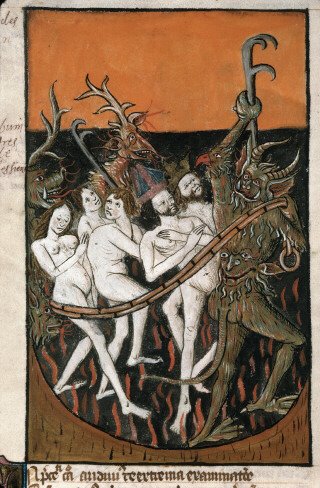
Intravit autem rex ut videret discumbentes, et vidit ibi hominem non vestitum veste nuptiali. Et ait illi: "Amice, quomodo huc intrasti non habens vestem nuptialem?" At ille obmutuit. Tunc dicit rex ministris: "Ligatis manibus et pedibus ejus, mittite eum in tenebras exteriores: ibi erit fletus et stridor dentium." Multi enim sunt vocati, pauci vero electi. (From the Gospel for the Nineteenth Sunday after Pentecost. Matthew xxii, 11-14: And the king went in to see the guests and he saw there a man who had not on a wedding garment, and he saith to him: "Friend, how camest thou in hither, not having on a wedding garment?" But he was silent. Then the king said to the waiters: "Bind his hands and feet, and cast him into the exterior darkness: there shall be weeping and gnashing of teeth." For many are called, but few are chosen.)

...it should not frighten you that in the Church the bad are many and the good few.[Terrere ...vos non debet quod in Ecclesia et multi mali et pauci sunt boni] For the Ark, which in the midst of the Flood was a figure of this Church, was wide below and narrow above, and at the summit measured but one cubit (Genesis vi, 16). And we are to believe that below were the four-footed animals and serpents, above the birds and men. It was wide where the beasts were, narrow where men lived: for the Holy Church is indeed wide in the number of those who are carnal minded, narrow in those who are spiritual. For where she suffers the morals and beastly ways of men, there she enlarges her bosom. But where she has the care of those whose lives are founded on spiritual things, these she leads to the higher place; but since they are few, this part is narrow. Wide indeed is the gate and broad is the way that leadeth to destruction; and many there are who go in thereat. How narrow is the gate that leadeth to life; and few there are that find it!

The Ark is made narrow at the summit, so that it is but one cubit wide: because, of those in the Church, the holier they are, the fewer they are. She reaches her highest perfection in Him Who alone among men was born Holy, and there is none to be compared with Him. He Who, in the words of the Psalmist, has become as a sparrow all alone on the housetop (Psalm ci, 8). And so the more the wicked abound, so much the more must we suffer them in patience; for on the threshing floor few are the grains carried into the barns, but high the piles of chaff that are burned with fire. ...

Then the king said to the waiters: "Bind his hands and feet, and cast him into the exterior darkness. There shall be weeping and gnashing of teeth." Then through this dread sentence, their hands and feet are bound who now will not restrain them from evil deeds, through amendment of life. For then chastisement shall bind those whom sin now restrains from doing good. For the feet that cared not to visit the sick, the hands that gave nothing to those in need, are now through their own fault no longer free to do what is good. Those therefore who now of their own free will are bound fast in sin, shall then against their will be bound fast in torment.

Rightly is it said that he shall be cast into exterior darkness. For we call blindness of heart, interior darkness; exterior darkness, the eternal night of damnation. Each one therefore who is damned, is cast, not into interior, but into exterior darkness: for there against his will he shall be cast forth into the night of damnation who here of his own will has fallen into blindness of heart; where, we are told, there shall also be weeping and gnashing of teeth: so that there teeth shall gnash which here delighted in gluttony, there eyes shall weep which here turned hither and thither in wanton desire. For each single member shall suffer punishment for the sins for which they were used in this life.

And when this one has been cast forth, in whom manifestly the whole body of the wicked is set before us, straightaway He adds a general sentence, which says: "For many are called, but few are chosen."

Dearest brethren, we should fear with a great fear the words we have just now heard. All we here present, already called through faith, have come to the marriage of the Heavenly King. We believe and confess the mystery of His Incarnation, and we partake of the banquet of the Divine Word. But in a day to come the King of judgement will enter in among us.

That we are called, we know; that we are chosen, we do not know. And so the more each one of us knows not whether he is chosen, so much the more do we need to humble ourselves in humility. There are, we know, those who do not even begin to do good; and some who do not remain constant in the good works they begin. Another is seen to pass almost his whole life in evil-doing, but close to the end he is drawn back from wickedness through tears of earnest repentance. Another seems to lead the life of one of the elect, and yet it happens that at the end of his life he will turn aside to the wickedness of heresy. Another begins well, and ends even better; while another, from his first years, gives himself to every evil, and growing ever worse than himself is destroyed in the midst of these very evils. In the measure therefore that each one knows not what is yet to come, in that measure should he live in fear and anxiety for himself before God: for, and let us say it over and over again, and let us never forget it: many are called, but few are chosen.

Saint Gregory the Great
Homilia XXXVIII
(Habita ad populum in Basilica Beati Clementis Martyris)

What you will not find here

Dear readers,

Heaven only knows how I would like to display the thousand possibilities of the probable motu proprio to be, God willing, issued (when?) by the Holy Father. But I must try to present facts, so this weblog will not venture in the field of conjectures*.

We simply do not know what the document will be like, its contents, the structures it may or may not establish, the rights it will recognize and the new ones it may create... If we are lucky, we may have a glimpse of the matter before the eventual publication, but in all probability not even that will be possible. We are dealing with surprises and deep secrecy, with a document which the mid-level and low-level bureaucrats, the ones who slow down the Vatican machinery, spread gossips, and fill the columns of talkative "experts", have not even seen**.

We have tried to bring to light only the "first" sources, those who are copied endlessly by news agencies and news releases, in an artificial spiral of feverishness, which is, now as always, inappropriate in this serious yet serene issue***. I believe we have succeding in separating wheat and chaff among news, rumors, and assumptions...

A great silence will fall on this issue for an unknown period of time which will seem long, even too long. It would be futile to waste time and resources on a number of events and possibilities which may never turn out to be true. It is much better to pray: for the Church, for the Holy Father, for the propagation of the one true Faith, for the triumph of the Immaculate Heart, for the social Kingship of Our Lord, for justice to be recognized and effected regarding the Traditional Rites of the Latin Church.

Only a few details will be important in the way we prepare ourselves to receive this eventual document, and in the way we teach and enlighten others about its true nature. These details will be presented and discussed in the appropriate time.
___________________

*Even though the causes for such a move are multiple and quite clear, as Father Zuhlsdorf explains.

** Read John Allen's text on the issue, 4th paragraph -- it is the same we have been hearing from others.

***Read Hilary's interesting post to understand how it works

Authority and Recognition

For the Holy Spirit was promised to the successors of Peter not so that they might, by his revelation, make known some new doctrine, but that, by his assistance, they might religiously guard and faithfully expound the revelation or deposit of faith transmitted [traditam] by the apostles.
Pastor Æternus
First Vatican Council

After the Second Vatican Council, the impression arose that the pope really could do anything in liturgical matters, especially if he were acting on the mandate of an ecumenical council. Eventually, the idea of the given-ness of the liturgy, the fact that one cannot do with it what one will, faded from the public consciousness of the West. In fact, the First Vatican Council had in no way defined the pope as an absolute monarch. On the contrary, it presented him as the guarantor of obedience to the revealed Word. The pope's authority is bound to the Tradition of faith, and that also applies to the liturgy. It is not 'manufactured' by the authorities. Even the pope can only be a humble servant of its lawful development and abiding integrity and identity.
Joseph Cardinal Ratzinger

Additional information on the probable Motu Proprio

If any further confirmation was needed, the news agency of the Italian Episcopal Conference (CEI) has also... confirmed the existence of the text of the Motu Proprio, information which is published today in the Conference's own daily newspaper, Avvenire (PDF): the document would be published "shortly".

Andrea Tornielli's comments on the CEI news release in today's (October 12) issue of Il Giornale:

The existence of the "Motu Proprio" of Benedict XVI which should liberalize the old pre-Conciliar Missal, revealed yesterday by our daily, has been confirmed even by SIR, the news agency of Catholic weeklies established by the Italian Episcopal Conference. "The news is learned from authoritative Italian sources -- writes SIR -- which thus confirm and detail some news published by the press". The "authoritative sources" consulted by the agency have not indicated "the time of release". Even though the text of the Papal document is substantially ready, it would not have been signed yet (in which case the promulgation should, in fact, happen shortly).
In its release, the Swiss-French agency APIC included this interesting note: "Also according to Vatican sources, the document would not focus only on the Mass of Saint Pius V, but it would have a larger liturgical dimension regarding Traditionalist questions"...

Columbus is Ours

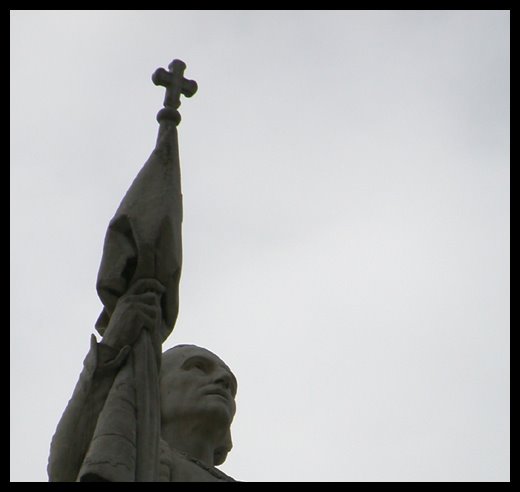
Columbus is ours; since if a little consideration be given to the particular reason of his design in exploring the mare tenebrosum, and also the manner in which he endeavored to execute the design, it is indubitable that the Catholic faith was the strongest motive for the inception and prosecution of the design; so that for this reason also the whole human race owes not a little to the Church. ...
He implored the Queen of Heaven to assist his efforts and direct his course; and he ordered that no sail should be hoisted until the name of the Trinity had been invoked. When he had put out to sea, and the waves were now growing tempestuous, and the sailors were filled with terror, he kept a tranquil constancy of mind, relying on God. The very names he gave to the newly discovered islands tell the purposes of the man. At each disembarkation he offered up prayers to Almighty God, nor did he take possession save "in the Name of Jesus Christ."
Quarto Abeunte Sæculo
Leo XIII

Traditional Mass to be Freed? Italian media abuzz


This morning, Italy woke up to a lot of talk about the possibility that the Traditional Rite of the Mass will be freed. Andrea Tornielli says that a Motu Proprio is ready, lacking "only" the Pope's signature.

Three updates: read below.
__________________
Update (1333 GMT) NewCatholic


The main excerpts of the Tornielli article in today's Il Giornale:


The Latin Mass Returns - Pope's decree soon

Andrea Tornielli


Rome

The text is ready, lacking only the signature of the Pope. Benedict XVI could publish a "Motu proprio" even before the end of 2006, with which the use of the pre-Conciliar Missal is liberalized, thus allowing groups of faithful to ask for the celebration of the old Mass without receiving negative answers, often unmotivated, from the singular bishops. The document shall "rehabilitate" the Mass said of Saint Pius V, celebrated in the Latin Catholic Church up to 1969 and never declared abrogated, defining it as an "extraordinary" universal rite, alongside the ordinary Roman Rite, which is the post-Conciliar one.

...


After having consulted the cardinals of the Roman Curia and having posed the question even to the consistory of past February, affirming that the theology of the Tridentine Mass cannot be defined as "reductive", Benedict XVI has charged Cardinal Darío Castrillón Hoyos, Prefect of Clergy and president of the Ecclesia Dei Commission of proceding [with the text]. A first draft of the text was thus written, which the Pope then sent to the Congregation for Divine Worship. Here the road of the decree, due to some internal resistance at the Dicastery, was made more difficult: a minimal number of solicitating faithful was considered, initially set at 100, then lowered to 30, and the references to liturgical abuses were removed from the draft. The text was thus returned to the Pontiff and to Ecclesia Dei. Other than Castrillón, Cardinal Julián Herranz, president of the Pontifical Council for the Interpretation of Legislative texts, was also involved in the crafting of the text.

The "Motu proprio" for the liberalization of the new [sic] Missal, a measure which finds notable resistance inside and outside the Roman Curia, should also ease the gathering into full communion with the Lefebvrists of the Fraternity of Saint Pius X, who have always fought for it. Obviously, if the Pope signs it, as he seems bent on doing, it will not mean that the simple faithful will find the Mass celebrated in the old way the very next day. It will be necessary to harmonise the desires of the Traditionalist faithful with those of the other parishioners.

__________________
Update 2 (1350 PM)NewCatholic:

Other Italian newspapers and agencies covering the matter today:

La Stampa (Marco Tosatti)

La Repubblica (also mentioning The Times' article...)

ADNKronos

Il Resto del Carlino, La Nazione, Il Giorno

and others...

__________________
Update 3 (1830 GMT)

CONFIRMED

For those who still had any doubts about the document itself, the report from the news agency of the United States Conference of Catholic Bishops leaves none:

Canadian Archbishop James Weisgerber of Winnipeg, Manitoba, told Catholic News Service Oct. 10 that Cardinal Dario Castrillon Hoyos, head of the Congregation for Clergy, had spoken briefly to Canadian bishops about the expected step.
A direct confirmation from a bishop to the "official" American Catholic news agency.

__________________
Comment (1425 GMT) Al Trovato & NewCatholic:

Many English-language news sources are spreading the news, but, naturally, the explosion in Italian news sources sharing details on the news regarding the Motu Proprio is what is truly significant. Two first-rate Vaticanists, Andrea Tornielli and Marco Tosatti, from two major Italian newspapers, confirm the news and add many details of the process leading to the (now quite probable) document. As we said in the first "rumor wave", last April, the lack of news from these usually able Italian journalists who cover the Vatican every single day made the rumors seem doubtful -- as indeed they were.

We added the same caveat in recent notes (here). Today, this condition of "believability" has been fulfilled. We are dealing with more than simple rumors.

Nevertheless, as Tornielli mentions, the Holy Father has probably not signed the document yet. As we have been here before, let us redouble our prayers and devotions, especially the Most Holy Rosary: the enemies within the very Vatican walls will not digest such a huge defeat quietly.


From the religious editor of La Croix

The chief editor of religious matters for the semi-official daily newspaper of the French Catholic establishment, La Croix, [Father] Michel Kubler, a very well-informed religious journalist, has some interesting words in an interview to the Croire website, though he does not specify any source for his information:

...the reintroduction of the Rite of Saint Pius V, the rite of the Council of Trent [30(sic)] must be expected, [though] it is not yet known under what form neither after what time[it will happen]. This rite would be reintroduced along with that of Vatican II. Every priest who wishes to celebrate this rite will be able to do it without a specific authorisation from the bishop. Today, the celebration according to the rite of Saint Pius V is strictly regulated. The new dispositions which Benedict XVI would like to make public, from now [up to] Christmas undoubtedly, would state that every priest may celebrate this Mass and that every community has a right to it.
Tip: Le Forum Catholique

P.S. Both La Croix and Croire.com belong to the same large French media organization, Bayard Presse, founded by the Assumptionists. Michel Kubler is an Assumptionist priest.

Salve, Sancta Mater Dei!

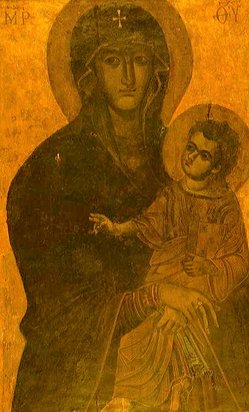
If anyone does not confess that Emmanuel is God in truth, and therefore that the Holy Virgin is the Mother of God (for she bore in a fleshly way the Word of God become flesh), let him be anathema.
Ecumenical Council of Ephesus
431


There is no rose of such virtue

As is the rose that bare Jesu,
Alleluia.

For in this rose contained was
Heaven and earth in little space,
Res miranda.

...

Good Things

You will not find a more accurate appraisal of the journal of modern American religious "scholarship" than this one, from our dear friends at the Cornell Society for a Good Time. Virtue is in the middle?... Not always; it is surely never lukewarm. Scio opera tua: ... quia tepidus es, et nec frigidus, nec calidus, incipiam te evomere ex ore meo.

In addition to which:

We congratulate Iosephus for the Cornell Society's presence in this Wednesday's edition of The Times [of London], in an article on rumors and news regarding the hypothetical document on the liberalization of the Traditional Roman Mass! We hope this does not go the same way as The Times' report on the "abolition" of Limbo...

Ecclesia Dei:
Recent changes in the Litany of Loreto must be observed

Vatican City (Fides Agency [News Agency of the Congregation for the Evangelization of Peoples]) -
The Pontifical Commission "Ecclesia Dei", expressing its own pleasure of observing the texts of the habitual prayers of the Christian faithful in the Latin language in the website of the Fides agency, underlines that two new "Marian titles" were added by Pope John Paul II to the Litany of Loreto [commonly known as the Litany of the Blessed Virgin Mary]: the title "Mater Christi" must be followed by the title "Mater Ecclesiae" and the title "Regina familiae" must precede the last title, "Regina Pacis". We thus inform our readers and the local Churches to complete the invocations of the Litany of Loreto, in case they have not already done so, both for their celebrations and when sending the translations to the Fides Agency.

Whatever happened to Religious Tolerance?

The reaction of some bishops in France to the consequences of the pontifical act which established the tiny Institute of the Good Shepherd is every time more puzzling. Now, the Bishop of Chartres complains that he was never told, not even out of mere "politeness", of the establishment of the seminary of this Society of Pontifical Right in Courtalain, within his diocese.

Well, everyone remembers when the probable rector of this new seminary, Father Aulagnier, visited Bishop Pansard of Chartres with Bishop Rifan, Apostolic Administrator of the Personal Apostolic Administration of Saint John Mary Vianney (Campos, Brazil) earlier this year, for apparently no clear reason... Perhaps Pansard was the only ecclesiastical authority in Chartres who did not know that the Seminary would be at Courtalain...

Pansard also uses his communiqué to profess his unending support for the last Council, as if that were in question at all! Yes, Vatican II is the unswerving "compass" ("the compass by which I live") of the Lord Bishop of Chartres -- now, what has this got to do with the seminary of the new Society of Pontifical Right at Courtalain, regarding which Rome was always aware (together with the work of members of the new Society in the Centre Saint-Paul, in Paris)?

Dear Bishops of France, please, calm down! Your desperation makes it seem as if you have got something to hide! It is just a tiny society of Traditional Catholic priests... or are you expecting something else?...

Limbo of the Children
New expiration date: 2008

At the eve of the closing Mass of this year's meeting of the International Theological Commission, when so much of the world media was reporting that "the Pope will abolish Limbo" (that is, the Limbus Infantium, or Limbo of the Children), including journalists we admire, such as Andrea Tornielli of Il Giornale, we decided not to publish an "opinion", but extremely important excerpts of Papal and Conciliar definitions on the matter.

Even though the Holy Father could not have been sterner in his homily yesterday (he did not "abolish" anything, but actually condemned those theologians who follow their huge egos), yet usually respectable sources (such as Korazym) still insist on stating, using some words of Archbishop Bruno Forte, an ITC member, that Limbo "never existed", it was "always a theological hypothesis"... After a week of idle speculation on the matter, the Italian media now states that the abolition of the Limbus Infantium will surely come in 2008...

This tiny example of news distortion serves as a reminder of what happened continously during the Second Vatican Council and its aftermath: it did not matter what a specific document said, or its actual magisterial relevance -- what mattered was what was expected as certain by "influential news organizations", what was "hyped" and, as such, immediately reported by the press, in a spiral of misinformation and distortion which could never be reversed in the mind of the people.

The Magisterial definitions, which no Pope may ever alter, and which the merely consultative ITC can never even touch, will remain unaltered, in 2006 as in 2008, in 2008 as in 1794...
________

Greatly recommended article: Could Limbo Be 'Abolished'?, by Father Brian Harrison.

Now the magazine of Continental Ultra-progressivism...

Golias, the not incredibly popular magazine of French Ultra-progressive Catholic ideals, also publishes, in its current weekly issue, the information that a document on the liberalization of the Traditional Roman Rite is imminent, that it will be published in November, that it was signed on September -- yet, the language used by Christian Terras and Romano Libero, Golias' editors, is similar to that mentioned in a similar note published by a web source recently and both texts fail to name a single source for their information.

Naturally, considering their unabated hatred of everything Traditional, their article is surprising, but it is gravely defective due to the lack of identification of its sources.

(For your information, past notes: 1, 2)

Calming down the ultra-progressives' fears.

"In Bordeaux, Cardinal Ricard said, the Good Shepherd institute could only begin pastoral activites after signing an agreement with the archdiocese." (CWN)

Well, well, this is what happens when original texts are misunderstood... The priests who are current members of the Institute of the Good Shepherd "began" their "pastoral activities" many years ago; and, as members of the Institute, from the day of its erection. So this new text by Cardinal Ricard, Archbishop of Bordeaux, which Catholic World News published in part, adds nothing to what he had actually said at the time of the new Institute's foundation (for his communiqué, read here): the Traditional Roman Rite is "proper" to the new Society; none of its priests may ever be constrained to concelebrate the new Mass, not even with the Cardinal-Archbishop himself...

That which demands an agreement between the Archdiocese and the Institute is the establishment of the Church of Saint-Éloi as a Personal Parish -- but its regular pastoral activities need not this canonical step to "begin"... The Holy See itself established Saint-Éloi as the seat of the Society, so there is not much Cardinal Ricard can do besides recognizing this exceptional place, safeguarded by the Vatican -- what he can do is to pretend that he wishes to "talk tough" to the "Integrists" so that his own diocesan presbyterate calm down, while at the same time he establishes a personal parish.

He desires to inform his priests (and other upset faithful) that he still is in charge, even though it is clear the circumstances were forced upon him: the Cardinal has got to do what he has got to do to calm down his priests and the other members of the Episcopal Conference he presides...
____

P.S. As noticed by a few others, there is an innovation in Cardinal Ricard's latest article: calling the Traditional Roman Rite "what the Pope calls [it]": "an extraordinary form of the Roman Rite".

The Roman Church teaches...

The Roman Church teaches [...] that the souls of those who depart in mortal sin or with only original sin descend immediately to hell, nevertheless to be punished with different punishments and in disparate locations...
Nequaquam sine dolore
John XXII
November 21, 1321


...the souls of those who depart this life in actual mortal sin, or in original sin alone, go down straightaway to hell to be punished, but with unequal pains.
Decree for the Greeks (Laetentur Caeli)
Ecumenical Council of Florence
July 6, 1439


[Errors of the Synod of Pistoia.] The doctrine which rejects as a Pelagian fable that place of the lower regions (which the faithful generally designate by the name of limbo of the children) in which the souls of those departing with the sole guilt of original sin are punished with the punishment of the condemned, exclusive of the punishment of fire [...] is false, rash, injurious to Catholic schools.
Auctorem Fidei
Pius VI
August 28, 1794

Note

We cannot ignore the plain declarations which add up to the previous statements (read here and here) regarding a supposed Vatican document on the liberalization of the Traditional Mass. In the past 10 days, declarations from a former member of the Priestly Fraternity of Saint Pius X - FSSPX/SSPX (Polish Father Krolikowski), who has just entered the new Institute of the Good Shepherd, and who mentions "November"; and great expectations from the Superior of the FSSPX District of France, Father de Cacqueray, in his latest lecture (mp3 file) in Paris (though he certainly does not identify the document as a certainty, nor a timetable for its release).

No serious Vaticanist has yet mentioned any such document.

---

Read Stephen Heiner's interview with Bishop Richard Williamson, one of the four FSSPX bishops consecrated by Archbishop Marcel Lefebvre and Bishop Antonio de Castro Mayer in 1988 -- an excerpt of which we first published in late August. Astonishing answers...

Milingo's excommunication declared; Episcopal ordinations not recognized

Essential excerpt of the Holy See Press Office's communiqué:

For this public act, both Archbishop Milingo and the four ordained [bishops] incur in a latae sententiae excommunication, envisioned by Canon 1382 of the Code of Canon Law. Moreover, the Church does not recognize and does not intend to recognize in the future these ordinations and all ordinations derived from them, and retains that the canonical status of the four supposed bishops remains that in which they found themselves before the ordination.

Note

Regarding the so-called liberalization of the Traditional rites of the Latin Church, we shall only publish declarations by identifiable sources (as we did here and here) and reports by experienced Vaticanists...

Short recess

We will be on a short recess here, for just a few days. Urgent news may be posted at any time.

Castrillón Hoyos' short interview

In a short interview with the French news agency I.Media, Cardinal Castrillón Hoyos does not answer fully the questions which are on many minds. Excerpts (the interview is copyrighted) below:

...

I.Media: Does not this gesture [the foundation of the Institute of the Good Shepherd] put in danger the negotiations with the Fraternity of Saint Pius X?

Cardinal [Castrillón] Hoyos: I do not quite see the logic of this question. Why would a gesture such as the erection of the Institute of the Good Shepherd, accomplished under the sign of reconciliation and of a full communion restored with the Church, put in question another process, which itself should be accomplished with the sign of reconciliation and full communion? ...


I.Media: The Mass of Saint Pius V seems strengthened as an extraordinary form of the Roman Rite. Is that the case?

Cardinal [Castrillón] Hoyos: This question also seems to me to go beyond what has actually happened. ... The rite of Saint Pius V has never been excluded from the life of the Church, and that is why the ancient rite was given as a proper rite to this institute, both to its members as well as to the faithful who seek [the institute], as to many other ecclesial realities.

A few additional questions
on the Traditionalist moment

A few days after we published our interview with Professor Luc Perrin, a small storm troubled the French Catholic hierarchy, and befuddled the clergy of Bordeaux, when Pope Benedict XVI ordered the foundation, through Cardinal Castrillón Hoyos and his Pontifical Commission "Ecclesia Dei" (PCED), of the Institute of the Good Shepherd. It seemed appropriate, in order to keep an up-to-date version of the events, to ask Professor Perrin a few further questions -- a demand to which he graciously acquiesced.

1) Professor Perrin, what do you make of the events leading up to the foundation of the new Institute of the Good Shepherd?

It is only partly a surprise. A handful of former SSPX priests, four of whom were expelled from the Society, have restored a full communion with Rome but ... were kept in quarantine by the French bishops. Even Archbishop Simon, who initially incardinated Father Aulagnier, without giving him any apostolate in his diocese, gave him recently a celebret , restricted to private masses only! I think it speaks volumes on the dominant episcopal mindset in France.

So in a French Church where the lack of priests is year after year more desperate, traditional priests, well ..., cannot find any place. That is the genuine meaning of the April 2006 statement of the French bishops conference.

On the other hand, the reconciliation with SSPX is, once again, stalled or delayed. The Good Shepherd Institute is another proof Christian charity isn't an empty word at least in one diocese... Rome. Fervent ultramontane Catholics, baptised, clergy, religious orders and bishops all united, knew that very well in the XIXth. Our neo-gallican era is quick to forget this basic tenet of Catholic faith expressed by Vatican I in a dogma.

We can also tell that, by creating on September 8, 2006 a new traditional institute the Holy See fears the consequences of a much greater act of charity: providing not only traditional faithful but every Catholic and, beyond that, every Christian with the formidable stream of grace that the Traditional Latin Rites are.

The Ecclesia Dei canonical regime has been a major gift from John Paul the Great and nobody can forget that. But the baby is growing and his clothes are staying at the same 1984-1988 size... It's more than time to upgrade the canonical status of the trad. communities worldwide. Is the Good Shepherd Institute the appropriate structure for that? Only very marginally, for a few priests, and very few lay people in one country.

2) Were you surprised by the strong reaction of the French hierarchy and clergy, considering that the new institute does not include any clear canonical improvement, as compared with, for instance, the previously existing Apostolic Administration of Saint John Mary Vianney, in Campos, Brazil?

As far as I know, there isn't anything decisively new in the new institute's status. But we have just the decree of erection and limited quotations of the Statutes: even "some affirmations" of the decree signed by Cardinal Castrillón Hoyos and Msgr. Perl are called a "disinformation" by ... Fr. Jean Rouet, Vicar-General of Bordeaux in a September 15 public statement published by the official website of the archdiocese of Bordeaux! So the details of the canonical status of the Good Shepherd Institute are still wrapped into some clerical thick fog. Who is disinforming whom? The Cardinal-archbishop? The Cardinal-President of PCED? Father Laguérie or Father Jean Rouet? Future will tell, when the fog of contradictory statements vanishes with the sunrays of published documents.

With the present informations, the new Institute is a FSSP bis with the same rights and the same limitations. Its members are just safe from being forced to celebrate NOM because they have TLM as a "proper rite": it is a response to concerns raised in 1999 by a protocol by Cardinal Medina Estevez that could have lead the Ecclesia Dei societies into bi-ritualism.

Otherwise, Cardinal Ricard made it crystal clear from the start the Good Shepherd is under the standard canonical rules and so the bishop's permission is requested to have any apostolate in a diocese. Father Laguérie spoke also of a "convention" to be signed for them to stay in Bordeaux, though the Roman decree is naming Bordeaux as the mother house location for this institute.

For what has been made public, the status of the new Institute is very far from the S.S.J.V Personal Apostolic Administration in Campos. We are watching the limitations of these standard provisions already: there is a growing rebellion within the clergy of Bordeaux; rather than rejoicing to be able to work alongside with new priests, rather than beginning this "true work of communion" (French bishops' declaration of April 2006), we hear a tempest in the modern clerical cup of coffee or ... glass of Bordeaux wine.

A former Catholic magazine had its cover last week with a picture of Father Laguérie and this ominous warning : "Why this man should have been kept outside"! Is he a Bin Laden in disguise? When Hans Küng chatted with Pope Benedict for hours, did you read similar statements?

3) What do you think of the surprising announcement by Father Laguérie of a document, to be issued "certainly in November"?

Wait and see !

In 1978 such a document was to be released after the meeting of Archbishop Lefebvre and the Pope but the result was the restrictive 1984 indult; in 1986, the ad hoc cardinalitial Commission concluded in favor of freedom for Traditional Latin Mass in the Latin Rite Church, but these conclusions are still waiting to be published; in 2001, this was officially requested by the SSPX, but John-Paul II declined after Curial and episcopal opposition; in 2003, Cardinal Castrillón Hoyos claimed the Traditional Latin Mass to be "a legitimate rite" in a publicized homily in Rome but the Instruction Redemptionis Sacramentum (March 2004) is silent on this topic. After the election of Benedict XVI, the rumor mill never stopped...

If the document recognizing freedom for the Traditional Latin Mass is published one day, canonical provisions to regulate the use of various missals will be necessary. These provisions will have to be put under scrutiny. However, a symbolic recognition of the Traditional Latin Rites (Roman rite and the others) would be a significant step forward: it would show this Pope is not only embittered by the liturgical chaos that followed the last council but that the Successor of Peter is not afraid to lead the whole Church back on the right track. Isn't he the Vicar of the ... Good Shepherd?

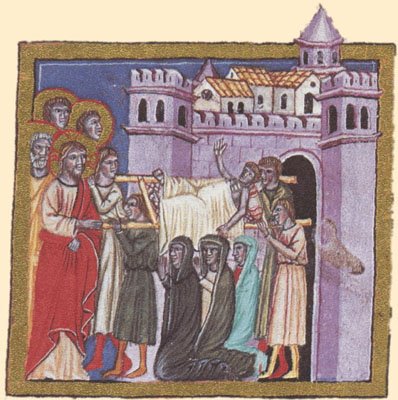
Young man, I say to thee: Arise!

Jesus went into a city called Naim: and there went with Him His disciples, and a great multitude. And when He came nigh to the gate of the city, behold a dead man was carried out, the only son of his mother, and she was a widow, and much people of the city were with her. And when the Lord saw her, He had compassion on her, and said to her: Weep not. And He came near and touched the bier. And they that carried it, stood still. And He said: Young man, I say to thee, Arise. And he that was dead, sat up, and began to speak. (from the Gospel for the Fifteenth Sunday after Pentecost)

One of the greatest Italian writers of the 20th Century was Tito Casini, a firm Catholic, who suffered so much for the near-destruction of the Traditional Mass, and whose memory has been so neglected. It is impossible to read the Gospel of the past Sunday without recalling the words of one of Casini's most powerful texts in those tragic days of the 1970s, when all seemed lost:

It will rise again!... The Mass...will rise again! ...

The bier -- and shall we renounce thus to believe and to act, to cry hopelessly about that which we loved so? It was thus, next to the bier, that the Naimite widow cried for her only son who was dead. But Jesus saw her and those tears moved Him, He got close to it, He touched the bier, and the dead man arose and sat up; and then he began to speak and [Jesus] restored him to his mother.

Thus Jesus -- for Whom there are no irremovable nails -- will restore to our Mother, the Church, the object of so much of His and our love: the Mass... for which the martyrs died... .

...another "Denzinger moment"

Regarding the Papal address at Regensburg, whose definitive text has not yet been made available, it would be appropriate to remark, once more, the exceptionally important paragraph which ends with this definition:


...there are elements in the evolution of the early Church which do not have to be integrated into all cultures. Nonetheless, the fundamental decisions made about the relationship between faith and the use of human reason are part of the faith itself; they are developments consonant with the nature of faith itself.

This is a definition. By a man who can make such definitions. Write it down, it shall appear, along with this, in the next edition of the Enchiridion Symbolorum et Definitiorum...

A liberalization document "is almost certain",
says SSPX District Superior

Father Christian Bouchacourt -- Superior of the District of South America for the Priestly Fraternity of Saint Pius X (FSSPX/SSPX) -- was interviewed by Fabián Vázquez, of Radio Cristiandad (link on our sidebar), regarding rumors that some priests of the District would join the newly-founded Institute of the Good Shepherd.

He reiterated his declaration (see here) that such news was unfounded.

However, that was not the most important part of the interview. Asked about the words of Father Laguérie, Superior of the new Institute that a document which would "restore" the "rights of the Traditional Mass" in "all their dignity" truly existed, and that such document would be released, "certainly in November", here is what Bouchacourt said:

"It may be that there will be a text, that is almost certain, that a text will be released, a document on the authorisation of the Mass but Father [Laguérie] is completely imprudent. It is a thing -- I know it for certain -- uh, all this is conducted in the Vatican in a secret manner. Nobody knows anything. Only the Pope and his collaborators, nothing else, nobody else. [Donc?], to say this is not prudent, because it is, it will, it will create a mess, all of this... one must wait, one must wait, it is said that this authorization shall be for private celebration. I do not know. To speak thus to all sides, urbi et orbi, is completely imprudent. It should not to be done."*

We would stress the following:

-(1) Fr. Bouchacourt's comments are a confirmation of Fr. Laguérie's declaration;
-(2) In all likeliness, Fr. Bouchacourt's source is NOT the same as Laguérie's, which is clear from the fact that there are a few important differences in the degree of "liberalization" mentioned by both.

We certainly respect the prudence of Father Bouchacourt, and these are times which demand utmost prudence -- but, as it usually happens, we felt compelled to publish this news as soon as possible, if only to prevent this very quotable affirmation from becoming a simple "rumor". Declarations from identifiable sources are not "rumors". Please, do note: these are qualified sources, not "Vatican sources", or "undisclosed, secret sources", unless one wishes to call two very serious priests, Frs. Laguérie and Bouchacort, mere rumormongers.
___

*Transcript of the original answer: "Puede ser que habrá un texto, eso es casi seguro, que va a salir un texto, un documento sobre la autorización de la Misa, pero el Padre [Laguérie] es totalmente imprudente. Es una cosa -- yo lo sé de manera segura -- eh, todo esto se trata en el Vaticano de manera secreta. Nadie sabe nada. Es unicamente el Papa y sus colaboradores, nada más, nadie más. [Donc?], hablar eso es, no es prudente, porque es, va, va crear un lío todo eso, hay que esperar, hay que esperar, se dice que la autorizacion estará para una celebración privada. Yo no sé. Pero hablar así, en todos lados, urbi et orbi, es totalmente imprudente. No se hace eso."

____

Update (Tuesday): A reader sent us a more detailed transcript of the words (available here), which we added, partly, to the original translation (in red). The audio of the interview is available here (the actual answer to the question begins at approximately 11 minutes).

No excuse

In a very rainy early afternoon in Castelgandolfo, the Holy Father personally acknowledged that he is "vigorously distressed" by the reactions to misunderstandings regarding a "small passage" of his lecture at the University of Regensburg, which was "considered offensive to the sensitivity of the Muslim faithful", that the "Medieval text" quoted by him did not reflect his personal opinion, and he offered the declaration issued yesterday by the Cardinal Secretary of State as the definitive explanation of his intentions.

He added that the speech must be seen as part of a "frank and sincere dialogue".
--

Update: the Vatican official translation is presented below, with this substantial mistranslation: "greatly" or "vigorously distressed" or "embittered" (vivamente rammaricato), which the Pontiff said very clearly in the live address, is translated as "deeply sorry". This would not make sense: how would the Pope be "sorry" for the reactions of others!? He could have said he was "sorry" for what he said (which is not what happened); or he could say he is upset, or distressed, or feels personal bitterness for the reactions the "small passage" of his lecture caused; but he would not (and, in fact, did not) say that he is "sorry for the reactions"...

Naturally, the Holy See Press Office hopes the whole mess, which was started by inaccurate soundbites, will be closed by new inaccurate soundbites (such as "I am deeply sorry")... As we said yesterday, it is clear that "the lives and property of countless Christians in Muslim lands could depend on it".

Dear Brothers and Sisters,
The Pastoral Visit which I recently made to Bavaria was a deep spiritual experience, bringing together personal memories linked to places well known to me and pastoral initiatives towards an effective proclamation of the Gospel for today. I thank God for the interior joy which he made possible, and I am also grateful to all those who worked hard for the success of this Pastoral Visit. As is the custom, I will speak more of this during next Wednesday’s General Audience. At this time, I wish also to add that I am deeply sorry for the reactions in some countries to a few passages of my address at the University of Regensburg, which were considered offensive to the sensibility of Muslims. These in fact were a quotation from a medieval text, which do not in any way express my personal thought. Yesterday, the Cardinal Secretary of State published a statement in this regard in which he explained the true meaning of my words. I hope that this serves to appease hearts and to clarify the true meaning of my address, which in its totality was and is an invitation to frank and sincere dialogue, with great mutual respect.


--

(Picture: Inside of a Greek Orthodox church in Tulkarm this Sunday, part of the Muslim "frank and sincere dialogue" in the Holy Land.)

--
Update 2: We see that Father Zuhlsdorf partly shares our disagreement with the simple translation of "rammaricato" as "sorry". We would add that the words were very carefully chosen (as were the words chosen for the Regensburg lecture...) and that there are dozens of truly straightforward ways of simply stating "regret" and of expressing an apology ("sorry") for personal mistakes in Italian.

--


Update 3: Sister Leonella (Rosa) Sgorbati, a 65-year-old Italian nun, of the Consolata Missionaries, who worked in a hospital in Mogadishu, Somalia, was martyred today by Muslim forces (picture provided and hosted by Corriere della Sera). She was also one of four nuns who cared for approximately 400 children in the main orphanage of the city.

Sister Leonella had been in Africa for more than three decades.


Pope to scientists: respect human life!

Hidden amidst the other Papal news of the day, the main portions of the Pope's speech to scientists, clerics, and others who are attending a congress on new [moral] possibilities for stem cell research in Rome, promoted by the Pontifical Academy for Life:

There must be no compromises nor tergiversations regarding the direct suppression of a human being; one cannot imagine that a society may fight crime efficaciously when [society] itself legalizes transgressions against nascent life. ...

Human welfare should be sought not only according to a universally valid finality, but also considering the methods used to reach it: a good end cannot at all justify intrinsically illicit means.

The Rational Religion Update

A Papal explanation

And Cardinal Bertone was right when he decided to issue this declaration: the lives and property of countless Christians in Muslim lands could depend on it.

But one can almost hear the secular media, a few decades from now, condemning the Papacy for its "silence" regarding the Islamic menace, as they do to Pius XI and Pius XII, of glorious memory, decades after their brave, yet prudent, stand in favor of righteousness and justice in an age of darkness.

Urban in Clermont = Benedict in Regensburg ?


The disproportionate reaction of all categories of Muslims regarding the Pope's speech at the University of Regensburg would make it seem that Benedict XVI has called for a new Crusade. It only makes the Papal message on the reality of the Rationality inherent to the Christian message, and notably absent in Mohammedanism, even clearer.

If only they realized how ridiculous this looks...


A Week of Benedict


...

certain values detached from their moral roots and full significance found in Christ have evolved in the most disturbing of ways. In the name of ‘tolerance’ [Canada] has had to endure the folly of the redefinition of spouse, and in the name of ‘freedom of choice’ it is confronted with the daily destruction of unborn children. When the Creator’s divine plan is ignored the truth of human nature is lost.


I have found in Saint Corbinian’s bear a constant encouragement to carry out my ministry with confidence and joy – thirty years ago, and again now in my new task – and to say my daily "yes" to God: I have become for you a beast of burden, but as such "I am always with you" (Ps 73:23). Saint Corbinian’s bear was set free in Rome. In my case, the Lord decided otherwise.


Every now and then, however, some African Bishop will say to me: "If I come to Germany and present social projects, suddenly every door opens. But if I come with a plan for evangelization, I meet with reservations". Clearly some people have the idea that social projects should be urgently undertaken, while anything dealing with God or even the Catholic faith is of limited and lesser urgency. Yet the experience of those Bishops is that evangelization itself should be foremost, that the God of Jesus Christ must be known, believed in and loved, and that hearts must be converted if progress is to be made on social issues and reconciliation is to begin ...

Monday, September 11


Jesus’ "hour" is the Cross; his definitive hour will be his return at the end of time. He continually anticipates also this definitive hour in the Eucharist, in which, even now, he always comes to us. ... In the Canon of the Mass, the Church constantly prays for this "hour" to be anticipated, asking that he may come even now and be given to us. And so we want to let ourselves be guided by Mary, ... by the Mother of all the faithful, towards the "hour" of Jesus.

---
...whenever priests , because of their many duties, allot less and less time to being with the Lord, they eventually lose, for all their often heroic activity, the inner strength that sustains them. Their activity ends up as an empty activism. To be with Christ - how does this come about? Well, the first and most important thing for the priest is his daily Mass, always celebrated with deep interior participation.

Tuesday, September 12


[Emperor Manuel II Palaeologos] addresses his interlocutor with a startling brusqueness on the central question about the relationship between religion and violence in general, saying: "Show me just what Mohammed brought that was new, and there you will find things only evil and inhuman, such as his command to spread by the sword the faith he preached". The emperor, after having expressed himself so forcefully, goes on to explain in detail the reasons why spreading the faith through violence is something unreasonable. Violence is incompatible with the nature of God and the nature of the soul. "God", he says, "is not pleased by blood – and not acting reasonably is contrary to God’s nature. Faith is born of the soul, not the body. Whoever would lead someone to faith needs the ability to speak well and to reason properly, without violence and threats... To convince a reasonable soul, one does not need a strong arm, or weapons of any kind, or any other means of threatening a person with death...". The decisive statement in this argument against violent conversion is this: not to act in accordance with reason is contrary to God’s nature.

...

This inner rapprochement between Biblical faith and Greek philosophical inquiry was an event of decisive importance not only from the standpoint of the history of religions, but also from that of world history - it is an event which concerns us even today. Given this convergence, it is not surprising that Christianity, despite its origins and some significant developments in the East, finally took on its historically decisive character in Europe. We can also express this the other way around: this convergence, with the subsequent addition of the Roman heritage, created Europe and remains the foundation of what can rightly be called Europe. ...

I must briefly refer to the third stage of dehellenization, which is now in progress. In the light of our experience with cultural pluralism, it is often said nowadays that the synthesis with Hellenism achieved in the early Church was a preliminary inculturation which ought not to be binding on other cultures. The latter are said to have the right to return to the simple message of the New Testament prior to that inculturation, in order to inculturate it anew in their own particular milieux. This thesis is not only false; it is coarse and lacking in precision. The New Testament was written in Greek and bears the imprint of the Greek spirit, which had already come to maturity as the Old Testament developed. True, there are elements in the evolution of the early Church which do not have to be integrated into all cultures. Nonetheless, the fundamental decisions made about the relationship between faith and the use of human reason are part of the faith itself; they are developments consonant with the nature of faith itself.


The organ has always been considered, and rightly so, the king of musical instruments, because it takes up all the sounds of creation – as was just said - and gives resonance to the fullness of human sentiments, from joy to sadness, from praise to lamentation. By transcending the merely human sphere, as all music of quality does, it evokes the divine. The organ’s great range of timbre, from piano through to a thundering fortissimo, makes it an instrument superior to all others. It is capable of echoing and expressing all the experiences of human life. The manifold possibilities of the organ in some way remind us of the immensity and the magnificence of God.

...

In an organ, the many pipes and voices must form a unity. If here or there something becomes blocked, if one pipe is out of tune, this may at first be perceptible only to a trained ear. But if more pipes are out of tune, dissonance ensues and the result is unbearable. Also, the pipes of this organ are exposed to variations of temperature and subject to wear. Now, this is an image of our community in the Church.


Thursday, September 14

I came to Germany to bring once more to my fellow-citizens the eternal truths of the Gospel and to confirm believers in their fidelity to Christ, the Son of God, who became man for the salvation of the world.

Rationality and irrationality

We believe in God. This is a fundamental decision on our part. But is such a thing still possible today? Is it reasonable? From the Enlightenment on, science, at least in part, has applied itself to seeking an explanation of the world in which God would be unnecessary. And if this were so, he would also become unnecessary in our lives. But whenever the attempt seemed to be nearing success -- inevitably it would become clear: Something is missing from the equation!

When God is subtracted, things does not add up for man, for the world, for the whole universe. So we end up with two alternatives. What came first? Creative Reason, the Spirit who makes all things and gives them growth, or Unreason, which, lacking any meaning, yet somehow brings forth a mathematically ordered cosmos, as well as man and his reason.

The latter, however, would then be nothing more than a chance result of evolution and thus, in the end, equally irrational. As Christians, we say: "I believe in God the Father, the Creator of heaven and earth" -- I believe in the Creator Spirit. We believe that at the beginning of everything is the eternal Word, with Reason and not Unreason. With this faith we have no reason to hide, no fear of ending up in a dead end. We rejoice that we can know God!
Benedict XVI, September 12, 2006 (Regensburg)
Zenit translation, with corrections

To all creatures she is Lady

The Blessed Evangelist Luke says significantly: "And the name of the Virgin was Mary" (Luke i, 27.) This most holy, sweet, and worthy name was eminently fitting to so holy, sweet, and worthy a virgin. For Mary means a bitter sea, star of the sea, the illuminated or illuminatrix. Mary is interpreted lady. Mary is a bitter sea to the demons; to men she is the star of the sea; to the angels she is illuminatrix, and to all creatures she is lady.

...Mary is ... illuminatrix by her most resplendent glory, which illuminates the whole of Heaven, as the sun doth the world, according to Ecclesiasticus: "The sun giving light hath looked upon all things, and full of the glory of the Lord is his work" (xlii, 16.)

The work of the Lord is full of His glory; the most excellent work of the Lord is Mary. This work, as it was full of the grace of the Lord in this world, is full of the glory of the Lord in Heaven. Thus, therefore, Mary, giving light by her glory, hath looked upon all things, because through all the angels and all the saints she spreadeth the illumination of her glory. What wonder if the presence of Mary illuminates the whole of Heaven, who also doth illuminate the whole earth?
...

Hail Mary! This most sweet and affectionate name, so full of grace and so noble, so glorious and so worthy, excellently befits Our Lady. For most fittingly is so loving a virgin named Mary. For she is Mary, in whom there is no vice, and who is glorious with every virtue.
Conrad of Saxony (erroneously attrib. to Saint Bonaventure),
Speculum Beatæ Mariæ Virginis

The liberalizing document in ... November ?

The French national newspaper Le Figaro reports today some interesting words from the first Superior of the new Institute of the Good Shepherd, said at Mass yesterday:

Father Laguérie is convinced that the Roman wind blows in the right direction. And he even believes he knows that "Rome is about to publish a document destined to restore the Traditional rite to its place, to liberalise its usage."
When would this document come? Just read Father Laguérie's exact words in the church of Saint-Eloi, in Bordeaux, transcribed by the Centre Saint-Paul of Paris (thanks to Le Forum Catholique):

"...one may say, I believe, that this giant step which has just been taken is, not only for us but for all the Church, is the sign, the preparation, the propaedeutics of this document which shall be released, certainly in November, in which the rights of the Traditional Mass shall be restored in all their dignity."
Well, Fathers Laguérie, Aulagnier, Héry, de Tanoüarn...have just returned from their latest Roman marathon, during which the new Institute was founded. It is probable that they are better informed on these details than most. The different "calendars" apparently seem to match right after October...

Let us pray.

P.S. Just to make it plainly clear: the affirmation is by Father Laguérie, which we cannot confirm nor deny. What we can confirm only is that he said it (which is the first time there is a clear and known source for the existence of such document and for the date of its expected release). It is not an anonymous rumor, but a quite identifiable declaration.


Primum quærite regnum Dei...

Primum quærite regnum Dei, et omnia adjicientur vobis, dicit Dominus. (Matthew, vi, 33: "Seek ye first the Kingdom of God: and all things shall be added unto you, saith the Lord." Communion Antiphon --and Gospel, Fourteenth Sunday after Pentecost.)

Nemo potest duobus dominis servire: aut enim unum odio habebit, et alterum diliget: aut unum sustinebit, et alterum contemnet. (Matthew, vi, 24: "No man can serve two masters; for either he will hate the one and love the other, or he will sustain the one and despise the other." From the Gospel for the same Sunday.)

If thou wouldest obtain worldly things, seek Heaven; if you wouldest enjoy things here, despise them. For, "Seek ye first the kingdom of God," He saith, "and all these things shall be added unto you." (Matthew, vi, 33)

Why dost thou admire these trifles? Why long for things of no real worth? How long is one poor? How long a beggar? Raise thine eyes to heaven, think of the riches there, and smile at gold; think of how little use it is; that the enjoyment of it lasts but for the present life, and that compared with eternity, the present life is as a grain of sand, or as a drop of water to the boundless ocean. This wealth is not a possession, it is not property, it is a loan for use.

For when thou diest, willingly or unwillingly, all that thou hast goes to others, and they again give it up to others, and they again to others. For we are all sojourners; and the tenant of the house is more truly perchance the owner of it, for the owner dies, and the tenant lives, and still enjoys the house. And if the latter hires it, the other might be said to hire it too: for he built it, and was at pains with it, and fitted it up.

Property, in fact, is but a word: we are all owners in fact but of other men's possessions. Those things only are our own which we have sent before us to the other world. Our goods here are not our own; we have only a life interest in them; or rather they fail us during our lives.

Only the virtues of the soul are properly our own, as alms-giving and charity. Worldly goods, even by those without, were called external things, because they are without us. But let us make them internal. For we cannot take our wealth with us, when we depart hence, but we can take our charities. But let us rather send them before us, that they may prepare for us an abode in the eternal mansions. (Luke, xvi, 9)

Goods are named from use, not from lordship, and are not our own, and possessions are not a property but a loan. For how many masters has every estate had, and how many will it have! There is a sensible proverb, (and popular proverbs, when they contain any wisdom, are not to be despised,) "O field, how many men's hast thou been, and how many men's wilt thou be?" This we should say to our houses and all our goods.

Virtue alone is able to depart with us, and to accompany us to the world above. Let us then give up and extinguish that love of wealth, that we may kindle in us an affection for heavenly things. These two affections cannot possess one soul. For it is said, "Either he will hate the one, and love the other; or else he will hold to the one, and despise the other" (Matthew, vi, 24).

Seest thou a man with a long train of attendants, clearing a way along the streets, clothed in silken garments, riding aloft, and stiffening his neck? Be not overawed, but smile. As we laugh when we see children playing at kings, so laugh at his state, for it is no better than theirs, nor indeed so pleasant, for there is not the same innocence and simplicity as with children. With them it is laughter and pleasure, here is a man made ridiculous and contemptible.

Saint John Chrysostom, Homilies on I Timothy (11)

Institute of the Good Shepherd:
Decree

This is the French text of the decree of erection of the new Institute, as made public by Father Aulagnier's website:

Commission Pontificale « Ecclesia Dei »
Décret
N° 118/2006


Notre Seigneur Jésus-Christ est réellement le Pasteur et l’évêque de nos âmes, l’apôtre Pierre l’enseigne dans sa première épître (I P 2, 25). Au même endroit, il exhorte les fidèles à suivre les traces du Pasteur. Cette exhortation de l’Apôtre doit être suivie, c’est évident, par tous les chrétiens. Mais elle concerne en premier lieu ceux qui ont été appelés à exercer dans l’Église une charge de pasteur, c’est-à-dire les évêques eux-mêmes et leurs coopérateurs prêtres et diacres, pour lesquels le Christ Bon pasteur, lui qui donne sa vie pour ses brebis, est l’exemple manifeste de la vie et du ministère apostolique.

Dans un certain nombre de diocèses en France, les fidèles attachés aux précédentes formes liturgiques du rite romain, manquent de pasteurs disponibles pour apporter aux évêques une aide efficace dans la charge pastorale de ces fidèles.

Récemment, dans l’archidiocèse de Bordeaux, est apparu un groupe de quelques prêtres sous le patronage du Bon Pasteur. Les membres de ce groupe s’efforcent d’aider son Éminence révérendissime Jean-Pierre Cardinal Ricard dans le travail paroissial, tout d’abord à destination des fidèles résolus à célébrer l’antique liturgie romaine. L’archevêque lui-même, convaincu de la grande utilité de tels coopérateurs, reçoit dans son diocèse cette communauté, en lui confiant l’église Saint-Éloi située dans sa ville épiscopale, avec la charge pastorale de ses fidèles.

Et comme ce nouvel Institut veut offrir aussi aux autres évêques qui le désirent son service pastoral, cette communauté, dans les circonstances particulières du temps présent, a humblement demandé aide et soutien au Siège apostolique. Tous ces éléments étant bien pesés, la Commission pontificale Ecclesia Dei, recevant avec bienveillance cette demande et avec l’aide du secours divin, en vertu des facultés qui lui ont été attribuées par le Souverain Pontife Benoît XVI, après avoir averti le Préfet de la Congrégation pour les instituts de vie consacrée et les sociétés de vie apostolique, érige comme société de vie apostolique de droit pontifical, dans la ville de Bordeaux, et plus précisément en l’église Saint-Éloi:

L’Institut du Bon Pasteur.

Ainsi, la Commission approuve pour cinq ans, ad experimentum, les constitutions dudit Institut telles qu’elles se trouvent dans le texte mis en annexe à ce décret.

Enfin, aux membres de cet Institut, elle confère le droit de célébrer la liturgie sacrée, en utilisant, et vraiment comme leur rite propre, les livres liturgiques en vigueur en 1962, à savoir le missel romain, le rituel romain et le pontifical romain pour conférer les ordres, et aussi le droit de réciter l’office divin selon le bréviaire romain édité la même année.

En dernier lieu, elle nomme le révérend abbé Philippe Laguérie premier supérieur de cet Institut.

Rien de contraire n’y faisant obstacle.

Au siège de la Commission Pontificale « Ecclesia Dei »,

En la fête de la Nativité de la Bienheureuse Vierge Marie, le 8 septembre 2006.

Dario Cardinal Castrillon Hoyos,
Président

Camille Perl,
Secrétaire
___

We would add as a comment, as we had said yesterday, that we really do not believe this new Institute has any impact on the Priestly Fraternity of Saint Pius X (FSSPX/SSPX) or on any eventual negotiations involving the SSPX and the Holy See.

Moreover, it is not at first sight possible to perceive, unless undisclosed clauses exist, any particular new advantage of the new Institute as compared with, for instance, the Fraternity of Saint Peter (FSSP).