Rorate Caeli

Summorum Notes: The priest's unalienable right to the Traditional Mass
The significance of "Private Masses"


Dear Priests of the entire world, cherish and make full and good use of this document: it is not the property of "estranged minorities"; it is not the domain of "nostalgic clerics"; it belongs to all of you, it is your charter of liturgical freedom. (from our Axes of Interpretation)

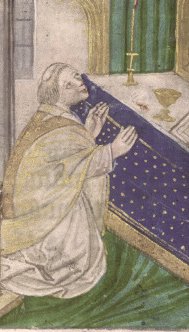
Under Summorum Pontificum, Masses without the people ("private Masses") will be particularly important, first and foremost for priests, but also particularly for small groups of faithful. The right of all priests in the Latin Church to celebrate their private Masses in the extraordinary form (Missal of Bl. John XXIII) is clear. Not only that: the law, in one of its most important articles, establishes a clear equivalence of rights for both forms in the celebration of private Masses. The priest shall choose that which is more convenient for him, or to which he is more attached, or... it does not matter why, his motivations for choosing either Missal for his private Masses are absolutely immaterial: the law does not establish any condition whatsoever and no permission is ever necessary (Art. 2: Ad talem celebrationem secundum unum alterumve Missale, sacerdos nulla eget licentia, nec Sedis Apostolicae nec Ordinarii sui), and the establishment of any additional condition is illicit (general principles of Canon Law are objectively applicable and cannot hinder the celebration of the Mass in the extraordinary form).

This also means that no authority whosoever may curtail the right of priests to celebrate private Masses in the extraordinary form (for instance, of a priest visiting a shrine). Let us recall that additional conditions and permissions apply only to article 5 provisions (that is, "public Masses"). The rector of a shrine may act upon art. 5, § 5 (which applies to "public Masses"), according to the general rules set in article 5, but he must not discriminate between private Masses of visiting priests: all priests in good standing (Art. 5, § 4: idonei... ac iure non impediti) are allowed to say private Mass according to the form of their choice.

That the lay faithful may attend private Masses has always been the case: and, just to avoid any misinterpretation of the latitude awarded to priests and faithful, art.4 makes clear that these Masses (which all priests may celebrate everywhere, as Summorum comes into effect) may be attended by the faithful who ask to be admitted, with no special authorization (admitti possunt, servatis de iure servandis, etiam christifideles qui sua sponte id petunt).

There is no doubt that the wide, complete, and absolute liberation of private Masses in either form (Summorum considers both of identical legal importance for such Masses), with the full licitness of the attendance of the lay faithful is the most far-reaching measure enacted by the act - if priests wish to enjoy the great liberating right which the Pope has recognized as theirs and if the faithful are wise enough to approach those priests who may be willing to celebrate according to the extraordinary form. Private Masses with the attendance of lay faithful may be particularly appropriate in those areas in which there are not exactly "groups" of lay faithful interested in the Traditional Mass, as well as in the initial steps in the formation of "groups stably constituted".

Statements

1. International Federation UNA VOCE Statement on the Motu Proprio SUMMORUM PONTIFICUM

And other links:

2. (UPDATE) A beautiful statement (French) by the Superior of the Institute of the Good Shepherd, Father Philippe Laguérie.

3. Interview granted by the Superior-General of the Priestly Fraternity of Saint Peter (FSSP), Father John Berg, to Brian Mershon.

4. Letter to the faithful of the Superior-General of the Priestly Fraternity of Saint Pius X (FSSPX/SSPX), Bishop Bernard Fellay.

5. Growing list of episcopal reactions (or lack thereof) around the world.

Castrillón speaks


From Sunday's edition of Il Giornale, an interview of the President of the Pontifical Commission Ecclesia Dei, Cardinal Castrillón Hoyos, with Andrea Tornielli, on the main aspects of Summorum Pontificum.

What meaning does the Pope's decision have?

"The Pontiff's letter is clear. It is a decision which comes from the heart and from the mind of a Pope who loves and knows liturgy well. He wishes that the heritage represented by the ancient liturgy be preserved, without this representing any contradiction with the new Mass. Thousands of letters arrived in Rome from those who asked for the freedom to be able to participate in the old rite."

There have been those who said that Ratzinger thus "rejected" the Council...

"Benedict XVI has not walked or will walk, in any way or expression, on a path which is different from that indicated by the Council. The new Mass remains the ordinary Roman Rite. There is nothing in the motu proprio or in the papal letter which signals a minimal deviation from the Council. It may be appropriate to recall that Vatican II did not forbid the ancient Mass, which was celebrated by the Conciliar Fathers during sessions. No rejection, no offense. It is an encounter with the demands of groups of faithful, an act of liberality."

Is it an act of continuity or rupture in comparison to the Montini and Wojtyla pontificates?

"There is no contraposition. Paul VI granted the possibility to celebrate with the old rite soon after the coming into effect of the new Missal and Pope Wojtyla intended to prepare a Motu proprio similar to the one now promulgated."

Is the authority of the Bishop undermined?

"Those who have argued [so], have done so based on a prejudice, because the role of the Bishop rests assured, canon law does not change. It is the competence of the pastor of the diocese to coordinate the liturgy, in harmony with the supreme orderer, who is the Pope. In case of problems, the Bishop will intervene, always in agreement with the dispositions established by the motu proprio. I am certain that the pastoral sensibility of Bishops will find the way to favor the unity of the Church, helping to avoid a schism."

How do we deal with the Holy Friday prayer for the Jews?

"The authorized Missal is that of 1962, promulgated by John XXIII, in which the expression 'perfidis iudaeis' and 'iudaica perfidia' had already been removed."

[...]

Do you predict difficulties?

"I am not aware, in the History of the Church, of any moment in which important decisions have been taken without difficulty. But I strongly hope that they may be coped with and overcome, with the approach suggested by the Pope in his letter."

After this decision, the end of the rupture with the Lefebvrists is closer?

"With this Motu proprio, the door is widely opened [si spalanca la porta] for a return of the Fraternity of Saint Pius X to full communion. If, after this act, the return does not take place, I truly will not be able to comprehend. I wish to clarify, though, that the papal document has not been made for the Lefebvrists, but because the Pope is convinced of the need to underline that there is a continuity in the Tradition, and that in the Church one does not move forward by way of fractures. The ancient Mass has never been abolished nor forbidden." [AnTor]

A bishop cries

Some words of Italian bishop Luca Brandolini about Summorum Pontificum have been reported by Reuters. Here is the full interview granted by him to Italian daily La Repubblica (Sunday edition):

"I will obey the Pontiff, but it is a day of grief. The reform is canceled"

ORAZIO LA ROCCA

VATICAN CITY - "This day is for me a day of grief. I have a lump in my throat and I do not manage to hold back my tears. But, I will obey the Holy Father, because I am a bishop and because I care for him. However, I cannot hide my sadness for the putting aside of one of the most important reforms of the Second Vatican Council." In fact, Monsignor Luca Brandolini, Bishop of Sora-Aquino-Pontecorvo and member of the Liturgical Committee of the Cei (Italian Episcopal Conference), hardly holds back his tears when he is asked for a comment on the reintroduction of the Tridentine Latin Mass: "Please, do not ask me anything, I do not wish to speak [about it], for I am living the saddest day of my life as a priest, as a bishop, and as a man."

Monsignor Brandolini, why [are you] so upset?

"It is a day of grief, not only for me, but for many who lived and worked in the Second Vatican Council. Today, a reform for which so many labored, at the cost of great sacrifices, animated solely by the wish to renew the Church, has been canceled."

The optional return to the Tridentine Rite represents thus a danger for the Church?

"We hope not. It remains to be seen in the future, but today an important reform of the Council was undermined."

Why are you so touched by the decision taken by Pope Ratzinger?
"The episcopal ring which I carry on my finger belonged to archbishop Annibale Bugnini, the father of the Conciliar liturgical reform. I was, at the time of the Council, a disciple of his and a close co-worker. I was close to him when he worked in that reform and I always recall with how much passion he worked for liturgical renewal. Now, his work has been canceled."

You will not accept the "motu proprio" of Benedict XVI, then?

"I will obey, because I care for the Holy Father. I have for him the same sentiment that a son has for his father. And then, as a bishop, I am bound to obedience. Yet, in my heart, I suffer deeply. I feel as if wounded in my heart, and I cannot help saying it. Nonetheless, if anyone in my diocese will ask me to follow the Tridentine rite, I will not be able to say no. But I do not believe this will happen, because ever since I have been the bishop of Sora-Aquino-Pontecorvo, there has never been anyone who has expressed a similar desire. I am certain that it will always be like this in the future.

_____________________
Transcript: Papa Ratzinger
Picture: Orbis Catholicus

Summorum Pontificum: Axes of Interpretation


It seemed improper - on a day when many visited this blog simply to find documentary information - to present comments on the Apostolic Letter given Motu Proprio Summorum Pontificum [Summorum]. In this first full day after the promulgation of the text, a Day of the Lord, the moment seems appropriate to discuss the three main axes of the text, to which our future comments will often refer.

1. The text must be read from "bottom to top".

Summorum contains 12 articles of law*, in its very end, the heart of the text. They recognize facts and rights, establish rights which are new or were unclear under previous law, and create new obligations.

This is extremely important: those 12 articles are the law. Naturally, other points of law apply (general principles, concepts explicitly mentioned in the articles themselves, as well as other applicable canonical aspects), but neither the introduction to the articles (the first part of Summorum), much less the cover letter sent by the Pope to the Bishops, nor any other text may be invoked to suppress or curtail the rights recognized or created by the Supreme Legislator in the 12 articles.
______________
*There is a 13th article of law, which is the determination of a "vacatio legis" from July 7, 2007 to September 13, 2007.

2. Whose interpretation?

Thankfully, the articles of law of Summorum are mostly quite clear. And where they may not be clear, there is a Roman Dicastery ready to provide the appropriate interpretation and probably unwilling to renounce to its recent increment in power (cf. Art. 12), to be specified by the Roman Pontiff in the future, according to his will (cf. Art. 11).

The text of reference is and will be only the Latin original. (Currently, there are no "official" Vatican translations, and our own version fixes just a few problems of the Vatican Information Service unofficial translation. One might only hope that the "official" Vatican translation will be adequate.)

3. Summorum is a new "Constitution" of the Roman Rite.

The Supreme Legislator wished to create a liturgical framework for priests and faithful - particularly for priests. It is a "Constitution", not as a theological document, but in the legal sense that it is a foundational law, a law above other laws: that is very clear, for instance, in the extremely important articles 2 and 4 (Masses without the people or "private Masses", with or without attending faithful), and 9, § 3 (free use of the Roman Breviary), which are the very embodiment of the liberation.

Summorum is, then, "above" the mere liturgical dispositions of the Latin Church. It is a legal revolution in the mutual cohabitation of what are now called the two forms of the Roman Rite: that is, the Missal of Paul VI may still be the "ordinary form", but it is not the standard compulsory form, from which some priests (due to particular deference or the charism of their order or society of apostolic life) are exempted due to special favor ("indult"). The age of the "indult" is over; the age of mere "episcopal generosity" is over: Summorum is a true liturgical Bill of Rights for all the priests of the Latin Church.

Dear Priests of the entire world, cherish and make full and good use of this document: it is not the property of "estranged minorities"; it is not the domain of "nostalgic clerics"; it belongs to all of you, it is your charter of liturgical freedom.

Benedicta es cælorum Regina

Et mundi totius Domina,
Et ægris medicina;
Tu præclara Maris Stella vocaris,
Quæ Solem Iustitiæ paris,
A quo illuminaris

Te Deus Pater,
Ut Dei Mater
Fieres, et ipse frater
Cuius eras filia,
Sanctificavit,
Sanctam servavit,
Et mittens sic salutavit:
"Ave, plena gratia."

Per illud Ave prolatum
Et tuum responsum gratum
Est ex te Verbum incarnatum
Quo salvantur omnia.

Nunc Mater, exora Natum,
Ut nostrum tollat reatum
Et regnum det nobis paratum
In cælesti patria.

Amen.


Thank you, Queen of Heavens!

And a final treat...

...for a special day: a printable Latin-English (side by side) version of the motu proprio Summorum Pontificum: PDF Document (it may even be resized to fit any liturgical book or handmissal).

RORATE CÆLI Interview: Rifan speaks


In January 2002, Pope John Paul II established the Personal Apostolic Administration of Saint John Mary Vianney, a Particular Church for the clergy and the faithful attached to the Extraordinary Form of the Roman Rite with the same area as that of the Diocese of Campos, in Brazil. For the past five years, as Cardinal Castrillón Hoyos declared in his address to the Bishops of Latin America in Aparecida, Brazil, the Campos experiment has allowed the Holy See to display to the world the possibility of a full peaceful cohabitation of the Catholic faithful attached to the Ordinary Form of the Roman Rite (the Diocese of Campos) and those attached to the "Forma Extraordinaria" of the Rite, the names used by the Motu Proprio Summorum Pontificum, published today.

The Apostolic Administrator of the Campos Apostolic Administration, Bishop Fernando Areas Rifan, granted RORATE CÆLI an exclusive interview which will be published in two installments. Today, a day of celebration, we present the first part, which deals with his general impressions regarding Summorum Pontificum and lessons from Campos, as well as with the SSPX.

RORATE CÆLI: Bishop Fernando Rifan, thank you for accepting our invitation. Summorum Pontificum has finally been published. How long have you waited for it?

Bishop Fernando Rifan: We have been waiting for this document since the creation of our Personal Apostolic Administration Saint John Mary Vianney. That is, we hoped that the immense benefit which had been granted to us could spread throughout the world and that all could profit from this great treasure which is the ancient form of the Roman Rite.

Cardinal Castrillon Hoyos said in Aparecida that the Campos experience was an example of peaceful coexistence for the Catholic world. Could you tell us what the relationship between both communities is like, in some detail?

Cardinal Castrillon said in his pronouncement before the CELAM that "The Holy Father's project has been partly proved in Campos, where the peaceful coexistence of the two forms of the only Roman Rite in the Church is a beautiful reality. We hope that this example will also bear fruit in other places of the Church where Catholic faithful with diverse liturgical sensibilities live together." There is a good communal and cordial relationship between both bishops, the one of the Apostolic Administration and the diocesan Bishop, Dom Roberto Gomes Guimarães. Mutual consultations, frequent visits. For important ceremonies in the Cathedral, Dom Roberto invites me, and I attend. Last year, I gave the inaugural philosophy class at the diocesan seminary. One of the priests of the Administration is a Latin professor in the diocesan seminary. At the last priestly ordination in the diocesan Cathedral, it was the choir of the seminarians of the Apostolic Administration which sang the musical parts of the mass in Gregorian chant, at the request of the diocesan seminarians. There is an exchange of apostolates between the priests of the Administration and the Diocese: our priests are invited to aid in hearing confessions in diocesan parishes at certain events. And there is, in general, a good friendly relationship between both clergies, though safeguarding our liturgical identity and our independence.

It has been rumored that you were consulted in the preparatory phases of the creation of what would become the Institut du Bon Pasteur. Is this true? Were you ever consulted in during the preparatory phases of Summorum Pontificum?


In the creation of the Institute of the Good Shepherd, I attempted to give all my support. The priests who had left the Fraternity of Saint Pius X wished to regularize their situation. They asked for our support. I went to France, presented them to Cardinal Ricard, of Bordeaux, who received them very well knowing that relations were shaken before. I introduced them to the Nuncio in Paris, to the Bishop of Chartres, in whose diocese they have their seminary, and I visited the Archbishop of Paris to speak of the matter. I believe that I thus attempted to open the doors for the establishment of the Institute of the Good Shepherd. As for our contribution to the motu proprio, our very existence and our good relations spoke in favor of it.

Are you concerned that the kind of liturgical abuse so prevalent in the celebrations according to the Missal of Paul VI may affect the Traditional Mass? How is it possible to avoid this from happening?

No. Precisely, one of the reasons for which we prefer and adopt the Traditional Mass is because its structure and form of celebration exempts it from such abuses. The best way to avoid them is the preservation of the Traditional Mass in all its purity, sobriety, respect, sacredness, and solemnity. The rubrics of the Traditional Mass are very rigorous and do not allow for creativity and inventiveness.


From your past experience, and considering your knowledge of your fellow Bishops in the Brazilian Episcopal Conference, what do you believe will be the reception of the papal document in Brazil? Will Bishops establish obstacles to those priests and groups of faithful who wish to see the new papal directive implemented? Do you believe there will be an increase in the interest and demand for the Traditional Mass in Brazil? On a practical side, is the Apostolic Administration planning any formal effort to train priests to say the Traditional Mass?

As Cardinal Castrillon said in his talk to the CELAM, due to the influence of our Apostolic Administration, "some Brazilian dioceses have contacted the Campos Apostolic Administration, which has allowed some of their priests to give pastoral care to the traditionalist faithful in their local churches." We have 13 dioceses offering the Traditional Mass in Brazil already. There will be hardships. But it will be much easier [with the motu proprio]. I am aware of Bishops who are waiting only for the Motu Proprio to liberate the Mass in their dioceses. And I believe that many groups will achieve it. We receive visits from many priests wishing to learn how to celebrate the Traditional Mass. We have even made a didactic DVD to teach priests how to celebrate Mass the Traditional way.

How is the construction of your new seminary coming along? Do you have seminarians from other Brazilian dioceses and from foreign countries?

The building of our new Seminary is coming along. We expect to move there next year, even though it will be only half done. We need help. We have some seminarians from other dioceses, but the majority are from here [Campos]. At this time we have 30 seminarians. The new seminary will have room for 80 students.

You have visited and traveled across the United States: do you believe that there is a potential for growth of the Mass in the U.S. or do you believe that there is a low interest for the Mass in America?

The United States is maybe, next to France, the country with the greatest interest in the Traditional Mass. In the United States and Canada there are about 600 places where the Traditional Mass is celebrated. There is a great interest [in the Traditional Mass].

Do you still have friends inside the Priestly Fraternity of Saint Pius X (FSSPX/SSPX)? If so, what do they tell you about a future reconciliation with the Holy See? Do you believe there is at least a chance for a intermediary stage, something less than a full agreement, particularly after the liberalization of the Traditional Mass?

Yes, some. Some are of the opinion that the reconciliation should be done in groups, each in its own diocese. But, we fear that the hard line will fall away into schism. Maybe the freedom of the Traditional Mass will bring us closer. What is bad is the spirit of criticism, that sees only the negative side of things, and makes everything more difficult. They are not yet conscious of the irregularity of their situation and of the theological necessity of a canonical regularization and the recovery of a perfect communion with the Church.


On a personal note, since you were Bishop Antonio de Castro Mayer's secretary for a long time, and particularly looking back at the dramatic events of 1988, what would a motu proprio like Summorum Pontificum have meant to Bishop de Castro Mayer?

I sincerely believe that he would very happy. Dom Castro Mayer was always a man of the Church, very faithful to its Magisterium. One must only see the body of his written work to arrive at that conclusion. And, on the day of my Episcopal Ordination, I said, in the presence of Cardinal Castrillon and of all the bishops who were there, that our regularization signified, also, the reestablishment of Dom Castro de Mayer, upon which I was applauded, including by them [the bishops].


Copyright: RORATE CÆLI

Holy See Press Office

NOTICE TO JOURNALISTS

Journalists are informed that on Tuesday, July 10, 2007, the Document of the Congregation for the Doctrine of the Faith "Responses to Questions concerning some aspects of the Doctrine on the Church" will be made public.

(The text - in Italian, French, English, German, Spanish, Portuguese, and Polish - will be available to journalists from 9.00 [Rome], under embargo until 12 [noon] of the same day.)

Previous post on the matter here.


Note of the Holy See Press Office.
FSSPX/SSPX Official Reaction.
Translation and Q&A: USCCB Bishops' Committee on the Liturgy
Q&A: French Episcopal Conference
FSSP

Comment box open only in this post.

Letter to Bishops
regarding the Apostolic Letter

SUMMORUM PONTIFICUM [in Latin; in English]


My dear Brother Bishops,

With great trust and hope, I am consigning to you as Pastors the text of a new Apostolic Letter "Motu Proprio data" on the use of the Roman liturgy prior to the reform of 1970. The document is the fruit of much reflection, numerous consultations and prayer.

News reports and judgments made without sufficient information have created no little confusion. There have been very divergent reactions ranging from joyful acceptance to harsh opposition, about a plan whose contents were in reality unknown.

This document was most directly opposed on account of two fears, which I would like to address somewhat more closely in this letter.

In the first place, there is the fear that the document detracts from the authority of the Second Vatican Council, one of whose essential decisions – the liturgical reform – is being called into question. This fear is unfounded. In this regard, it must first be said that the Missal published by Paul VI and then republished in two subsequent editions by John Paul II, obviously is and continues to be the normal Form – the Forma ordinaria – of the Eucharistic Liturgy. The last version of the Missale Romanum prior to the Council, which was published with the authority of Pope John XXIII in 1962 and used during the Council, will now be able to be used as a Forma extraordinaria of the liturgical celebration. It is not appropriate to speak of these two versions of the Roman Missal as if they were "two Rites". Rather, it is a matter of a twofold use of one and the same rite.

As for the use of the 1962 Missal as a Forma extraordinaria of the liturgy of the Mass, I would like to draw attention to the fact that this Missal was never juridically abrogated and, consequently, in principle, was always permitted. At the time of the introduction of the new Missal, it did not seem necessary to issue specific norms for the possible use of the earlier Missal. Probably it was thought that it would be a matter of a few individual cases which would be resolved, case by case, on the local level. Afterwards, however, it soon became apparent that a good number of people remained strongly attached to this usage of the Roman Rite, which had been familiar to them from childhood. This was especially the case in countries where the liturgical movement had provided many people with a notable liturgical formation and a deep, personal familiarity with the earlier Form of the liturgical celebration. We all know that, in the movement led by Archbishop Lefebvre, fidelity to the old Missal became an external mark of identity; the reasons for the break which arose over this, however, were at a deeper level. Many people who clearly accepted the binding character of the Second Vatican Council, and were faithful to the Pope and the Bishops, nonetheless also desired to recover the form of the sacred liturgy that was dear to them. This occurred above all because in many places celebrations were not faithful to the prescriptions of the new Missal, but the latter actually was understood as authorizing or even requiring creativity, which frequently led to deformations of the liturgy which were hard to bear. I am speaking from experience, since I too lived through that period with all its hopes and its confusion. And I have seen how arbitrary deformations of the liturgy caused deep pain to individuals totally rooted in the faith of the Church.

Pope John Paul II thus felt obliged to provide, in his Motu Proprio Ecclesia Dei (2 July 1988), guidelines for the use of the 1962 Missal; that document, however, did not contain detailed prescriptions but appealed in a general way to the generous response of Bishops towards the "legitimate aspirations" of those members of the faithful who requested this usage of the Roman Rite. At the time, the Pope primarily wanted to assist the Society of Saint Pius X to recover full unity with the Successor of Peter, and sought to heal a wound experienced ever more painfully. Unfortunately this reconciliation has not yet come about. Nonetheless, a number of communities have gratefully made use of the possibilities provided by the Motu Proprio. On the other hand, difficulties remain concerning the use of the 1962 Missal outside of these groups, because of the lack of precise juridical norms, particularly because Bishops, in such cases, frequently feared that the authority of the Council would be called into question. Immediately after the Second Vatican Council it was presumed that requests for the use of the 1962 Missal would be limited to the older generation which had grown up with it, but in the meantime it has clearly been demonstrated that young persons too have discovered this liturgical form, felt its attraction and found in it a form of encounter with the Mystery of the Most Holy Eucharist, particularly suited to them. Thus the need has arisen for a clearer juridical regulation which had not been foreseen at the time of the 1988 Motu Proprio. The present Norms are also meant to free Bishops from constantly having to evaluate anew how they are to respond to various situations.

In the second place, the fear was expressed in discussions about the awaited Motu Proprio, that the possibility of a wider use of the 1962 Missal would lead to disarray or even divisions within parish communities. This fear also strikes me as quite unfounded. The use of the old Missal presupposes a certain degree of liturgical formation and some knowledge of the Latin language; neither of these is found very often. Already from these concrete presuppositions, it is clearly seen that the new Missal will certainly remain the ordinary Form of the Roman Rite, not only on account of the juridical norms, but also because of the actual situation of the communities of the faithful.

It is true that there have been exaggerations and at times social aspects unduly linked to the attitude of the faithful attached to the ancient Latin liturgical tradition. Your charity and pastoral prudence will be an incentive and guide for improving these. For that matter, the two Forms of the usage of the Roman Rite can be mutually enriching: new Saints and some of the new Prefaces can and should be inserted in the old Missal. The "Ecclesia Dei" Commission, in contact with various bodies devoted to the usus antiquior, will study the practical possibilities in this regard. The celebration of the Mass according to the Missal of Paul VI will be able to demonstrate, more powerfully than has been the case hitherto, the sacrality which attracts many people to the former usage. The most sure guarantee that the Missal of Paul VI can unite parish communities and be loved by them consists in its being celebrated with great reverence in harmony with the liturgical directives. This will bring out the spiritual richness and the theological depth of this Missal.

I now come to the positive reason which motivated my decision to issue this Motu Proprio updating that of 1988. It is a matter of coming to an interior reconciliation in the heart of the Church. Looking back over the past, to the divisions which in the course of the centuries have rent the Body of Christ, one continually has the impression that, at critical moments when divisions were coming about, not enough was done by the Church’s leaders to maintain or regain reconciliation and unity. One has the impression that omissions on the part of the Church have had their share of blame for the fact that these divisions were able to harden. This glance at the past imposes an obligation on us today: to make every effort to enable for all those who truly desire unity to remain in that unity or to attain it anew. I think of a sentence in the Second Letter to the Corinthians, where Paul writes: "Our mouth is open to you, Corinthians; our heart is wide. You are not restricted by us, but you are restricted in your own affections. In return … widen your hearts also!" (2 Cor 6:11-13). Paul was certainly speaking in another context, but his exhortation can and must touch us too, precisely on this subject. Let us generously open our hearts and make room for everything that the faith itself allows.

There is no contradiction between the two editions of the Roman Missal. In the history of the liturgy there is growth and progress, but no rupture. What earlier generations held as sacred, remains sacred and great for us too, and it cannot be all of a sudden entirely forbidden or even considered harmful. It behooves all of us to preserve the riches which have developed in the Church’s faith and prayer, and to give them their proper place. Needless to say, in order to experience full communion, the priests of the communities adhering to the former usage cannot, as a matter of principle, exclude celebrating according to the new books. The total exclusion of the new rite would not in fact be consistent with the recognition of its value and holiness.

In conclusion, dear Brothers, I very much wish to stress that these new norms do not in any way lessen your own authority and responsibility, either for the liturgy or for the pastoral care of your faithful. Each Bishop, in fact, is the moderator of the liturgy in his own Diocese (cf. Sacrosanctum Concilium, 22: "Sacrae Liturgiae moderatio ab Ecclesiae auctoritate unice pendet quae quidem est apud Apostolicam Sedem et, ad normam iuris, apud Episcopum").

Nothing is taken away, then, from the authority of the Bishop, whose role remains that of being watchful that all is done in peace and serenity. Should some problem arise which the parish priest cannot resolve, the local Ordinary will always be able to intervene, in full harmony, however, with all that has been laid down by the new norms of the Motu Proprio.

Furthermore, I invite you, dear Brothers, to send to the Holy See an account of your experiences, three years after this Motu Proprio has taken effect. If truly serious difficulties come to light, ways to remedy them can be sought.

Dear Brothers, with gratitude and trust, I entrust to your hearts as Pastors these pages and the norms of the Motu Proprio. Let us always be mindful of the words of the Apostle Paul addressed to the presbyters of Ephesus: "Take heed to yourselves and to all the flock, in which the Holy Spirit has made you overseers, to care for the Church of God which he obtained with the blood of his own Son" (Acts 20:28).

I entrust these norms to the powerful intercession of Mary, Mother of the Church, and I cordially impart my Apostolic Blessing to you, dear Brothers, to the parish priests of your dioceses, and to all the priests, your co-workers, as well as to all your faithful.

Given at Saint Peter’s, 7 July 2007

BENEDICTUS PP. XVI


Reference: AAS 99 (2007), 795-799

APOSTOLIC LETTER SUMMORUM PONTIFICUM
OF THE SUPREME PONTIFF BENEDICT XVI
GIVEN MOTU PROPRIO

__________________

APOSTOLIC LETTER
SUMMORUM PONTIFICUM
OF THE SUPREME PONTIFF

BENEDICT XVI
GIVEN MOTU PROPRIO

On the extraordinary use
of the ancient form of the Roman Rite
__________________


It has been the constant concern of the Supreme Pontiffs up to the present to ensure that the Church of Christ offers a worthy worship to the Divine Majesty, 'to the praise and glory of His name,' and 'to the benefit of all His Holy Church.'

Since time immemorial it has been necessary - as it is also for the future - to maintain the principle according to which 'each particular Church must concur with the universal Church, not only as regards the doctrine of the faith and the sacramental signs, but also as regards the usages universally accepted by uninterrupted apostolic tradition, which must be observed not only to avoid errors but also to transmit the integrity of the faith, because the Church's law of prayer corresponds to her law of faith.' (1)

Among the pontiffs who showed that requisite concern, particularly outstanding is the name of St. Gregory the Great, who made every effort to ensure that the new peoples of Europe received both the Catholic faith and the treasures of worship and culture that had been accumulated by the Romans in preceding centuries. He commanded that the form of the sacred liturgy as celebrated in Rome (concerning both the Sacrifice of Mass and the Divine Office) be conserved. He took great concern to ensure the dissemination of monks and nuns who, following the Rule of St. Benedict, together with the announcement of the Gospel illustrated with their lives the wise provision of their Rule that 'nothing should be placed before the work of God.' In this way the sacred liturgy, celebrated according to the Roman use, enriched not only the faith and piety but also the culture of many peoples. It is known, in fact, that the Latin liturgy of the Church in its various forms, in each century of the Christian era, has been a spur to the spiritual life of many saints, has reinforced many peoples in the virtue of religion and fecundated their piety.

Many other Roman pontiffs, in the course of the centuries, showed particular solicitude in ensuring that the sacred liturgy accomplished this task more effectively. Outstanding among them is Saint Pius V who, sustained by great pastoral zeal and following the exhortations of the Council of Trent, renewed the entire liturgy of the Church, oversaw the publication of liturgical books amended and 'renewed in accordance with the norms of the Fathers,' and provided them for the use of the Latin Church.

One of the liturgical books of the Roman rite is the Roman Missal, which developed in the city of Rome and, with the passing of the centuries, little by little took forms very similar to that it has had in recent times.

'It was towards this same goal that succeeding Roman Pontiffs directed their energies during the subsequent centuries in order to ensure that the rites and liturgical books were brought up to date and when necessary clarified. From the beginning of this century they undertook a more general reform.' (2) Thus acted also our predecessors Clement VIII, Urban VIII, Saint Pius X (3), Benedict XV, Pius XII and Blessed John XXIII.

In more recent times, the Second Vatican Council expressed a desire that the respectful reverence due to divine worship should be renewed and adapted to the needs of our time. Moved by this desire our predecessor, the Supreme Pontiff Paul VI, approved, in 1970, reformed and partly renewed liturgical books for the Latin Church. These, translated into the various languages of the world, were willingly accepted by bishops, priests and faithful. John Paul II amended the third typical edition of the Roman Missal. Thus Roman pontiffs have operated to ensure that 'this kind of liturgical edifice ... should again appear resplendent for its dignity and harmony.' (4)

But in some regions, no small numbers of faithful adhered and continue to adhere with great love and affection to the earlier liturgical forms. These had so deeply marked their culture and their spirit that in 1984 the Supreme Pontiff John Paul II, moved by a concern for the pastoral care of these faithful, with the special indult
Quattuor abhinc annos, issued by the Congregation for Divine Worship, granted permission to use the Roman Missal published by Blessed John XXIII in the year 1962. Later, in the year 1988, John Paul II with the Apostolic Letter given Motu Proprio, Ecclesia Dei, exhorted bishops to make generous use of this power in favor of all the faithful who so desired.

Our predecessor John Paul II having already considered the insistent petitions of these faithful, having listened to the views of the Cardinal Fathers of the Consistory of 22 March 2006, having reflected deeply upon all aspects of the question, invoked the Holy Spirit and trusting in the help of God, with this Apostolic Letter We DECREE the following:


Art. 1 The Roman Missal promulgated by Paul VI is the ordinary expression of the Lex orandi [Law of prayer] of the Catholic Church of the Latin rite. Nonetheless, the Roman Missal promulgated by St. Pius V and reissued by Bl. John XXIII is to be considered as an extraordinary expression of that same Lex orandi, and must be given due honour for its venerable and ancient usage. These two expressions of the Church’s Lex orandi will in no any way lead to a division in the Church’s Lex credendi [Law of belief]. They are, in fact two uses of the one Roman rite.


It is, therefore, permissible to celebrate the Sacrifice of the Mass following the typical edition of the Roman Missal promulgated by Bl. John XXIII in 1962 and never abrogated, as an extraordinary form of the Liturgy of the Church. The conditions for the use of this Missal as laid down by earlier documents Quattuor abhinc annos and Ecclesia Dei, are substituted as follows:


Art. 2 In Masses celebrated without the people, each Catholic priest of the Latin rite, whether secular or regular, may use the Roman Missal published by Bl. Pope John XXIII in 1962, or the Roman Missal promulgated by Pope Paul VI in 1970, and may do so on any day with the exception of the Easter Triduum. For such celebrations, with either one Missal or the other, the priest has no need for permission from the Apostolic See or from his Ordinary.


Art. 3 Communities of Institutes of consecrated life and of Societies of apostolic life, of either pontifical or diocesan right, wishing to celebrate Mass in accordance with the edition of the Roman Missal promulgated in 1962, for conventual or “community” celebration in their oratories, may do so. If an individual community or an entire Institute or Society wishes to undertake such celebrations often, habitually or permanently, the decision must be taken by the Superiors Major, in accordance with the law and following their own specific decrees and statutes.


Art. 4 Celebrations of Mass as mentioned above in art. 2 may – observing all the norms of law – also be attended by faithful who, of their own free will, ask to be admitted.


Art. 5 § 1 In parishes, where there is a group of faithful who stably adhere to the earlier liturgical tradition, the pastor should willingly accept their requests to celebrate the Mass according to the rite of the Roman Missal published in 1962, and ensure that the welfare of these faithful harmonises with the ordinary pastoral care of the parish, under the guidance of the bishop in accordance with canon 392, avoiding discord and favouring the unity of the whole Church.


§ 2 Celebration according to the Missal of Bl. John XXIII may take place on working days; while on Sundays and feast days one such celebration may also be held.


§ 3 For faithful and priests who request it, the pastor should also allow celebrations in this extraordinary form for special circumstances such as marriages, funerals or occasional celebrations, e.g. pilgrimages.


§ 4 Priests who use the Missal of Bl. John XXIII must be idoneous and not juridically impeded.


§ 5 In churches that are not parish or conventual churches, it is the duty of the Rector of the church to grant the above permission.


Art. 6 In Masses celebrated in the presence of the people in accordance with the Missal of Bl. John XXIII, the readings may be given in the vernacular, using editions recognised by the Apostolic See.


Art. 7 If a group of lay faithful, as mentioned in art. 5 § 1, has not obtained satisfaction to their requests from the pastor, they should inform the diocesan bishop. The bishop is strongly requested to satisfy their wishes. If he does not want to arrange for such celebration to take place, the matter should be referred to the Pontifical Commission “Ecclesia Dei”.


Art. 8 A bishop who, desirous of satisfying such requests, but who for various reasons is unable to do so, may refer the problem to the Commission “Ecclesia Dei” to obtain counsel and assistance.


Art. 9 § 1 The pastor, having attentively examined all aspects, may also grant permission to use the earlier ritual for the administration of the Sacraments of Baptism, Marriage, Penance, and the Anointing of the Sick, if the good of souls would seem to require it.


§ 2 Ordinaries are given the right to celebrate the Sacrament of Confirmation using the earlier Roman Pontifical, if the good of souls would seem to require it.


§ 3 Clerics ordained “in sacris constitutis” may use the Roman Breviary promulgated by Bl. John XXIII in 1962.


Art. 10 The ordinary of a particular place, if he deems it appropriate, may erect a personal parish in accordance with can. 518 for celebrations following the ancient form of the Roman rite, or appoint a chaplain, while observing all the norms of law.


Art. 11 The Pontifical Commission “Ecclesia Dei” (5) , erected by John Paul II in 1988, continues to exercise its function. Said Commission will have the form, duties and norms that the Roman Pontiff wishes to assign it.


Art. 12 This Commission, apart from the powers it enjoys, will exercise the authority of the Holy See, supervising the observance and application of these dispositions.

We order that everything We have decreed with this Apostolic Letter given Motu Proprio be considered as having full and lasting force, and be observed from September 14 of this year, Feast of the Exaltation of the Holy Cross, notwithstanding any provisions to the contrary.

Given in Rome, at Saint Peter’s, on July 7, in the year of Our Lord 2007, the third of Our Pontificate.


BENEDICTUS PP. XVI

___________________________
  1. 1. General Instruction of the Roman Missal, 3rd ed., 2002, no. 397.
  2. 2. John Paul II, Apostolic Letter "Vicesimus quintus annus," 4 December 1988, 3: AAS 81 (1989), 899.
  3. 3. Ibid.
  4. 4. St. Pius X, Apostolic Letter Motu propio data, "Abhinc duos annos," 23 October 1913: AAS 5 (1913), 449-450; cf John Paul II, Apostolic Letter "Vicesimus quintus annus," no. 3: AAS 81 (1989), 899.
  5. 5. Cf John Paul II, Apostolic Letter Motu proprio data "Ecclesia Dei," 2 July 1988, 6: AAS 80 (1988), 1498.
___________________________
Official publication: AAS 99 (2007), 777-781.
[in Latin;
Deutsch, Español, Français, Italiano, Polski, Português]

[Papal Explanatory Letter: in English]
__________________
LITTERAE APOSTOLICAE
MOTU PROPRIO DATAE

BENEDICTUS XVI


SUMMORUM PONTIFICUM


De usu extraordinario
antiquae formae Ritus Romani
__________________


SUMMORUM PONTIFICUM cura ad hoc tempus usque semper fuit, ut Christi Ecclesia Divinae Maiestati cultum dignum offerret, «ad laudem et gloriam nominis Sui» et «ad utilitatem totius Ecclesiae Suae sanctae».

Ab immemorabili tempore sicut etiam in futurum, principium servandum est «iuxta quod unaquaeque Ecclesia particularis concordare debet cum universali Ecclesia non solum quoad fidei doctrinam et signa sacramentalia, sed etiam quoad usus universaliter acceptos ab apostolica et continua traditione, qui servandi sunt non solum ut errores vitentur, verum etiam ad fidei integritatem tradendam, quia Ecclesiae lex orandi eius legi credendi respondet» [n.1].

Inter Pontífices qui talem debitam curam adhibuerunt, nomen excellit sancti Gregorii Magni, qui tam fidem catholicam quam thesauros cultus ac culturae a Romanis in saeculis praecedentibus cumulatos novis Europae populis transmittendos curavit. Sacrae Liturgiae tam Missae Sacrificii quam Officii Divini formam, uti in Urbe celebrabatur, definiri conservarique iussit. Monachos quoque et moniales maxime fovit, qui sub Regula sancti Benedicti militantes, ubique simul cum Evangelii annuntiatione illam quoque saluberrimam Regulae sententiam vita sua illustrarunt, «ut operi Dei nihil praeponatur» (cap. 43). Tali modo sacra liturgia secundum morem Romanum non solum fidem et pietatem sed et culturam multarum gentium fecundavit. Constat utique liturgiam latinam variis suis formis Ecclesiae in omnibus aetatis christianae saeculis permultos Sanctos in vita spirituali stimulasse atque tot populos in religionis virtute roborasse ac eorundem pietatem fecundasse.

Ut autem Sacra Liturgia hoc munus efficacius expleret, plures alii Romani Pontifices decursu saeculorum peculiarem sollicitudinem impenderunt, inter quos eminet Sanctus Pius V, qui magno cum studio pastorali, Concilio Tridentino exhortante, totum Ecclesiae cultum innovavit, librorum liturgicorum emendatorum et «ad normam Patrum instauratorum» editionem curavit eosque Ecclesiae latinae usui dedit.

Inter Ritus romani libros liturgicos patet eminere Missale Romanum, quod in romana urbe succrevit, atque succedentibus saeculis gradatim formas assumpsit, quae cum illa in generationibus recentioribus vigente magnam habent similitudinem.

«Quod idem omnino propositum tempore progrediente Pontifices Romani sunt persecuti, cum novas ad aetates accommodaverunt aut ritus librosque liturgicos determinaverunt, ac deinde cum ineunte hoc nostro saeculo ampliorem iam complexi sunt redintegrationem» [n.2]. Sic vero egerunt Decessores nostri Clemens VIII, Urbanus VIII, sanctus Pius X [n.3], Benedictus XV, Pius XII et beatus Ioannes XXIII.

Recentioribus autem temporibus, Concilium Vaticanum II desiderium expressit, ut debita observantia et reverentia erga cultum divinum denuo instauraretur ac necessitatibus nostrae aetatis aptaretur. Quo desiderio motus, Decessor noster Summus Pontifex Paulus VI libros liturgicos instauratos et partim innovatos anno 1970 Ecclesiae latinae approbavit; qui ubique terrarum permultas in linguas vulgares conversi, ab Episcopis atque a sacerdotibus et fidelibus libenter recepti sunt. Ioannes Paulus II, tertiam editionem typicam Missalis Romani recognovit. Sic Romani Pontifices operati sunt ut «hoc quasi aedificium liturgicum [...] rursus, dignitate splendidum et concinnitate» appareret [n.4].

Aliquibus autem in regionibus haud pauci fideles antecedentibus formis liturgicis, quae eorum culturam et spiritum tam profunde imbuerant, tanto amore et affectu adhaeserunt et adhaerere pergunt, ut Summus Pontifex Ioannes Paulus II, horum fidelium pastorali cura motus, anno 1984 speciali Indulto "Quattuor abhinc annos", a Congregatione pro Cultu Divino exarato, facultatem concessit utendi Missali Romano a Ioanne XXIII anno 1962 edito; anno autem 1988 Ioannes Paulus II iterum, litteris Apostolicis "Ecclesia Dei" Motu proprio datis, Episcopos exhortatus est ut talem facultatem late et generose in favorem omnium fidelium id petentium adhiberent.

Instantibus precibus horum fidelium iam a Praedecessore Nostro Ioanne Paulo II diu perpensis, auditis etiam a Nobis Patribus Cardinalibus in Concistorio die XXIII mensis martii anni 2006 habito, omnibus mature perpensis, invocato Spiritu Sancto et Dei freti auxilio, praesentibus Litteris Apostolicis DECERNIMUS quae sequuntur:


Art. 1. Missale Romanum a Paulo VI promulgatum ordinaria expressio "Legis orandi" Ecclesiae catholicae ritus latini est. Missale autem Romanum a S. Pio V promulgatum et a B. Ioanne XXIII denuo editum habeatur uti extraordinaria expressio eiusdem "Legis orandi" Ecclesiae et ob venerabilem et antiquum eius usum debito gaudeat honore. Hae duae expressiones "legis orandi" Ecclesiae, minime vero inducent in divisionem "legis credendi" Ecclesiae; sunt enim duo usus unici ritus romani.


Proinde Missae Sacrificium, iuxta editionem typicam Missalis Romani a B. Ioanne XXIII anno 1962 promulgatam et numquam abrogatam, uti formam extraordinariam Liturgiae Ecclesiae, celebrare licet. Condiciones vero a documentis antecedentibus "Quattuor abhinc annos" et "Ecclesia Dei" pro usu huius Missalis statutae, substituuntur ut sequitur:


Art. 2. In Missis sine populo celebratis, quilibet sacerdos catholicus ritus latini, sive saecularis sive religiosus, uti potest aut Missali Romano a beato Papa Ioanne XXIII anno 1962 edito, aut Missali Romano a Summo Pontifice Paulo VI anno 1970 promulgato, et quidem qualibet die, excepto Triduo Sacro. Ad talem celebrationem secundum unum alterumve Missale, sacerdos nulla eget licentia, nec Sedis Apostolicae nec Ordinarii sui.


Art. 3. Si communitates Institutorum vitae consecratae atque Societatum vitae apostolicae iuris sive pontificii sive dioecesani quae in celebratione conventuali seu "communitatis" in oratoriis propriis celebrationem sanctae Missae iuxta editionem Missalis Romani anno 1962 promulgatam habere cupiunt, id eis licet. Si singula communitas aut totum Institutum vel Societas tales celebrationes saepe vel habitualiter vel permanenter perficere vult, res a Superioribus maioribus ad normam iuris et secundum leges et statuta particularia decernatur.


Art. 4. Ad celebrationes sanctae Missae de quibus supra in art. 2 admitti possunt, servatis de iure servandis, etiam christifideles qui sua sponte id petunt.


Art. 5, § 1. In paroeciis, ubi coetus fidelium traditioni liturgicae antecedenti adhaerentium stabiliter exsistit, parochus eorum petitiones ad celebrandam sanctam Missam iuxta ritum Missalis Romani anno 1962 editi, libenter suscipiat. Ipse videat ut harmonice concordetur bonum horum fidelium cum ordinaria paroeciae pastorali cura, sub Episcopi regimine ad normam canonis 392, discordiam vitando et totius Ecclesiae unitatem fovendo.


§ 2. Celebratio secundum Missale B. Ioannis XXIII locum habere potest diebus ferialibus; dominicis autem et festis una etiam celebratio huiusmodi fieri potest.


§ 3. Fidelibus seu sacerdotibus id petentibus, parochus celebrationes, hac in forma extraordinaria, permittat etiam in adiunctis peculiaribus, uti sunt matrimonia, exsequiae aut celebrationes occasionales, verbi gratia peregrinationes.


§ 4. Sacerdotes Missali B. Ioannis XXIII utentes, idonei esse debent ac iure non impediti.


§ 5. In ecclesiis, quae non sunt nec paroeciales nec conventuales, Rectoris ecclesiae est concedere licentiam de qua supra.


Art. 6. In Missis iuxta Missale B. Ioannis XXIII celebratis cum populo, Lectiones proclamari possunt etiam lingua vernacula, utendo editionibus ab Apostolica Sede recognitis.


Art. 7. Ubi aliquis coetus fidelium laicorum, de quo in art. 5 § 1 petita a parocho non obtinuerit, de re certiorem faciat Episcopum dioecesanum. Episcopus enixe rogatur ut eorum optatum exaudiat. Si ille ad huiusmodi celebrationem providere non vult res ad Pontificiam Commissionem "Ecclesia Dei" referatur.


Art. 8. Episcopus, qui vult providere huiusmodi petitionibus christifidelium laicorum, sed ob varias causas impeditur, rem Pontificiae Commissioni "Ecclesia Dei" committere potest, quae ei consilium et auxilium dabit.


Art. 9, § 1. Parochus item, omnibus bene perpensis, licentiam concedere potest utendi rituali antiquiore in administrandis sacramentis Baptismatis, Matrimonii, Poenitentiae et Unctionis Infirmorum, bono animarum id suadente.


§ 2. Ordinariis autem facultas conceditur celebrandi Confirmationis sacramentum utendo Pontificali Romano antiquo, bono animarum id suadente.


§ 3. Fas est clericis in sacris constitutis uti etiam Breviario Romano a B. Ioanne XXIII anno 1962 promulgato.


Art 10. Fas est Ordinario loci, si opportunum iudicaverit, paroeciam personalem ad normam canonis 518 pro celebrationibus iuxta formam antiquiorem ritus romani erigere aut rectorem vel cappellanum nominare, servatis de iure servandis.


Art. 11. Pontificia Commissio "Ecclesia Dei" a Ioanne Paulo II anno 1988 erecta [n. 5], munus suum adimplere pergit.


Quae Commissio formam, officia et normas agendi habeat, quae Romanus Pontifex ipsi attribuere voluerit.


Art. 12. Eadem Commissio, ultra facultates quibus iam gaudet, auctoritatem Sanctae Sedis exercebit, vigilando de observantia et applicatione harum dispositionum.


Quaecumque vero a Nobis hisce Litteris Apostolicis Motu proprio datis decreta sunt, ea omnia firma ac rata esse et a die decima quarta Septembris huius anni, in festo Exaltationis Sanctae Crucis, servari iubemus, contrariis quibuslibet rebus non obstantibus.

Datum Romae, apud Sanctum Petrum, die septima mensis Iulii, anno Domini MMVII, Pontificatus Nostri tertio.


BENEDICTUS PP. XVI
______________________
1 Institutio generalis Missalis Romani, Editio tertia, 2002, 397
2 Ioannes Paulus Pp. II, Litt. ap. Vicesimus quintus annus (4 Decembris 1988), 3: AAS 81 (1989), 899.
3 Ibid.
4 Pius Pp. X, Litt. Ap. Motu proprio datae Abhinc duos annos (23 Octobris 1913): AAS 5 (1913), 449-450; cfr Ioannes Paulus II, Litt. ap. Vicesimus quintus annus (4 Decembris 1988), 3: AAS 81 (1989), 899.
5 Cfr Ioannes Paulus Pp. II, Litt. ap. Motu proprio datae Ecclesia Dei (2 iulii 1988), 6: AAS 80 (1988), 1498.
___________________________
AAS 99 (2007), 777-781.


Motu proprio notes: Towards the Motu proprio

This article, written by one who was actively involved with the development of the text, Father Nicola Bux, in one of his weekly columns for Fides, the news agency of Propaganda Fide, provides important keys for the interpretation and reception of the text, to be made available to the public in a couple of hours:

WORDS OF DOCTRINE: Towards the Motu proprio Rev. Nicola Bux and Rev. Salvatore Vitiello

Vatican City (Agenzia Fides) - The recent announcement of the imminent publication of a Motu proprio on the celebration of the Eucharist according to the rite of what is known as the Saint Pius V Missal approved in the latest edition by Blessed John XXIII, gave rise to keen interest among the media and among the ordinary faithful. Pending its publication very soon, it would seem opportune to illustrate two fundamental aspects of a similar procedure.

A recent text by Nicola Bux and Adriano Garuti bears the title, “Peter loves and unites. The personal responsibility of the Bishop of Rome for the universal Church”. It is precisely from this point of view that the Motu proprio to be shortly made public must be read: a free and sovereign act of a Pontiff who, by right and by the Church's faith in the primacy of Peter, has a personal responsibility which cannot be delegated to others, in the guidance of the universal Church.

Accepting the exercise of this responsibility is an integral part of the acceptance of faith due to the dogma of the primacy of Peter and in this sense calls all Catholics to love, to pray for and to obey the one who is called to be Bishop of Rome, the universal Shepherd of Church.

The Motu proprio should be welcomed by all since it is not a restrictive measure, but rather an 'extension' of options, in keeping with the now familiar Ratzinger line to "extend reason".

No one will be impeded in any way, at the most he will be 'prevented from impeding' celebrations according to the old rite. Down through the centuries the Church has never feared liturgical-ritual differences, as long as they do not signify differences in faith, and she has always tolerated legitimate linguistic, geographical and ritual distinctions, on the simple condition that these expresses the truth faith of the Church.

It is difficult to see why some people, often champions of the most libertarian theories in many other fields, today fear greater freedom in the choice of rite in which to celebrate the Divine Liturgy. A founded impression, that precisely they are the promoters of the pernicious liturgical creativity which too often distorts our rites preventing them from speaking to the People of God.

Who is afraid of freedom? No one, let us hope. The Motu proprio is an act of the personal responsibility of the Pope who is extending the freedom of the Church. [Source]

New Document of the Congregation for the Doctrine of the Faith
The "Church of Christ" and the Catholic Church

Andrea Tornielli reports today in Il Giornale that the Congregation for the Doctrine of the Faith is about to release a Doctrinal Document stating in definitive and clear terms the interpretation of the Lumen Gentium passage according to which, "Haec ...unica Christi Ecclesia ... in hoc mundo ut societas constituta et ordinata, subsistit in Ecclesia catholica" ("this ...one Church of Christ ... constituted and organized in the world as a society, subsists in the Catholic Church")

"The Church of Christ is the Catholic one"

from Rome

The Church of Christ is not distinct or distinguishable from the Catholic Church, which is the only one to possess "all elements of the Church instituted by Jesus". The Congregation for the Doctrine of the Faith will confirm it next week, responding to "doubts" [dubia] raised in the past few years. The doctrinal stand of the former Holy Office ... should be accompanied by an authoritative theological comment on the pages of L'Osservatore Romano.

At the center of the debate is once again the meaning of the verb "subsists", used by the Council in the Constitution Lumen Gentium, where it is said that the only Church of Christ "subsists in the Catholic Church" (in Latin, "subsistit in"). Words which, in the course of the years, have suffered several interpretations, including the one according to which Jesus in reality had not thought of founding a Church and, in case he had, it would have afterwards divided itself in various Churches and ecclesial communities. Therefore ... , there would not be the true Church of Christ anymore, but only several expressions of it.

This recurrent thesis has already been repeatedly denied by the Popes. In 1973, with the declaration Mysterium Ecclesiae, of Paul VI; in 1985, with the notification of the Congregation for the Doctrine of the Faith on a book of liberation theologian Leonardo Boff; in 1992, with the Letter to the Bishops Communionis Notio, and, finally, in 2000 ... , with the declaration Dominus Iesus, approved by John Paul II.

Nonetheless, the doubts return cyclically ... .

I.Media informs that it will be released on Tuesday, July 10 (France-Presse dispatch/La Croix).

Holy See Press Office

NOTICE TO JOURNALISTS: Publication of the Motu Proprio "SUMMORUM PONTIFICUM"

Journalists are informed that tomorrow, Saturday, July 7, 2007, the Apostolic Letter of His Holiness Benedict XVI "given Motu Proprio" SUMMORUM PONTIFICUM, on the use of the Roman Liturgy prior to the reform of 1970, will be made public.

The Document will be accompanied by an explanatory Letter of the Holy Father.

(Both texts will be available to journalists from 9.00 [Rome], under embargo until 12 [noon] of the same day.)

Motu proprio notes: Remembering Klaus Gamber

In this age of abysmally deficient party throwers who dare call themselves "liturgists", it is fitting to remember the work of a true Liturgical Scholar, a glory of Germany, Monsignor Klaus Gamber (1919-1989). Few scholars were as dedicated as Gamber to the search for Truth in liturgical history: not for the false truths of carefully crafted aberrations, as so many did in the late decades of the Liturgical Movement, with feverish application of their misguided concepts in the post-Conciliar turmoil. As Cardinal Ratzinger said in the well-known preface to the French translation of Gamber's most famous book, Die Reform der römischen Liturgie (The Reform of the Roman Rite):

What happened after the Council was altogether different: instead of a liturgy fruit of continuous development, a fabricated liturgy was put in its place. A living growing process was abandoned and the fabrication started. There was no further wish to continue the organic evolution and maturation of the living being throughout the centuries and they were replaced -- as if in a technical production -- by a fabrication, a banal product of the moment. Gamber, with the vigilance of a true visionary and with the fearlessness of a true witness, opposed this falsification and tirelessly taught us the living fullness of a true liturgy, thanks to his incredibly rich knowledge of the sources. As a man who knew and who loved history, he showed us the multiple forms of the evolution and of the path of the liturgy; as a man who saw history from the inside, he saw in this development and in the fruit of this development the intangible reflection of the eternal liturgy, which is not the object of our action, but which may marvelously continue to blossom and to ripen, if we join its mystery intimately.
Gamber was not afraid of revealing what he knew was true in liturgical history, even if that meant for him living a life of ostracism after the Second Vatican Council. The following excerpt of the aforementioned book displays the powerfulness of Gamber's scholarship, whose impact has been far-reaching:

...when Luther and his followers first discarded the Canon of the Mass, this change was not commonly noticed by the people because, as we know, the priest spoke the Canon in a low voice, as a private prayer. But Luther purposely did not dispense with the elevation of the Host and Chalice, at least not initially, because the people would have noticed that change. Also, in the larger Lutheran churches, Latin continued to be used, as was Gregorian chant. German hymns existed before the Reformation and at times were sung during the liturgy, so they were not a major change. Much more radical than any liturgical changes introduced by Luther, at least as far as the rite was concerned, was the reorganization of our own liturgy — above all, the fundamental changes that were made in the liturgy of the Mass. It also demonstrated much less understanding for the emotional ties the faithful had to the traditional liturgical rite.

At this point, it is not entirely clear to what extent these changes were, in fact, influenced by dogmatic considerations — as they had been in Luther's case. ...

The truly tragic aspect of this development is that many of those involved in designing the new liturgical texts, among them especially bishops and priests who had come out of the Catholic Youth Movement [Jugendbewegung], were acting in good faith, and simply failed to recognize the negative elements that were part of the new liturgy, or they did not recognize them right away. To them, the new liturgy embodied the fulfillment of all their past hopes and aspirations for which they had waited so long.

One thing is certain: the new (liberal) theology was a major force behind the liturgical reforms. (A good example of this is the German hymnal, Praising God.) Yet to assert, as is sometimes done, that the Novus Ordo Mass is "invalid" would be taking this argument too far. What we can say is that ever since the liturgical reforms were introduced, the number of invalid Masses certainly has increased.

Neither the persistent entreaties of distinguished cardinals, nor serious dogmatic points raised about the new liturgy, nor urgent appeals from around the world not to make the new Missal mandatory could stop Pope Paul VI — a clear indication of his own, strong personal endorsement. Even the threat of a new schism — the Lefebvre affair — could not move him to have the traditional ritus Romanus at least coexist with the new rite — a simple gesture of pluralism and inclusiveness, which, in our day and age, certainly would have been the politic thing to do.