Rorate Caeli
Showing posts with label Summorum. Show all posts

Refuting the Exaggerated and Belligerent Claims of the French Bishops’ Survey: Paix Liturgique

Pope Francis with leadership of the French Bishops' Conference, December 2022

EDITOR'S NOTE

Another blog, known for its extreme adulation of Pope Francis, is currently discussing the synthesis the French Bishops' Conference put out in 2021 in response to the Summorum Pontificum Survey. They exaggerate its significance and its pertinence as a document that reflects the true opinion of the bishops. Aside from the forceful misinterpretations, sophisms, and plain exaggeration, the article also shows a desperate attempt to control the narrative on Traditionis Custodes

For the Record: The "Extraordinary Form of the Roman Rite" is still the official name of the Traditional Roman Rite for the Vatican

 [Update: not anymore…]

When Traditionis Custodes was promulgated last year, that disturbing document had as its central theoretical point the following definition, in article 1: that the Paul VI liturgical books, "are the sole expression of the lex orandi of the Roman Rite." 


The document simply abolished the notion created by Benedict XVI (rejected even by many Traditionalists, but very useful legally) that there are two forms of the Roman Rite: the most prevalent one now (the Novus Ordo), called Ordinary Form, and the Traditional one, called Extraordinary Form.


So, it came as a surprise that the document expected since the beginning of the pontificate, regarding the reorganization of the Roman Curia, the Apostolic Constitution named "Praedicate Evangelium", was released yesterday -- Italian text only -- with the following attributes among those granted to the Congregation for Divine Worship:


Art. 93

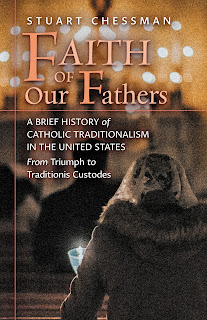
New Book Tells the Dramatic Story of Traditionalist Movement in the USA

In many conversations online and in person about the situation in which we traditional Catholics find ourselves in 2022, one thing I have seen again and again is a temptation to discouragement or despair on account of the threat—or the reality—of that which we love being torn out of our churches, our towns, our families.

The Radical Claim and Fatal Flaw of TC’s Article 1 — Article by a French Priest

Rorate is pleased to bring to its readers an English translation of a critique of
Traditionis Custodes written by a priest of the Institute of Christ the King, published initially behind a paywall in Revue Catholica on November 10, 2021, but now available online for free. Fr. Jestin addresses the theological radicalness of the motu proprio and exposes its fatal weakness by concentrating on the infamous Article 1, with Francis’s accompanying letter and articles by Andrea Grillo dated July 16, July 19, July 21, and July 24. Since Grillo is the doyen of the liturgical progressives currently in power, the attention paid to his work is both right and revealing (see also this related article). My thanks to Zachary Thomas and John Pepino for assistance with the translation.—PAK

The End of Conciliation Efforts
Fr. Laurent Jestin, ICKSP, La Rochelle
November 10, 2021
[English translation: January 10, 2022]

Open letter by Dominican theologian Fr. Wojciech Gołaski: “I must bear witness to the treasure of the holy rites of the Church”

The following open letter to Pope Francis was composed by Fr. Wojciech Gołaski O.P. and has been published already in Polish. Below is the English translation that was provided to Rorate Caeli by the author. Regardless of where one stands on the question of the SSPX, it deserves an attentive reading for its formidable critique of “Traditionis Custodes.”   
Fr. Wojciech Gołaski O.P.

Jamna, August 17, 2021

Cancelling Pope Benedict: Reflections on a recent article and the “hermeneutic of rupture”

Rorate has received this excellent essay by “A Concerned Priest” and is pleased to share it with our readers. It is one of the best analyses to date of the impossible theological premises on which Pope Francis has enacted his campaign against the survival of the traditional rites of the Church.

Speaking to the Masses

Pope Francis' recent attack on the traditional Latin Mass and those who attend and offer it has produced quite the outcry around the world.  Yet another example of the unintended Francis Effect, slapping around faithful Catholics has blown up in the face of the Vatican.  When the Jesuit, left-wing America magazine and normally anti-TLM neoconservative George Weigel both voice public criticism of restricting the freedom to offer and attend Latin Masses, clearly the Vatican roll-out of Francis' hit-job can be considered a massive communications failure based on bad policy and poor planning.


To that end, we all have likely had family or friends with almost no interest in the traditional Latin Mass ask us what on earth is going on recently.  It is a terrific moment to educate -- the ideal time to further grow the TLM movement.  Very few people have publicly defended Francis' recent attack on the TLM.


There are usually two kinds of Catholics with respect to news and current events: those who pay close attention to daily updates, and those who scan headlines or get their news from someone else.  Rorate readers likely fall into the former category; and we commend you for staying educated.  At the same time, while even the mainstream media is interested in the traditional Latin Mass -- an opportunity that does not come often -- we have the chance to speak to the masses (pun intended).


“The Old Mass is Good for Catholic Social Teaching”—Article by Stefano Fontana

The Old Mass is Good for Catholic Social Teaching

by Stefano Fontana

La Nuova Bussola Quotidiana, July 21
translated by Zachary Thomas


Summorum pontificum gave hope to many who are committed to Catholic Social Teaching [CST] who nevertheless continue to regularly attend the Mass of Paul VI. CST is not unrelated to the liturgy. The old Mass stresses the centrality of God, including his social kingship, more than the Novus Ordo does. Francis’ latest motu proprio moves us in the direction of a “new” CST where the divine recedes and the primacy of the Church over the world is obscured.

Francis’s motu proprio Traditionis custodes has many aspects that can be considered imprudent. Some are still emerging, others will only become clear with time. Meanwhile, I would like to point out one that relates to Catholic Social Teaching.

Can a document based on falsehoods have juridical standing? Can a doubtful law bind?

Given Its Foundational Falsehoods, Does Traditionis Custodes Lack Juridical Standing?


Peter A. Kwasniewski

ARTICLE 1 of the motu proprio Traditionis Custodes reads: “The liturgical books promulgated by Saint Paul VI and Saint John Paul II, in conformity with the decrees of Vatican Council II, are the unique expression of the lex orandi of the Roman Rite.”

The pope here claims that the Novus Ordo is the only law of prayer for the Roman Rite. It is impossible to see how this is compatible with the history of the Church and with her reverence for the venerable rites of antiquity and the Middle Ages, epitomized in the Missale Romanum of 1570 and its subsequent integral editions. They, too, are the lex orandi and cannot be otherwise. Instead, the motu proprio fumblingly makes “lex orandi” do duty as a juridical, canonical term, able to be applied ad libitum, as if it were an extrinsic label. In reality, the lex orandi is the whole complex of historical prayer texts, ceremonies, and music that make up the Roman Rite.

The only way to sustain the fiction of Article 1 is to claim that there is so great a continuity between the old missal and the new missal that the new one is simply an updated version of the old one—that the Novus Ordo is substantially the same as the traditional Roman Rite that preceded it is. Francis’s letter to the bishops makes just this move:

It must therefore be considered that the Roman Rite, adapted several times over the centuries to the needs of the times, has not only been preserved but also renewed “in faithful obedience to Tradition.” Those who wish to celebrate with devotion according to the previous liturgical form will not find it difficult to find in the Roman Missal, reformed according to the mind of the Second Vatican Council, all the elements of the Roman Rite, especially the Roman Canon, which is one of its most characteristic features.

One can only stare in amazement at the flagrant falsehood of this pair of sentences.

A RORATE CÆLI Editorial: Bishops should dispense priests and faithful from the horrors of Traditionis Custodes immediately


*Approved by a Doctor of Canon Law.

We at Rorate Caeli are gratified and edified by the generous paternal and pastoral approach that many bishops, particularly those in the Anglo-French sphere, have taken as a response to the horror that is “Traditionis Custodes”. To those good shepherds who read this we express, from the depths of our souls, our heartfelt gratitude. 


In a time when anger and sadness try to push their way into our hearts and disturb our peace your actions, correct and courageous, calm the waters and keep the enemy from taking hold. 


That said, these actions have been few and far apart. More action is needed post-haste. 


We plead with all prelates of good will, all shepherds who love and care for their flock, for the spiritual good of all the faithful – clergy and laity – who have benefited now for years from the immense spiritual, euchological, and theological treasury of the 1962 Missale Romanum,  to dispense us from the draconian provisions found in Traditionis Custodes.


The canonical institution of dispensation has always had a robust usage in the history of canon law, and is currently expressed in the words of canon 87, §1 of the 1983 Code of Canon Law[1]. The law predicates itself on the judgment of the diocesan bishop for the spiritual good of his territory or his subjects. In connection with the notion of dispensation, Hans-Jurgen Guth has, in recent years, written in canonical literature about the bishop’s right in law to protest against decisions of the Pontiff, also known as the ius remonstrandi.[2] 


Given that the right to the traditional Mass from Quo Primum is firmly established in the canonical tradition as never abrogated, bishops could -- and should -- immediately exercise their canonical right of remonstration against such an overreach.


Healthy spiritual fruits, as illustrated by Matthew 7:16, are present in all groups of faithful attached to the Missal of Quo Primum – loving, caring families who faithfully attend Mass and frequently receive the sacraments of Penance and Holy Communion; seminarians dedicated to prayer, study, and service of the Church; priests dedicated to the care of souls; and religious consecrated to single-hearted devotion to the Lamb of God.


The Church, they say, never moves quickly. That cannot be said, however, of the original promulgation of the Novus Ordo (and banning of the traditional Latin Mass) or in the harsh, whiplash-inducing release of Traditionis Custodes. And the response must be just as swift. 


We believe there are many prelates out there waiting for a leader. They are waiting for a brother bishop near them to take the first step and fully dispense priests and laity from Traditionis Custodes so those under their care may continue on their path to salvation in peace and without disturbance. 


We ask, in all sincerity and all fidelity: Use your legitimate power and dispense all of us. This is in your power and is your option. 


Please, we pray and plead, exercise it today.


[1]Can. 87 §1. A diocesan bishop, whenever he judges that it contributes to their spiritual good, is able to dispense the faithful from universal and particular disciplinary laws issued for his territory or his subjects by the supreme authority of the Church. He is not able to dispense, however, from procedural or penal laws nor from those whose dispensation is specially reserved to the Apostolic See or some other authority.

[2]Guth, Hans-Jurgen. "Ius Remonstrandi: A Bishop's Right in Law to Protest". Revue de droit canonique 2002, Volume 52, Number 1, pp. 153-65.


A RORATE CÆLI Editorial: The Attack of Hatred and Vengeance Against the Latin Mass Should be Ignored


As confident as we were in our sources forecasting today as the day of reckoning for Summorum Pontificum and the traditional Latin Mass as we know it, in the back of our minds we had hoped it was merely an unfounded rumor.  After all, Pope Benedict XVI is not only alive, but fully cognizant, dressed in a white cassock while living in the Vatican gardens.  To that end, would a sitting pope be so arrogant as to publicly humiliate the 94 year old pope emeritus?


Alas, the answer is yes.  Jorge Mario Bergoglio is without a doubt the most arrogant pope in the history of the Catholic Church.  From day one, if not before, it has always been about him -- whatever the subject.  Labeled "humble" by the mainstream media due to token stunts such as carrying a bag and wearing polyester vestments, Bergoglio is in reality a man of vengeance.  A pope of vengeance.  An angry bitter Jesuit settling scores through vengeance.


What ought traditional Catholics to do in response to the latest attack on the Mass and all those who love tradition?  Simply put:  ignore it.  Ignore its message.  Ignore its motivation caused by pure hatred and vengeance. Keep calm and keep on going as if it does not even exist.


“The right to celebrate the perennial Mass of the Roman Church is based on immemorial tradition and not on legal positivism” — Homily by Traditional Catholic Priest

A recently-ordained priest's first Mass

Rorate Caeli has been given a copy of a homily preached this past Sunday, the Seventh after Pentecost, by a traditional priest serving in a major metropolitan parish, with whose permission we publish it for the benefit of our readers as we prepare to return to the bunkers and trenches of the 1970s.


Everyone knows that the centrepiece of the Catholic religion is the holy Mass. The Mass is a proper sacrifice in which the true Body and Blood of the Lord are offered to God under the outward appearances of bread and wine through the ministry of an ordained priest. The holy Mass renews—you could say it prolongs and perpetuates—the sacrifice Our Lord offered once and for all on the cross. In fact, it is the self-same sacrifice; only the outward manner of the offering differs.


This holy sacrifice, moreover, does not exist in a void but it is encased in a sublime sequence of prayers and ceremonies called the rite or the liturgy of the Mass. The ancient axiom of the Church Fathers lex orandi, lex credendi—“the law of praying is the law of believing”—reminds us that our liturgical prayers must be an accurate expression of our faith and must inculcate true reverence for God. That is why, especially at the time of the Protestant Reformation, the faith of the people was changed precisely by disrupting the ancient forms of Catholic worship. For example, John Calvin, a radical reformer who denied the Real Presence of Our Lord in the Eucharist, once wrote, “God has given us a table at which to feast, not an altar on which to offer sacrifice” (Institutes; IV, xviii, 12, col. 1059), and so by removing the old high altars and replacing them with a common table, the faith of the people in the sacrifice of the Mass was undermined and soon destroyed.


I mention these things because today [July 11] falls right between two important anniversaries related to the sacred liturgy: the papal letter Summorum pontificum from Pope Benedict XVI on July 7, 2007 and the papal bull Quo primum from Pope Saint Pius V on July 14, 1570. The Council of Trent had met from 1545 to 1563 to address the challenges of the Protestant Reformation, above all by clearly defining the Catholic dogmas denied by the heretics [1] and by promoting sound reforms in the life of the Church to root out the abuses which had first sparked the Reformation—things like the poor training and immorality of some of the clergy and the shoddy manner of celebrating Mass in many places.


“Beyond Summorum Pontificum: The Work of Retrieving the Tridentine Heritage”: Full Text of Dr. Kwasniewski’s Roman Forum Lecture

The following is the transcript of the lecture I gave at the Roman Forum on July 3. A video of the lecture has been posted at Remnant-TV (link). A synopsis (less than one-third the length) was published at Crisis Magazine on July 7, under the title “Summorum Pontificum at Fourteen: Its Tragic Flaws.” As we near the imminent restriction or suppression of this motu proprio, it is important to step back and look at the bigger picture: What is—or is not—the role of the papacy vis-à-vis the liturgy handed down in tradition? What should our attitude be to abuses of papal authority, particularly in regard to its attempts to “allow” or “forbid” immemorial rites of divine worship? I would draw the reader’s attention to the notes, which contain important supporting material.—PAK


Beyond Summorum Pontificum: The Work of Retrieving the Tridentine Heritage


Peter A. Kwasniewski


As we find out more and more about the sheer corruption of the papal court today, which rivals the record of the Renaissance, it seems (if anything) still more remarkable, bordering on the miraculous, that Summorum Pontificum was ever issued at all. It was a watershed moment, a gesture of fortitude and favor, and a clear factor in multiplying old Masses around the world and weakening the modernist hegemony. We were grateful to have a pope who, instead of throwing a bone to the nostalgics—the so-called “indults” of Paul VI and John Paul II—had the courage to say the truth: that the great liturgy of our tradition had never been abrogated and could never be abrogated. In just a few sentences, central claims of Archbishop Lefebvre, Michael Davies, Count Neri Capponi, and others were vindicated.


I think it is fair to say right from the start that Summorum Pontificum was useful to our movement in the way that an enormous booster rocket is useful for launching a spaceship into orbit: it has a lot of raw power, but it can only do so much, and when it’s empty, it falls away. Summorum Pontificum is destined to be one of the great papal interventions in all of history, but it is no more than damage control; it is not a pillar, much less a foundation, of a permanent structure. And those who lean on it too much will find themselves crushed by its incoherences. My goal in this presentation will be to walk through Summorum Pontificum and identify its principal flaws, the elements in it that act as weights pulling us down, so that we can resolutely go beyond it to retrieve the fullness of the Tridentine heritage that constitutes the authentic Roman rite.


I can imagine what some of you may be thinking: “Rumors are swirling everywhere that Summorum Pontificum is about to be severely curtailed or shelved—and you are complaining about its imperfections? Right now, we’d all be grateful and relieved if we could just hold on to this motu proprio, warts and all.” My response is that unless we understand precisely the weak points of Summorum Pontificum, we will not be able to understand why we are still so vulnerable to the machinations of Francis and his circle, and, more to the point, we will not be able to summon the necessary strength to ignore or to oppose what the Vatican might do to reduce or prevent the celebration of the classical Roman rite. For the motu proprio establishes or reaffirms false principles that are coming back to haunt us, or perhaps have never stopped haunting us. As much as the traditional movement has benefited pragmati­cally from Summorum (and of that, there is no doubt), we must learn to put our weight fully on our own two feet, so that when the legal crutch or brace is suddenly removed, we do not topple over helplessly.


BREAKING - IMPORTANT - Summorum Under Threat? - Holy See sends survey to Bishops on Summorum Pontificum (Exclusive)

[Update - See: "The Summorum Questionnaire, what is going on behind the scenes?"]

Could the motu proprio Summorum Pontificum, that recognized the rights and continuity of the Traditional Latin Rite, be under threat?

When the motu proprio was first published, there was a period of consultations of three years. It was defined by Pope Benedict XVI in his accompanying letter to bishops: "Furthermore, I invite you, dear Brothers, to send to the Holy See an account of your experiences, three years after this Motu Proprio has taken effect. If truly serious difficulties come to light, ways to remedy them can be sought." This was done, and the result was the mostly positive 2011 Instruction.

***

Quite strangely, now, 13 years after Summorum, when it has become a permanent part of the life of the Church in many places throughout the world, the Congregation for the Doctrine of the Faith (CDF), now responsible for Summorum, has sent out a new survey for bishops on the application of Summorum Pontificum, because, "His Holiness Pope Francis wishes to be informed about the current application of the aforementioned document."

It could be ominous. The questions seem neutral, but, once one reads them carefully, they may indicate serious consequences.

Rorate has received copies of both documents that were sent, and that had been unknown to the faithful up to this moment: the March 7, 2020, letter of the Prefect of CDF  to the Presidents of the Episcopal Conferences, and the questions to bishops asked in the April 2020 survey itself -- the due date is July 31, 2020.

Both documents are below (click to open larger and more readable view for both documents):

On the Fiftieth Anniversary of the Novus Ordo: Dr. Kwasniewski’s Lecture “Beyond ‘Smells and Bells’: Why We Need the Objective Content of the Usus Antiquior

In his Apostolic Constitution Missale Romanum (April 3, 1969), Pope Paul VI specified that the Novus Ordo Missae would go into effect on the First Sunday of Advent that year — November 30, exactly fifty years ago. In my recent Minneapolis lecture, written with an eye to this important anniversary, I argue that the Novus Ordo Missae constitutes a rupture with fundamental elements of all liturgies of apostolic derivation, and that, as a consequence, it violates the Church’s solemn obligation to receive, cherish, guard, and pass on the fruits of liturgical development. Since this development is, in fact, a major way in which the Holy Spirit leads the Church “into the fullness of truth” over the ages, as Christ promised, so great a “sin against the Holy Spirit” cannot fail to have enormous negative consequences, as indeed the past five decades have verified. Nor is it possible to bridge the abyss between old and new by applying cosmetics or the drapery of elegant clothing, because the problem is on the order of a genetic mutation, or damage to internal organs. The profound and permanent solution is to maintain continuity with the living liturgical tradition found in the usus antiquior.

The full text of the lecture, with notes, is given below; the recording of the talk may be found either on YouTube or at SoundCloud.


Beyond “Smells and Bells”:  Why We Need the Objective Content of the Usus Antiquior

Peter A. Kwasniewski
Minneapolis, Minnesota
November 13, 2019

URGENT: Ecclesia Dei Commission for the Latin Mass to be extinguished?

Messa in Latino reports (and the information is also relayed by Vaticanist Marco Tosatti) that the Pontifical Commission "Ecclesia Dei" (PCED), the Vatican body in charge of matters related to the Traditional Latin Mass and of negotiations with traditional groups (in particular the Society of Saint Pius X), is set to be abolished shortly, according to highly credible sources

Its functions would be completely amalgamated and absorbed by the Congregation for the Doctrine of the Faith (CDF), to which it has been closely linked since the beginning, and in particular since July 2008, when the Prefect of CDF was made head "ex officio" of Ecclesia Dei.

Despite the close links, the limited structural autonomy of PCED had proven extremely beneficial to the integrity of the Traditional Latin Mass, especially since the motu proprio Summorum Pontificum, of July 7, 2007, had given PCED important functions regarding the Traditional Roman Rite.

Is it a first step in the dismantlement of Summorum Pontificum?

Count Neri Capponi, Defender of the Traditional Mass, Requiescat in pace

Count Neri Capponi (left) with Michael Davies at a FIUV meeting

A dear friend and reader of Rorate Caeli alerted us to the fact that a great traditionalist of the 20th century, Count Neri Capponi, died yesterday, on the feast of St. Lucy. Requiem aeternam dona ei, Domine, et lux perpetua luceat ei. Requiescat in pace.

New Online Database Tracks Episcopal Fidelity, Including in Liturgy


LifeSiteNews, for which I am a daily columnist, has just launched an initiative called Faithful Shepherds. It is an idea that I have heard people speculate about for years and wish would come true, without having the organizational resources to make it happen. Needless to say, it is welcome at this critical moment in the life of the Church. From the official announcement:

Faithful Shepherds helps hold American bishops accountable by providing years, sometimes decades, of past tweets, public speeches, sermons, actions, pastoral letters, and diocesan guidelines. Faithful Shepherds currently gives evidence of where U.S. bishops stand on ten issues: Archbishop Vigano's testimony, Amoris Laetitia, pro-life leadership, homosexuality, abortion politics, contraception, “LGBT” ideology, liturgy, marriage and family life, and education. More will be added as new evidence is gathered.

Sacred Triduum: of course the '62 books are permitted

One of the biggest myths still remaining concerning the traditional Latin Mass is that the use of 1962 books for the Sacred Triduum is not allowed at regular parishes.  Not only is this "fake news," but the Vatican has clarified the fact that any parish may use the 1962 books for the entire Triduum -- and it can even be in addition to an existing novus ordo schedule.

Pope Pius XI, Maundy Thursday

The confusion stems from Article Two of the motu proprio Summorum Pontificum, which states:

Announcing Una Voce Wyoming

Sometimes I hear people say that we've grown tired and a bit lazy after the exciting days of the 1990s and 2000s, when there were so many people in so many places laboring and fighting to establish the traditional Latin Mass. The more optimistic believe it is due to the remarkable success of Summorum Pontificum and the ever more widespread availability of the usus antiquior, which makes it less necessary to be vocal and active about introducing it. The more pessimistic believe it is due to weariness and discouragement: after having had doors slammed in their faces too many times, or unreturned phone calls, Catholics have given up. The more realistic would say the situation is more complicated, and that both sides are pointing to phenomena one can see and verify. This much seems true: the implementation of Summorum Pontificum is exceedingly inconsistent, variable, evolving. It makes all the difference in the world what diocese you live in and whether your local clergy are sympathetic or not. The motu proprio continues to make inroads wherever youth and orthodoxy combine.