Before and After the Conclave
Archbishop Héctor Agüer
Emeritus of La Plata, Argentina
Buenos Aires, May 12, 2025
Before the Conclave
Before and After the Conclave
Before the Conclave

Children or Pets?
 |
| [The collapse of birth rates in Argentina] |

This December 22 will be the 50th anniversary of the martyrdom of Carlos Alberto Sacheri, besieged by a commando of the terrorist group ERP (People's Revolutionary Army), when he was returning from Mass with his family. I do not hesitate to recognize that his death was a martyrdom, fruit of his charity. In the history of the Church there is a history of martyrdom. What makes a martyr such is not the suffering imposed on the martyr, but the charity that impels him to embrace the Cross. Charity, I stress, the agape of the New Testament. The martyr, with Christian fortitude, surrenders to death.

ECCLESIASTICAL ODDITIES
 |
| [La Plata, Argentina: Immaculate Conception Cathedral in central Moreno Square] |
The corresponding adjective is "odd" ("rare"), which has several meanings in the dictionary; I choose one: odd is that which has little density and consistency. Although it also refers to extraordinary and extravagant things. I mean: it is an oddity that the Pope is Argentinian, what is also odd is the fact that in over a decade he has not had the concern to visit his homeland. John Paul II (Wojtyla) and Benedict XVI (Ratzinger), as soon as they were elected, the first trip they made took them to their homeland, respectively Poland and Germany. I read in “La Prensa”, a Buenos Aires newspaper: “Francis revealed that he would like to come in November or at the beginning of 2025”. Under this title, the newspaper says that the Pope “commented that it is in his plans to travel to Argentina either at the end of November or at the beginning of 2025”. According to the old saying, “think wrong and you will be right,” I dare to think that he will not come, and I outline a reason: he knows that he is not going to do very well. I may be wrong, of course, but this opinion of mine responds to a 46-year-old knowledge of Jorge Bergoglio.
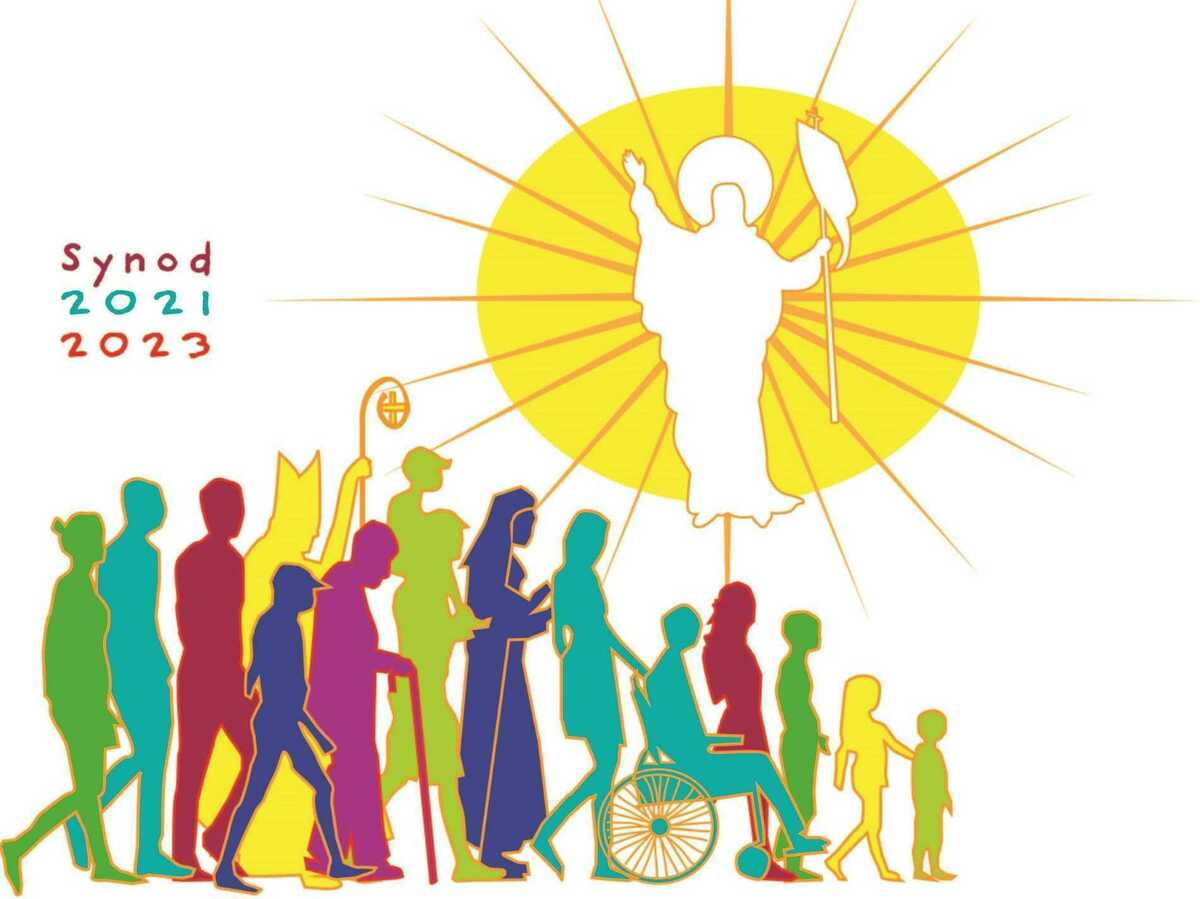
Synod is the exact translation of the Greek noun synodos. It is interesting to collect the elements from which the word is formed: syn, as an adverb means "whole, all together, at the same time", and as a preposition it can be translated "with, by means of". The noun synodos, indicates gathering, assembly, and also fellow traveler. The syn is composed with hodos, "way, route, guide" (it is feminine in Greek); from there it is also formed méthodos, method. Historically, in Christian antiquity the synod was called the convocation, and the meeting of the bishops, according to the ecclesiastical provinces, each presided over by the Metropolitan; which meet in assembly to deal with matters of utmost importance, define doctrines, and condemn and refute heresies, warning of the heterogeneity of those errors, in contradiction with respect to the didache, whose foundation is found in the apostolic beginnings. Two main features to keep in mind: the protagonists are always bishops, successors of the Apostles of Jesus, and the duration is determined in time, it does not extend excessively.
The name synod has remained to signify only those designated meetings, that is, an exclusively theological, ecclesiastical use. The history of the Church offers numerous testimonies of the interchange between synod and council, a name that comes from Latin, as we shall see below.
A Regrettable Step Backwards