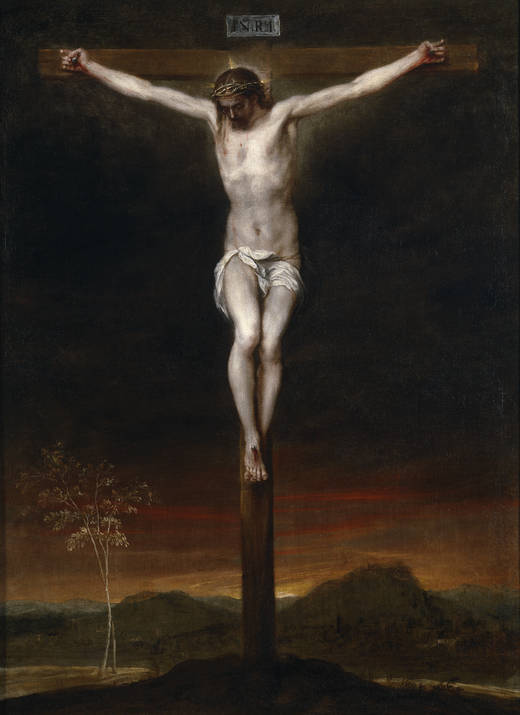
Rorate Caeli
Showing posts with label Reposts. Show all posts

Miraculous Medal: Are You Wearing Yours? #RueduBac


Along with the Brown Scapular, another significant item Catholics should wear is the Miraculous Medal. From the Catholic encyclopedia:

"The devotion commonly known as that of the Miraculous Medal owes its origin to Zoe Labouré, a member of the Daughters of Charity of St. Vincent de Paul, known in religion as Sister Catherine [Note: She was subsequently canonized], to whom the Blessed Virgin Mary appeared three separate times in the year 1830, at the mother-house of the community at Paris. The first of these apparitions occurred 18 July, the second 27 November, and the third a short time later."

"I am the Immaculate Conception"

MARY IN OUR DIVINE HISTORY
Father R. Plus S.J.


The Song of Bernadette (1943 - apparition of March 25, 1858)


We should not be astounded at such a sublime privilege! Are not the reasons which wage battle in favor of the Immaculate Conception of Mary evident? Due to His holiness, Jesus had to be born of a sinless Mother; He ‘who finds specks in the Angels themselves’ and Who ‘takes delight only amongst the lilies’ would never have consented to have been born of a flesh tainted by sin.

The starting point of the elevation to grace is, for each one of us, Baptism. Every man, in fact, enters into existence with the consequences of original sin, and he does not possess that divine life which God wanted to give to humanity, because our first parents lost it. Therefore, born firstly to human life, it is necessary that he be born a second time to the divine life. This is the reason the baptismal rite exists: to introduce him into the Christian life, in the supernatural sphere, into the family of the children of God.

Time for Worldwide Sacrifice: Ember Week in September

The equinox is coming. The Roman Church will once again remind us of the cycle of the seasons in this Ember Week in September.

We re-post, for those who are not aware of it, this article first posted by us in 2008, and reposted often since. May you all have a fruitful week of sacrifice.

___________________________________________________________


THE GLOW
OF THE EMBER DAYS
By Michael P. Foley


A potential danger of traditionalism is the stubborn defense of something about which one knows little. I once asked a priest who had just finished beautifully celebrating an Ember Saturday Mass about the meaning of the Ember days. He replied (with an impish twinkle in his eye) that he hadn’t a clue, but he was furious they had been suppressed.

Traditionalists, however, are not entirely to blame for their unfamiliarity with this important part of their patrimony. Most only have the privilege of assisting at a Sunday Tridentine Mass, and hence the Ember days—which occur on a weekday or Saturday—slip by unnoticed. And long before the opening session of the Second Vatican Council, the popularity of these observances had atrophied.

So why care about them now? To answer this question, we must first determine what they are.


The Four Seasons

The Ember days, which fall on a Wednesday, Friday, and Saturday of the same week, occur in conjunction with the four natural seasons of the year. Autumn brings the September Embertide, also called the Michaelmas Embertide because of their proximity to the Feast of St. Michael on September 29.1 Winter, on the other hand, brings the December Embertide during the third week of Advent, and spring brings the Lenten Embertide after the first Sunday of Lent. Finally, summer heralds the Whitsun Embertide, which takes place within the Octave of Pentecost.

In the 1962 Missal the Ember days are ranked as ferias of the second class, weekdays of special importance that even supersede certain saints’ feasts. Each day has its own proper Mass, all of which are quite old. One proof of their antiquity is that they are one of the few days in the Gregorian rite (as the ’62 Missal is now being called) which has as many as five lessons from the Old Testament in addition to the Epistle reading, an ancient arrangement indeed.

Fasting and partial abstinence during the Ember days were also enjoined on the faithful from time immemorial until the 1960s. It is the association of fasting and penance with the Embertides that led some to think that their peculiar name has something to do with smoldering ash, or embers. But the English name is probably derived from their Latin title, the Quatuor Tempora or “Four Seasons.”2

Our Lady and the Scapular: The most extraordinary event in English history


The Mother of God and her Divine Son appear to Saint Simon Stock in Cambridge -- 767 years ago today, in 1251: has there been any other moment in English history whose consequences have aided so many souls throughout the world achieve and keep holiness, reaching final perseverance? Men and women, made of flesh, need material reminders of the presence of God in their lives -- and what could be more profitable than the blessed physical sign that Our Lady's Mantle covers us at all times, that Her Divine Son keeps watch over us day and night?

Armatura
fortis pugnantium
furunt bella
tende praesidium
Scapularis.

Saint Elias, pray for us!
Saint Simon Stock, pray for us!
Queen of Mount Carmel, pray for us!
Et fidelium animae per misericordiam Dei requiescant in pace. Amen.

The Reform of Holy Week in the Years 1951-1956

Rorate Caeli first presented the following translation of Fr. Stefano Carusi's work on the reform of Holy Week under Pope Pius XII seven years ago. As our readership has grown dramatically over that time we are compelled to bring it back and share with new readers. This translation is the work of Fr. Charles W. Johnson, a U.S. military chaplain, and one of the first priests in the Rorate Caeli Purgatorial Society:

From Disputationes Theologicae:

THE REFORM OF HOLY WEEK IN THE YEARS 1951-1956
FROM LITURGY TO THEOLOGY BY WAY OF THE STATEMENTS OF CERTAIN LEADING THINKERS (ANNIBALE BUGNINI, CARLO BRAGA, FERDINANDO ANTONELLI)


by Stefano Carusi

"It was felt necessary to revise and enrich the formulae of the Roman Missal. The first stage of such a reform was the work of Our Predecessor Pius XII with the reform of the Easter Vigil and the rites of Holy Week (1), which constituted the first step in the adaptation of the Roman Missal to the contemporary way of thinking"

(Paul VI, Apostolic Constitution Missale Romanum, April 3, 1969)


INTRODUCTION
In the course of recent years, the publication of numerous studies concerning the history of the theological and liturgical debate of the 1950's has cast new light on the formation and the intentions (which were not always openly declared at the time) of those who were the actual composers of certain texts.

"I am the Immaculate Conception"

MARY IN OUR DIVINE HISTORY
Father R. Plus S.J.


The Song of Bernadette (1943 - apparition of March 25, 1858)


We should not be astounded at such a sublime privilege! Are not the reasons which wage battle in favor of the Immaculate Conception of Mary evident? Due to His holiness, Jesus had to be born of a sinless Mother; He ‘who finds specks in the Angels themselves’ and Who ‘takes delight only amongst the lilies’ would never have consented to have been born of a flesh tainted by sin.

The starting point of the elevation to grace is, for each one of us, Baptism. Every man, in fact, enters into existence with the consequences of original sin, and he does not possess that divine life which God wanted to give to humanity, because our first parents lost it. Therefore, born firstly to human life, it is necessary that he be born a second time to the divine life. This is the reason the baptismal rite exists: to introduce him into the Christian life, in the supernatural sphere, into the family of the children of God.

COLUMBUS IS OURS -- Let us rejoice!

Monastery of Sant Jeroni de la Murtra, near Barcelona,
where the Catholic Monarchs welcomed Columbus back from the Indies in 1493
Now that four centuries have sped since a Ligurian first, under God's guidance, touched shores unknown beyond the Atlantic, the whole world is eager to celebrate the memory of the event, and glorify its author. Nor could a worthier reason be found where through zeal should be kindled. For the exploit is in itself the highest and grandest which any age has ever seen accomplished by man; and he who achieved it, for the greatness of his mind and heart, can be compared to but few in the history of humanity.

--75 years--
Ad orientem
Saint Benedicta: the Cross and the Sacrifice are in the East.


August 9, 1942, the eve of Saint Lawrence, the celebrated martyr of the Church of Rome, is generally considered the last day of Saint Teresa Benedicta of the Cross on this earth. 75 years ago, she and Rosa, her sister, who days earlier had boarded in the transit camp of Westerbork (Netherlands under German occupation) the train destined to the General Government area of occupied Poland, would be killed, along with an unknown number of other prisoners, and all trace of their physical existence would vanish.

The Cross had been her concern and her love even before she chose to enter the Church. Expiation, suffering, surrendering oneself completely, being ravaged by the world: death. Her cross expected her in the East. Hatred, brutality, and evil may have destroyed her body, but her soul was embraced by the Redeemer.

The keepers that go about the city found me: they struck me: and wounded me: the keepers of the walls took away my veil from me. I adjure you, O daughters of Jerusalem, if you find my beloved, that you tell him that I languish with love. What manner of one is thy beloved of the beloved, O thou most beautiful among women? what manner of one is thy beloved of the beloved, that thou hast so adjured us? ... such is my beloved, and he is my friend, O ye daughters of Jerusalem. (Cant. v)

Lord: Thy head is like Carmel: and the hairs of thy head as the purple of the king bound in the channels. (Cant. vii, 5)
_____________________________________

Germany is a beautiful country. And though Germans, for some reason, tend these days to abandon their nation in droves in the warm weeks of August, it hardly looks more majestic than in the summer. A true festival of shades of green, dramatic valleys and forests, and hills that are brighter than ever, reflecting the bright sunlight of the season.

Wrocław (Breslau) in August
Germany was the homeland of Saint Benedicta. It was in the then very German city of Breslau (now in Poland) that Sr. Benedicta had been born, as Edith Stein, in October 1891. For the first time in many years, on August 6-7, 1942, she reentered Germany. Was she allowed to take the only volume of the beloved breviary she still had with her, her major consolation in those days? Was she able to see, in the trains that left the transit camp of Westerbork the green fields and intensely colorful skies and rivers of August? Was she able at least to stay in the same car as her sister Rosa? Were they able to strengthen each other through their last journey? 

From west to east, they crossed their Germany - because it was their Germany, too. They even crossed their Silesia, always going eastwards. Deported to the east: could they guess what their destination would be? Was Sr. Benedicta aware of exactly where she was being sent? Was she aware that the martyred Polish lands under German occupation would witness her own death?

From the "Testament" of Sr. Benedicta:

From this moment, I accept the death that God has prepared for me, fully and joyfully submitting myself to his most holy will. I pray the Lord that he will accept my life and my death, in his honor and glory, for all the intentions of the Most Sacred Hearts of Jesus and Mary, and of the Holy Church; in particular, for the preservation, sanctification, and perfection of our holy Order, above all of the Carmels of Cologne and Echt, in expiation for the unbelief of the Jewish people, and so that the Lord may be welcomed by his own, and that his Kingdom will come in Glory, for the salvation of Germany and for peace in the world, and, at last, for my relatives, living and deceased, and for all those God has given to me: let not one of them be lost.

Friday in the Octave of Corpus Christi, June 9, 1939, seventh day of my spiritual exercises.

In nomine Patris et Filii et Spiritus Sancti.

Sr. Teresa Benedicta a Cruce O.C.D.
_____________________________________

Of one thing we can be certain: she had already accepted the death that one day we will all face. She accepted it, because she knew Redemption was at hand: for Catholics, "hope springs eternal" (Pope) because hope comes from the Cross.

Written soon after the beginning of the war (usually published among her autobiographical writings):

The world is on fire; the struggle between Christ and the Antichrist is now fully in place. If you decide [to fight] for Christ, this may cost you your life; therefore, consider your promises very well. ...


The Savior hangs from the Cross, right before you, for his obedience unto death, and death on the Cross. He came to the world not to do his will, but the will of the Father. ...

Your Savior hangs before you with a wounded heart. He gave the Blood of his own heart in order to have your heart. If you wish to follow him in holy purity, then your heart has to be free from all earthly desire, and Jesus, the Crucified, must be the only object of your wishes, of your desires, and of your thoughts. ... The arms of the Crucified one are open to attract you towards his heart. He wants to take your life in order to offer you his life. Ave Crux, spes unica!

The world is on fire. The fire can also affect our own house; but high above us, above all flames, the Cross will stand upright. The flames cannot destroy it. It is the path from earth to heaven, and whoever embraces it, believing, loving, hoping, moves upward towards the very bosom of the Trinity.

[W]ith the strength of the Cross, you can be in all fronts, in all places where there is affliction. Your merciful love, the love of the divine heart, will take you to all places in which his precious blood flows, soothing, sanctifying, saving.

The eyes of the Crucified stare at you, pensive, questioning. Do you wish to once again establish your covenant with the Crucified one? What will you say to him? 'Lord, to whom shall we go? Thou only hast the words of eternal life.'

Ave Crux, spes unica!!

September 14, 1939


Saint Benedicta, Co-patroness of Europe, pray for us.

75 years: Echt, August 2, 1942 - Sr. Benedicta is arrested with her sister
Her last letter: "Send me the next volume of the Breviary"

75 years ago, the crackdown on Jewish-born Catholic converts reached deep inside the silent walls of the Carmel of Echt (Limburg, Netherlands under German occupation). The new wave of persecution had been the swift response of the occupying forces to the public reading of the Pastoral Letter of the Dutch Episcopate (see previous post). 

Teresa Benedicta of the Cross, O.C.D., (known simply as Sr. Benedicta in her Carmel) had been trying, in a brave and Christian way, to protect herself and her sister, who had joined her in Echt, from what seemed inevitable - she had already managed to secure them places in Carmelite houses in Switzerland. But the order of events overwhelmed her plans.

From the biography provided by the General House of the Discalced Carmelites:


The Cross was at the centre of Edith's whole spiritual life. But particularly as the persecution of the Jews grew daily in intensity, at the Carmel of Echt she placed herself unconditionally at the foot of the Cross. On Passion Sunday 1939 she sought permission to offer herself "to the Sacred Heart as a victim of expiation for true peace". On June 9 she wrote her Last Testament, ending with the words: "From now on I accept the death God has reserved for me, joyfully and with perfect submission to his most holy Will. I pray the Lord to accept my life and death to his honour and praise.... as expiation for the unbelief of the Jewish people". ...

What caused the sudden explosion of hate, and the plan to exterminate the Dutch Jews, was the Pastoral Letter of Archbishop Jong of Utrecht, read in all the churches of Holland on July 26, 1942. It voiced the Church's protest against the deportation of Jews. The reaction of the SS. was immediate. All baptised Jews, priests and religious sisters of Jewish origin, were arrested and sent to the concentration camp. Among them were Edith and Rosa. Two SS officials arrived at the monastery of Echt, giving Sister Benedicta only five minutes to get ready. ...

In the night of August 2-3, the sisters arrived at Amersfort dispersal camp. Then during the night of August 3-4 the Jewish prisoners with many others were moved to Westerbork camp, set in a district completely uninhabited in the north of Holland. From here Edith was able to send a note to the Prioress of Echt Carmel, through the mother of a religious sister who had arrived at the camp with luggage for her daughter. Dated August 6, the note was a brief request for woollen stocking and two blankets, and some woollen clothes for Rose. Particularly relevant was the final sentence, "Tomorrow a convoy is to leave for Silesia or Czechoslovakia??"


The last letters written by Sr. Benedicta show her concerns during the last weeks of her life, including in her days of confinement in deportation camps in the Netherlands.

Titus Brandsma, O.Carm. (July 26, 1942)
- 75th Anniversary

Father Titus Brandsma, a Carmelite friar and prominent Dutch scholar, was one of the over 1,000 Catholic priests who perished in the concentration camp of Dachau, near Munich (Bavaria, Germany). It is thought that Brandsma, who had been interned in Dachau for several months, was executed exactly 75 years ago today, on July 26, 1942. 

On that Sunday, Brandsma's sacrifice was united to the holy One he had celebrated so many times at Holy Mass. On that Sunday, the 9th Sunday after Pentecost, new waves of persecution would be launched in his native Netherlands due to the reading from pulpits across the nation of the Pastoral Letter of the national episcopate (see previous post). 

Why had Brandsma been detained and sent to Dachau? He had been under strict surveillance by the German forces of occupation and their local National Socialist collaborators for some time. He was a great master of Carmelite spirituality, but that was not the problem for the occupation forces - the problem was the influence the former Rector of the Catholic University of Nijmegen had with Abp. de Jong, Metropolitan Archbishop of Utrecht. 

Catholic periodicals had always blocked the publication of Socialist and Communist propaganda - they should not, and could not, print National-Socialist propaganda either. Abp. de Jong published the following note, drafted by Brandsma:

Circular of the Archbishop of Utrecht in the name of the Episcopate to the directors and editors-in-chief of Catholic periodicals

16 January 1942

75th anniversary of the
Pastoral Letter of the Bishops of the Netherlands
on the deportation of the Jewish population

 ________________________________________________

Pastoral letter of the Dutch Bishops
July 20, 1942


We live in a time of great affliction, both spiritual and material. In recent times two specific afflictions have come to the fore: the persecution of the Jews and the unfortunate lot of those who are sent to work in foreign countries.

All of us must become fully aware of these troubles, and for this reason, they are now brought to our attention as a community.

These afflictions must also be brought to the attention of those who are responsible for them. To this end, the venerable Dutch Episcopate, in communion with nearly all the churches in the Netherlands, approached the authorities of the occupying forces concerning, among other things, the Jews, in a recent telegram of Saturday, July 11. The telegram stated the following:

"The undersigned Dutch churches, already deeply shocked by the actions taken against the Jews in the Netherlands that have excluded them from participating in the normal life of society, have learned with horror of the new measures by which men, women, children, and whole families will be deported to the German territory and its dependencies.

"The suffering that this measure will bring upon tens of thousands of people, the knowledge that these measures are contrary to the deepest moral sense of the Dutch people, and, above all, the hostility of these measures against the divine norms of justice and mercy urge the churches to direct to you the urgent petition not to execute these measures.

"Our urgent petition to you is also motivated by the consideration that, for the Christian Jews, these measures would make it impossible for them to participate in the life of the Church."

As a result of this telegram, one of the General Commissioners, in the name of the Reich's Commissioner [Reichskommissar], promised that Christian Jews will not be deported if they belonged to one of the Christian churches before January 1941.

Beloved faithful, when we consider the immense spiritual and physical misery that, for three years already, has threatened the entire world with destruction, then we think naturally of the situation that the Gospel of today [9th Sunday after Pentecost] paints for us:

"And when he drew near, seeing the city, he wept over it, saying: If thou also hadst known, and that in this thy day, the things that are to thy peace; but now they are hidden from thy eyes. For the days shall come upon thee, and thy enemies shall cast a trench about thee, and compass thee round, and straiten thee on every side, and beat thee flat to the ground, and thy children who are in thee: and they shall not leave in thee a stone upon a stone: because thou hast not known the time of thy visitation." [St. Luke 19, 41-44]

Jesus's prediction was literally fulfilled: forty years later, God's judgment over the city of Jerusalem was accomplished. They had not, unfortunately, recognized the time of grace.

Now, too, everything around us points to a punishment from God. But, thanks be to God, it is not yet too late for us. We can still avert it if we recognize the time of grace, if we recognize what will bring us peace. And that is only the return to God, from whom for many years already a great portion of the world has turned away. All human means have failed; only God can still bring a solution.

Beloved faithful, let us first examine ourselves with a deep sense of repentance and humility. Are we not, after all, partly responsible for the disasters that affect us? Have we always fulfilled the duties of justice and charity toward our neighbor? Have we not sometimes entertained feelings of unholy hatred and bitterness? Have we always sought our refuge in God, our Heavenly Father?

When we turn to ourselves, we will have to confess that we have all failed. Peccavimus ante Dominum Deum nostrum: We have sinned before the Lord our God. [Baruch 1,17]

We also know, though, that God will not despise a contrite and humbled heart. [Psalm 50, 19] Cor contritum et humiliatum non despicies. We therefore turn to him and beg him with childlike confidence for his mercy. He himself tells us, "Ask, and it shall be given you: seek, and you shall find: knock, and it shall be opened to you." (Luke 11,9)

In the Introit of today’s Holy Mass [9th Sunday after Pentecost], the Church calls to us with the words of the Psalmist: "For behold God is my helper: and the Lord is the protector of my soul." [Psalm 53,6] And the Epistle repeats the very comforting words of the Apostle: "Let no temptation take hold on you, but such as is human. And God is faithful, who will not suffer you to be tempted above that which you are able: but will make also with temptation issue, that you may be able to bear it." [1 Cor. 10, 13]

Therefore, beloved faithful, let us implore God, through the intercession of the Mother of Mercy, that He will soon grant the world a just peace.

May He sustain the people of Israel, who are being so bitterly tested in these days, and may He bring them to true redemption in Jesus Christ.

May He protect those whose lot it is to work in foreign lands and to be separated from their loved ones. May He protect them in soul and body, protect them from becoming bitter and discouraged, keep them faithful to the Christian faith, and may God also strengthen those they left behind.

Let us implore Him for a solution for all those who are tested and oppressed, for prisoners and hostages, for so many who are threatened by death.

Pateant aures misericordiae tuae, Domine, precibus supplicantium: that the ears of your mercy, Lord, may be open to the prayers of those who cry to you.

This, our joint pastoral letter, shall be read in the usual manner next Sunday, July 26, during all scheduled Holy Masses in all the churches and chapels in our Church Province that have an appointed rector.

Given in Utrecht, the 20th day of July of the Year of Our Lord 1942.
________________________________________________

We are very glad to provide the first online English translation (to our knowledge) of one of the most impressive Catholic documents of the 20th century: the Pastoral Letter of the Dutch Episcopate of July 20, 1942, written by and under the authority of the Archbishop of Utrecht, J. de Jong. It is a very short document, but it is filled with mercy and concern for those who were suffering most harshly under the German occupation of the Netherlands.

"To the poorest daughter of Carmel,
honor speaks louder than fear."


Mother Marie: Sister Blanche...

First Commissary: I forbid you to continue...

Mother Marie: You have the power to force me to silence, but none to command me to it. I represent here the Reverend Mother Prioress and I shall take no orders from you.

A Commissary: Confounded old hag! She cannot be made to hold her tongue, fellow Citizen, but remind her that the Republic has a machine at its disposal that will leave her somewhat short of breath!

First Commissary: Enough! I repeat that you must behave as a true representative of the people! [He turns to Sister Blanche:] Young citizen, you have nothing to fear from us, who are your liberators! Say but one word, and you will find yourself beyond the sway of those who, to better put you in their power, have not feared to offend nature in usurping even the sacred name of "mother". Henceforth, you are under the protection of the Law.

Mother Marie: But she is first under my protection. Do you think I shall permit you to take any further advantage of the terror of a child? I shall take great care to avoid a language that you cannot understand. You know nothing of that which holds us here and keeps us united unto death - or, if once you knew it, it is now certainly forgotten. But there are still perhaps words which are common to us, and which can touch your conscience. Well, sir, you must know that to the poorest daughter of Carmel, honor speaks louder than fear.
Georges Bernanos
Dialogues des Carmélites


On the day following her feast, the Blessed Virgin of Mount Carmel would receive her dear French daughters, martyred for their faith in her Son and for their loyalty to His Church.

O glorious Martyrs of Compiègne, pray for us!

[Our regular July 17 homage.]
[Personal recess for several weeks]

The most extraordinary event in English history


The Mother of God and her Divine Son appear to Saint Simon Stock in Cambridge - 766 years ago today, in 1251: has there been any other moment in English history whose consequences have aided so many souls throughout the world achieve and keep holiness, reaching final perseverance? Men and women, made of flesh, need material reminders of the presence of God in their lives - and what could be more profitable than the blessed physical sign that Our Lady's Mantle covers us at all times, that Her Divine Son keeps watch over us day and night?

Armatura
fortis pugnantium
furunt bella
tende praesidium
Scapularis.

Saint Elias, pray for us!
Saint Simon Stock, pray for us!
Queen of Mount Carmel, pray for us!
Et fidelium animae per misericordiam Dei requiescant in pace. Amen.

Palm Sunday: The Condemned Lord moves along

[On this Palm Sunday, Rorate remembers the
over 30 Coptic Christians martyred today by
the satanic Sect of Death in Egypt.]

Meditation for Palm Sunday - Jesus Carries the Cross to Calvary

I.

The sentence upon Our Saviour having been published, they straightway seize hold of Him in their fury: they strip Him anew of that purple rag, and put His own raiment upon Him, to lead Him away to be crucified on Calvary, - the place appropriated for the execution of criminals: They took off the cloak from Him, and put on Him His own garments, and led Him away to crucify Him.” (Matt. xxvii 31.) They then lay hold of two rough beams, and quickly make them into a cross, and order Him to carry it on His shoulders to the place of His punishment. What cruelty, to lay upon the criminal the gibbet on which he has to die!

But this is Thy lot, O my Jesus, because Thou has taken my sins upon Thyself.

II.

Jesus refuses not the cross; with love He embraces it, as being the altar whereon is destined to be completed the sacrifice of His life for the salvation of men: And bearing His own Cross, He went forth to that place which is called Calvary.

Mitigating our way to Perdition

A month out from Easter Sunday, there is still time to double down on our Lenten penance and sacrifices, making the most of this beneficial time. 

Below is a short, powerful sermon, which we hope will both help you understand what the Church has lost since her downward spiral began in the 20th Century, and yet motivate you to strive even harder to become great saints. 

Click here to listen to the sermon.

[Originally posted in 2015]

COLUMBUS NOSTER EST

Monastery of Sant Jeroni de la Murtra, near Barcelona,
where the Catholic Monarchs welcomed Columbus back from the Indies in 1493
Now that four centuries have sped since a Ligurian first, under God's guidance, touched shores unknown beyond the Atlantic, the whole world is eager to celebrate the memory of the event, and glorify its author. Nor could a worthier reason be found where through zeal should be kindled. For the exploit is in itself the highest and grandest which any age has ever seen accomplished by man; and he who achieved it, for the greatness of his mind and heart, can be compared to but few in the history of humanity.

"To the poorest daughter of Carmel,
honor speaks louder than fear."


Mother Marie: Sister Blanche...

First Commissary: I forbid you to continue...

Mother Marie: You have the power to force me to silence, but none to command me to it. I represent here the Reverend Mother Prioress and I shall take no orders from you.

A Commissary: Confounded old hag! She cannot be made to hold her tongue, fellow Citizen, but remind her that the Republic has a machine at its disposal that will leave her somewhat short of breath!

First Commissary: Enough! I repeat that you must behave as a true representative of the people! [He turns to Sister Blanche:] Young citizen, you have nothing to fear from us, who are your liberators! Say but one word, and you will find yourself beyond the sway of those who, to better put you in their power, have not feared to offend nature in usurping even the sacred name of "mother". Henceforth, you are under the protection of the Law.

Mother Marie: But she is first under my protection. Do you think I shall permit you to take any further advantage of the terror of a child? I shall take great care to avoid a language that you cannot understand. You know nothing of that which holds us here and keeps us united unto death - or, if once you knew it, it is now certainly forgotten. But there are still perhaps words which are common to us, and which can touch your conscience. Well, sir, you must know that to the poorest daughter of Carmel, honor speaks louder than fear.
Georges Bernanos
Dialogues des Carmélites


On the day following her feast, the Blessed Virgin of Mount Carmel would receive her dear French daughters, martyred for their faith in her Son and for their loyalty to His Church.

O glorious Martyrs of Compiègne, pray for us!

[Our regular July 17 homage.]

The most extraordinary event in English history


The Mother of God and her Divine Son appear to Saint Simon Stock in Cambridge - 765 years ago today, in 1251: has there been any other moment in English history whose consequences have aided so many souls throughout the world achieve and keep holiness, reaching final perseverance? Men and women, made of flesh, need material reminders of the presence of God in their lives - and what could be more profitable than the blessed physical sign that Our Lady's Mantle covers us at all times, that Her Divine Son keeps watch over us day and night?
Armatura
fortis pugnantium
furunt bella
tende praesidium
Scapularis.
Saint Elias, pray for us!
Saint Simon Stock, pray for us!
Queen of Mount Carmel, pray for us!
Et fidelium animae per misericordiam Dei requiescant in pace. Amen.

Happy St. John's Day!


Fuit homo missus a Deo, cui nomen erat Ioannes.
Non erat ille lux, sed ut testimonium perhiberet de lumine.

Crisis in the Church: "The Mass, Prayer, the Rosary — nothing else can avail"

Monsignor Robert Hugh Benson 

Persecution, he said, was coming. There had been a riot or two already. But persecution was not to be feared. It would no doubt cause apostasies, as it had always done, but these were deplorable only on account of the individual apostates. On the other hand, it would reassure the faithful; and purge out the half-hearted.