Messa in Latino is reporting that on February 6 of this year, at 3:30 P.M., His Eminence Walter Cardinal Brandmuller, the former President of the Pontifical Committee for Historical Sciences, will offer a Solemn Pontifical Mass. This Mass will be offered at the Shrine-Parish of the "Beata Vergine Addolorata" (which is administered by the Franciscan Friars of the Immaculate) in Campocavallo in Osimo (Archdiocese of Ancona).
Beato subito
Not news at this moment, but we must post it, for the record of current events:
On January 14, 2011, the Supreme Pontiff, Benedict XVI, during the audience granted to His Eminence Cardinal Angelo Amato, prefect of the Congregation for the Causes of Saints, authorized the Congregation to promulgate the Decree on the miracle attributed to the Venerable Servant of God John Paul II (Karol Wojtyla). [Note of the Congregation]
The Rite of Beatification of the Venerable Servant of God John Paul II (Karol Wojtyła) will take place in the Vatican, on May 1, 2011, Second Sunday of Easter (of the Divine Mercy), presided by the Supreme Pontiff, Benedict XVI. [Note of the Holy See Press Office.]

Let us pray

For the victims of natural disasters, including the hundreds of victims of the floods in the state of Rio de Janeiro, Brazil (in the mountainous areas between Campos and Rio).
And also for the dozens of victims of the floods in Queensland.
[In the picture, church in Teresopolis, Brazil - Spanish news agency EFE]
And also for the dozens of victims of the floods in Queensland.
[In the picture, church in Teresopolis, Brazil - Spanish news agency EFE]
Rorate Caeli Purgatorial Society (fifteenth posting of souls)

Below, please find the fifteenth posting of enrolled souls of the Rorate Caeli Purgatorial Society.
A reminder on how to enroll souls: please email me at cpaulitz@yahoo.com and submit as follows: "name, state, country." If you want to enroll entire families, simply write in the email:
"The Pancetta family, Rome, Italy". Individual names are preferred. Be greedy -- send in as many as you wish and forward this posting to friends as well. PLEASE follow this format strictly, as any deviation creates a lot of extra work -- and there's been a great deal of deviation lately.
Please pray for the enrolled souls and the 14 holy priests of the Society:
Msgr. Fellay at the Congress of the Courrier de Rome
Rorate presents the following translation of an article published on Summorum Pontificum Observatus on January 10, 2011. Assuming that this report is accurate, Msgr. Fellay's speech on the evening of January 9, 2011 was greatly different in tone, compared to his homily on the morning of the same day. Emphases mine.

Yesterday evening, Sunday , January 9th, at the Maison de la Chimie, rue Saint-Dominique, Monsignor Bernard Fellay, Superior General of Saint Pius X Priestly Fraternity (FSSPX), as usual, gave the last of the speeches at the conference organized by Abbé du Chalard (Courrier de Rome) and the Saint Pius X Institute. In order to understand the significance of this exercise, we should bear in mind that Monsignor Fellay here expresses himself publicly, knowing well that his words will be reported and commented upon ad extra, but he does it paradoxically enough by employing the language he uses for internal use, with connotations, and directed at his priests.
He answered the successive questions posed to him by abbé Lorans, by extending successive responses that certainly were very much focused on the Fraternity, but the tone of which may be summarized in the following way, considering the points seemingly most relevant to the listeners, who sometimes were quite surprised:
- On the subject of the foundation of the Priestly Fraternity by Mgr Lefebvre, Mgr Fellay insisted on the Founder’s original wish being that of “making priests”, even before that of responding in a militant way to the crisis of the Church.
- As for the crisis and its present developments, Mgr Fellay criticized very incisively Assisi III, as he had done earlier in the same morning during his sermon at St-Nicolas du Chardonnet. (See Rorate's post on this sermon. CAP) Noting however that Assisi II was better than Assisi I, he pronounced an ideal hypothesis for Assisi III, which he himself did not think would happen (the pope could ask his guests to convert themselves) and he drew no consequences out of this (“we will see what this will provide [us] in the discussions”).
- Regarding the doctrinal discussions taking place in Rome, he insisted heavily upon the “unbelievable” progress that they represent in themselves. Rome never debates over its Magisterium. It is a thing unheard-of. However, Rome has agreed to a debate over the Council, because it is not infallible. That is why the FSSPX “holds the contract”: an event of such a dimension requires peace and serenity. FSSPX thus “tacitly” exempts itself from attacking as it did in the past. But the war against Modernism continues and most important of all – we must not believe that “everything has been done” ("tout est arrive").
- On the subject of what the FSSPX may give to the Church: Mgr Fellay, evoking a retreat that he preached in Albano for 30 Italian diocesan priests, indirectly underlined the positive aspect of the Motu Proprio (asking that one should not criticize it). The priests who return to the traditional liturgy also return to the traditional doctrine, but they return from afar. And to drive home the point: there are – especially in Rome – very good people, priests, bishops and even cardinals.
The highest point of this discourse of “openness” was the citation of a conversation that Mgr Ranjith, now a Cardinal, had had with him. Mgr Ranjith said to him that one would probably have to wait 20 years for the liturgical reform to give way to the Traditional Mass. Mgr Fellay comments: there will be intermediate, “gradual” stages, where everything will not be good, it is true, but neither will everything be bad.
SSPX Bishop Fellay: "Assisi will be full of devils!"

Remarks on the Feast of the Epiphany during a sermon given at St. Nicolas du Chardonnet on the Solemnity of the Epiphany, January 9, 2011.
Personal Ordinariate for Former Anglicans in England and Wales to be erected this week
As reported in The Catholic Herald:
See The Catholic Herald to read the remainder of the announcement and guide to the Ordinariate.
A Statement from the General Secretary of the Catholic Bishops’ Conference of England and Wales
THE ESTABLISHMENT IN ENGLAND AND WALES OF A PERSONAL ORDINARIATE FOR GROUPS OF FAITHFUL AND THEIR CLERGY FROM THE ANGLICAN COMMUNION ENTERING INTO FULL COMMUNION WITH THE CATHOLIC CHURCH
Introduction
On or before 15 January 2011, it is expected that the Congregation for the Doctrine of the Faith will publish a Decree which will formally establish a ‘Personal Ordinariate’ in England and Wales (from here on referred to as ‘the Ordinariate’) for groups of Anglican faithful and their clergy who wish to enter into full communion with the Catholic Church. . . . .
See The Catholic Herald to read the remainder of the announcement and guide to the Ordinariate.
Reminder: send in souls to be enrolled Thursday ...
A friendly reminder that the 15th posting of souls enrolled in the Rorate Caeli Purgatorial Society will go live Thursday. Please send in your souls to be enrolled today
A reminder on how to enroll souls: please email me at cpaulitz@yahoo.com and submit as follows: "name, state, country."
If you want to enroll entire families, simply write in the email: "The Pancetta family, Rome, Italy". Individual names are preferred. Be greedy -- send in as many as you wish and forward this posting to friends as well.
And please remember to follow @RorateCaeli on Twitter.
Benedict XVI against the persecutors of the Church
Regia Hall
Monday, 10 January 2011
 Your Excellencies,
 Ladies and Gentlemen,
I am pleased to welcome you, the distinguished representatives of so many countries, to this meeting which each year assembles you around the Successor of Peter. It is a deeply significant meeting, since it is a sign and illustration of the place of the Church and of the Holy See in the international community. I offer my greetings and cordial good wishes to each of you, and particularly to those who have come for the first time. I am grateful to you for the commitment and interest with which, in the exercise of your demanding responsibilities, you follow my activities, those of the Roman Curia and thus, in some sense, the life of the Catholic Church throughout the world. Your Dean, Ambassador Alejandro Valladares Lanza, has interpreted your sentiments and I thank him for the good wishes which he has expressed to me in the name of all. Knowing how close-knit your community is, I am certain that today you are also thinking of the Ambassador of the Kingdom of the Netherlands, Baroness van Lynden-Leijten, who several weeks ago returned to the house of the Father. I prayerfully share your sentiments.
As a new year begins, our own hearts and the entire world continue to echo the joyful message proclaimed twenty centuries ago in the night of Bethlehem, a night which symbolizes humanity’s deep need for light, love and peace. To the men and women of that time, as to those of our own day, the heavenly hosts brought the good news of the coming of the Saviour: “The people who walked in darkness have seen a great light; those who dwelt in a land of deep darkness, on them has light shined” (Is 9:1). The mystery of the Son of God who became the son of man truly surpasses all human expectations. In its absolute gratuitousness this saving event is the authentic and full response to the deep desire of every heart. The truth, goodness, happiness and abundant life which each man and woman consciously or unconsciously seeks are given to us by God. In longing for these gifts, each person is seeking his Creator, for “God alone responds to the yearning present in the heart of every man and woman” (Post-Synodal Apostolic Exhortation Verbum Domini, 23). Humanity throughout history, in its beliefs and rituals, demonstrates a constant search for God and “these forms of religious expression are so universal that one may well call man a religious being” (Catechism of the Catholic Church, 28). The religious dimension is an undeniable and irrepressible feature of man’s being and acting, the measure of the fulfilment of his destiny and of the building up of the community to which he belongs. Consequently, when the individual himself or those around him neglect or deny this fundamental dimension, imbalances and conflicts arise at all levels, both personal and interpersonal.
This primary and basic truth is the reason why, in this year’s Message for World Day of Peace, I identified religious freedom as the fundamental path to peace. Peace is built and preserved only when human beings can freely seek and serve God in their hearts, in their lives and in their relationships with others.
Read more HERE.
Archbishop of Brasília new Prefect of Religious

(January 4, 2011, 11:04 A.M.) The Holy Father named today, as new Prefect of Religious (Congregation for Institutes of Consecrated Life and Societies of Apostolic Life), the Archbishop of the Brazilian capital, Brasília, Abp. João Braz de Aviz. A Brazilian of Portuguese and German descent, and a native of Mafra (State of Santa Catarina), Abp. Aviz is not a member of a religious order, but he did study in a PIME seminary and is considered extremely close to the Focolare Movement and, in recent years, to the Neocatechumenal Way; he is now the second Latin-American (together with Italian-Argentinian Cardinal Sandri) and only Brazilian to head a Congregation (following the retirement of Cardinal Hummes).
UPDATE by CAP, Jan. 10, 2011: In one of his first interviews as the newly-appointed Prefect of Religious, Archbishop João Braz de Aviz said the following, interesting words:
UPDATE by CAP, Jan. 10, 2011: In one of his first interviews as the newly-appointed Prefect of Religious, Archbishop João Braz de Aviz said the following, interesting words:
Do you know the United States?The Brazilian Archbishops's words come a few weeks after his Secretary in the same congregation, Abp. Joseph Tobin C.SS.R, said that the Vatican must hear the "anger and hurt" of U.S. nuns, and that there will be no "punitive fall-out" from the ongoing apostolic visitation of the nuns in the U.S. (Abp. Tobin specifically says that the visitation will not, for instance, result in the nuns being forced to wear their habits once again.)
Not really. I understand very little English, and I’ve never travelled in the United States.
You’re aware of the Apostolic Visitation of religious women in the United States?
I’m aware of it, because I recently spoke with Mother Clare Millea, the American sister who’s in charge of the visitation. She’s coming to see me here in Brasilia sometime in the coming days, in part because we also have to talk about her congregation [Congregation of the Apostles of the Sacred Heart of Jesus]. Beyond that, I really don’t know anything at all.
Are you aware that many sisters in America are concerned because, to them, the process seems “secret,” and they’re worried that they won’t have an opportunity to respond to whatever the conclusions might be?
I’ve heard that from the sister who spoke to me. I haven’t read anything else about it, so I’ll have to learn once I arrive at the congregation in Rome.
Are you open to talking to the American sisters about how to make this a constructive experience?
Of course. What the Holy Father wants is fidelity to the consecrated life, but we also have to be in dialogue with the world and all the other things that women religious strive to do. I would say that “secrecy” is not the spirit of this intervention. You know, whenever a higher level of authority in the church intervenes, they’re doing so because they have a responsibility to carry out a mission, but there’s often a problem of trust. I want to create trust – I believe in that very much. We have to get past this vision of seeing one another as enemies, believing that the ‘other’ is somehow far from God or a threat to me.
I learned that vision from the Focolare. They taught me that I always need to try to understand the path that the other person is on, how they see things, and to learn from it. It’s very important to find the good in what other person thinks and feels, not to condemn it or try to destroy it. It’s a spirit of unity, which we have to construct together. For me, there is no other path. By the way, I have a great relationship with the religious here in Brazil, including the national coordination for religious orders.
So you’re open to dialogue with the religious women in the States
Yes, I want to learn from them and to walk with them. You have to see people up close, get to know them, which helps you overcome whatever problems are there. I would say the same thing about the sexual abuse crisis that we’ve lived through in recent years. We have to be concerned with the holiness of the church, but we also have to be very close to those who have been wounded, to the victims. I’m passionate about that.
A fresh triumph for the Neocatechumenal Way?

[Image: the Pope receives the leaders of the Way, Kiko Argüello, Carmen Hernández - in privilegio delle sweats-, and Fr.Mario Pezzi - Nov. 13, 2010 - NC]
For more on the background to this story, see this, this, and this.
The article relies entirely on the NCW's reporting. Hence the question mark at the end of the title of this post. CAP.
From ZENIT:
Neocatechumenal Way Will Not Be Suspended in Japan
Secretariat of State Sends Letter to Movement
MADRID, Spain, JAN. 7, 2011 (Zenit.org).- The Neocatechumenal Way will not be suspended in Japan for five years, as was previously announced by the country's episcopal conference, reports the lay movement.
According to a spokesman of movement, Alvaro de Juana, this decision was communicated recently in writing by the Vatican Secretariat of State to the Neocatechumenal Way founders: Kiko Arguello, Carmen Hernandez and Mario Pezzi.
De Juana informed ZENIT that the letter came after Benedict XVI presided at a Dec. 13 meeting with a representation of several Japanese bishops, among them the president of the episcopal conference, Archbishop Leo Ikenaga of Osaka, to address some aspects of the Neocatechumenal Way in Japan.
A few weeks earlier, the Japanese episcopal conference announced that it would suspend the activities of the movement in Japan for five years.
De Juana explained that "the Holy See has made a series of decisions," which were revealed in Cardinal Bertone's letter.
"The first indicates that the suspension of the Neocatechumenal Way in Japan for five years -- as attempted by the country's Episcopal Conference -- is not admissible," he said.
On the other hand, the spokesman added, it specified that "the dialogue between the bishops of Japan and the Neocatechumenal Way must be taken up again as soon as possible with the help of a competent delegate who loves the Way and respects the problems of the bishops."
"Finally, if necessary, the latter must give concrete indications to the Way for each of its own dioceses, avoiding pronouncements of the episcopal conference," explained De Juana. (!!! -- CAP)
"The Holy See points out in addition that the Secretariat of State will be in charge of giving the necessary instructions and will address, in contact with the Congregation for the Evangelization of Peoples, the questions referring to the presence of the Way in said country," concluded the spokesman.
The Neocatechumenal Way began in Spain in 1964, initiated by painter Argüello, a convert from atheistic existentialism, and Hernández, a missionary. They worked among prostitutes, gypsies and ex-convicts in a novel approach to the evangelization of the "fallen away."
Archbishop Casimiro Morcillo of Madrid was the first prelate to support the movement, on his return from the Second Vatican Council. The first communities were born in the parishes of Zamora, Madrid and Rome. Today they are active in some 5,000 parishes worldwide.
Rorate Caeli readers in Maryland ...

If you live in Maryland near Bowie, Hyattsville, Davidsonville or Annapolis, and are a traditional Catholic, please email me at cpaulitz@yahoo.com.
Looking for the Lord: Benedict XVI on the Epiphany
 From Benedict XVI's 2011 Epiphany Homily:
The Magi then meet with the scholars, the theologians, the experts that know everything about the Sacred Scriptures, who know the possible interpretations, who are able to recite by heart every passage and hence are a precious help to those who wish to follow the way of God. But, Saint Augustine affirms, they love to be guides for others, showing the way, but they do not walk, they remain immobile. For them the Scriptures become a sort of atlas to read with curiosity, an ensemble of words and concepts to examine and to discuss learnedly. But again we can ask ourselves: is there not also in us the temptation to hold the Sacred Scriptures, this very rich and vital treasure for the faith of the Church, more as an object for study and the discussions of specialists, than as the Book that indicates to us the way to reach life? I think that, as I indicated in the apostolic exhortation "Verbum Domini," the profound disposition must always be reborn in us to see the word of the Bible, read in the living Tradition of the Church (No. 18), as the truth that tells us what man is and how he can realize himself fully, the truth that is the way to follow daily, together with others, if we wish to build our existence on a rock and not on sand.
And thus we come to the star. What type of star was that which the Magi saw and followed? Throughout the centuries this question has been the object of discussions among astronomers. Kepler, for example, held that it was a "nova" or a "supernova," that is, one of those stars that normally emanate a weak light, but which can have unexpectedly a violent internal explosion that produces an exceptional light. Certainly, interesting things, but which do not lead us to what is essential in order to understand that star. We must return to the fact that those men were seeking the traces of God; they were seeking to read his "signature" in creation; they knew that "the heavens tell the glory of God" (Psalm 19:2); they were certain, namely, that God can be perceived in creation. But, from wise men they also knew that it is not with any telescope but with the profound eyes of reason in search of the ultimate meaning of reality and with the desire of God moved by faith, that it is possible to find him, more than that, rendered possible is that God comes close to us. The universe is not the result of chance, as some would have us believe. Contemplating it, we are invited to read in it something profound: the wisdom of the Creator, the inexhaustible imagination of God, his infinite love for us. We must not let our minds be limited by theories which come only to a certain point and that -- if we look well -- are not in fact in concurrence with the faith, but do not succeed in explaining the ultimate meaning of reality.
From the Pope's Angelus Address on January 6, 2011:
Dear friends, this is the question that the Church wishes to awaken in the hearts of all men: who is Jesus? This is the spiritual longing that drives the mission of the Church: to make Jesus known, his Gospel, so that every man can discover in his human face the face of God, and be illumined by his mystery of love. Epiphany pre-announces the universal opening of the Church, her call to evangelize all peoples. But Epiphany also tells us in what way the Church carries out this mission: reflecting the light of Christ and proclaiming his Word. Christians are called to imitate the service that the star gave the Magi. We must shine as children of the light, to attract all to the beauty of the Kingdom of god. And to all those who seek truth, we must offer the Word of God, which leads to recognizing in Jesus "the true God and eternal life" (1 John 5:20).
The crib itself, as an image of the Incarnation of the Word, in light of the evangelical account, already alludes to Easter. It is interesting to see how in some icons of the nativity in the Eastern tradition, the Child Jesus is represented wrapped in swaddling clothes and placed in a sepulcher-shaped manger -- an allusion to the moment in which he will be taken down from the cross, wrapped in a cloth and placed in a sepulcher hewn from rock (cf. Luke 2:7; 23, 53). Incarnation and Easter are not next to one another, but are the two inseparable key points of the one faith in Jesus Christ, the Son of God incarnated and redeemer. The cross and Resurrection presuppose the Incarnation. Only because truly the Son, and in him, God himself, "descended" and "was made flesh," are the death and resurrection of Jesus events that are contemporary for us and concern us, snatching us from death and opening us to a future in which this "flesh" -- earthly and transitory existence -- will enter into the eternity of God. In this unitary perspective of the mystery of Christ, the visit to the crib orients one to the visit to the Eucharist, where we find present in a real way the crucified and risen Christ, the living Christ.
The liturgical celebration of Christmas, then, is not only a remembrance but is above all a mystery; it is not only a memory but also a presence. To appreciate the meaning of these two indissoluble aspects, one must live intensely the whole Christmas season as the Church presents it. If we consider it in a broad sense, it extends for 40 days, from Dec. 25 to Feb. 2, from the celebration of Christmas Eve to Mary's Maternity, to the Epiphany, to the Baptism of Jesus, to the wedding of Cana, to the Presentation in the Temple, precisely in analogy with Eastertide, which forms a unity of 50 days, until Pentecost. The manifestation of God in the flesh is the event that revealed Truth in history. In fact, the date Dec. 25, linked with the idea of the appearance of the sun -- God who appears as a light that doesn't set on the horizon of history -- reminds us that this is not just an idea: that God is the fullness of light, but rather a reality for us men that is already fulfilled and always present. Today, as then, God reveals himself in the flesh, namely, in the "living body" of the Church journeying in time, and, in the sacraments, he gives us salvation today.
The symbols of the Christmas celebration, recalled in the readings and the prayers, give the liturgy of this season a profound sense of God's "epiphany" in his incarnate Christ-Word, that is, the "manifestation" that also has an eschatological meaning, it orients, that is, to the end times. Already in Advent the two comings -- the historical one and the one at the end of time -- were directly linked; but it is in particular in the Epiphany and in the baptism of Jesus that the Messianic manifestation is celebrated in the perspective of the eschatological expectation: the Messianic consecration of Jesus, incarnate Word, through the effusion of the Holy Spirit in visible form, brings to fulfillment the time of the promises and inaugurates the end times.
It is important to rescue this Christmas time from an overly moralistic and sentimental mask. The celebration of Christmas does not propose to us only examples to imitate, such as the humility and poverty of the Lord, and his benevolence and love for men; but it is rather an invitation to allow oneself to be totally transformed by him who entered into our flesh...
Photo is from Daylife
The Massabielle grotto up-close
Following the works of restoration and cleaning of the Grotto of Massabielle, in the Sanctuary of Our Lady of Lourdes (France), the following video was released on Jan. 4 with exclusive and up-close views of the interior of the humble cave in which the Immaculate Conception revealed herself to the young Bernadette Soubirous. [Tip: Le Forum Catholique]
Julian Calendar Christmas Greeting

Christ is Born! Glorify Him!
Merry Christmas to all Eastern Catholics and other Christians celebrating Christmas today!
Rorate Caeli Purgatorial Society (fourteenth posting of souls)
Below, please find the fourteenth posting of enrolled souls of the Rorate Caeli Purgatorial Society.
I'm pleased to say that, in addition to another long list this week, we have also been blessed with our 13th and 14th holy priests saying either weekly or monthly Traditional Latin Masses for the relief of the enrolled souls. The first priest is the one who recently penned an exclusive for Rorate Caeli readers comparing the Mass with the Novus Ordo. Our second priest is actually the first priest from the Society of St. Pius X (SSPX) saying Masses for the souls. Please do remember to keep all of the priests of the Purgatorial Society in your daily prayers along with the souls.
A reminder on how to enroll souls: please email me at cpaulitz@yahoo.com and submit as follows: "name, state, country." If you want to enroll entire families, simply write in the email:
"The Pancetta family, Rome, Italy". Individual names are preferred. Be greedy -- send in as many as you wish and forward this posting to friends as well. PLEASE follow this format strictly, as any deviation creates a lot of extra work -- and there's been a great deal of deviation lately.
Please pray for the enrolled souls and the holy priests of the Society:
Epiphany Proclamation of Moveable Feasts for 2011
Noveritis, fratres carissimi, quod annuente Dei misericordia, sicut de Nativitate Domini nostri Jesu Christi gavisi sumus, ita et de Resurrectione ejusdem Salvatoris nostri gaudium vobis annuntiamus. Die vigesima Februarii erit Dominica in Septuagesima. Nona Martii dies Cinerum, et initium jejunii sacratissimae Quadragesimae. Vigesima quarta Aprilis sanctum Pascha Domini nostri Jesu Christi cum gaudio celebrabitis. Secunda Junii erit Ascensio Domini nostri Jesu Christi. Duodecima ejusdem Festum Pentecostes. Vigesima tertia ejusdem Festum sacratissimi Corporis Christi. Vigesima septima Novembris Dominica prima Adventus Domini nostri Jesu Christi, cui est honor et gloria, in saecula saeculorum. Amen.
I would like to thank Dr. Rudolph Masciantonio and Jim Pauer for providing this text.
See also the following articles from Rorate's 2010 archives (both updated very recently): The Blessing of Epiphany Water and A Glimpse of the Liturgical Riches of the Feast of the Epiphany
See also the following articles from Rorate's 2010 archives (both updated very recently): The Blessing of Epiphany Water and A Glimpse of the Liturgical Riches of the Feast of the Epiphany
A Jubilee worth remembering: Casti Connubii at 80
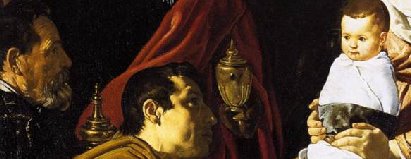 In this glorious day of the Epiphany, when the adoration of a Baby by strange noblemen from distant lands is remembered by us, we would like to remind every Catholic of one of the most important Encyclical letters of the 20th Century: Casti Connubii, signed on December 31, 1930, and published 80 years ago.
This encyclical is especially important to those converts who saw the beauty of the One True Faith from afar in its moral teachings long, much long actually, before even entertaining with any seriousness the notion of becoming Catholic.
In this Diamond Jubilee, we wish, once again, to thank particularly those "bishops" of the Anglican Communion who, assembled in the Lambeth Conference of 1930, had agreed that, in very exceptional circumstances, married couples could make some use of artificial contraception. The amazing text (which would be clearly considered exceedingly "conservative" by many today) is the following:
Where there is clearly felt moral obligation to limit or avoid parenthood, the method must be decided on Christian principles. The primary and obvious method is complete abstinence from intercourse (as far as may be necessary) in a life of discipline and self-control lived in the power of the Holy Spirit. Nevertheless in those cases where there is such a clearly felt moral obligation to limit or avoid parenthood, and where there is a morally sound reason for avoiding complete abstinence, the Conference agrees that other methods may be used, provided that this is done in the light of the same Christian principles. The Conference records its strong condemnation of the use of any methods of conception control from motives of selfishness, luxury, or mere convenience.
It was a first in the history of all self-declared Christian bodies and it sounded like a thunder throughout the West.
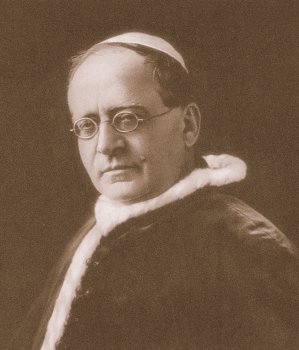 In the Catholic world, the eyes of those who had seen another step by the Anglicans in their self-demolition turned to the See of Peter. For the first (but not the last) time in the 20th century, an absurd decision by the Anglicans would force the Holy See to issue a fast response. The faithful did not have to wait for long: Pope Pius XI gave the Catholic (that is, the universal, perennial, and traditional) response to the problem:
"Since, therefore, openly departing from the uninterrupted Christian tradition some recently have judged it possible solemnly to declare another doctrine regarding this question, the Catholic Church, to whom God has entrusted the defense of the integrity and purity of morals, standing erect in the midst of the moral ruin which surrounds her, in order that she may preserve the chastity of the nuptial union from being defiled by this foul stain, raises her voice in token of her divine ambassadorship and through Our mouth proclaims anew: any use whatsoever of matrimony exercised in such a way that the act is deliberately frustrated in its natural power to generate life is an offense against the law of God and of nature, and those who indulge in such are branded with the guilt of a grave sin."How useless are the "solemn" declarations of those communities separated from Peter! How disastrous were the inevitable consequences of Lambeth 1930 for families, social order, and social mores!
"Ah, but Catholics had to wait until the 'Theology of the Body' to see marriage truly appreciated beyond reproduction," some of those ignorant of Church History say. This is said especially by those who believe that the Church began circa 1965 -- but it is denied by the whole Tradition of Holy Mother Church. As Pius XI reminded his children in 1930, quoting the Catechism of the Council of Trent:
"This mutual molding of husband and wife, this determined effort to perfect each other, can in a very real sense, as the Roman Catechism teaches, be said to be the chief reason and purpose of matrimony, provided matrimony be looked at not in the restricted sense as instituted for the proper conception and education of the child, but more widely as the blending of life as a whole and the mutual interchange and sharing thereof."
December 31, 1930: truly another day of glory in the long history of the Church of Rome! In her is the unbroken Doctrine of the Faith, which cannot deceive or be altered. In this Church we can trust. Thank you, dear Anglicans, for the warning which forced the Mother of all Churches to pronounce, once again, her sweet words of Truth!
Pope names staunch pro-abortion and
pro-"gay marriage" scientist to Pontifical Academy of Sciences
 A Brazilian reader calls our attention to the nomination, today, of Dr. Miguel Nicolelis, a Brazilian scientist and professor at Duke University, as a new ordinary member of the Pontifical Academy of Sciences. In last year's presidential campaign in Brazil, Dr. Nicolelis backed the winning candidate, current President Dilma Rousseff, of the Workers' Party; that alone would not disqualify him from holding a position in a venerable Church institution. However, in his staunch support letter for the candidate, Dr. Nicolelis included the following astounding words, in criticism of the campaign which was being supposedly waged by the opponent of Ms. Rousseff:
"Going back to the American strategy of winning elections, in a second phase, in case the opponent survives the first round, one resorts another infallible weapon: the evident lack of Christian values of the opponent, manifested by her explicit acceptance of abortion; her sexual libertinage and lack of moral values, invariably linked to the ghost that haunts the tradition, family, and property of the hysterical right, represented by the as defamed as it is legitimate approval of the civil union of homosexual couples. Under this implacable steamroll, everything is related to victory, whatever it may cost, and it matters little to the Brazilian George Bush that thousands of humble and abandoned women die every year, in the hospitals and emergency rooms of Brazil, the victims of horrendous infections caused by clandestine abortions.
"George Bush, both the original one as well as the generic version of the tropics, probably knows several women of his class that, due to circumstances and vicissitudes of life, were forced to have abortions in well-equipped clinics, conducted by highly specialized professionals, paid very well for this procedure. Neither of both Georges Bushes, however, has ever been on duty in the emergency room of the Hospital of the Clinics of Sao Paulo and witnessed, with their own eyes and tears, the death of a teenager, victimized by generalized septicemia, caused by an illegal abortion, committed by some butcher posing as a doctor and a savior." [Tip and translation: reader; source: Universities for Dilma Blog]
Well, a Planned Parenthood spokesman could not have said it better.
Reminder: send in souls to be enrolled Thursday ...
A friendly reminder that the 14th posting of souls enrolled in the Rorate Caeli Purgatorial Society will go live Thursday. Please send in your souls to be enrolled today!
A reminder on how to enroll souls: please email me at cpaulitz@yahoo.com and submit as follows: "name, state, country."
A thorough comparison of the Traditional Latin Mass and the ordinary Mass
We have been blessed with an exclusive, lengthy, deep delve into what really differentiates the Mass of All Ages and the ever-so-ordinary Mass in use, unfortunately, in all too many parishes -- the Novus Ordo.
The author, Don Pietro Leone, holds degrees in both classics and philosophy. This holy priest has taught philosophy in both America and Europe at the university and seminary level. He is a priest of the Tridentine Rite. He divides his time between pastoral and academic work and has recently completed a book on Catholic marriage from a philosophical and theological standpoint.
Please use the link below to read this fine work. Our most gracious thanks to Father for sharing this exclusively with the Rorate Caeli family..
How DARE the Pope ask for protection for Christians!!!
From the Grand Imam of Al Azhar (Islam's oldest and most prestigious center of learning) no less -- definitely not a "marginal" or "fringe" figure in Islam, and one of the 300+ signatories of the supposedly ground-breaking and pro-"dialogue" A Common Word Between Us and You addressed by Muslim scholars to the Pope and other Christian leaders.

Egypt's top Muslim cleric on Sunday criticised Pope Benedict XVI's call for world leaders to defend Christians as interference in his country's affairs, the official MENA news agency reported.
CAIRO (Ahlul Bayt News Agency) - Egypt's top Muslim cleric on Sunday criticised Pope Benedict XVI's call for world leaders to defend Christians as interference in his country's affairs, the official MENA news agency reported.
The call, following a deadly church car-bombing in northern Egypt, was "unacceptable interference in Egypt's affairs," Ahmed al-Tayeb, the Grand Imam of Al-Azhar, the oldest Islamic seat of learning, told reporters. "I disagree with the pope's view, and I ask why did the pope not call for the protection of Muslims when they were subjected to killings in Iraq?" (Yes. The Pope should be a good dhimmi first and put Muslim concerns ahead of everything else before daring to ask for anything at all. CAP) he said at a news conference. Benedict at a New Year's Mass at the Vatican appealed for the "concrete and constant engagement of leaders of nations" to protect Christians in the Middle East, in what he termed a "difficult mission." In the wake of rising tension and "especially discrimination, abuse and religious intolerance which are today striking Christians in particular, I once again launch a pressing appeal not to give in to discouragement and resignation," he said.
Tayeb, who renewed his condemnation of the New Year's Eve church bombing which cost 21 lives, said Azhar, the highest institute in Sunni Islam, would form a joint committee with the Coptic Church to resolve disputes between the communities. The committee, which should begin its work in two weeks, will "discuss reasons for deterioration (in Muslim-Copt ties) and propose appropriate solutions," he said. Tayeb later met with the head of Egypt's Coptic Church, Pope Shenouda III, at his headquarters in Cairo's St Mark Cathedral.
Benedict XVI on Theology
Few seemed to take notice of this speech when it came out on December 3, 2010. Emphases mine:
ADDRESS OF HIS HOLINESS BENEDICT XVI
TO MEMBERS OF THE INTERNATIONAL THEOLOGICAL COMMISSION
Consistory Hall
Friday, 3 December 2010
Your Eminence,
Venerable Brothers of the Episcopate,
Distinguished Professors and Collaborators,
I receive you with joy at the end of your annual Plenary Session. First of all, Your Eminence, I wish to express my warm thanks to you for the words of tribute that you have addressed to me, on behalf of all, in your capacity as President of the International Theological Commission. The work of this eighth quinquennium of the Commission, as you recalled, confronts the following weighty topics: theology and its methodology; the question of the one God in relation to the three monotheistic religions; the integration of the Church's social doctrine in the broader context of Christian doctrine.
“The love of Christ controls us, because we are convinced that one has died for all; therefore all have died. And he died for all, that those who live might live no longer for themselves but for him who for their sake died and was raised” (2 Cor 5: 14-15). How can we fail to feel that this beautiful reaction of Paul's to the encounter with Christ is not also our own. This very experience is at the root of the three themes into which you have delved during the Plenary Session just concluded.
Whoever has discovered in Christ the love of God, instilled in our hearts by the Holy Spirit, wishes to know better the One who loves him and whom he loves. Knowledge and love sustain one another in turn. As the Fathers of the Church said, whoever loves God is impelled to become, in a certain sense, a theologian, one who speaks with God, who thinks of God and seeks to think with God; whereas the professional work of a theologian is, for some, a vocation of great responsibility before Christ, before the Church. To be able to study God himself professionally and to be able to speak of him – contemplari et contemplata docere (St Thomas Aquinas, Super Sent., lib. 3 d. 35, q. 1, art. 3, qc. 1, arg. 3) – is a great privilege.
Your reflection on the Christian vision of God will be a precious contribution both to the life of the faithful and to our dialogue with believers of other religions and with non-believers. In fact, the word “theo-logy” itself reveals the communicative aspect of your work – in theology we seek – through the “logos”, to communicate what “we have seen and heard” (1 Jn 1:3). But we know well that the word “logos” has a very broad meaning that also comprehends the sense of “ratio”, “reason”. And this leads us to a second point of great importance. We can think of God and communicate what we have thought because he has endowed us with a reason in harmony with his nature. It is not by chance that John begins with the affirmation, “In the beginning there was the Logos... and the Logos was God” (cf. Jn 1:1). To accept the Logos – this Divine thought – is ultimately to contribute to peace on earth. Indeed, to know God in his true nature is also the certain way to secure peace. A god that is not seen as the font of forgiveness, of justice and of love, cannot be a light on the path of peace.
Since man always strives to connect the different branches of his knowledge, the knowledge of God is also organized in a systematic way. Yet no theological system can subsist unless it is permeated by love of the divine “Object”, which in theology must necessarily be the “Subject” that speaks to us and with whom we are in a relationship of love. Thus, theology must always be fed by dialogue with the divine Logos, Creator and Redeemer. Moreover, theology is not theology unless it is integrated into the life and reflection of the Church through time and space. Yes, it is true that in order to be scientific theology must argue rationally, but it must also be faithful to the nature of ecclesial faith: centred on God, rooted in prayer, in a communion with the other disciples of the Lord guaranteed by communion with the Successor of Peter and with the whole Episcopal College.
The consequence of this acceptance and transmission of the Logos is also the fact that the very rationality of theology helps to purify human reason, liberating it from certain prejudices and ideas that can exercise a strong influence on the thought of every age. It should, moreover, be pointed out that theology always lives in a continuity and in a dialogue with the believers and theologians who came before us; since ecclesial communion is diachronic, so also is theology. The theologian never begins from zero, but considers as teachers the Fathers and theologians of the whole Christian tradition. Rooted in Sacred Scripture, read with the Fathers and Doctors, theology can be the school of sanctity, as witnessed by Bl. John Henry Newman. To discover the permanent value of the riches passed down from the past is no small contribution of theology to the symphony of the sciences.
Christ died for us all, though we do not not all know and accept it. Having received the love of God, how can we not love those for whom Christ gave his own life? “[H]e laid down his life for us; we ought to lay down our lives for the brethren” (1 Jn 3:16).
All this leads us to serve others in the name of Christ; in other words the social commitment of Christians derives necessarily from the manifestation of divine love. Contemplation of the revealed God and charity for our neighbour cannot be separated, even if they live according to different charisms. In a world that often values the many gifts of Christianity – such as, for example, the idea of democratic equality – without understanding the root of its own ideals, it is particularly important to show that the fruits die if the roots are severed from the tree. Indeed, there is no justice without truth, and justice does not develop fully if its horizon is limited to the material world. For us Christians, social solidarity always has a prospect of eternity.
Dear theologian friends, our meeting today shows in a precious and special way the indispensable unity that must reign between theologians and Pastors. It is impossible to be theologians in solitude: theologians need the ministry of the Church's Pastors, just as the Magisterium needs theologians who fulfil their service totally, with all the ascesis that this implies. Through your Commission, therefore, I wish to thank all theologians and encourage them to have faith in great value of their commitment. In offering you my best wishes for your work, I impart my Blessing to you with affection.
A foretaste of the heavenly liturgy

In Saint Augustine’s words: “singing is an expression of joy and … love” (Sermo 34:1). As you tell out God’s praises, you give voice to the natural desire of every human being to glorify him with songs of love. It is hard to find words to convey the joy of the soul’s loving encounter with God, yet fine music is able to express something of the mystery of his love for us and ours for him, as we are reminded by the theme chosen for your Congress: Deus Caritas Est.
Always remember that your singing is a service. It is a service to God, offering him the praise that is due. It is a service to other worshippers, helping them raise their hearts and minds in prayer. And it is a service to the whole Church, a foretaste of the heavenly liturgy in which the choirs of angels and saints unite in one unending song of love and praise.
Benedict XVI, Address to the Pueri Cantores Federation, December 30, 2010.
(This work of art is from the "Cantoria" of the Cathedral of Florence made by the 15th-century Italian sculptor Luca della Robbia. Photo from Lib-Art.Com.)
(This work of art is from the "Cantoria" of the Cathedral of Florence made by the 15th-century Italian sculptor Luca della Robbia. Photo from Lib-Art.Com.)

An auspicious start

I have heard on the grapevine that five former Anglican bishops, their wives and three former Anglican nuns from Walshingham are to be received into the full communion of the Catholic Chuch at 12.30pm tomorrow, New Years Day, at Westminster Cathedral.
I presume that the former bishops concerned (and their former dioceses) are: Andrew Burnham (Ebbsfleet), Keith Newton (Richborough), John Broadhurst (Fulham), Edwin Barnes (assistant bishop, Winchester) and David Silk (assistant bishop, Exeter).
This will be the first step on the road to the eventual establishment of the Ordinariate for former Anglicans who wish to be in full communion with the Catholic Church.
Several other blogs have confirmed it (tip: reader P.K.T.P.).
(UPDATE by CAP 1/2/11: The formerly FiF-affiliated C of E "flying bishops" John Broadhurst, Andrew Burnham and Keith Newton, three nuns from the Anglican shrine in Walsingham and the wives of two of the former C of E bishops were received into the Church at the 12:30 P.M. Mass in Westminster Cathedral on January 1, 2010. See Three ex-Anglican bishops are received into full communion and First Anglicans are received into the Roman Catholic Church in historic service. Further articles can be found on blogs such as Caritas in Veritate, The Anglo-Catholic, English Catholic, De Cura Animarum, and Valle Adurni.)
(UPDATE by CAP 1/2/11: The formerly FiF-affiliated C of E "flying bishops" John Broadhurst, Andrew Burnham and Keith Newton, three nuns from the Anglican shrine in Walsingham and the wives of two of the former C of E bishops were received into the Church at the 12:30 P.M. Mass in Westminster Cathedral on January 1, 2010. See Three ex-Anglican bishops are received into full communion and First Anglicans are received into the Roman Catholic Church in historic service. Further articles can be found on blogs such as Caritas in Veritate, The Anglo-Catholic, English Catholic, De Cura Animarum, and Valle Adurni.)
An inauspicious start:
Assisi 2011

In his Angelus message today, Pope Benedict XVI announced that, on the 25th anniversary of the visit of Pope John Paul II to Assisi for the meeting of different religious leaders in 1986, he will visit Assisi in October 2011 for a meeting with "Christian brothers of the different confessions, leaders of the world's religious traditions, and, ideally, all men of good will".
Interreligious dialogue: as the massacre of Christians in Alexandria reminded us just today, "How's that workin' out for ya?"
An inauspicious start
Muslims strike again: Carnage in Alexandria

At least 21 people were killed and 79 injured when a car bomb exploded outside a Coptic Christian church in the Mediterranean city of Alexandria in the deadliest terrorist attack in Egypt since 2006.
The blast occurred about 12:30 a.m. today as worshipers were leaving a New Year’s service, the state-run Middle East News Agency said, citing the Health Ministry. “Foreign elements” appear to have been responsible for the blast, the Interior Ministry said in a statement on its website ... .

Since they invaded the Christian land of Egypt, the Mohammedans have done everything to eradicate Christianity. They shall not prevail!
Baby Jesus, bless your second home of Egypt!
Holy Virgin and Saint Joseph,
pray for the blessed land that received you as refugees!
The Roman Synod of 1960
2010 is the fiftieth year since the Roman Synod of 1960, called by Pope John XXIII in anticipation of Vatican II. Romano Amerio speaks of this Synod as having fallen into the Erebus of oblivion, tanquam non fuerit, "as if it had never been", and indeed its 50th anniversary this year was scarcely marked or commemorated anywhere. In belated amends for this forgetfulness I would like to present the following passage (sans the footnotes) from Amerio's Iota Unum regarding this forgotten Synod, this foreshadowing of the Vatican II that had been hoped for.
The Mass that is "more directed toward God"
The canonist Urbano Navarette Cortes S.J. (1920-2010) was created Cardinal by Pope Benedict XVI in 2007. In 2008 he gave an interview to Bruno Volpe which was widely reported in the Spanish and Italian Catholic blogospheres. To my knowledge, this interview was never published in its entirety in English. In belated memorial for this cardinal, Rorate presents the following translation (by Fr. Charles Johnson) of this interview (underlining is by CAP):
Cardinal Navarrete remembers Pius XII and Paul VI: “Pacelli was accused unjustly of anti-Semitism but saved thousands of Jews, Montini suffered greatly after the Council by being isolated”
Today is Friday, so...
...I would like to bring to your attention the following article on "Fish on Fridays":
By Michael P. Foley
Rorate Caeli Purgatorial Society (thirteenth posting of souls)
Below, please find the thirteenth posting of enrolled souls of the Rorate Caeli Purgatorial Society.
I'm pleased to say that, in addition to another long list this week, we have also been blessed with our 12th holy priest saying Traditional Latin Masses for the relief of the enrolled souls. This priest, a young American studying in Rome, will say a weekly Mass for the souls. Please do remember to keep all of the priests of the Society in your daily prayers along with the souls.
A reminder on how to enroll souls: please email me at cpaulitz@yahoo.com and submit as follows: "name, state, country." If you want to enroll entire families, simply write in the email:
"The Pancetta family, Rome, Italy". Individual names are preferred. Be greedy -- send in as many as you wish and forward this posting to friends as well. PLEASE follow this format strictly, as any deviation creates a lot of extra work.
Please pray for the enrolled souls and the holy priests of the Society:
Letter of the PCED to Una Voce
From the official website of the FIUV: a letter from Monsignor Pozzo about its report for the third anniversary of Summorum Pontificum:


Surprise: Belgian Marxist Gaudium et Spes commission Secretary
outed as child abuser

Father François Houtart, an 85-year-old Belgian activist priest who served as a peritus at the Second Vatican Council, has admitted twice abusing his cousin in 1970. His cousin was then an eight-year-old boy.
...
Ordained a priest of the Archdiocese of Malines-Brussels in 1949, Houtart taught at the Catholic University of Louvain from 1958 to 1990. As a peritus at Vatican II, he assisted Cardinal Leo Jozef Suenens and served as secretary of the subcommission that drafted the introduction to Gaudium et Spes, the pastoral constitution on the Church in the modern world.
...
An international petition drive calling upon the Nobel Prize committee to award Houtart the Nobel Peace Prize in 2011 has attracted thousands of signatures from 74 nations. In the midst of this effort, the sister of the abuse victim lodged a complaint with Church officials in Belgium, and the priest admitted the abuse.
Houtart, long known as a "Marxist Canon" (Le Figaro), has been a living symbol of a Belgian Liberal priesthood that helped shape Vatican II in all its aspects.
Reminder: send in souls to be enrolled tomorrow ...
A friendly reminder that the 13th posting of souls enrolled in the Rorate Caeli Purgatorial Society will go live tomorrow (Thursday). Please send in your souls to be enrolled today!
A reminder on how to enroll souls: please email me at cpaulitz@yahoo.com and submit as follows: "name, state, country." If you want to enroll entire families, simply write in the email: "The Pancetta family, Rome, Italy". Individual names are preferred. Be greedy -- send in as many as you wish and forward this posting to friends as well.
A reminder on how to enroll souls: please email me at cpaulitz@yahoo.com and submit as follows: "name, state, country." If you want to enroll entire families, simply write in the email: "The Pancetta family, Rome, Italy". Individual names are preferred. Be greedy -- send in as many as you wish and forward this posting to friends as well.
And please remember to follow @RorateCaeli on Twitter.
Interesting words
From an interview granted by the Superior General of the Priestly Fraternity of Saint Pius X (FSSPX/SSPX) to the Caledonian newspaper Les Nouvelles Caledoniennes (Dec. 27, 2010):
The goal of your Fraternity is still to integrate the Catholic Church?
Yes, we have always maintained that we do not wish to go our own way. We maintain that we are Catholic and that we remain so. We wish that Rome will recognize us as true Bishops. Otherwise, the word schismatic is not used any longer regarding us. Now, if we are not schismatics, nor heretics, then we are truly Catholic. Otherwise, the Pope says that there is solely a problem of a canonical nature. An act of Rome suffices to state that it's over and that we reenter the Church. This will happen [Ça viendra.]. I am very optimistic.
[Source: Le Forum Catholique; tip: Le Salon Beige]
This is the sign of the Church always, the Sign of Blood

Seven years were my people without my presence;
Seven years of misery and pain.
Seven years a mendicant on foreign charity I lingered abroad:
Seven years is no brevity.
I shall not get those seven years back again.
Never again, you must make no doubt,
Shall the sea run between the shepherd and his fold.
...
It is not I who insult the King,
And there is higher than I or the King.
It is not I, Becket from Cheapside,
It is not against me, Becket, that you strive.
It is not Becket who pronounces doom,
But the Law of Christ's Church, the judgement of Rome.
...
I am here.
No traitor to the King.
I am a priest,
A Christian, saved by the blood of Christ,
Ready to suffer with my blood.
This is the sign of the Church always,
The sign of blood.
Blood for blood.
His blood given to buy my life,
My blood given to pay for His death.
My death for His death.
...
For my Lord I am now ready to die,
That His Church may have peace and liberty.
T. S. Eliot
Murder in the Cathedral
___________________
Our traditional post in honor of Saint Thomas Becket.
Lord of the Flies
Found: secret ceremony of those responsible for the New Mass

"Secret Lodges of the Flies."
"-You are now an Illuminati."
"-Cursum perficio."
Author: Liniers (Ricardo Siri)
Subscribe to:
Posts (Atom)