Rorate Caeli
Showing posts with label Bossuet. Show all posts

"When you have lifted up the Son of Man,
then you will know that I am He."

Sacrifice demands tranquility: including at Holy Mass

"When you have lifted up the Son of Man, then you will know that I am He, and that of Myself I do nothing; but that I preach only what the Father has taught Me. And He Who sent Me is with Me; He has not left Me alone, because I do always the things that are pleasing to Him." (Gospel for Monday following the II Sunday in Lent, St. John viii, 28-29)
___________________________________

Today, a meditation on the tranquility of Christ, the High Priest, as He offers His Sacrifice of His own Self:
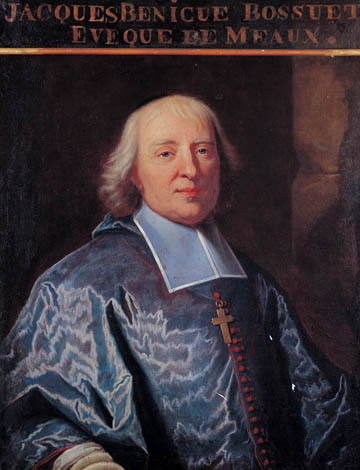


On the eve of His death,... Our Lord sweats, trembles and shudders at the terrible vision of His torture that rises before Him; but when His heavy troubles have actually come upon Him, He seems to be another man, to whom torments are indifferent. He talks quietly to the happy thief; He looks upon and recognizes all those of His own people who are at the foot of the Cross, speaks to them, and comforts them; and, at last, seeing that He has accomplished all He had to do, and carried out the Will of His Father in every particular, He gives up His Soul to Him in such a peaceful, free and deliberate manner that there can be no doubt of its being His own act. It is just as He had said: "No man taketh it away from Me, but I lay it down of Myself!"

... [T]he reason probably is that the scheme of our redemption was necessarily a work of strength and weakness combined. Christ wished to show by His fears that, like us, He felt trouble keenly; while by His firmness He had to prove that He could perfectly master His feelings and make them yield to His Father's Will. Such is the reason of our Redeemer's attitude at this supreme moment, given by Saint John Chrysostom; and doubtless it is a solid one. Yet other reasons too may be found; and I venture to suggest one (...).

I think we may believe that one most probable cause of Our Lord's peace on Calvary, when the Mount of Olives had witnessed His agony, was the fact that the Cross on Mount Calvary found Him in the very act of His Sacrifice, and there is no action in the world that should be performed in so calm a spirit as this one. Those who let their thoughts wander here and there without restraint, according as curiosity or inclination suggest, while present at the Holy Sacrifice of the Mass, cannot have the least idea of what Sacrifice means.

Sacrifice is an act by which we offer our homage to God; and who does not know that any act of respect demands a quiet and collected demeanor? It is the very nature of respect to require this, God sees into the depth of all hearts, and holds us to be wanting in due respect for His majesty when our souls are uncontrolled and distracted in His presence. How important, then, that the High Priest who actually offers the sacrifice should do so with a perfectly calm mind! The oil with which Aaron is anointed, that symbol of peace poured so abundantly over his head, is in fact intended to warn him of the peace that he should attain to in his own mind and heart by banishing every distracting thought and feeling.

Hence it was, we cannot doubt, that Our Divine Pontiff Jesus Christ showed Himself so perfectly calm in His death-agony. If He had appeared troubled on Mount Olivet, it was, says St. Augustine, a voluntary anguish that He suffered, for only by his own will could it affect Him, and for this reason: He was then, in His own eyes, simply the victim, and He willed to behave as a victim. Therefore He adopted, if we may be allowed to say so, the very actions and posture of a victim which was being dragged, terrified and shuddering, to the altar.

But on the Cross it is quite otherwise. He it now at the altar, as Priest; and from the moment that His innocent hands have been raised to present Himself as our victim to the Wrath of Heaven, He is exercising His priestly function, and He will allow no more fear to be seen lest it should imply any repugnance for the sacrifice. His Divine Will, to which all His emotions are subject, prevents the peace of His Soul from being troubled and represses all outward sign of anguish; and thus we are made to understand that our most merciful High Priest offers Himself for us quite freely and from pure love of our salvation. According to St. Augustine, again, "He dies as gently as we might go to sleep".

Jacques-Bénigne Bossuet
Sermon sur la Compassion de la Sainte Vierge

Playing Luther: extraordinary and divine vocation independent of the whole ecclesiastical hierarchy


[Luther] applies himself to maintain his mission as extraordinary and divine. In a letter he wrote to the bishops, "falsely so styled," said he, he assumed the title of Ecclesiastes [Ecclesiastical Superior], or Preacher, of Wittenberg, which none had ever given him; nor does he pretend anything else, but that he granted it himself; that so many bulls, and so many excommunications, so many condemnations from the pope and emperor, had stripped him of all his former titles, and defaced the character of the beast in him; yet he could not remain without a title, and had therefore given himself this, as a token of the ministry to which God had called him, and which he had received not from man, nor by man, but by the gift of God, and by the revelation of Jesus Christ.

Here we have his vocation as immediate, and as extraordinary, as that of St. Paul. On this foundation, at the beginning, and throughout the entire body of the letter, he qualifies himself as "Martin Luther, by the grace of God Ecclesiastes of Wittenberg;" and declares to the bishops, lest they should pretend ignorance, that this is his own title which he bestows on himself, with an egregious contempt of them and Satan; and that he might, with as good a claim, have called himself Evangelist by the grace of God; for Jesus Christ most certainly named him so, and considered him as Ecclesiastes.

By virtue of this celestial mission he did every thing in the church: he preached, he visited, abrogated some ceremonies, left others remaining, instituted and deposed. He, that never was more than a priest, dared to make, I do not say other priests, which itself would be an attempt unheard of in the entire Church since the origin of Christianity; but, what is much more unheard-of, even a bishop. It was deemed expedient by the party to invade the bishopric of Nuremberg. Luther went to this city, and by a new consecration ordained Nicholas Amsdorf bishop of it, whom he had already made minister and pastor of Magdeburg. He did not, therefore, make him bishop, in the sense he sometimes calls by that name all pastors, but he made him bishop, with all the prerogatives annexed to this sacred name, and gave him that superior character which himself had not: but all was comprised in his extraordinary vocation; and an Evangelist, sent immediately from God like another Paul, could do all he pleased in the church.

Such attempts as these, I know very well, are considered nothing in the "new reformation". These vocations and missions, so much respected in all ages, are nothing more, after all, than formalities to these new doctors, who require only what they call essentials; but these formalities established by God, preserve what is essential. They are formalities, if they please, but in the same sense the sacraments are so — divine formalities, which are the seals of the promise, and the instruments of grace.

'Vocation, mission, succession, lawful ordination,' are alike with them to be called formalities. By these sacred formalities God seals the promise he made to his church of preserving her for ever. "Go, teach and baptize; and lo, I am with you always, even to the end of time" - with you, teaching and baptizing, not with you here present only, and whom I have immediately chosen, but with you in the persons of those who shall be for ever substituted in your place by my appointment. Whoever despises these formalities of legitimate and ordinary missions, may, with the same reason, despise the sacraments, and confound the whole order of the church.

And without entering further into this subject, Luther, who said he was sent with an extraordinary title immediately from God as an evangelist and apostle, was not ignorant himself that that extraordinary vocation ought to be confirmed by miracles. Therefore, when [Thomas] Müntzer, with his Anabaptists, assumed the title and function of a "pastor," Luther would not suffer the question to turn on what he might call essential, or admit he should prove his doctrine from the Scriptures; but ordered he should be asked, "Who had given him commission to teach. Should he answer — God ; let him prove it," says Luther, "by a manifest miracle; for when God intends to alter anything in the ordinary form of mission, it is by such signs that he declares himself."

Luther had been educated in good principles, and could not avoid sometimes returning to them. Witness the treatise which he wrote of the authority of magistrates, in 1534. This date is remarkable, forasmuch as four years after the Augsburg Confession, and fifteen after the rupture, it cannot be said that the Lutheran doctrine had not at that time taken its form; and yet Luther there declared again, "That he had much rather a Lutheran should leave the parish, than preach there against his pastor's consent; that the magistrate ought not to suffer either private assemblies, or any to preach without lawful vocation; if they had suppressed the Anabaptists when they began to spread their doctrine without vocation, the many evils which desolated Germany would have been prevented; that no man truly pious should undertake anything without vocation, which ought to be observed so religiously, that even an 'Evangelical' (for so he calls his own disciples) might not preach in the parish of a papist or a heretic, without the consent of him who was pastor of it" which, proceeds he, in warning to the magistrates, "that they might shun those prattlers, who brought not good and sure testimonials of their vocation, either from God or men; without this, though they preached the pure gospel, or were angels dropped from heaven, yet they ought not to be admitted." This is to say, sound doctrine is not sufficient; but, besides this, one of two things is requisite, either miracles to testify God's extraordinary vocation, or the authority of those pastors who were already qualified to confer the ordinary vocation in due form.

When Luther wrote this, he was well aware it might be asked, whence he himself had received his authority? ... [W]hen he spoke with this assurance of his church, the question was: who had given him a charge of it; and how that vocation, which he had received with dependence, all of a sudden became independent of the whole ecclesiastical hierarchy?

Jacques-Bénigne Bossuet
Histoire des variations des églises protestantes
(History of the variations of the Protestant churches)

Bossuet: "Two ways of aspiring to the reformation of the Church"


There were thus [prior to the 16th century] two different sorts of persons who called for reformation: one, the truly peaceful and true children of the Church, without bitterness supporting her grievances, and who, with respect, proposed a reformation of them, and in humility bore them despite its delay.

Far from desiring to effect this object by schism, they, on the contrary, looked on schism as the greatest of all evils. In the midst of these abuses, they admired the Providence of God, who, according to his promises, knew how to preserve the faith of the Church.

And, though they could not accomplish a reformation of attitudes, free from all bitterness, and free from all passion, they deemed themselves glad that nothing prevented them from accomplishing it within themselves. These were the strong ones of the Church, whose faith no temptation could shake, nor induce to deviate from unity.

Besides these, there were proud spirits, who, shocked by the disorders they saw prevailing in the Church, particularly in her ministers, did not understand how the promises of her eternal duration could subsist in the midst of such abuses; whereas the Son of God had taught to respect for  the chair of Moses, notwitstanding the evil works of the Scribes and Pharisees who sat upon it; these became proud, and thereby weak, yielding to the temptation which inclines to hate the Chair itself, due to the hatred towards those who preside upon it; and, as if the wickedness of man could make void the work of God, the aversion they had conceived against the Doctors made them hate both the doctrines they taught and the authority they had received from God to teach.

Such were the Waldensians and Albigensians; such were John Wycliffe and Jan Hus. The ordinary bait by which they induced weak souls into their webs was the hatred with which they inspired them against the Pastors of the Church; influenced by this spirit of bitterness, they desired nothing but rupture.

Jacques-Bénigne Bossuet
Histoire des variations des églises protestantes

Chalice of abandonment and mercy


Pater, si non potest hic calix transire nisi bibam illum, fiat voluntas tua. (Communion for Palm Sunday, Second Sunday in Passiontide - St. Matthew xxvi, 42: "Father, if this chalice may not pass away, but I must drink it, Thy will be done.")

__________________________

... The most soothing consolation to the man who is plunged in affliction is the consciousness of his innocence; which, like an angel, watches at his side, and whispers comfort to his soul. The holy confidence arising from the consideration of innocence supported the martyrs,and upheld their enduring patience under the pressure of the most feverish tortures! This consideration acted with a magical influence: it calmed their sufferings, it lulled the excruciating sensation of the flames while they consumed their bodies, and diffused over their countenance the expression of a celestial joy.

But Jesus, the innocent Jesus, found no such consolation in his sufferings: what was given to the martyrs was denied to the King of Martyrs. Under the ignominy of the most disgraceful death, under the hostile impression of the most agonizing torments, he was not allowed to complain, nor even to think that he was treated with injustice. It is true, he was innocent respecting man; but what did the recollection of an immaculate life avail him? ...

Behold, behold the innocent Jesus, the spotless Lamb, suddenly become the goat of abomination, burdened with the crimes, the impieties, the blasphemies of all mankind. It is no longer the Jesus who once said, "Which of you convinceth me of sin?" (St. John, viii, 46.). He presumes no more to speak of his innocence. Oh, Jesus! Jesus! I dare not now pronounce you innocent, while I see you bending beneath the weight of universal guilt.

Brethren, what a subject for our most serious thoughts! What a theme for our affection! For you, and for me, this miracle of benevolence is performed! Devoid as we are of all merit, what have we to offer to our suffering Redeemer but our gratitude! ... See imputed to our divine Savior the crime of the whole world: all the perfidies that ever were acted, all the impurities and adulteries that ever were committed, all the sacrileges that ever were executed, and all the imprecations, all the blasphemies that ever were yelled from the throats of unbelievers.

This turbulent ocean of iniquity is ready to engulf our Redeemer; whichever way he casts his eyes, he sees torrents of sin bursting upon him. Let us now approach the divine Sufferer, and behold him carrying his Cross. I confess that this incident overpowers my bosom with affectionate gratitude.

To be fastened to the cross is to suffer the punishment of malefactors, but to carry the cross was esteemed as a public avowal of the condemned person, that the death he was going to suffer was justly ordained; and, therefore, when our Savior was in the act of carrying his Cross, he bore testimony to the justice of his condemnation.

...[T]he Cross is now uplifted, exhibiting the sublime victim! Now flows the sacred blood! ... [T]o us, the Divine Mercy was immediately extended. As we sometimes see the face of the heavens wrapped in a brooding storm, till, gathering to maturity, it bursts with a tremendous explosion, yet wasting its strength as it descends, and losing, as it were, its brightness in diffusion, the face of the heavens resumes its wonted cheerful serenity; so the fulminating wrath of God overwhelms his sacred Son; but, like a cloud rent asunder by its own vehemence, the storm subsides, the Deity relents, and the returning beams of mercy glitter from his throne!

By a wonderful commutation, which comprises the mystery of our salvation, the Heavenly Father abandons the innocent Son, in consequence of his unbounded love towards guilty man, and receives him into the arms of his forgiveness for the love of his innocent Son! How feeble are words, how inadequate is language, to uphold this weight of mercy! Let this church be to every one of us a Calvary! And let us not depart from hence before we have kindled, in our bosom, the flame of eternal gratitude for the sublime act of mercy which is, on this day, recorded throughout the Christian world.
Jacques-Bénigne Bossuet
Premier Sermon pour le Vendredi Saint sur la Passion de N.S. Jésus-Christ
______________________________
BLOG RECESS DURING HOLY WEEK
relevant news may be posted at any time.

Bossuet Week:
"I came not to seek the Just"


In the whole teaching of the Gospels there is nothing more touching than God's gentle and loving way of treating His reconciled enemies, that is, converted sinners. He is not satisfied with blotting out our stains and washing away our filth; to His infinite goodness it is but a little thing that our sins should do us no harm. He would have them actually profit us. He draws out of them such benefits for our soul that we even feel constrained to bless our very transgressions, and to cry with the Church: "O Felix culpa!" [Blessing of the Paschal Candle, Easter Vigil]

His grace seems to struggle with our sins for the upper hand, and Saint Paul says that it even pleases Him to make grace abound more where sin has abounded. In fact, He receives penitent sinners back with so much love that innocence itself might almost be said to have cause for complaint or at least for some jealousy at the sight of it. The extreme gentleness with which He treats them, if their regret for sin be but real, appears to do away with all further need for regret. Let but one sheep stray from His side, and it seems to become dearer to Him than all the others who remained constant; like the father in the parable, His heart melts over His returned prodigal rather than over the elder, faithful brother.

We seem, indeed, at first sight to have ground for saying that the penitent sinner has the advantage over the just who have not sinned; that restored virtue may triumph over innocence preserved. Nevertheless, it is not so. We may never doubt that innocence is a privileged state - and if there were no other reason for maintaining this it would be enough to remember that Jesus Christ chose that state for Himself.

Observe the terms in which the great Apostle declares His Divine Master's innocence: "Talis decebat ut esset nobis pontifex": "It was fitting that we should have a high priest, holy, innocent, undefiled, separated from sinners, and made higher than the heavens, Who needeth not to offer sacrifices for His own sins" [Hebrews, vii, 26], but, being holiness itself, expiates sin. Must not the Son of God, then, have dearly loved the innocence that He took for His own lot?

No, His tender feelings for converted sinners does not place them above holy souls that have never been stained by sin. Only, just as we feel the blessing of health most keenly on recovering from a long illness, though we would far rather have been spared the illness and kept our strength unbroken; or, again, as a lovely mild day in the midst of a hard winter is peculiarly enjoyed from its unexpectedness, yet it is by no means so pleasurable as a long mild season would have been.
So, humanly speaking, we may understand how Our Lord lavishes tenderness on freshly converted sinners, who are His latest conquest; yet, He nevertheless has a more ardent love for His early friends, the Just. ...

Though Jesus Christ, as Son of God, may take pleasure in seeing at His feet a sinner who has returned to the right path, yet, being Himself essential Sanctity, He must love the innocence that has never strayed with a stronger love. For as it is nearer to His own infinite holiness and more perfectly imitates it, He cannot help honoring it by closer familiarity. Whatever favor the tears of a penitent may find in His eyes, they can never equal the pure charm of a holiness ever-faithful to Him.

But when God becomes man to save us from our sins He, as our Savior, comes to seek the guilty: for them He lives, because to them He was sent. How does He Himself describe the object of His mission? "Non veni vocari iustos" ("I came not to seek the Just"), that is to say : "Though they may be the most noble and worthy of My friendship, My commission does not extend to them. As Savior, I am to seek the lost; as Physician, the sick; as Redeemer, those who are captive." Hence it is that He loves only the society of such as these because to them alone He was sent into the world.

The angels, who never fell, may approach Him as Son of God: that is the prerogative of innocence; but, in His quality of Savior, He gives the preference to sinners.

Jacques-Bénigne Bossuet
Premier Sermon pour la Fête de la Nativité de la Sainte Vierge
1659/1660 - Hôpital Géneral de Paris

Bossuet Week:
The greatest sacrifice of the Mother of God

The Blessed Virgin had three most perfect possessions. She had her high dignity; her wondrous purity of body and soul; and her motherhood of Jesus Christ: she had for her own Son Him in Whom St. Paul says "it hath well pleased the Father that all fullness should dwell". In her, then, we have a creature greatly distinguished beyond her kind; but we find that her deep humility strips her in a sense of all these wonderful privileges.

Though raised far above others by her dignity as Mother of God, she lives a life of obscure service as one of the common herd; though separated from all by her immaculate purity, she mixes in the society of sinners, and purifies herself as they do. But she does more than this: from Calvary, she even loses her well-beloved Son. And she does not merely lose Him by seeing Him die a cruel death, but by His ceasing, in a certain sense, to be her Son at all and by His substituting another for Himself: "Woman," He says to her, "behold thy son!"

Be sure that Our Saviour did not speak in this way to His Mother without reason. He would not appear not to know her would not call her Woman instead of Mother if there were no deep mystery hidden beneath His action; and the reason of it may be found in the state of abject humiliation in which Our Lord then was, and which He willed that His holy Mother should share with Him by the closest possible imitation. We must remember, here, that Jesus had a God for His Father, and Mary a God for her Son. At the moment we are speaking of, the Saviour had lost His Father, as a father, and called upon Him only as His God. Mary, then, must lose her Son, to correspond with this supreme sacrifice; and hence He addresses her now as "woman," and not as "mother ". Further, which is the deepest humiliation of all, He gives her another son; as though henceforth He would cease to be hers, and meant to break the bond of their sacred union.

Saint Paulinus gives as Christ's reason for this act that whereas, so long as He lived His mortal life on earth, He had paid every possible honor and service that a Son could pay to His Mother, and had been her constant consolation and support, now that He was on the eve of entering into His glory He assumed an attitude more suited to the dignity of God; and, therefore, gave up the natural duties of filial love to another. Thus was Mary left with Saint John for her son in the place of Jesus, Who had Himself instituted the exchange. She humbly accepted the humiliating decree, and took the disciple instead of the Master, the son of Zebedee instead of the Son of God (as Saint Bernard says) to her maternal heart; and so she lived for many years on earth, only thinking in her humility that she deserved not to be the Mother of God.
But if Mary was thus perfectly stripped of everything, that her humiliation in this world might bear a close likeness to her Divine Son's, she was to have all back in full, and more than full, measure; her humility was not only to "have nothing," but to "possess all things". Because she made herself the servant of others she is to be raised to a throne; because she purified herself being all pure as though a sinner, she is to be the advocate of sinners, and their refuge next after Christ - Refugium peccatorum -, and, because she gave up her Son and patiently and humbly bore His apparent desertion of her, that beloved Son will now enter once more into His filial rights which He had ceded to John but for a time and will present her before the whole heavenly court as His Mother.

Jacques-Bénigne Bossuet
Premier Sermon pour la Fête de l'Assomption de la Sainte Vierge

Bossuet Week:
Christ, the High Priest, offers Himself for us in peace

On the week of the anniversary of the death (April 12) of one of the greatest of all orators, Bossuet, excerpts of his sermons.

Today, a meditation on the tranquility of Christ, the High Priest, as He offers His Sacrifice of His own Self:

On the eve of His death,... Our Lord sweats, trembles and shudders at the terrible vision of His torture that rises before Him; but when His heavy troubles have actually come upon Him, He seems to be another man, to whom torments are indifferent. He talks quietly to the happy thief; He looks upon and recognizes all those of His own people who are at the foot of the Cross, speaks to them, and comforts them; and, at last, seeing that He has accomplished all He had to do, and carried out the Will of His Father in every particular, He gives up His Soul to Him in such a peaceful, free and deliberate manner that there can be no doubt of its being His own act. It is just as He had said: "No man taketh it away from Me, but I lay it down of Myself!"

... [T]he reason probably is that the scheme of our redemption was necessarily a work of strength and weakness combined. Christ wished to show by His fears that, like us, He felt trouble keenly; while by His firmness He had to prove that He could perfectly master His feelings and make them yield to His Fathers Will. Such is the reason of our Redeemer's attitude at this supreme moment, given by Saint John Chrysostom; and doubtless it is a solid one. Yet other reasons too may be found; and I venture to suggest one (...).

I think we may believe that one most probable cause of Our Lord's peace on Calvary, when the Mount of Olives had witnessed His agony, was the fact that the Cross on Mount Calvary found Him in the very act of His Sacrifice, and there is no action in the world that should be performed in so calm a spirit as this one. Those who let their thoughts wander here and there without restraint, according as curiosity or inclination suggest, while present at the Holy Sacrifice of the Mass, cannot have the least idea of what Sacrifice means.
Sacrifice is an act by which we offer our homage to God; and who does not know that any act of respect demands a quiet and collected demeanor? It is the very nature of respect to require this, God sees into the depth of all hearts, and holds us to be wanting in due respect for His majesty when our souls are uncontrolled and distracted in His presence. How important, then, that the High Priest who actually offers the sacrifice should do so with a perfectly calm mind! The oil with which Aaron is anointed, that symbol of peace poured so abundantly over his head, is in fact intended to warn him of the peace that he should attain to in his own mind and heart
by banishing every distracting thought and feeling.

Hence it was, we cannot doubt, that Our Divine Pontiff Jesus Christ showed Himself so perfectly calm in His death-agony. If He had appeared troubled on Mount Olivet, it was, says St. Augustine, a voluntary anguish that He suffered, for only by his own will could it affect Him, and for this reason: He was then, in His own eyes, simply the victim, and He willed to behave as a victim. Therefore He adopted, if we may be allowed to say so, the very actions and posture of a victim which was being dragged, terrified and shuddering, to the altar.

But on the Cross it is quite otherwise. He it now at the altar, as Priest; and from the moment that His innocent hands have been raised to present Himself as our victim to the Wrath of Heaven, He is exercising His priestly function, and He will allow no more fear to be seen lest it should imply any repugnance for the sacrifice. His Divine Will, to which all His emotions are subject, prevents the peace of His Soul from being troubled and represses all outward sign of anguish; and thus we are made to understand that our most merciful High Priest offers Himself for us quite freely and from pure love of our salvation. According to St. Augustine, again, " He dies as gently as we might go to sleep".
Jacques-Bénigne Bossuet
Sermon sur la Compassion de la Sainte Vierge

Heresy is innovation


From the origin of Christianity, all heresies have had the same character, and, long before the age of Arius, Tertullian had said, "Heretics vary in their rules; namely, in their confessions of faith. Every one of them thinks he has a right to change and model what he has received according to his own fancy, as the author of the sect composed it according to his own fancy. Heresy never changes its proper nature in never ceasing to innovate...". ...

This nature of heresy has always been observed by Catholics and two holy authors of the eighth century wrote that "heresy, however old, is always in itself a novelty; to better retain their title of novelty, [heresy] innovates daily and daily changes its doctrine."

But, while heresies always vary, never agreeing among themselves and continuously introducing new rules..., Tertullian says that "in the Church, the rule of Faith is unalterable, and never to be reformed". It is so because the Church, which professes to speak and teach nothing but what she has received, does not vary; heresy, on the contrary, which began by innovating, innovates daily, and does not change its nature. ...

Two aspects cause this disorder of heresies: one drawn from the nature of the human mind, which, having once tasted the temptation of novelty, does not cease to seek with disordered appetite this deceitful allurement; the other originating from the difference which exists between the works of God and those of man.

The Catholic Truth proceeds from God and has its perfection at once; heresy, the frail offspring of the human mind, can be formed only by disordered patches. When ... we venture to remove "the ancient landmarks established by our Fathers" and to reform the doctrine once received among the faithful, we set events in motion without the slightest insight into the consequences of our attempt.

Jacques Bénigne Bossuet
Histoire des variations des églises protestantes