Rorate Caeli
Showing posts sorted by relevance for query ultramontanism. Sort by date Show all posts

Modernism, Not Ultramontanism, Is the “Synthesis of All Heresies” — A Response to Stuart Chessman

The following article was submitted to Rorate Caeli by José Antonio Ureta, co-founder of Fundación Roma (Chile) and advisor of its pro-life and pro-family project Acción Familia, a senior researcher at Société Française pour la Défense de la Tradition, Famille et Propriété (Paris), and author of Pope Francis’s Paradigm Shift: Continuity or Rupture in the Mission of the Church? (Spring Grove, PA, 2018). We publish it in the interests of open discussion of topics of grave importance in the Church.

Modernism,  Not Ultramontanism, Is the “Synthesis of All Heresies”

José A. Ureta

Ultramontanism: Its Life and Death

We cannot understand the crisis in the Catholic Church today or how to escape from it unless we understand how the ecclesiological distortion popularly known as ultramontanism originated, how it functions as a kind of hyperclericalism, and finally how it has consumed itself like the ouroboros. Stuart Chessman published the following very insightful historical analysis in four installments (December 20, 23, 27, and 31) at the Society of St. Hugh of Cluny’s blog. With his permission they are published here as a single essay.—PAK

Ultramontanism: Its Life and Death 
Stuart Chessman
The Society of St. Hugh of Cluny

The actions of present Pope have put incredible stress on the Church’s constitution—the papal absolute monarchy. I’d like to offer some reflections on this system of government: ultramontanism. To understand it, though, we have to go back in history, starting with the reign of Pius IX when the ultramontanist regime received its “classic” form. I will focus on history—what actually happened—as opposed to theological considerations.

Papolatry and Ultramontanism are not the same: Why I am proud to be an ultramontane - by Roberto de Mattei

In recent months, a debate on ultramontanism has opened on Rorate Caeli and elsewhere, with interesting interventions by Stuart Chessman (here), Peter Kwanieswski (here), and José Antonio Ureta (here and here).

I know these authors personally and I have esteem and friendship for them, but to be faithful to the Latin adage Amicus Plato, sed magis amica veritas (Plato is my friend, but truth is a greater friend), I stick to what seems to me to be the truth.

Ultramontanism's Death Sentence

Pope Pius XII
In 1952 Pope Pius XII said the following, in a public address recorded among his official acts:

Even when it is a question of the execution of a condemned man, the State does not dispose of the individual's right to life. In this case it is reserved to the public power to deprive the condemned person of the enjoyment of life in expiation of his crime when, by his crime, he has already disposed himself of his right to live.

In 2017 Pope Francis spoke, in a not dissimilar context:

Death Penalty: Ultramontanism's Death Sentence


In 1952 Pope Pius XII said the following, in a public address recorded among his official acts:

Even when it is a question of the execution of a condemned man, the State does not dispose of the individual's right to life. In this case it is reserved to the public power to deprive the condemned person of the enjoyment of life in expiation of his crime when, by his crime, he has already disposed himself of his right to live.

In 2017 Pope Francis spoke, in a not dissimilar context:

From Dante’s Inferno to Erasmus’s In Praise of Folly: Papal Magisterium in Support of Satire and Invective Against Popes

We thank Fr. Romano Tommasi, the pen name of a theologian, for this guest article.

Writers on this site often inveigh against hyper-papalism or ultramontanism, evaluated as vices. Pre- and post-Vatican II popes agree in principle and have even taught it magisterially in a way unfortunately overlooked.

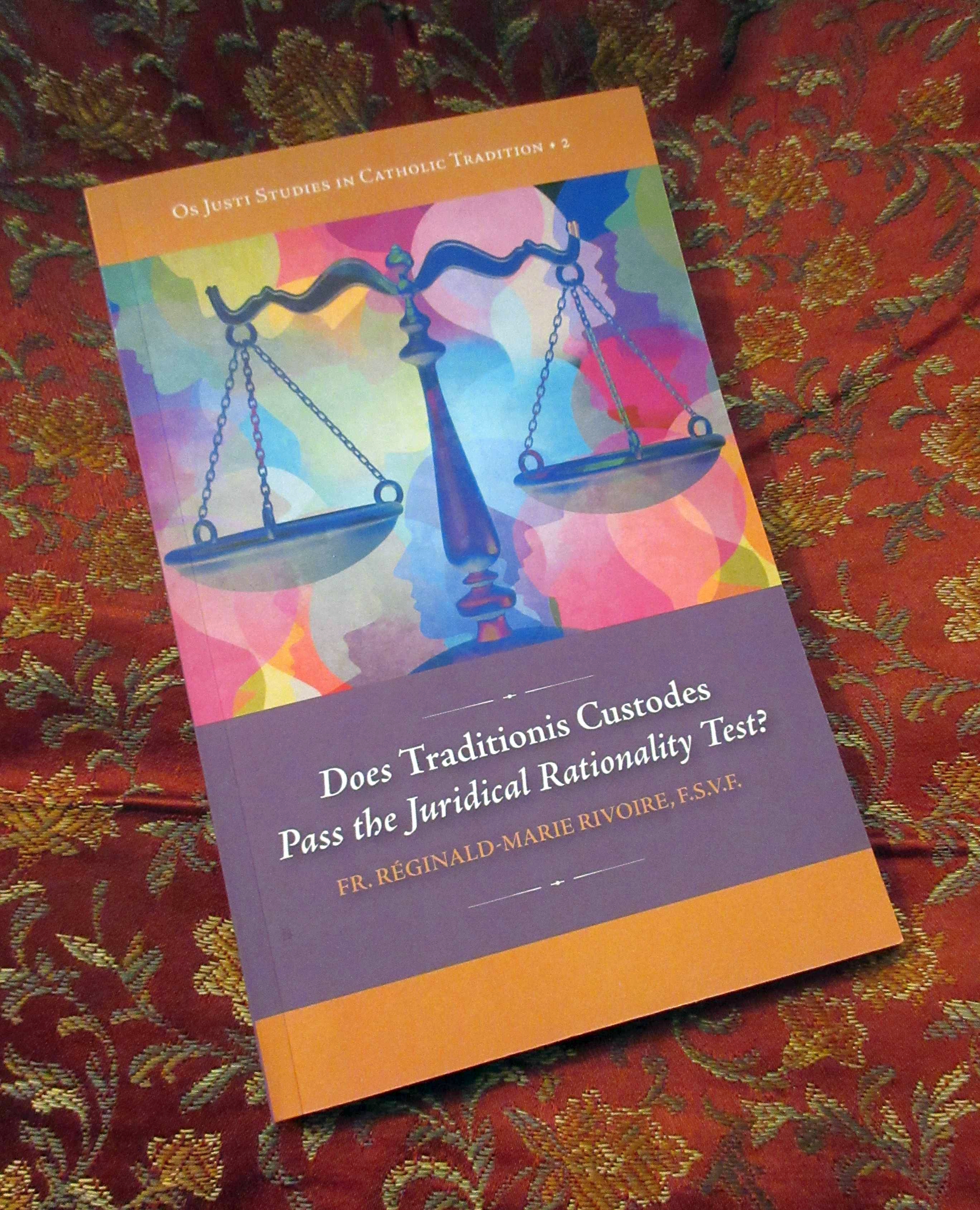
Two New Books: Best Canonical Critique of "Traditionis Custodes" to Date; Clearest Account of the Dogma of Papal Infallibility

The inaccuracies, difficulties of interpretation, and problems of concrete application of Traditionis Custodes and the Responsa ad Dubia have raised many questions among canonists, pastors, and institutes whose proper law binds them to the liturgical forms of the Latin tradition.

Events: Dr. Kwasniewski’s Upcoming Lectures in New Jersey, Pennsylvania, Ohio

After a long hiatus due to COVID-19, I will be resuming my public lectures with a trip to southern New Jersey, across Pennsylvania, and ending at the Franciscan University of Steubenville (my third visit to a most accommodating community, thanks to the local Juventutem and Una Voce chapters!). I will be giving a different talk at each location. The dates and locations follow. Nota bene: I am aware that, due to various restrictions, locations will have caps on the number of guests. As a result, we are working to ensure that the talks will be made available afterwards in video form; some, at least, will be published as well.

Defense of the TLM’s “Sacerdotalism”: Full Text of Dr. Kwasniewski’s Michigan Lecture

In the following lecture, recorded in Michigan on March 4, 2022, I defend the “sacerdotalism” or priest-centeredness of the old rite and, accordingly, of its immeasurable superiority for the spiritual life of the priest and for that of his people as well. The video (scroll down to the bottom) includes the Q&A. 


The Relationship between Priest and People in the Latin Mass:
Space and Time for Divine Intimacy

Peter A. Kwasniewski

Saying and Unsaying: The Synod’s Orwellian Atmosphere

It surprises me how often Catholics grasp at straws when it comes to the situation in Rome and in much of the Church’s episcopacy these days. It’s as if they are working as hard as they can to deny the evidence of their senses and to find absurdly far-fetched explanations that will prevent them from having to draw the obvious conclusions.

Let’s consider three facts.

1. To leave something unsaid is often to unsay it.

Many commentators on the interim relatio and the final relatio noted that these documents were rather inadequate (in varying degrees) when it came to articulating the beauty and blessings of marriage as instituted by God and elevated by Christ and defending its truth and goodness. The documents included this or that true statement, but they did not give the lion’s share of attention to the sacrament of marriage itself and its nobility, permanent validity, and abundant graces for the world, nor did they condemn the sins and structures of sin aligned against Christian marriage.

Book review: History of the FIUV by Leo Darroch


Una Voce: the History of the Foederatio Internationalis Una Voce 1964-2003, by Leo Darroch (Gracewing; 467pp)

Review by Joseph Shaw

Buy it from the LMS bookshop, Amazon.co.uk, or Gracewing

Leo Darroch has produced a substantial and fascinating volume on the FIUV, commonly known as Una Voce International, from its beginnings up to the end of the presidency of the late Michael Davies. Davies’ predecessor, Eric de Savanthem, was President for 30 years, from the early days of the organisation, so the book revolves around these two remarkable men.

Because of the nature of the material, the book is episodic in character. Some of these episodes are very revealing about the state of the Church at the time they took place, so I will devote this review to three of them.

"Unresolved Tensions in Papal-Episcopal Relations": New Anthology Maps Out the Terrain

Os Justi Press has just released a new book that will be of interest to many readers of this weblog: Unresolved Tensions in Papal-Episcopal Relations: Essays Occasioned by the Deposition of Bishop Joseph Strickland.

This book brings together essays and articles by 14 authors who wrestle with ecclesiological and canonical questions prompted by some of the tyrannical acts of Pope Francis, using this as a springboard for a broader consideration of the rights and duties of a bishop according to traditional theological sources.

The centerpiece of the book is the respectful but intense debate between José Ureta and John Lamont concerning whether a bishop unjustly deposed should accept his deposition as a valid act of papal jurisdictional primacy (even if it be an illicit or sinful one), or should rather refuse to acknowledge it and remain in his see. Ureta argues for the former position, Lamont for the latter. Each marshals quotes from classic authors on behalf of his side. It’s one of the best high-level debates I’ve seen in years. Several of these pieces by Ureta and Lamont appeared first at Rorate Caeli. They are given definitive form in the book.

Dictionary of Contemporary Theology: "Bergoglianism"

Berg·o·glian·ism
noun

A spiritual disease of Argentinian origin first found in the early twenty-first century and thought to be the result of a localization and intensification of various strains of mid-late twenty-century modernism. Initial symptoms include institutional and ritual iconoclasm, incomprehension of the nature, duties and limits of one’s office, irresponsible utterances in public, incessant nepotism and a propensity gratuitously to insult one’s collaborators, officials and clergy.

Cathedral of Manila in "Pledge of Loyalty" exalts Pope Francis as "the very personification of the spirit of Vatican II"

Another exhibit for the freakshow known as Hyperpapalism (i.e., ultramontanism on steroids). In Manila, apparently in 2018, Cardinal Tagle started the custom of making a "Pledge of Loyalty" to the Great Leader after the Creed on June 29th. The custom has continued under his successor.

The End of the “Reform of the Reform”:
Father Kocik’s "Tract 90"


In 1841 the last of the Tracts for our Times, as they were called, was published.  This was the last of a series of 90 tracts dealing with ecclesial issues by a group of Anglicans who wanted the Church of England to return to a more Catholic understanding of the nature of the Church and the Sacraments.  The main writers of these Tracts were Edward Bouverie Pusey, John Keble, and John Henry Newman.  These Tracts caused a sensation in mid-nineteenth century England and were the written foundation of what became known as the Oxford Movement.  The most famous, or infamous, of the Tracts was number 90, written by Newman.  In this Tract, Newman insists that the Articles of Religion of the Church of England could be interpreted in a Catholic way, so that, for example, a member of the Church of England could believe in the Real Presence despite the seeming denial of that doctrine in the Articles.   Tract 90 was the last straw for many in the Established Church, and the Anglican Bishop of Oxford forbade the publication of more Tracts.  As readers of Newman’s Apologia know, the Tracts served as a basis for the understanding of the Anglican Church as the Via Media between the errors of Rome and the errors of Protestantism.  The suppression of the Tracts by the bishop and the furious reaction against them began that process of thought and spiritual discernment in Newman that found its fruit in his entering the Catholic Church.   It also marked the end of the illusory notion of Anglicanism as the Via Media.

The “New Liturgical Movement” that sprang up in the 1990s concerned itself with “the reform of the reform”.  This movement, which was and has always been diffuse, was grounded in dissatisfaction with the Novus Ordo rite of Mass. The sources of this dissatisfaction were many and varied:  the liturgical abuses in the ‘70s and ‘80s, the faulty translations of the Latin into the vernacular; the near disappearance of an ars celebrandi; the disappearance of chant and polyphony and the ubiquity of folksy tunes with sentimental texts, first popularized by the St. Louis Jesuits and then institutionalized by the publishers of Missalettes; the lack of reverence at the typical parish Mass: one could list many more such sources of dissatisfaction.  The purpose of the “Reform of the Reform" movement was to correct the abuses that were the source of dissatisfaction.  But the movement assumed, in the main, that the goal was a reform of the Novus Ordo rite in the direction of Catholic Tradition.  It was assumed that the Novus Ordo was  the proper fruit of the Second Vatican Council and that it was now “the Roman rite”, pure and simple.  The Indult given by Pope John Paul II to celebrate Mass according to the 1962 Missal was understood, again by most if not all, as something not having to do with the Reform of the Reform.


Much has changed since the beginning of the “Reform of the Reform” movement.  Pope Benedict XVI’s Motu Proprio Summorum Pontificum forced the movement to reassess its complete acceptance of the Novus Ordo rite as the “continuation” of the Roman rite, as merely a contemporary revision of the Roman rite.  Whatever the logical and theological and liturgical and historical problems within the declaration of Summorum Pontificum that there are now two "forms" of the Roman rite, as contained in the 1962 Missal of Pope John XXIII and the 1970 Missal of  Pope Paul VI, the question of the continuity of the two rites, which question had been raised by a number of theologians including Joseph Ratzinger, now came to the fore.  The basic supposition of the Reform of the Reform movement, namely the continuity of the two "forms", was severely threatened.

When one looks back to the beginning of the criticism of the 1970 Missal, one sees the evolution of a thought process that is analogous to that of the Oxford Movement as seen in the Tracts for our Times.  Aidan Nichols, Klaus Gamber, Lauren Pristas, Joseph Ratzinger, and Alcuin Reid, to name only a few, were in their own way authors of “tracts” that dealt with the flaws, weaknesses and discontinuities with Tradition inherent in the 1970 Missal.  These Tracts refused to adopt the “positivist” attitude that whatever happens in the Church is good and is the will of God and cannot be questioned.  The penultimate Tract, which we can call analogously Tract 89, was Alcuin Reid’s forceful exposition, in his address to the Church Music Association of America on October 15, 2013,  of the question of the role and scope of papal authority with respect to the Liturgy, when it is shorn of both positivism and ultramontanism. These contemporary Tractarians used scholarship, empirical data and the historical proceedings of the post-Conciliar Consilium---and common sense—to expose the shaky foundations of the assertion that the 1970 Missal was continuous with the Traditional Roman Rite.

Just this past Sunday, February 9,  Fr. Thomas Kocik published the equivalent of Tract 90 on the New Liturgical Movement website.  Fr. Kocik has been one of the leading lights in the Reform of the Reform movement.  Those who know Fr. Kocik know him to be above all a parish priest whose love for the Liturgy is at the center of his priesthood.  He is a scholar and a man of the Church. His book, The Reform of the Reform? A Liturgical Debate (Ignatius Press, 2003), is a cogent and spirited defense of the Reform of the Reform movement.  This book was certainly one of the important “Tracts” in the evolving understanding of the post-Conciliar Liturgy.  The “Dean” of the Reform of the Reform movement writes as follows in his article of only a few days ago, Reforming the Irreformable?:

There are significant ruptures in content and form that cannot be remedied simply by restoring Gregorian chant to primacy of place as the music of the Roman rite, expanding the use of Latin and improving vernacular translations of the Latin liturgical texts, using the Roman Canon more frequently (if not exclusively), reorienting the altar, and rescinding certain permissions. As important as it is to celebrate the reformed rites correctly, reverently, and in ways that make the continuity with tradition more obvious, such measures leave untouched the essential content of the rites. Any future attempt at liturgical reconciliation, or renewal in continuity with tradition, would have to take into account the complete overhaul of the propers of the Mass;  the replacement of the Offertory prayers with modern compositions; the abandonment of the very ancient annual Roman cycle of Sunday Epistles and Gospels; the radical recasting of the calendar of saints; the abolition of the ancient Octave of Pentecost, the pre-Lenten season of Septuagesima and the Sundays after Epiphany and Pentecost; the dissolution of the centuries-old structure of the Hours; and so much more. To draw the older and newer forms of the liturgy closer to each other would require much more movement on the part of the latter form, so much so that it seems more honest to speak of a gradual reversal of the reform (to the point where it once again connects with the liturgical tradition received by the Council) rather than a reform of it…
In the meantime, improvements can be made here and there in the ars celebrandi of the Ordinary Form. But the road to achieving a sustainable future for the traditional Roman rite—and to achieving the liturgical vision of Vatican II, which ordered the moderate adaptation of that rite, not its destruction—is the beautiful and proper celebration, in an increasing number of locations, of the Extraordinary Form, with every effort to promote the core principle (properly understood) of “full, conscious and active participation” of the faithful (SC 14).

This is indeed “Tract 90” for the "reform of the reform" and sounds the death knell of any serious attempt to hold onto the fiction of continuity between the 1970 Missal and the Traditional Roman rite.  Just as Tract 90 marked the end of Newman’s attempt to find a Catholic continuity and a Via Media in Anglicanism, so does Fr. Kocik’s public articulation of the abandonment of his attempt to find a liturgical and theological continuity between the Novus Ordo and the Traditional Roman rite mark the end of the Reform of the Reform movement. What must be done now—and this will require much laborandum et orandum—is to make the Extraordinary-----ordinary.

Father Richard G. Cipolla

“Many ‘on the one hands’ and ‘on the other’ around a Francis resignation” — Michael Charlier on the end of a pontificate

In Catholic media, but also to some extent in the secular press, there was a lot of speculation at Pentecost about a possible resignation of Pope Francis before the end of this August. The trigger—in addition to pictures of Francis in a wheelchair—was the announcement of a trip to L’Aquila immediately after the consistory planned for Aug. 27, at which Francis plans to explain his curia reform to the cardinals. L’Aquila is the site of the tomb of Coelestine V, the only pope to resign under semi-regular circumstances before Benedict XVI. And Benedict, who had taken office asking for the strength not to flee from wolves, had also traveled to L’Aquila, admittedly four years before his resignation.

We do not want to take part in the speculations that broke out thereupon; for a list of counter-arguments we refer to an article of the sometimes very sharp and sometimes rather esoteric Mundabor’s Blog. Instead, here are some general reflections on the position and weight of the papal office after almost ten years of Francis, the “dictator pope” as historian Henry Sire described him in his sensational 2017 book.

Francis has influenced the status of his office in two opposing directions.

On the one hand, his overall actions—in his openly displayed contempt for all traditions, in the texts he has written or commissioned, in his personnel policies, in the manner of his public appearances, and in often despotic and inhumane actions behind the scenes—have painted a picture of the papacy that many would not have believed possible today: even in the 21st century a pope can appear as an unrestrained ruler whose will is law and whose subjects, like the courtiers of an absolutist ruler, must follow the arbitrariness of the potentate or go off to the desert.

On the other hand, through precisely this style of government, he has spectacularly weakened the papacy in general as well as his own legacy. Pope Francis today, outside the Church, is not much more and not much else than one of countless players in world politics and global value management. One listens to him and applauds him whenever he is pleasing to the spirit of the times—everything else is ignored or, where that seems useful, also attacked in the media. In the Church, he is surrounded by people, congregations, and communities who eagerly await the end of his government—admittedly for different and partly contradictory reasons. He can really rely only on a group of opportunists, however strong in Rome, who have risen to high positions despite hair-raising moral, theological, or human shortcomings and can hold them only as long as they enjoy the goodwill of their promoter and accomplice. And as long as the latter is alive and in office.

It is this faction that is probably working hardest toward a future Francis II, but it is uncertain what support it enjoys in the college of papal electors. The majority of cardinal-electors are indeed appointed by Francis—but according to unclear and sometimes contradictory criteria. It is entirely uncertain whether a cardinal elevated by Francis because of his episcopal seat on the margins shares Francis’s aberrant theological and ecclesiastical ideas—or whether he does not locate his and the church’s interests in an entirely different direction. It is idle to speculate about this. There are a hundred individual cases here.

On the other hand, it can be considered certain that a large part of the personnel decisions already made by Francis or imminent will become invalid with the departure of the dictator pope from his office, which is also expected soon (resignation or not), partly because some top offices automatically expire with the death of a pope and can be filled anew by the successor according to his own wishes, partly because there is nothing—at least from a legal point of view—that could prevent a successor from proceeding as arbitrarily in the allocation of offices as Francis has practiced. On the contrary, Francis’s arbitrariness has cleared away all the barriers that previously practically limited the theoretical freedom of popes in their exercise of government.

In what direction a successor to Francis would exercise this new freedom is again a matter of speculation. Only one thing is certain: even without a change from or violation of Francis’s new laws and regulations, the election of a new pope will reshuffle all the cards. No dignitary appointed today by Francis for a maximum renewable term of five years knows whether he will not lose this office again after the next sede vacante—or whether the successor will tacitly disregard the term limit imposed by Francis and leave him in office permanently. No dicastery, whose officials, hand-picked by Francis, may hope to soon have a woman “cardinal prefect” at its head, can be sure that this wish will be fulfilled in the lifetime of its younger members. Nowhere does it say that women must be appointed—and even if it were, it would not bind the successor.

The inconsistency and, in many cases, explicit (un)bindingness of Francis’ legislation at the pontiff’s discretion, as well as the complete lack of anchoring in tradition in many cases, make it easy for any successor who wishes to do so to disregard what has been established. No modern pope has had such latitude. But even that is only true in the narrower sphere, that is, for the Roman Curia and the circle of sycophants and water carriers, which is scattered around the world but not very reliable.

One of the positive consequences of this pontificate is this: the ultramontanism and hyperpapalism that have plagued the Church since the mid-19th century have been disavowed in a way that can hardly be reversed. Never before have local churches and communities been so spiritually independent as at the end of this pontificate. On the one hand, this entails risks of disintegration and schism, as can be seen in the Synodal Way of the Germans. On the other hand, however, it also opens up to all those who want to hold on to the traditions of the Church and the revealed faith possibilities for action that previously seemed unthinkable. The enormous differences with which the bishops are reacting to the attempt to abolish tradition once and for all, a campaign started with Traditionis Custodes, indicate the kind of situation the Church will have to face in the future.

Michael Charlier
June 7, 2022

[IMPORTANT] Guest Op-Ed - Bishop Schneider: On the question of a heretical pope

Note: We urge everyone to reprint, post and share this important Op-Ed -- published first here at Rorate Caeli -- far and wide. And we urge you to keep reading beyond the "Read more" link as His Excellency lays out a plausible case for future binding canonical norms to address a "heretical or a manifestly heterodox pope":

By Bishop Athanasius Schneider
Special to Rorate Caeli
March 20, 2019

On the question of a heretical pope

The issue of how to handle a heretical pope, in concrete terms, has not yet been treated in a manner which approaches anything like a true general consent in the entire Catholic tradition. So far, neither a pope nor an Ecumenical Council has made relevant doctrinal pronouncements nor have they issued binding canonical norms regarding the eventuality of how to handle a heretical pope during the term of his office.

There is no historical case of a pope losing the papacy during his term of office due to heresy or alleged heresy. Pope Honorius I (625 - 638) was posthumously excommunicated by three Ecumenical Councils (the Third Council of Constantinople in 681, the Second Council of Nicaea in 787, and the Fourth Council of Constantinople in 870) on the grounds that he supported the heretical doctrine of those who promoted Monotheletism, thereby helping to spread this heresy. In the letter with which Pope Saint Leo II (+ 682 - 683) confirmed the decrees of the Third Council of Constantinople, he declared the anathema on Pope Honorius (“anathematizamus Honorium”), stating that his predecessor “Honorius, instead of purifying this Apostolic Church, permitted the immaculate faith to be stained by a profane treason.” (Denzinger-Schönmetzer, n. 563)

The Liber Diurnus Romanorum Pontificum, a miscellaneous collection of formularies used in the papal chancery until the eleventh century, contains the text for the papal oath, according to which every new pope, upon taking office, had to swear that he “recognized the sixth Ecumenical Council, which smote with eternal anathema the originators of the heresy (Monotheletism), Sergius, Pyrrhus, etc., together with Honorius." (PL 105, 40-44)

In some Breviaries until the 16th or the 18th centuries, Pope Honorius was mentioned as a heretic in the lessons of Matins for June 28th, the feast of Saint Leo II: “In synodo Constantinopolitano condemnati sunt Sergius, Cyrus, Honorius, Pyrrhus, Paulus et Petrus, nec non et Macarius, cum discipulo suo Stephano, sed et Polychronius et Simon, qui unam voluntatem et operationem in Domnino Jesu Christo dixerunt vel praedicaverunt.” The persistence of this Breviary reading through many centuries shows that it was not considered scandalous by many generations of Catholics, that a particular pope, and in a very rare case, was found guilty of heresy or of supporting heresy. In those times, the faithful and the hierarchy of the Church could clearly distinguish between the indestructibility of the Catholic Faith divinely guaranteed to the Magisterium of the See of Peter and the infidelity and treason of a concrete pope in the exercise of his teaching office.