Archbishop François Fénelon was deeply respected by all parties in his Archdiocese of Cambrai, due to his sincere piety and great and personal dedication to every detail of diocesan life. Following the unfortunate incidents of the Quietist controversy - in which he acted, as in everything else during his life, in complete submission to higher authority -, Fénelon continued his lifelong work of gentle persuasion of non-Catholics to join the Catholic Church.
Influenced by Quietism, some had great difficulty in understanding how Fénelon could honestly accept the infallibility of the Church while submitting to the condemnation by the Apostolic See, in 1699, of his work "Maxims of the Saints" (Explications des maximes des saints sur la vie intérieure), due to some of the affirmations which it contained. Could he still be viewed as a man of integrity? Cardinal Bausset describes in his biography of Fénelon the dramatic exchange between one convert and the Archbishop of Cambrai:
Fénelon abhorred schism and separation from the Roman See. In his own submission to higher authority, he showed those he wanted to bring to the Church that he wanted them to convert fully, abandoning not only the doctrines, but also the attitudes of disunity, sectarianism, rebelliousness, disobedience, subversion, and revolutionary spirit that converts often bring with them into the Church.
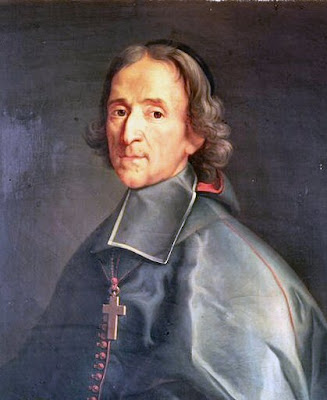 This is made quite clear in this remarkable letter to a Protestant correspondent:
Influenced by Quietism, some had great difficulty in understanding how Fénelon could honestly accept the infallibility of the Church while submitting to the condemnation by the Apostolic See, in 1699, of his work "Maxims of the Saints" (Explications des maximes des saints sur la vie intérieure), due to some of the affirmations which it contained. Could he still be viewed as a man of integrity? Cardinal Bausset describes in his biography of Fénelon the dramatic exchange between one convert and the Archbishop of Cambrai:
"The Church has not condemned pure love in condemning my book: that doctrine is taught in every Catholic church.' [Fénelon said]. But the expressions which I employed in explaining it were not proper for a doctrinal work. My book is worth nothing; I hold it as such; it was the miscarriage of my mind, and not the fruit of the piety of my heart. I do not wish that you should read it."
We may easily conceive what weight such candor must have added to the reasonings and proofs with which Fénelon supported the authority of the decisions of the Church. He must surely have felt, from his heart, the conviction of its infallibility, since he cited his own condemnation as a proof of the submission which was due to its authority.
Fénelon abhorred schism and separation from the Roman See. In his own submission to higher authority, he showed those he wanted to bring to the Church that he wanted them to convert fully, abandoning not only the doctrines, but also the attitudes of disunity, sectarianism, rebelliousness, disobedience, subversion, and revolutionary spirit that converts often bring with them into the Church.

Cambrai, September 11, 1708
I am very pleased, sir, to learn from you the effort you have dedicated in searching for the truth, despite your former predispositions. This honesty will garner you great blessings.
Nothing is as important as simplicity and sincere mistrust of one's own judgment. If each one would be occupied with prayer, recollection, charity, disregard for self, and relinquishing a vain reputation of mind and knowledge, all disputes would be soon appeased. Jesus Christ said to the Jews: "How can you believe, you who receive glory one from another, and who do not seek the glory which is from God alone?" [Jn. v, 44] He adds: "If any man do the will of him who sent me, he shall know, of the doctrine, whether it be of God, or whether I speak of myself." [Jn. vii, 17] ...
What men create schisms and heresies? They are the intelligent men who are curious, critical, full of their own talents, motivated by a fierce and pharisaic zeal for reform, disdainful, unruly, and overbearing: they may possess right habits, a stern and haughty courage, a bitter zeal against abuses, a relentless dedication to study and discipline; but you will not find in them neither gentleness, nor understanding for neighbor, nor patience, nor humility, nor true prayer. "O Father, Lord of heaven and earth," Jesus Christ exclaims, "I confess to thee, because thou hast hid these things from the wise and prudent, and hast revealed them to the little ones." [Mt. xi, 25] And he also says, "if the son of peace be there, your peace shall rest upon him." [Lk. x, 6]
I am, sir, most sincerely yours,
F. Arch. D. de Cambrai

