Showing posts with label Fontgombault and daughter houses. Show all posts
Showing posts with label Fontgombault and daughter houses. Show all posts
The Fire of Faith - Our Lady of Clear Creek video
May this new video by Clear Creek Abbey (Oklahoma) inspire you and yours to deepen your interest in monastic life:

Fontgombault Sermon for the Feast of Saint John the Baptist: Saint John, "the first Monk of the New Testament."

St. John the Baptist
(and Simple Profession of Monk)
Sermon of the Right Reverend Dom Jean Pateau
Father Abbot of Our Lady of Fontgombault
Fontgombault, June 24, 2024
Quis... puer iste erit?
What then will this child be?
(Lk 1:66)
Dear Brothers and Sisters,
My dearly beloved Sons,
and most especially you, who are going
to take your vows of religion,
This question sounds trite, commonplace, as the still virgin leaf of a new life has just received its first lines. Yet, if the people from the nearby country ask themselves this question, it is because the events surrounding the Precursor’s birth are a token of God’s special benevolence towards this child: “For the hand of the Lord was with him.” (Lk 1:66.)
Fontgombault Sermon for Corpus Christi: "Communion after communion, our hearts resemble more and more Christ’s Heart."

Homily of the Right Reverend Dom Jean Pateau
Father Abbot of Our Lady of Fontgombault
Fontgombault, May 30, 2024
Fac cor nostrum secundum Cor tuum.
Make our hearts like Thine.
(Verse from the Litanies of the Sacred Heart)
Make our hearts like Thine.
(Verse from the Litanies of the Sacred Heart)
Dear Brothers and Sisters,
My dearly beloved Sons,
The mystery of the Most Holy Trinity, which we celebrated last Sunday, rounded off the liturgical cycle dedicated to the Christian mysteries. Two feasts, however, come and complete this cycle: Corpus Christi, and the feast of the Sacred Heart. The former dates back to the 13th century. The latter is in line with the development of the devotion to the Heart of Jesus during the Middle Ages, and in the wake of the apparitions of Paray-le-Monial between 1673 and 1675. The feast of the Sacred Heart was extended to the universal Church by Pius IX in 1856.
Fontgombault Sermon for the Ascension of the Lord, 2024: "Each man is called to kindle his own lamp."

Sermon of the Right Reverend Dom Jean Pateau
Father Abbot of Our Lady of Fontgombault
Fontgombault, May 9, 2024
Et eritis mihi testes.
You shall be witnesses unto me.
(Acts 1:8)
Dear Brothers and Sisters,
My dearly beloved Sons,
After encountering Christ risen and victorious over death during the first apparitions to the disciples, the Church invited us a few weeks ago to ponder on the figure of the Good Shepherd. (Cf. Jn 10.) The Good Shepherd is He who leads His sheep so that “they may have life, and have it abundantly.” (Jn 10:10.) He is for them the door: If any one enters by Me, he will be saved, and will go in and go out, and find pasture. (v. 9.)
Unlike the hireling, the Good Shepherd gives his life for His sheep. He knows His own sheep and His own sheep know Him. As the parable of the lost sheep attests, He doesn’t hesitate to leave the fold to go after the one which is lost (Lk 15:3-7). The vocation of the Good Shepherd is expressed by the words he utters: “I am the way, and the truth, and the life.” (Jn 14:6.)
Fontgombault Sermon for the Annunciation: Mary's "Yes" is the Greatest Moment in Human History
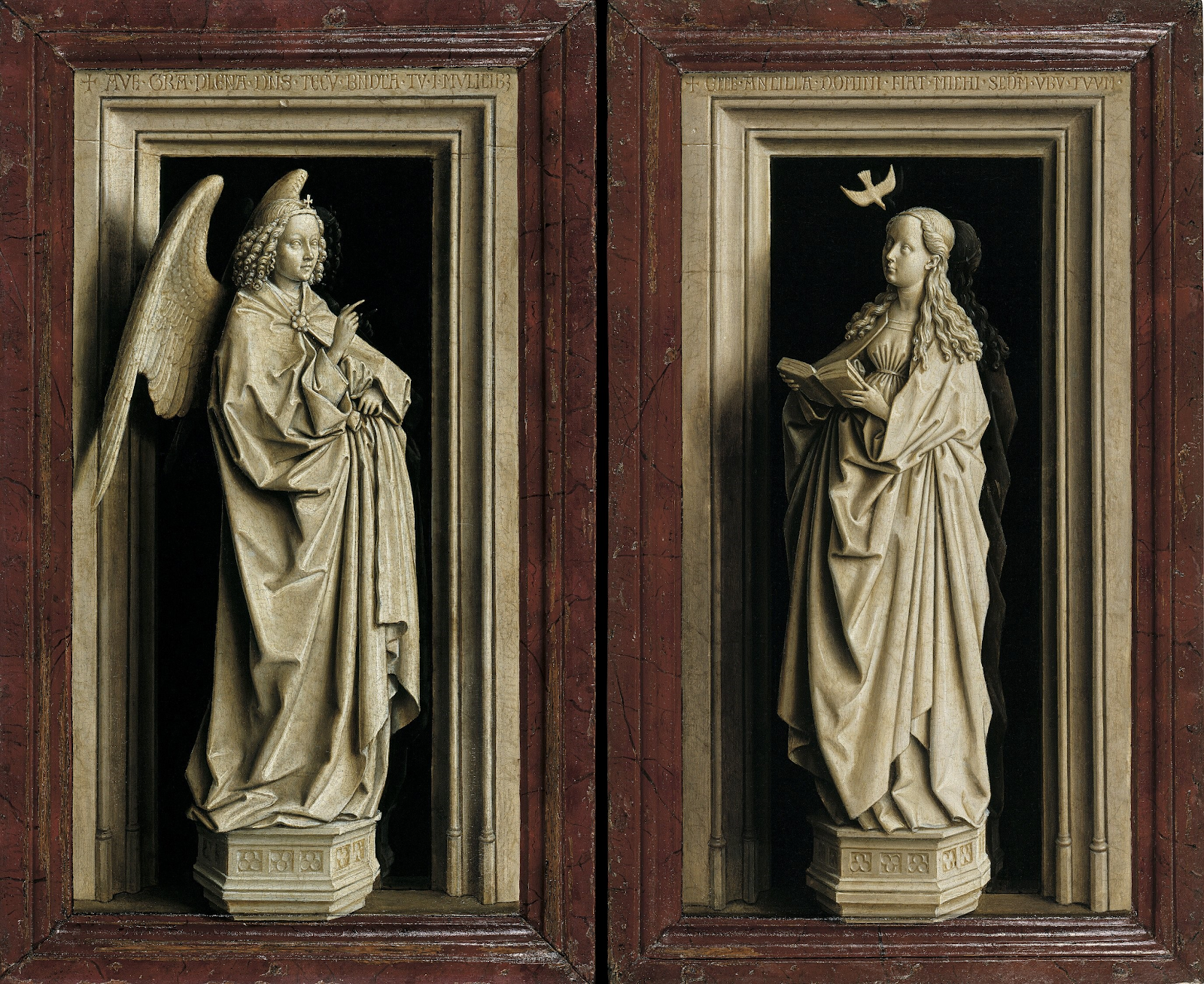
Annunciation
and Simple Profession of Br. Jean-François Charlebois and of Br. Hernane Pereira
Sermon of the Right Reverend Dom Jean Pateau
Father Abbot of Our Lady of Fontgombault
Fontgombault, March 25, 2023
Dear Brothers and Sisters,
My dearly beloved Sons,
and most especially you, who are now going to make your religious vows,
Monks like to pronounce theirs vows and promises underMary’s eyes. They do that in the hope that these eyes will never turn away from their everyday life, and they can do it with a firm trust. How could a mother, the Mother par excellence, turn away from those she has received as children, for we are truly her children?
What then is this unique motherhood?
St. Irenaeus wrote in his Treatise against Heresies:
Fontgombault Ash Wednesday Sermon: "We still have a path of conversion to tread, strengthened by the reception of sacraments."
Ash Wednesday
Sermon of the Right Reverend Dom Jean Pateau
Abbot of Our Lady of Fontgombault
Fontgombault, February 22, 2023

Miserere mei, Deus.
Have mercy on me, O God.
(Ps 56:2)
Dear Brothers and Sisters,
My dearly beloved Sons,
Mankind’s moral decadence, and as a consequence the
weakening, and even the disappearance, of the respect
due to each human life, scandals endlessly shaking the most respectable institutions, all kinds of diseases and viruses, all of
these make a major contribution to a diffuse feeling of deep desperation and disquiet. Is human condition today enviable? Can
man be loved? Can he love himself? Would his only outlet be
to join those whose sole religion is the protection of nature, and
the absolute preservation of animals until their natural death?
Indeed, can man still be loved?
CHRISTMAS: Fontgombault Sermon for Christmas Day Mass: "The Child of the crib is truly God."
Christmas Day Mass
Sermon of the Right Reverend Dom Jean Pateau
Abbot of Our Lady of Fontgombault
Fontgombault, December 25th, 2022

Et Verbum caro factum est.
And the Word was made flesh. (Jn 1:14)
Dear Brothers and Sisters,
My dearly beloved Sons,
Since last night the liturgy has been taking us with a dis-concerting easiness from a poor stable to the most unfathomable mysteries of the Trinity. The birth according to the flesh of a child in a stable rubs shoulders with the eternal generation of the second person of the Trinity in the bosom of the Father. The angels make themselves close to the shepherds. Very soon, we shall learn that a star has convoked three kings in the presence of the Divine Child. As the Word of God takes flesh in our earth, the laws of nature seem to be topsy-turvy.
What is then the divine plan carried out under our eyes? It is a plan of salvation, granted to men by God “not by the works of justice which we have done, but according to His mercy.” During Advent, the Church kept asking for this mercy, in the school of the people of the Old Testament: “Ostende nobis, Domine, misericordiam tuam. — Show us, O Lord, Thy mercy.”
CHRISTMAS: Fontgombault Sermon for Christmas Midnight Mass
Christmas
Midnight Mass
Sermon of the Right Reverend Dom Jean Pateau
Abbot of Our Lady of Fontgombault
Fontgombault, December 25th, 2022

Natus est vobis hodie Salvator.
This day is born to you a Savior. (Lk 2:11)
Dear Brothers and Sisters,
My dearly beloved Sons,
It is said that one of the chaplains of Elizabeth II, the late Queen of England called to God a few months ago, was once quite surprised when she told him that she hoped Christ would come back on earth during her lifetime. Nonplussed, he asked, “Why?” The Queen’s answer was immediate, revealing the depth of her spiritual life, and the outcome of a thinking process where all the elements had been carefully weighed up: “For I would like so much to lay down my crown at His feet.”
As, after chanting the genealogy of Our Lord Jesus Christ taken from St. Matthew’s gospel, we have just laid the Child Jesus down into the crib, as the overflowing mercy coming down from Heaven is once again poured out over mankind in the gift of the Emmanuel, God with us, are we ready to go to the crib, there to encounter the Lord? How shall we go there? Shall we lay down there our crowns? And which crowns?
The introit of tonight’s Mass is taken from Psalm 2, and begins with a question:
Why have the Gentiles raged, and the people devised vain things? The kings of the earth stood up, and the princes met together, against the Lord, and against his Christ.
Interview with New Abbot of Triors, 35: Benedict XVI told me that, "in the present confusion, the important thing is to live according to the tradition." "Future belongs to those who esteem brothers with other liturgical sensibilities."

Triors is a beautiful village outside of Romans-sur-Isère, in the Drôme department in Southeast France, not far from where the Rhône and Isère rivers meet. In the 1980s, the heir of a beautiful property including a chateau and the remains of an old abbey decided to donate it for the foundation of a new daughter-house of Fontgombault.
Notre Dame de Triors (Our Lady of Triors) is one of the most beautiful new abbeys of France and, following the lead of Fontgombault, has always kept the Traditional Mass. Its work in the recording of the entire Gregorian music of the liturgical year in a CD collection made it very famous among many Traditional Catholics worldwide.

Just recently, the community elected their new Abbot, Dom Louis Blanc, just 35 years old -- a living example of how Traditionalist families are revitalizing the Church in France, as a smaller but much more vibrant and faithful church. Dom Blanc granted an interview to the latest edition of French Catholic monthly La Nef:
Triors: a path marked out by the centuries
La Nef
December 2022
Interview by Christophe Geffroy
Triors was founded by Fontgombault in 1984 and erected as an abbey in 1994 with Dom Hervé Courau as its first Abbot. Elected Father Abbot of Triors on November 30, 2021, Dom Louis Blanc, 35 years old, received the abbatial blessing on February 2, 2022.
La Nef - Could you first tell us about your itinerary and the reasons for your entry into Triors?
Fontgombault Sermon for the Ascension of the Lord, 2022: The Ascension Message is Believing and Transmitting

Sermon of the Right Reverend Dom Jean Pateau
Father Abbot of Our Lady of Fontgombault
Fontgombault, May 26, 2022
Dear Brothers and Sisters,
My dearly beloved Sons,
Although many of our contemporaries will doubtless consider the feast of the Ascension as the traditional opportunity for a much-appreciated extended weekend [Rorate Note: the Ascension is a public holiday in France], it is also quite clear that, as compared with the solemnities of Easter and Pentecost, for many Christians the Ascension holds but a secondary rank.
Fontgombault Sermon for the First Sunday in Advent: "What can be feared of a Child?"
First Sunday in Advent

Sermon of the Right Reverend Dom Jean Pateau
Father Abbot of Our Lady of Fontgombault
Fontgombault, November 28, 2021
Appropinquat redemptio vestra.
Your redemption draweth nigh.
(Lk 21:28)
Dear Brothers and Sisters,
My dearly beloved Sons,
Aren’t we quite astonished to hear, on the morning of this first Sunday in Advent, the opening day in the liturgical year, the reading of the end of St. Luke’s gospel? Why doesn’t rather the Church meditate on the gospel texts narrating the expectation of the Divine Child? Why doesn’t she draw from the numerous texts in the Old Testament announcing a Messiah?
The very theme of the chosen passage is surprising, too.
Fontgombault Sermon for the Dedication of the Abbey Church: "The Church is buffeted by all the waves, but she doesn’t founder."

Dedication of the Abbey Church
Homily of the Right Reverend Dom Jean Pateau
Father Abbot of Our Lady of Fontgombault
Fontgombault, October 12, 2021
Ecce nova facio omnia.
Behold, I make all things new.
(Ap 21:5)
Dear Brothers and Sisters,
My dearly beloved Sons,
The feast of the Dedication in the liturgical year belongs neither to the temporal cycle, which goes through the mysteries in Christ’s life, the times of Advent, Christmas, Epiphany, Lent, Easter and Pentecost, nor to the Sanctoral cycle, in which the Church invites her children, through a public worship, to imitate the life of those who have lived their lives listening to grace, and according to God’s law, and whom she has proclaimed saints.
Fontgombault Sermon for the Feast of the Most Holy Rosary: "Mary, Eternal Fountain of Love"
Sermon of the Right Reverend Dom Jean Pateau
Abbot of Our Lady of Fontgombault
Fontgombault, October 7, 2021

Fiat mihi secundum verbum tuum.
Be it done to me according to thy word.
(Lk 1:38)
Dear Brothers and Sisters,
My dearly beloved Sons,
The richness of the feast of the Holy Rosary, which unfolds both in the texts of the Mass and in those of the office, leads us to ponder all the mysteries of the Lord’s life through Mary’s eyes and heart. Pius XII wrote on August 7th, 1947, to the members of a congress which took place in Paris, and then in Lisieux between September 23rd and 30th, on the occasion of the fiftieth anniversary of St. Thérèse of the Child Jesus:
Whereas in the order of nature a child, as he grows, should learn to become self-sufficient, in the order of grace, the child of God, as he grows, understands ever better that he will never be able to be self-sufficient, and that he should live in a superior docility and dependence.
Who might forget that if Mary gave birth without pain to Jesus in the Bethlehem stable, the all-sorrowful Virgin received all of us as her children and gave birth to us at the foot of the Cross: “Woman, behold thy son… behold thy mother.” (Jn 19:26-27) John the Evangelist, to whom these words were addressed, adds consequently: “And from that hour, the disciple took her to his own.”
Fontgombault Sermon for the Nativity of the Blessed Virgin Mary: "Mary, Mother of Him Who is the Wisdom, offers Him to the world."
Nativity of Our Lady & Perpetual Promise of an Oblate
Sermon of the Right Reverend Dom Jean Pateau
Abbot of Our Lady of Fontgombault
Fontgombault, September 8, 2021
Dear Brothers and Sisters,
My dearly beloved Sons,
And most especially you, who are going to pronounce your perpetual promise of regular oblate,
My dearly beloved Sons,
And most especially you, who are going to pronounce your perpetual promise of regular oblate,

On this day dedicated to the Nativity of Our Lady, the readings taken from the Book of Proverbs and the Gospel according to St. Matthew are somewhat surprising. The texts give us two outlooks, one on the genesis of the universe, the other one on Jesus’ genealogy, and yet Mary, the subject of the feast, is barely present, just as a passing mention.
We would have expected her genealogy from St. Matthew, and especially from St. Luke. Nothing of the sort. Beginning with Abraham, the Father of all believers, the Evangelist lists in fact the genealogy of Jesus, the Christ, son of David, son of Abraham. He bears witness to God’s faithfulness to the promise made so long ago to the Father of all believers: not only will his seed be as numerous as the sand on the seashore, but from it will be born the Messiah.
After this long list, Joseph is acknowledged as begotten by Jacob, but also as “the husband of Mary, of whom was born Jesus, who is called Christ.” In this last link in the chain running through the centuries of the chosen people’s history, there is a break. Jesus is begotten of Mary, not of Joseph. The Messiah is son of Joseph by adoption only, receiving from his adoptive father the Davidic and kingly sonship. This break emphasizes Mary’s very special role. The Virgin of Nazareth is pregnant with the Word of God according to human nature. She conceives not by the means of a human seed, but by the action of the Holy Spirit.
This special place in the work of Redemption invites us to remember Mary’s Immaculate Conception, through which God built for Himself a most fitting place for Him to put on a body. Conceived nine months ago, we marvel today before the one-day old Virgin, who is already the bearer of the whole mankind’s hope.
Fontgombault Sermon for the Feast of Saint Benedict in Summer: "We should take note of our social regression: God has been eliminated from the States and societies."

Sermon of the Right Reverend Dom Jean Pateau
Abbot of Our Lady of Fontgombault
Fontgombault, July 11, 2021
Gaudeamus.
Let us rejoice.
Let us rejoice.
Dear Brothers and Sisters,
My dearly beloved Sons,
On this Sunday, from the very first word of the introit, the Church invites us to rejoice. Is that so astonishing? Sunday is quintessentially a day of joy. After a week of work, man is invited by God Himself to rest. Such is the commandment, or more exactly the word, a word of love, which God addressed on Mount Sinai to the people He had just brought out of Egypt:
"Six days shalt thou labour, and shalt do all thy works. But on the seventh day is the Sabbath of the Lord thy God: thou shalt do no work on it, thou nor thy son, nor thy daughter, nor thy manservant, nor thy maidservant, nor thy beast, nor the stranger that is within thy gates. For in six days the Lord made heaven and earth, and the sea, and all things that are in them, and rested on the seventh day: therefore the Lord blessed the seventh day, and sanctified it." (Ex 20:9-11)
God had just set His people free from Pharaoh, and He did not want greed for lucre to shackle it, and lead it through a ceaseless frenzy of work to forget its Maker. The seventh day therefore became the day on which man would remember that he had been freely liberated by God from bondage.
For Christians, Sunday has been enriched with a new gift. Man, who from the very beginning had rebelled against God, had to be liberated from another form of bondage, a deeper, more universal, and multifaceted one, that is, sin. Man needed to be reconciled with God, with the design God had prepared in His immense love for His so puny creature: eternal beatitude, that is to say, life in communion with God, the vision of God for eternity. Such is the reward of rewards, to which God in His goodness calls us.
Fontgombault Homily for the Feast of Saints Peter and Paul: "Knowing is not enough. Proclaiming is not enough. We have to offer our own life for Christ."
Sermon of the Right Reverend Dom Jean Pateau
Father Abbot of Our Lady of Fontgombault
Fontgombault, June 29, 2021

Tu es Petrus, et super hanc petram ædificabo Ecclesiam meam.
Thou art Peter, and upon this rock I will build My church.
(Mt 16:18)
Dear Brothers and Sisters,
My dearly beloved Sons,
My dearly beloved Sons,
Acknowledging Christ, this is the concern for truth that seems to prompt the question the Lord asks of His apostles, and especially of Peter, who answers it in the name of all. The answer is not that obvious, as witnessed by the various opinions several disciples report concerning the Son of man’s identity: John the Baptist, Elijah, Jeremy, or one of the prophets. Acknowledging the Son of man also means appropriating a mission. St. Peter’s confession in Caesarea marks a milestone in the progressive revelation Christ makes of His imminent Passion and resurrection:
From that time, Jesus began to shew to His disciples, that He must go to Jerusalem, and suffer many things from the ancients and scribes and chief priests, and be put to death, and the third day rise again. (Mt 16:21)
Confessing what the Son of man is, is not sufficient, and Peter has yet to understand it. Despite the fact that he proclaims Christ’s divinity, “Thou art Christ, the Son of the living God!” (Mt 16:16), Peter doesn’t seem to be ready to follow the path the Lord is showing him. He doesn’t under-stand the Lord’s mission, and consequently, he won’t be able to accept his own mission, in the Christ’s footsteps. Faced with the scandal of the Cross, Peter rebels, takes Christ aside, and forcefully rebukes Him:
Fontgombault Sermon for Corpus Christi 2021: "God’s table is plentiful. God gives Himself as a food. God lives in us, and we live in God. "

CORPUS CHRISTI
Sermon of the Right Reverend Dom Jean Pateau
Abbot of Our Lady of Fontgombault
Fontgombault, June 3, 2021
Dear Brothers and Sisters,
My dearly beloved Sons,
On Maundy Thursday evening, the Church commemorated the institution of the Eucharist, within the broader framework of the Paschal triduum events: institution, death and resurrection of the Lord.
Today, in the wake of the particular revelations made to St. Juliana, an Augustine sister of the convent and leper house of Mont-Cornillon, during the 13th century, the Church invites us more specially to consider this mystery as the place of communion with the Lord and adoration of Him. When she was an adolescent, Juliana used to be strongly drawn by the Eucharistic devotion. She was frequently favored with mystical visions. For instance, she saw the moon blazing with light, but incomplete, crossed diametrically by a dark stripe separating it into two equal parts.
Benedict XVI commented, during the general audience of November 17th, 2010:
The Lord made her understand the meaning of what had appeared to her. The moon symbolized the life of the Church on earth, the opaque line, on the other hand, represented the absence of a liturgical feast for whose institution Juliana was asked to plead effectively: namely, a feast in which believers would be able to adore the Eucharist so as to increase in faith, to advance in the practice of the virtues, and to make reparation for offenses to the Most Holy Sacrament.
Juliana accepted this mission, and was helped by Blessed Eva of Liege, a recluse.
Fontgombault Sermon for Pentecost: If God rests in a heart, then this heart rests in God, and it is at peace.

Homily of the Right Reverend Dom Jean Pateau
Abbot of Our Lady of Fontgombault
Fontgombault, May 23rd, 2021
Illumina cor hominum.
Illuminate men’s hearts.
(Hymn of Wednesday Vespers)
Illuminate men’s hearts.
(Hymn of Wednesday Vespers)
Dear Brothers and Sisters,
My dearly beloved Sons,
The feast of Pentecost, through the great richness of its texts, and the outstanding beauty of its melodies, evokes with a great liturgical simplicity the coming of the Holy Spirit on the Apostles, gathered in the Cenacle with Mary. A mighty wind fills the whole house. Tongues as of fire appear, part themselves, and sit upon the head of each of the disciples. These begin to speak with different tongues, according to what the Holy Spirit gives them to speak.
Obviously, these phenomena are not limited to the sole room of the Cenacle. A crowd gathers outside, drawn by the noise, and curious to see what is happening. Inhabitants of Jerusalem, devout Jews coming from all the nations, are bewildered because all of them can hear the words of the disciples in their own tongue. They bear witness to what the disciples are proclaiming, “the wonders of God.”
After having meditated on the Lord’s resurrection, the cause of our salvation, the events taking place this morning in the Cenacle should lead us to desire a new Pentecost. The liturgy, for that matter, urges us to call for it, “Veni, Come.”
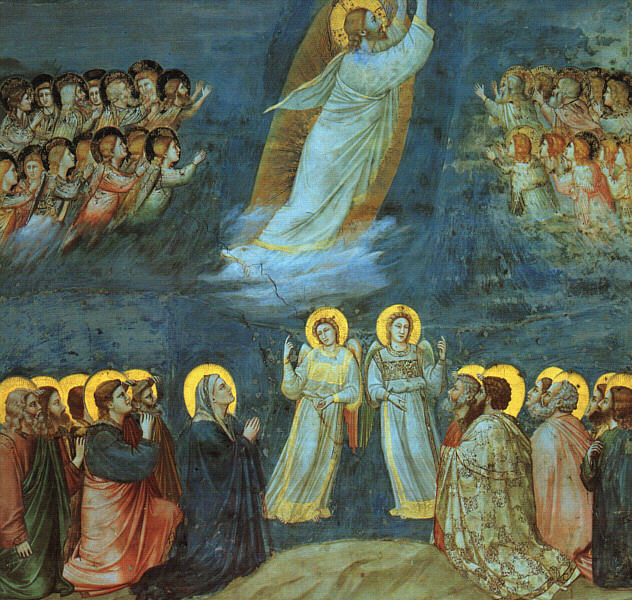
Fontgombault Sermon for the Ascension: "In the name of pseudo-synodal approaches, members of the Church stray away from the One True Shepherd"
Sermon of the Right Reverend Dom Jean Pateau
Abbot of Our Lady of Fontgombault
Fontgombault, May 13, 2021
Dear Brothers and Sisters,
My dearly beloved Sons,
When we entered the Paschal mystery’s celebration, on
Maundy Thursday evening, we heard the last, intimate words the Lord addressed to His disciples, as all of
them were going to forsake their Master and leave Him to
His passion and death.
Today, we are witnessing another separation. The times
have changed. The guards have receded. The disciples would
like to remain with their Master, and keep Him with them.
The fact that they are gazing intently into the sky as He goes
away bears witness to that. Yet, the Lord now has to depart.
Fontgombault Sermon for Easter Day 2021: "The tomb is empty. Will the same happen to the tombs of our lives, of our miseries?"
MASS FOR EASTER DAY
Sermon of the Right Reverend Dom Jean Pateau
Father Abbot of Our Lady of Fontgombault
Fontgombault, April 4, 2021

Rich and poor, exult together. You who have abstained, and you who were neglectful, honor this day. You who have fasted, and you who have not fasted, rejoice today… All of you, enjoy the feast of faith… Let no one bewail his misery, for our Kingdom has appeared. Let no one weep on his sins, for forgiveness has risen from the tomb. Let no one fear death, for the Savior’s death has set us free. Death held Him, and He has smothered death; He descended into hell, and He has despoiled it… Hell, where is thy victory? Christ is risen, and the devils are fallen. Christ is risen, and the angels rejoice. Christ is risen, and life reigns.
Dear Brothers and Sisters,
My dearly beloved Sons,
By these words, taken from the Byzantine rite of the Easter Vigil, St. John Chrysostom, archbishop of Constantinople, addressed his people “on this holy and radiant
day of Christ our God’s glorious and salutary resurrection.” Whoever we may be, whatever our lives may be, let us
implore the forgiveness Christ offers us through His victory over evil, and over death. Let us rise with Him and enjoy the feast of faith. These words divide mankind into two parts. Every man who acknowledges he needs a savior receives them for his salvation. Every man who is self-sufficient rejects them for his ruin.
On this holy Easter day, let us remember the parable of the prodigal son, also called the parable of the merciful father. Among the two sons, the younger first demands his
share of the estate, then leave his father’s home to live his own life. He squanders all his goods, and then conceives the wish to go back to his father, not as a son, but as a hired servant. From afar, his father catches sight of him. He goes and meets him, forgives him, and orders his homecoming to be celebrated. The elder son comes back from the field, and having been informed of the reason for the celebration, is greatly angered and refuses to join the feast.
Neither the elder son nor the younger had understood the secret of their father’s heart, mercy. The elder, out of a narrow-minded fidelity to his education, was expecting from his father nothing but justice. He was righteous, and deemed himself not to need mercy. The younger son had squandered away his goods, his inheritance, and above all, his education. Aware of his own misery and responsibility, he could only claim to be condemned.
As to the father, he was eager to share his secret, his mercy, with both of his children.
Subscribe to:
Posts (Atom)