Rorate Caeli
Showing posts with label Blessed Virgin Mary. Show all posts

SSPX and Rome - Toward a Marian Hermeneutic for Modernity (and Vatican II) to Preserve Church Unity

A guest article by Dr. Michaël Bauwens, University of Antwerp. As usual, we share this essay for the benefit of wider and deeper conversation, not as an official Rorate editorial position. ~PAK


The rising tensions concerning the scheduled episcopal consecrations by the SSPX and the announced ensuing excommunications by the Vatican have provoked a range of reactions – from pleas for ecclesial unity, obedience, leniency and pragmatism, to the intricacies of canon law, all the way to ideologically hardened hearts. These are pressing and legitimate ecclesial worries indeed, but the current situation shows that the roots of the problem are really doctrinal and theological, and are still far from being resolved.

Is Mary Co-redemptrix? Guest article by theologian Antonio Francés

As is well known, the Prefect of the Congregation for the Doctrine of the Faith recently published the document Mater populi fidelis. It states that “it is always inappropriate to use the title ‘Co-redemptrix’ to define Mary’s cooperation” (n. 22, italics in the original). The reasons given in numbers 17-22, however, are quite inadequate. They are limited, in short, to affirming that Christ has a unique place in Redemption and that “reverent caution [is needed] whenever proposing any form of possible cooperation with him in the realm of Redemption” (n. 20). In other words, the core of the reasons is the denial that there is any participation in the redemptive work. Paragraph 22 gives another reason: “When an expression requires many, repeated explanations to prevent it from straying from a correct meaning, it does not serve the faith of the People of God and becomes unhelpful.”

Fontgombault Sermon for the Annunciation: Mary's "Yes" is the Greatest Moment in Human History

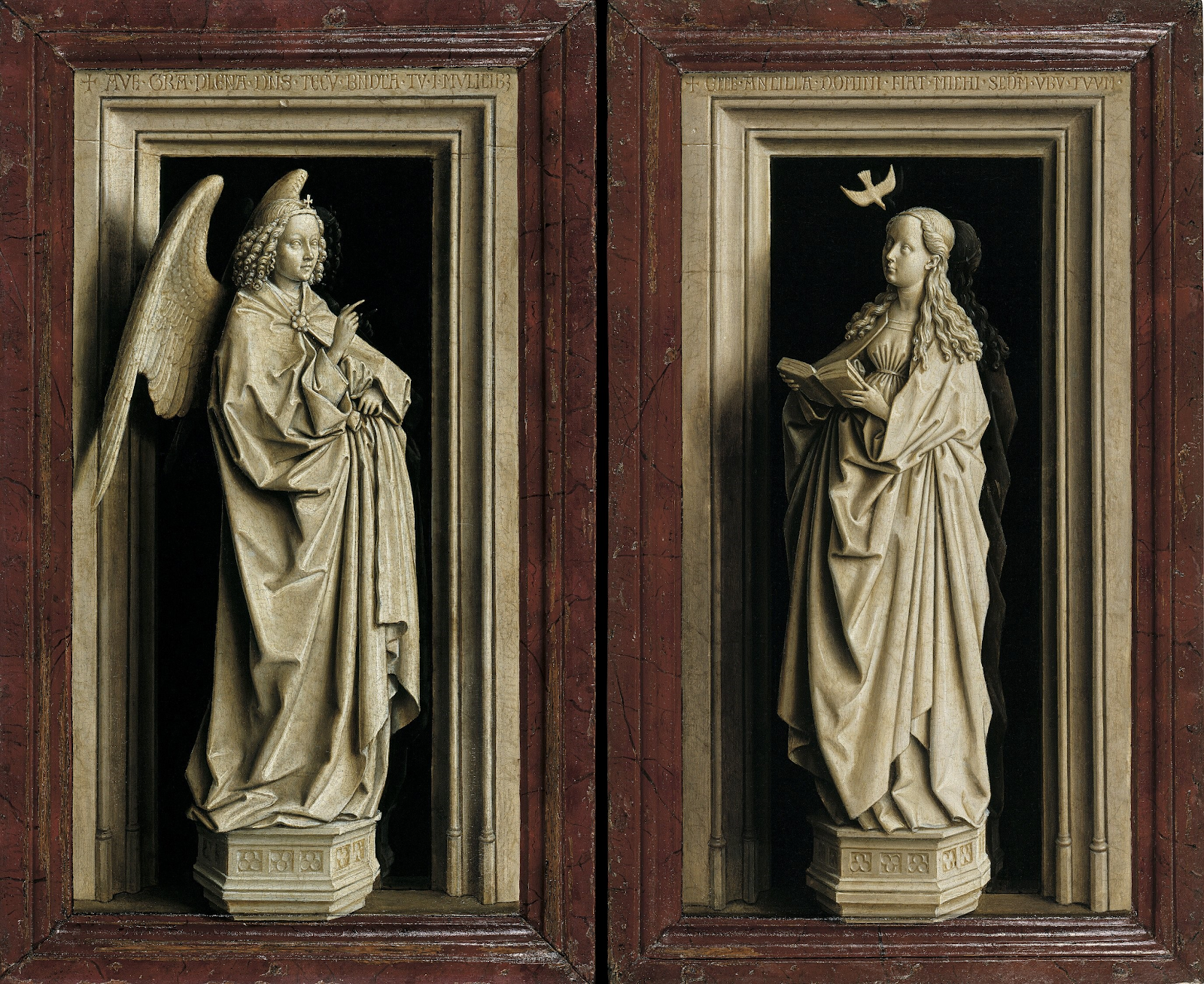
Annunciation

and Simple Profession of Br. Jean-François Charlebois and of Br. Hernane Pereira


Sermon of the Right Reverend Dom Jean Pateau
Father Abbot of Our Lady of Fontgombault
Fontgombault, March 25, 2023


Dear Brothers and Sisters,

My dearly beloved Sons,

and most especially you, who are now going to make your religious vows,


Monks like to pronounce theirs vows and promises underMary’s eyes. They do that in the hope that these eyes will never turn away from their everyday life, and they can do it with a firm trust. How could a mother, the Mother par excellence, turn away from those she has received as children, for we are truly her children? 


What then is this unique motherhood?


St. Irenaeus wrote in his Treatise against Heresies:

Fontgombault Sermon for the Nativity of the Blessed Virgin Mary: "Mary, Mother of Him Who is the Wisdom, offers Him to the world."

Nativity of Our Lady & Perpetual Promise of an Oblate


Sermon of the Right Reverend Dom Jean Pateau
Abbot of Our Lady of Fontgombault
Fontgombault, September 8, 2021
Dear Brothers and Sisters,
My dearly beloved Sons,
And most especially you, who are going to pronounce your perpetual promise of regular oblate,


On this day dedicated to the Nativity of Our Lady, the readings taken from the Book of Proverbs and the Gospel according to St. Matthew are somewhat surprising. The texts give us two outlooks, one on the genesis of the universe, the other one on Jesus’ genealogy, and yet Mary, the subject of the feast, is barely present, just as a passing mention.

We would have expected her genealogy from St. Matthew, and especially from St. Luke. Nothing of the sort. Beginning with Abraham, the Father of all believers, the Evangelist lists in fact the genealogy of Jesus, the Christ, son of David, son of Abraham. He bears witness to God’s faithfulness to the promise made so long ago to the Father of all believers: not only will his seed be as numerous as the sand on the seashore, but from it will be born the Messiah.

After this long list, Joseph is acknowledged as begotten by Jacob, but also as “the husband of Mary, of whom was born Jesus, who is called Christ.” In this last link in the chain running through the centuries of the chosen people’s history, there is a break. Jesus is begotten of Mary, not of Joseph. The Messiah is son of Joseph by adoption only, receiving from his adoptive father the Davidic and kingly sonship. This break emphasizes Mary’s very special role. The Virgin of Nazareth is pregnant with the Word of God according to human nature. She conceives not by the means of a human seed, but by the action of the Holy Spirit. 

This special place in the work of Redemption invites us to remember Mary’s Immaculate Conception, through which God built for Himself a most fitting place for Him to put on a body. Conceived nine months ago, we marvel today before the one-day old Virgin, who is already the bearer of the whole mankind’s hope.

De Mattei: The Assumption: a Dogma for Our Times

 Roberto de Mattei 
Corrispondenza Romana
August 19, 2020


Waiting for the Virgin in Heaven  (Michael Willman 1681). 

Seventy years ago, on August 15, 1950, the dogma of the Assumption in Heaven of the Blessed Virgin Mary was proclaimed. The promulgation of the dogma was decreed on November 1, 1950, with the Apostolic Constitution  Munificentissimus Deus, but Pius XII made the announcement on August 15, the day  in which, from time immemorial, the Feast of the Assumption has been celebrated.

The Assumption is the transit of the Blessed Virgin, body and soul, from earth to the celestial life.  This truth of Faith springs from the Divine Maternity and virginal integrity of Mary’s Body. Mary being the Mother of God and immune from original sin, it was not fitting that She be subject to the corruption of death, which is a punishment for sin. The dogma of the Immaculate is the premise, the Assumption is the conclusion of a coherent vision of the Mother of God’s privileges.

 “Christ – explains Pius XII in the encyclical proclaiming the dogma -   overcame sin and death by his own death, and one who through Baptism has been born again in a supernatural way has conquered sin and death through the same Christ. Yet, according to the general rule, God does not will to grant to the just the full effect of the victory over death until the end of time has come.” [4]

As a consequence of original sin, also the bodies of the just dissolve after death, and only on the last day will each be reunited to their own glorious soul. “Now God has willed that the Blessed Virgin Mary should be exempted from this general rule. She, by an entirely unique privilege, completely overcame sin by her Immaculate Conception, and as a result she was not subject to the law of remaining in the corruption of the grave, and she did not have to wait until the end of time for the redemption of her body.” [5]

On October 30, two days before the definition of the dogma, Pius XII, had the extraordinary grace of seeing the same spectacle of the sun spinning in the heavens like a fiery globe, which 70,000 pilgrims had witnessed in Portugal more than thirty years before, on October 13, 1917.  “The “dance of the sun” was repeated again right in front of Pope Pacelli on October 31 and November 8.  For the Pontiff, the prodigy seemed to be the heavenly seal on the recently proclaimed dogma and an encouragement to develop the great Marian Movement, which, after the Immaculate Conception and the Assumption, cried out for the proclamation of the Mediation of Mary and the Consecration of Russia to Her Immaculate Heart.

Anno Domini MMXX - Notes for the Year: January 1st with 5th-Century Mosaics at Saint Mary Major


The divine plan for the world’s salvation included the existence of a Mother of God: and as heresy sought to deny the mystery of the Incarnation, it equally sought to deny the glorious prerogative of Mary. Nestorius asserted that Jesus was only man; Mary consequently was not Mother of God, but merely Mother of a Man called Jesus. This impious doctrine roused the indignation of the Catholic world. The East and West united in proclaiming that Jesus was God and Man, in unity of Person; and that Mary, being his Mother, was, in strict truth, Mother of God.’

Fontgombault Sermon for the Immaculate Conception: "Rorate cæli desuper" in our Troubled Times!

IMMACULATE CONCEPTION


Sermon of the Right Reverend Dom Antoine Forgeot
Abbot Emeritus of Our Lady of Fontgombault
(Fontgombault, December 8, 2019)

Deus caritas est.
God is love.
(1 Jn 4:8)

Dear Brothers and Sisters,
Dearly beloved Sons of the absent Abbot,

From the outset, wrote the pious and learned Cardinal Journet, God has loved the human race “with a mad love, to the point that He wanted to give Himself to us in the heavenly vision” (1). We know how this plan was thwarted, yet not fully destroyed, by the sin of our first parents, a sin the scars of which we are still bearing. The redeeming Incarnation of the Word of God, the second Person in the Holy Trinity, is the greatest manifestation of the love of God for us men:

For God so loved the world, as to give His only begotten Son: […] that the world may be saved by Him. (Jn 3:16-17)

The whole history of the chosen people is marked by an expectation for the salvation that God had, in His mercy, foretold. He had even, in a mysterious way, involved in this salvation “the woman”, who was none other than She whose Immaculate Conception we are celebrating today, Mary, the All-Holy Mother of God.

The Immaculate Conception


“Some people are so foolish they think they can go through life without the help  of the Blessed Virgin. ” St. Padre Pio

Feast of the Divine Maternity — or of Papa Roncalli?

Today, October 11, is a perfect illustration of the basic problem of the Catholic Church in the 20th century.

In 1931, Pope Pius XI instituted on October 11 the feast of the Divine Maternity of the Blessed Virgin Mary, to commemorate the 1500th anniversary of the Council of Ephesus, which had bestowed on her the glorious title Theotokos or God-bearing-One. This feast was placed on October 11. Thus, it’s not an ancient feastday (as neither was Christ the King, instituted by the same Pius), but fits into that slow and loving process of amplification by which the traditional liturgy has been enriched over twenty centuries with ever-new facets of devotion.

Pope John XXIII comes along and decides to open the Second Vatican Council on October 11, precisely because it was the feast of the Divine Motherhood of Our Lady.

Fast-forward to after the Council: Bugnini’s Consilium decides to abolish the feast and to conflate it with January 1st, which had been the Octave of Christmas and the Circumcision of Christ, but which would now be styled “the Solemnity of Mary Mother of God.” Lots of busy scissors and paste...

And then along comes Pope Francis, who canonizes John XXIII and declares that October 11 will be HIS feastday.

So, hey presto!, October 11 has shifted from honoring the deepest mystery of the Virgin Mary  her being the Theotokos  to honoring Vatican II’s architect as elevated by the Council’s mutant progeny, Jorge Bergoglio. As Ratzinger said in a different context, we now celebrate ourselves and our achievements rather than the mightiest works of God.

This is the kind of thing I had in mind when I maintained that the modern Church is characterized by a Nietzschean “transvaluation of all values.”

It also seems a haunting coincidence (but there are no coincidences under Divine Providence) that Pope Francis has been reported this week by Scalfari to have denied the divinity of Our Lord Jesus Christ, making Bergoglio a sort of Nestorian (at best), with Our Lady being demoted to Christotokos, Christ-bearer, as she is for Protestants who refuse her the august title “Mother of God.” Neither the Pope nor the Vatican is willing to confront Scalfari for egregious lies or misrepresentations or amnesia; instead, the the usual non-denial denial has been issued.  Unlike his predecessor Pius XI, who cared enough about the dogmatic formulation of Ephesus to institute a feast in commemoration of its principal definition, the current Pope said two days ago, in a homily painfully reminiscent of the anti-theological mentality of the 1970s: “Do I love God or dogmatic formulations?”

The silver lining on this otherwise dark cloud is that, in spite of everything that has transpired, despite all the wickedness in high places, October 11 continues to this day to be celebrated as the feast of the Divine Maternity, in all communities and parishes that avail themselves of the traditional Missale Romanum. The feast has not perished; it has merely been eclipsed, and it will return in splendor to illuminate the Church after this night of self-celebration has passed.

Fontgombault Sermons for the Assumption: Vow of Louis XIII; and Mass of the Day - "All want to question the Dogmas of the Church, but no one is in doubt about the dogmas of democracy."

The Right Reverend Dom Jean Pateau
Father Abbot of Our Lady of Fontgombault
August 14-15, 2019

Sermon at Vespers, before the procession of the Vow of Louis XIII


Dear Brothers and Sisters,
My dearly beloved Sons,

On the evening of this day, we are going on a procession in the honor of Mary, to abide by the vow of Louis XIII.

Let us pray for our country, which is in such a perilous situation, and especially for the young people whose education and training, both of affection, ethical, and moral, is with each passing day more and more difficult.

If all of us should be the children of Mary, how much more our country, France, should enter the Mother of Jesus’ school, Mary, who has always answered “Yes” to the plan of God, and is therefore the perfect teacher for nations and hearts!

In the Book of Genesis we find the reflection of the plan of God: man and woman, created in the image of God, are meant to be fruitful and multiply, and fill the earth, making it bear through their work beautiful fruits. Today, man arrogates to himself the rights of his Maker, while feigning to ignore the consequences of his errors: human relationships are marked by violence, enslavement, bondage, possession of the other one, unto the most sacred domain, which is human love, a place of fecundity.

Whereas it is good form to cast doubt on the dogmas of the Catholic Church, which are founded on the witness of the Scripture and have been preciously kept by centuries of Christendom, no one seems to be in any doubt concerning the dogma of democracy: establishing as the source of the executive and legislative powers the person or persons who will have been approved by the will of the majority, is guaranteed to save the nation and ensure its happiness. 

Yet, casting an honest glance on the recent history of the Western world and on the state of today’s society is not that reassuring.

In his Message to the Youth of the World for the 21st World Youth Day (April 9th, 2006), Benedict XVI wrote:

It is not easy to recognize and find authentic happiness in this world in which we live, where people are often held captive by the current ways of thinking. They may think they are “free”, but they are being led astray and become lost amid the errors or illusions of aberrant ideologies. “Freedom itself needs to be set free” (Veritatis splendor, n. 86), and the darkness in which mankind is groping needs
to be illuminated.

Setting free freedom, such is the key of happiness: setting free freedom, so that it may be responsible, fair, and true. Today, children are conditioned from the very first years in their lives by the contact with death-bringing ideologies, which refuse the human condition such as it was willed by his Maker.

O Our Lady, look after the youth, defend and protect the purity of their hearts and bodies, threatened from all sides by the Evil One and the ideas of the world. Lead their hearts towards all that is good and holy, and pour out in them a living and trustful faith in the Sacred Heart of Jesus, King and Lord, as well as a deep love for thy maternal Heart. Amen.

***

Sermon for the Mass on the Feast of the Assumption


Beatam me dicent omnes generationes.
All generations shall call me blessed.
(Lk 1:48)

Dear Brothers and Sisters,
My dearly beloved Sons,

The “Eighth Sorrow” of Our Blessed Mother

For the feast of the Seven Sorrows of Our Lady, we present to readers an excerpt from the book In Sinu Jesu: When Heart Speaks to Heart—The Journal of a Priest at Prayer, which has featured here before.

Thursday, September 15, 2011

Yes, my beloved little son, the eighth sorrow of my maternal and Immaculate Heart is that my Son is so offended in the Sacrament of His love. This sorrow of mine will endure until the end of time, when the real presence of my Son in the Most Holy Sacrament will give way to the sight of His divine majesty. Then will faith give way to vision, and hope to possession. Then will love be secure and everlasting for all who will have died in the embrace of His divine friendship. 

Fontgombault Sermon - ASSUMPTION: Even within the Church, the temptation to water down Doctrine!

Sermon for the Feast of the Assumption of Our Lady

Right Reverend Dom Jean Pateau
Abbot of Our Lady of Fontgombault
Fontgombault, August 15, 2018
Fontgombault Abbey in summertime

Beatam me dicent omnes generationes.
All generations shall call me blessed.
(Lk 1:48)

Dear Brothers and Sisters,
My dearly beloved Sons,

The Assumption is one of the most beloved feasts among those of the liturgical year. Even though we be in the middle of summer, the sun does indeed seem to shine very weakly in the light of those two mysteries, the last two glorious mysteries of the Rosary that are the object of today’s feast, the Assumption and the Coronation in Heaven of the Blessed Virgin. Such are actually the last of the great things that the Almighty has done for her, who had accepted to become His mother.

Today, we who became her adopted children since Jesus said to the Apostle St. John, “Behold thy mother,” rejoice and proclaim that she is blessed. The Almighty has done great things for her. United with the Church on earth, the angelic choirs exult as they see their Queen crossing the gates of Heaven. On the day of the Annunciation, Mary had offered to the second Person of the Holy Trinity the peaceful shelter of her motherly womb, where God made Himself a man. Today, as if to repay her mysteriously — since the Lord owes nothing to anybody, — God receives Mary in His heavenly house, and crowns her forever as the Queen of heaven and earth. Mary is blessed, and all proclaim it.

Rorate cæli: The silence of Christ's coming

Rorate, cæli, desuper, et nubes pluant iustum: aperiatur terra, et germinet Salvatorem. (cf. also the fourth Lesson for Ember Saturday in Advent, Isaias xlv, 6-8: "I am the Lord, and there is none else: I form the light, and create darkness, I make peace, and create evil: I the Lord that do all these things. Drop down dew, ye heavens, from above, and let the clouds rain the just: let the earth be opened, and bud forth a savior: and let justice spring up together: I the Lord have created him.")


Giovanni Battista Trotti, called Il Malosso
Virgin Mary Architect of the Universe (1603)

This Sunday (RORATE Sunday, the 4th Sunday in Advent, superseded this year by the Vigil of the Nativity) marks the 12th anniversary of this blog: thank you for your readership, and a very blessed Christmastide to you and yours!

___________________

I. Consider first, that this blessed earth here spoken of is, according to the strictest interpretation, no other than Our Lady, that inviolate Virgin and immaculate Earth, from which, without human agency, there sprang that Divine Bud, desired by Isaias so long before, when he exclaimed: "Let the earth be opened, and bud forth a Savior." This being so, it will at once strike thee as strange that this form of expression should be used. For, if the Earth here spoken of was so inviolate as to remain as much closed during as before childbirth, how can the Prophet pray that it might be opened? "Let the earth be opened."

"I am the Immaculate Conception"

MARY IN OUR DIVINE HISTORY
Father R. Plus S.J.


The Song of Bernadette (1943 - apparition of March 25, 1858)


We should not be astounded at such a sublime privilege! Are not the reasons which wage battle in favor of the Immaculate Conception of Mary evident? Due to His holiness, Jesus had to be born of a sinless Mother; He ‘who finds specks in the Angels themselves’ and Who ‘takes delight only amongst the lilies’ would never have consented to have been born of a flesh tainted by sin.

The starting point of the elevation to grace is, for each one of us, Baptism. Every man, in fact, enters into existence with the consequences of original sin, and he does not possess that divine life which God wanted to give to humanity, because our first parents lost it. Therefore, born firstly to human life, it is necessary that he be born a second time to the divine life. This is the reason the baptismal rite exists: to introduce him into the Christian life, in the supernatural sphere, into the family of the children of God.

ASSUMPTION
- Tots a una veu: Visca la Mare de Déu!


Mary! She is the north of the tender youth
who, feeling in his heart the burning life,
rows forward with courage and delight.
And, in the growing glare of heaven's light,
 a voice rises from the peaceful earth:
the Virgin, shaded by a blooming rose.
Father Jacint Verdaguer
L'Atlàntida
1877
________________________________________

The mystery play of Elche is a sacred musical drama of the death, the passage into heaven (known as the Assumption) and the crowning of the Virgin Mary.

Leave the Valley of Death -- with the help of the Mater Dolorosa

Ma poi ch’i’ fui al piè d’un colle giunto,
là dove terminava quella valle
che m’avea di paura il cor compunto,

guardai in alto e vidi le sue spalle
vestite già de’ raggi del pianeta
che mena dritto altrui per ogne calle.
(Dante Alighieri, Inferno, Canto I)

***


Right in the beginning of the greatest poem ever written by a Christian, Dante's "Commedia", the reader is faced with a terrifying scene: a blighted valley, a wild and suffocating jungle so deep and impenetrable that the very rays of the Sun cannot reach within. We are, "nel mezzo del cammin di nostra vita" ("halfway through the journey of our life"), so deep in sin we cannot even see our own selves, Light being nowhere.

The spirit of the liturgy in the words and actions of Our Lady

On Saturday, November 12, I delivered the plenary address at the Annual General Meeting of the Vancouver Traditional Mass Society/Una Voce Canada. The event was located at Holy Family Parish, an apostolate of the Fraternity of St. Peter. The text of my lecture is reproduced in full below, with notes at the end. All paintings are by James Tissot (1836-1902). Those who would like to listen to the audio (including Q&A) will find it here.

The Spirit of the Liturgy in the Words and Actions of Our Lady


Peter A. Kwasniewski 

Reverend Fathers and friends in Christ: I thank all of you for coming this evening to hear my lecture, which I dedicate to Our Lady of Victories and to our saint of today, Pope St. Martin I. Rather than compromise one bit with error (as Pope Honorius had shamefully done about 15 years earlier), St. Martin energetically opposed the Monothelite heresy, on account of which he was abducted by command of the Byzantine emperor, exiled, imprisoned, and banished. Having died of exhaustion, he is revered as a martyr by both Roman Catholics and the Eastern Orthodox. He exemplifies how a pope is supposed to behave towards heresies, regardless of threats or punishments from the mighty of this world.

De Mattei: Earthquakes of a spiritual nature are graver

Roberto de Mattei
Il Tempo
August 31, 2016


During the Angelus of August 28th Pope Francis announced that he would go to visit the earthquake victims in Lazio, Umbria and delle Marche "as soon as possible", to bring them in person "the comfort of the faith, a fatherly and brotherly embrace and the support of Christian hope."

That "as soon as possible" is not connected to the Pope’s agenda, which would be to go there immediately, as much as to avoid his presence being an obstacle to the work of the firemen, the civil defense and the police force.  As Andrea Tornielli recalls, John Paul II’s blitz 48 hours after the quake which hit Campania and Basilicata on November 23rd 1980, resulted in heated polemics. There were those who said that John Paul II had obstructed the rescue work and distracted the police force from other more urgent tasks.  Benedict XVI, in contrast, waited 22 days before visiting Aquila devastated by the quake of April 6th 2009, and 36 days before going to Emilia, after the earthquake of May 20th 2012.

The choice to put off the visit appears therefore opportune for various reasons.  In the first weeks immediately after the catastrophe, the earthquake victims need material help most of all.  It is in the following months, when their situation doesn’t make the news headlines anymore, that they feel abandoned and need spiritual and moral support.  And nobody, more than the Pope, can bring this help which consists mainly in remembering that everything in the Christian life has significance, even the worst catastrophes.

Sermon for the Feast of the Assumption of the Blessed Virgin Mary, 2016

Father Richard G. Cipolla
St. Mary's, Norwalk, Connecticut
August 15, 2016
The Assumption of the Virgin, by Leonard Porter (2013)
St. Mary's, Norwalk, Connecticut (Source)

“When the corruptible frame takes on incorruptibility and the mortal immortality, then will the saying of Scripture be fulfilled: death is swallowed up in victory.”  I Cor. 15:53

When I am asked what Christianity is basically about, and this question arises more and more in the post-Christian culture we live in, I answer:  it is about death.  This comes as a surprise to non-Christians and to an increasing number of Christians as well.  But it should not be so, since it is the question of the meaning of death and the event of the death of Jesus Christ that are at the heart of this faith.  A religion that does not squarely face death and does not have an answer to the fundamental question of death can have no relevance to anyone’s life.  But if someone asked me what today’s feast is all about, I would respond that this feast is the commemoration of an event that is the response to death, or this is what we understand as the fruit of Christ’s death, namely eternal life with God, the source and giver of all life, and we join all the angels in heaven and sing:  Mary is assumed into heaven; today she was raised above choirs of angels to lasting glory with Christ.

Seven ways the Rosary and the Traditional Latin Mass are alike

Francesco Granacci, The Assumption of the Virgin, c. 1517-9
In honor of my heavenly Mother, I present this small bouquet to her on the great feast of her exaltation, body and soul, into everlasting glory.

1. Useful repetition. As all normal human beings know, and as apparently the liturgical reformers did not know, repetition is exceedingly useful and important in human discourse—as demonstrated in the rhythmic lines of poets, the intimate conversations of lovers, the lofty visions of mystics, the arias of opera composers, and the frequent requests of little children to hear the same story over again. We repeat that which is lovely to those who are beloved to us. The Rosary exemplifies this practice, but so does the traditional liturgy, whether the Mass or the Divine Office. The many repetitions here reinforce, amplify, and give expression to the thoughts and feelings of the heart. 

It was a cruel exercise of rationalism to slice out supposedly “useless” repetitions like the many kissings of the altar, the many utterances of “Dominus vobiscum,” the double Confiteor, the ninefold Kyrie, the signs of the Cross, the multiple prayers before communion, and the twice-repeated threefold “Domine, non sum dignus.” I wonder if those responsible for this deformation had the sorry lot to be neglected children who did not hear poetry or stories repeated often enough.

The only kind of repetition our Lord forbids is mindless or manipulative repetition, when one repeats vocables without mindfully intending anything thereby, or repeats words as incantations that can exercise power over some other object (including the gods, in the silly way that some pagans thought of them). Traditional Catholic piety uses repetition in an entirely different way, for the honor of God and the benefit of the soul.