Rorate Caeli
Showing posts with label The Spanish Question. Show all posts

Editorial: Catalan has always meant Spaniard

Vestments, Images, Pious Objects: the "Republican Left of Catalonia" (ERC), then as
now a hardline anti-Catholic party and current backbone of Catalan secessionism, was behind thousands of deaths of Catholic martyrs in Catalonia, and scenes such as the one above -- piles of objects ready to be burned in a bonfire in the main square of Vich, Barcelona Province, Spain (1936)

It was 2006, our first full year. And, as we commemorated the grievous massacres of Catholics in 1936-1939 in our first special series, "The Passion of Spain", the then-Socialist central Spanish government negotiated with the Catalan regional government a new Charter of Autonomy, the "Estatut".

The seeds of the problem that ecloded this Friday, the pseudo-independence of the northeastern Spanish region of Catalonia, were all present in that Estatut, whose most radical ideas would end up being declared unconstitutional by the Constitutional Court. What is interesting to recall is that the Leftism already present in that text is the central axis of the Catalonian secessionist movement today, whose backbone is formed by the extreme-left ERC (that martyred thousands of Catholics in 1936-38) and the ever more extreme and Anarchist CUP.

Is Catalonia a "nation"? Not exactly. It is a part of a regional nationality, in a sense, but if it's defined by a language, then many people in other Spanish regions and in the French Roussillon also speak it. What is most important, though, is that what we now call Catalonia was never an independent nation. Its earliest version, after the first waves of the Reconquista, was the County of Barcelona, which very soon merged with the domains of the Kingdom of Aragon, the lord of Northeastern Iberia, to form the larger Kingdom of Aragon. As the same dynasty, the Trastámaras, reigned over both Aragon and the Western Iberian kingdom of Castile, the stage was set for one of the most succesful political matches in History, the founding moment of Spain: the wedding of Ferdinand of Aragon and his second cousin Isabella of Castile in 1469.

The territories of northeastern Spain were, therefore, since the very beginning, constituent and leading regions of Spain. And Catholicism was, long before any language, the cement that kept it together.

We pray for a united Spain, all languages and peoples around the Immaculate Virgin. Only the faith in the Immaculata will preserve the Unity of Spain. It seems impossible now, as disintegration seems sure, as we foresaw in 2006 ("ready to be partitioned"), if not now then not far into the future. But how much more impossible did the Spanish epic that transformed the world after 1492 seem before Covadonga?

As it happened after Luther's revolt, and in the Kingdom's firm promotion of Trent, we pray that Spain will once again be a bulwark of Catholicism.  "For with God nothing will be impossible."

***

Our editorial from 2006:

The Passion of Spain - 80th Anniversary


Exactly 80 years ago, the tensions within the Spanish Republic reached unbearable levels and the alzamiento of July 18 began. The greatest persecution of Catholics since late Antiquity was about to begin in the territory retained by the Communist-inspired forces, and would be particularly brutal in the first six months of the conflict - giving the Church thousands of martyrs (including 13 bishops), of which around 1,000 have already been beatified.

Ten years ago, we began a special series of posts on the story of this relentless persecution, reverted only after Catholics joined the struggle for the faith: read it all in The Passion of Spain series. We also ask our readers to please share on our Twitter feed their favorite books, videos, online sources on this event, in any language - for instance, the Collective Letter of the Spanish Bishops (July 1, 1937); the response of several national episcopates, including the Bishops of Ireland; or the chilling images in the first and second annex on religious persecution of the Causa General.
_____________________________________

(In the first image, Republican militiamen fire at the Monument to the Sacred Heart, in the Cerro de los Ángeles, province of Madrid -- the monument would be completely destroyed in the first months of the persecution. It would be rebuilt following the war. In the image below, a Russian Orthodox chaplain of the White Russian volunteers assembled by General Evgeny Miller, exiled in France, who would be kidnapped in French soil during the war, tortured and killed in his homeland - source. And in a Mass celebrated  near the Sierra Nevada, in Andalusia, for the Tercio Isabel la Católica, of Granada, one of the many Catholic groups fighting against the attempted extermination of the Church - source.)

_____________________________________

As a final reminder of who represented what in that conflict, we once again recall the words of Pope Pius XII when victory was declared, in 1939:


RADIOMESSAGE
«CON INMENSO GOZO»
OF HIS HOLINESS
PIUS XII
TO THE SPANISH FAITHFUL

(April 14, 1939)

With great joy We address you, most dear children of Catholic Spain, to express to you our fatherly congratulations for the gift of peace and of victory, with which God has deemed worthy to crown the Christian heroism of your faith and charity, tried in so many and so generous sufferings. Our Predecessor, of venerable memory, expected, with longing and trust, this Providential peace, which is undoubtedly the fruit of that copious blessing which he sent, in the very beginning of the struggle, "to all those who had devoted themselves to the difficult and dangerous task of defending and restoring the rights and the honor of God and Religion" [1]; and We do not doubt that this peace shall be the one that he himself foretold since then, "the sign of a future of tranquility in order, and of honor in prosperity" [2].

Without Tradition, We Are Cattle

Spanish writer Juan Manuel de Prada has already been quoted here - for instance, on aspects of the current pontificate (cf. "The Nests of Yesteryear").

In the following article, published days ago, he uses very Spanish examples to make a very profound universal point for all former Christendom. The Catholic Church always used to be the top defender of local traditions, local languages, and local cultures because she was the confident bearer of a Tradition that does not die. Now, with her self-confidence eliminated, her Tradition wounded and humiliated, her liturgy destroyed in vast regions, local traditions also disappear and are replaced with a global pseudo-cultural blob. The strength of Tradition and traditions allowed the Christians of the Iberian peninsula to reconquer their land, and then conquer much of the world for the Church. What will they do now?
_______________________________


Betrayed Traditions
Juan Manuel de Prada
August 31, 2014

Blasts from the Past: Madrid, 1954

Just years before it all went tumbling down: whatever happened to these two young men?...

Madrid, 1954: Two seminarians near the Gran Vía on a cool day,
in front of the movie theater of the Plaza del Callao

[Tip: Le FC]

Crisis of Bishops: "I'm a Religious Ed teacher, entered a 'gay marriage,' and I'm still teaching, with my bishop's full knowledge. Great!"

Rorate - an explanatory note: in Spain, as in several countries, one of several government agreements with the Holy See allows for the teaching of Catholic Religious Education in state schools, if the parents so require. In such cases, the educator needs a license to teach from the Diocese, similar in nature to licenses to teach Catholic theology around the world; in the specific case of Spain, the teachers themselves are appointed by the Diocese to the local government (the municipality or, more usually, the Autonomous Communities, which are the autonomous Spanish regions responsible for almost all educational matters). The law redefining civil marriage to include couples of the same sex in Spain dates from 2005.

__________________________________________________

Bishop Francisco Cases, of the Canary Islands, and the Pope
Luis Alberto González tells his story: "A New Way of Making Church?"

The Bishop of the Canaries "blesses"* the gay marriage of a Religion teacher from Lanzarote

Luis Alberto González
August 9, 2014
for Religión Digital

I was the first to think that this was not my place anymore, and that I was doing the right thing before the ecclesiastical institution. But time passes by, and I see myself pleasantly surprised with the acceptance of my situation


(Luis Alberto González) - I entered into civil marriage with another man in 2012. The matter would have no greater relevance, if it were not for the fact that I'm a high school Catholic Religious Education teacher, for which I considered appropriate to send a letter to Francisco Cases, Bishop of the Canary Islands, at the end of that school year [note: that is, in the summer of 2013], presenting my situation and understanding that my position would be taken away due to what the Code of Canon Law requires.

Spain: Religious Orders prepare for the end

(Note: Some minor corrections have been made to the entry for the Franciscans (OFM) as of 1750H GMT of Jan. 11, 2013.)

A reader has brought to our attention an article in Spanish, published on October 2012, summarizing the "restructuring" of some of the major religious orders in Spain (due to the drastic decline in their numbers and vocations) as follows:


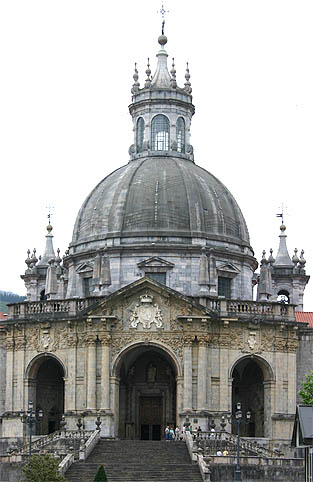
Society of Jesus : Its five Spanish provinces (Aragon, Andalusia or Betica, Castile, Loyola and Tarragona, see picture to the left) will be consolidated into a single province, the "Province of Spain", in 2014. (Photo source.)


Order of Friars Minor Capuchin (OFM Cap) : In 2011 the four provinces of Andalusia, Castile, Navarra-Cantabria-Aragon and Valencia were unified into a single province.

To the right: Spanish Capuchins during the assembly that unified their provinces in 2010. (Source)
Discalced Carmelites : In 2014 the seven provinces of Navarre, Burgos, Castile, Andalusia, Aragon, Valencia, Catalonia and Portugal will be unified into one.


In 2010, there were 433 Discalced Carmelites in Spain; 230 were above 60 years of age (92 were more than 80 years old), and 203 were below 60 years of age (only 25 were below 40 years old).


Above: Discalced Carmelite Capitulars of the Province of Aragon praying together in 2010. (Photo and statistics source)


Order of Friars Preachers (Dominicans): In 2016, the 800th anniversary of the founding of the Friars Preachers, the Dominicans will unify the Provinces of Spain, Aragon, Andalusia, Portugal and the Vicariate of the Holy Rosary into one. 

Meeting in 2012 of  Spanish Dominican superiors. Photo source


Order of Friars Minor (OFM) : In 2015 the Provinces of 1) Castile, 2) Andalusia, 3) Granada, 4) Valencia-Aragon, 5) Catalonia, 6) Cartagena-Murcia and 7) the Custody of San Francisco Solano will be consolidated into a single entity. The Provinces of Aránzazu and Santiago will remain as they are. 

Meeting of Spanish Franciscan Provincial Definitors in Sept. 2012. Photo source

Franciscans of the Province of Valencia, and some Franciscan sisters, attending a conference in 2009. Photo source

Montserrat

Montserrat: the sublime mother-monastery of the ancient Crown of Aragon. Our Lady of Montserrat is the Queen of Catalonia - her house on the high hills outside Barcelona is one of only a couple of very ancient, very renowned, most influential, and still active abbeys in the Iberian Peninsula, comparable to very few other places, such as Silos.

A healthy patriotism, a pride of ancient Catalan roots, always existed in Montserrat, and it reached great levels as the liturgical movement progressed in the 20th century, and as the Benedictine Abbey became the most relevant liturgical actor in Spain. But then, something happened: the 1960s, as the UNMENTIONABLE EVENT transformed Montserrat as it transformed the Church. Liturgy became revolutionary, patriotism became bigotry, vocations transformed into dust.

But something must indeed be changing as the most liberal Benedictine abbey in Southern Europe prepares to host, as the main and closing event of a pilgrimage in honor and for the soul of a young priest who died a year ago, Fr. Jordi Moya, a High Mass, on the High Altar of the church of the Mare de Déu: next Sunday, April 29, for the first time in so many decades, the Queen of the Spanish Levant will receive her due once again, a solemn Mass, a Traditional Mass, as the countless Masses she received in her home. [Source: Germinans germinavit, via La Cigüeña]

May it be the first of many; may the soul of Catalonia, Spain, Iberia, and all of Europe rise again. "With God, all things are possible." (Mt xix, 26).

Emerging slowly from secrecy: the Traditional Latin Mass in Spain

The following interview was first published in French by Paix Liturgique on November 30, 2011. The English translation (posted below) was published on the same website very recently. The interviewee, Fr.Manuel María de Jesús, is the founder of the Fraternidad de Cristo Sacerdote y Santa María Reina, a biritual association with a clerical branch, the Hermanos de la Fraternidad de Cristo Sacerdote y Santa María Reina, that currently has care of the Iglesia de Salvador in Toledo, the sole church in that archdiocese where Mass is said every Sunday (and every weekday as well) according to the 1962 Missal.  The Santa María Reina blog of the Fraternidad chronicles the liturgical life in that church.


A SPANISH PRIEST AT THE SERVICE OF THE MOTU PROPRIO 
(Paix Liturgique English Letter 24)


A few months ago in Spain the superior of the Fraternidad de Cristo Sacerdote y Santa María Reina, Padre Manuel María de Jesús, published a little book titled "Motu Proprio Summorum Pontificum, Problem or Asset?" This work was soon translated into Portuguese, showing the interest it has garnered in the Iberian peninsula. 

This self-published book goes straight to the crux of the issue and is actually breaking the silence surrounding Benedict XVI's liberation of the traditional Mass in Spain as in Portugal. This great silence has been quantified in the survey polls conducted in those countries: in Portugal, according to the 2010 Harris Interactive survey, 74% of Catholics had never heard of the Motu Proprio; in Spain, according to the 2011 Ipsos survey, the proportion reaches 81.7%. 

"Springtime" update:
Before the Council, science; after the Council, death.

Mother of Science, of the University, and of Beauty, the Catholic Church has always been at the forefront of the search for Truth. No wonder that, in 1904, priests and brothers of the Society of Jesus founded the Ebro Observatory (Observatori de l'Ebre, in Catalan, Observatorio del Ebro, in Spanish), a groundbreaking project for the study of the Sun, in Roquetes (Tarragona, Catalonia, Spain). As the Observatory's website itself recalls:

The Ebro Observatory is a research Institute founded by the Society of Jesus in 1904 to study the Sun-Earth relationships. It is a nonprofit Foundation associated with the Spanish Research Council (CSIC) since its inception. It has continuously maintained collaboration with the National Meteorological Institute (INM) since 1920. Recently, it has started collaboration with other institutions, like the National Technical Aerospace Institute and the Cartographic Institute of Catalonia.

The Observatory was, by itself, one of those structures that defy anti-Catholic prejudices, both in the beautiful presence of Catholic priests dedicated to scientific research and in its very foundation, in a time and place condemned by outsiders as examples of "darkness": not only a Jesuit foundation, but a Jesuit foundation in early 20th Century Spain, the humiliated post-imperial Spain of 1898.

Following fifty years of Conciliar "Springtime", however, there are not many Jesuits now left in the Observatory. The Observatory announced the following in the end of November:

After more than [one] hundred years of active presence at the Ebro Observatory, the staff of the Society of Jesus will leave our Center. Due to a restructuring of the Society of Jesus, the last Jesuits who are working at the Observatory - father Luis Felipe Alberca, father Ernest Sanclement and brother Isidre Moncal - will move to Barcelona later this year. The Observatory, along with the City of Roquetes, is preparing an event of recognition and farewell as thanks for their work at the Center, and in general in this region, for many years. This event will be held on December 14 in the Landerer’s Building of the Observatory. Also, an exhibition has been prepared at the Library of the Observatory for this event and it can be visited until December 30.

It is probably all the fault of the pre-Conciliar world itself: as George Weigel said in July, in pre-Conciliar Spain, "Catholic intellectual life withered"...

[Image: the Ebro Observatory was, in the 1920s, one of the foremost Jesuit research centers in Spain.]

Collapse of Catholic weddings in Spain

The statistical agency of the Spanish region of Catalonia, Idescat (in Catalan), published today a report on weddings in that autonomous community. The most startling number? The proportion of Catholic marriages, 66.6% of all weddings celebrated in 2000, collapsed to only 21.6% of all weddings just 10 years later - in absolute numbers, from 21079 Catholic weddings in 2000 to merely 5879 celebrations in 2010. (Tip: La voz de Barcelona - in Spanish)

Catalonia, the land of Saint Peter Claver and Saint Raymond Nonnatus, and of so many other holy men and women, was, as is well known, one of the most intensely Catholic regions in all of Europe just a few decades ago - the very literary rebirth of its language, the movement known as the Renaixença catalana, was Catholic in its origins. Following the Council, and together with the other furnace of Catholic identity in the peninsula, the Basque Country, it led that nation on the road to Secularism and perdition. Its bishops and most of its priests became mere promoters of "progressive politics" and regional separatism. Catholic Catalonia is dead.

Note: since some have tried to downplay what are simply numbers (we thought the clear collapse in absolute numbers would have been enough), here is a clarification provided by the statistical institute itself: of all marriages by a single man and a single woman (27269 in 2000, 18737 in 2010, a decline of about one third), and without considering other occasions in which a Catholic marriage would have been possible, but cannot be separated from other situations, this means that approx. 77.9% of all first marriages were Catholic in 2000, but only 31.3% of first marriages were in 2010. This in only one decade; let us repeat ourselves: in one decade.

The Spain that the Pope will visit:
Fast decline of the number of Catholics

"España será católica, o no será," (Spain shall be Catholic, or it shall not be) Menéndez Pelayo famously said. If so, the day is fast approaching in which Spain will be no more. From yesterday's edition of El País:
"Things are not as God orders anymore, Manuel and María believe. They were married in the Church in the middle of the last century and had their three children baptized, [and] educated in religious schools. Two of them got married before the altar in the 1980s, and the third before a judge and while already living with her boyfriend, in the 1990s. There was baptism for the three grandchildren, but only two had their first communion. Of these three generations, between 15 and 82, the grandparents are the only ones who go to Mass every Sunday. 'That is what there is,' grandmother María sums up.

"That is what there is is what in great measure happened to this Madrilenian family of unmentioned surnames. And the Spain that Pope Benedict XVI will visit for a third time, the old spiritual reserve of the West, is secularizing fast. Catholics are still a majority that is clear, but that decreases every year: 71.7% of Spaniards now declare themselves as such, compared to 82.1% in 2001. A fall of over 10% in one decade. Atheists and non-believers are already one in every four citizens: they have climbed to 24.3% compared to the 14.6% of 2001, according to the Center of Sociological Research (CIS). The remainder belongs to other faiths (2.4%) or did not respond.

" 'In our church, there are mostly elders and some children. One barely sees persons of other age groups,' María describes, after recalling once overflowing churches where now the faithful are rare at noon on Sundays. The numbers of the CIS back her observation: belief in Catholicism falls drastically with age. For those over 65, 9 in every 10 Spaniards profess to be believers, and the proportion falls to 56.8% among those who are between 18 and 24, according to the poll of this past July. The portrait offers other elements: the higher the education, the lower the belief (50.2% of believers among those with higher education), and greater secularization in large cities (53% of believers) than in the countryside (8 [believers] in 10)."

[First image: Church in Alcalá de Guadaíra, Andalusia, with the words, "Arderéis como en el '36" (You shall burn as in 1936).]

Ireland, Quebec, Portugal, Spain:
not "modern enough" to take Vatican II

For someone who actually thinks that the solution for the Irish Church is to be found in Canadian bishops, well... this article ("Erin go bonkers", George Weigel) is not that surprising. And the lumping of what were essentially liberal representative governments (Quebec, Ireland) with one peculiar regime that came about almost peacefully and came down in flames (Portugal) and another one that was forged in war and peacefully transitioned to constitutional monarchy (Spain) is absurd; not only that, but, as critical as we have been of the Portuguese situation (and, less so, of the Spanish situation, whose prelates are in general better than those of their smaller neighbor), there has surely been no child abuse "crisis" in these two nations.

Now, it is quite good to see walking (and writing) contradictions such as Weigel admit that the Second Vatican Council was a "deluge".

The Passion of Spain - 75 years


Exactly 75 years ago, the tensions within the Spanish Republic reached unbearable levels and the alzamiento of July 18 began. The greatest persecution of Catholics since late Antiquity was about to begin in the territory retained by the Communist-inspired forces, and would be particularly brutal in the first six months of the conflict - giving the Church thousands of martyrs (including 13 bishops), of which around 1,000 have already been beatified.

Five years ago, we began a special series of posts on the story of this relentless persecution, reverted only after Catholics joined the struggle for the faith: read it all in The Passion of Spain series. We also ask our readers to please share in the comments their favorite books, videos, online sources on this event, in any language - for instance, the Collective Letter of the Spanish Bishops (July 1, 1937); the response of several national episcopates, including the Bishops of Ireland; or the chilling images in the first and second annex on religious persecution of the Causa General.
_____________________________________

(In the first image, Republican militiamen fire at the Monument to the Sacred Heart, in the Cerro de los Ángeles, province of Madrid -- the monument would be completely destroyed in the first months of the persecution. It would be rebuilt following the war. In the image below, a Russian Orthodox chaplain of the White Russian volunteers assembled by General Evgeny Miller, exiled in France, who would be kidnapped in French soil during the war, tortured and killed in his homeland - source. And in our header above, a Mass celebrated  near the Sierra Nevada, in Andalusia, for the Tercio Isabel la Católica, of Granada, one of the many Catholic groups fighting against the attempted extermination of the Church - source.)

_____________________________________

As a final reminder of who represented what in that conflict, we once again recall the words of Pope Pius XII when victory was declared, in 1939:


RADIOMESSAGE
«CON INMENSO GOZO»
OF HIS HOLINESS
PIUS XII
TO THE SPANISH FAITHFUL

(April 14, 1939)

With great joy We address you, most dear children of Catholic Spain, to express to you our fatherly congratulations for the gift of peace and of victory, with which God has deemed worthy to crown the Christian heroism of your faith and charity, tried in so many and so generous sufferings. Our Predecessor, of venerable memory, expected, with longing and trust, this Providential peace, which is undoubtedly the fruit of that copious blessing which he sent, in the very beginning of the struggle, "to all those who had devoted themselves to the difficult and dangerous task of defending and restoring the rights and the honor of God and Religion" [1]; and We do not doubt that this peace shall be the one that he himself foretold since then, "the sign of a future of tranquility in order, and of honor in prosperity" [2].

The Zapatero Government:
A horror story that never ends

Cerro de los Ángeles, Province of Madrid, 1936

After the approval of laws legalizing "express divorce" and abortion as a "right", on demand, and regardless of parental notification, the current Socialist government of Spain has urgent priorities (and, no, they are not new measures to rescue the Spanish Treasury from the brink of bankruptcy). Libertad Digital reports this Sunday:
... the Government has leaked to daily El País the draft of the Religious Liberty bill. ... It contains a total of 37 articles, among which are those related to several bans, selected by El País. According to this information, "religious symbols must not be displayed in public establishments and buildings, unless they are of artistic-historic, architectural, or cultural worth." ... "This means that, for instance, crucifixes will be removed from all public schools ... and from public buildings."

"Official acts and celebrations will not include religious ceremonies."
This Sunday, the Belgian elections should be a sign of the increasing support for independence in Flanders. The former Spanish Netherlands always had only one true unifying principle: a vigorous and firm Catholicism. The attempt to replace it with a mild Secular French identity under a very superficial Catholicity merely fostered resentment among the Dutch-speaking Flemish during the first century of the Belgian state. The vertiginous secularization of Belgian society following the Council has led to the inevitable result: Flemish Nationalism, of course, for, after the demise of their shared Catholic identity, what do Flemish and Walloons have in common? Flanders will in the end become independent - not now, but shortly.

The same will certainly happen in Spain, a diverse nation which was always held together by its festive and colorful, yet stern, Catholic identity. As the remains of Catholicism are expelled from the public square, the Flemish lesson will soon be learned. As the great Menéndez Pelayo famously said, "España será católica, o no será" ("Spain shall be Catholic, or shall not be.").

Spain ya no es, and a glorious chapter of the History of Christendom will soon come to an end.

The death of Spain
step by step


Controversy abounded at the traditional feast of Corpus Christi in Toledo this Thursday. Because, despite the tradition, the military serving in the city, belonging to the Infantry Academy, could not grant military honors to the Blessed Sacrament, displayed in the Custodia de Arfe, due to the entry into force of the new Rules of Military Honors that [Socialist] Minister Carmen Chacón adopted a few weeks ago.

The Pioneers Squad received the Custodia de Arfe in full uniform, only because they received special permission from Chacon on Wednesday, and carrying only the sword. The military did not carry the Spanish flag, as they traditionally do, or remained in military position in front of the [Sacrament].
The same Spanish Socialist government recently approved the law, duly signed by the Bourbon monarch, making abortion a "right".

Spain signs own death certificate


Who would guess that the year of the 70th anniversary of the Spanish Civil War (see our previous topics, The Passion of Spain and New Martyrs Recognized) would bring more than symbolic reminders of the great Spanish political drama? Probably, few would have thought that Spaniards would once again choose inept leaders, moved by fear, and pride, and hatred, as they did in the infamous days of the Second Republic, but that is what they did when they chose José Luis Rodríguez Zapatero as their prime-minister.

First, he surrendered to the Muslim terrorists; then he pandered to the "gay" lobby; then, he pledged to persecute the Church's school system and finances; now, after compromising with the Basque terrorist nationalists, he surrenders to the Catalan anticlerical extreme-left nationalists. Not all nationalisms are good; or rather, one would not go too far to say that all nationalisms are bad and idolatrous, and are essentially different from the virtue of patriotism.

Among the factors which led to the Civil War of 1936-39, one of the most important was the rabid nationalism of Catalonia. Now, Catalonia had not considered itself as a nation before the 19th century; there had never been a "nation" called Catalonia, though Catalan had been spoken in the Iberian Peninsula since the 10th century, the period in which the Romance languages became more clearly distinguishable. Catalan had been the main language in the kingdom of Aragon, which stretched from the Ebro to Calabria, but Catalans had always considered themselves as part of those glorious Hispanienses who had expelled the brutal Caliphs.

It is easy to verify that Catalan has always also meant Spaniard: read the names of the defenders of Spanish integrity and its Catholic spirit, and you will find many Catalan, and Basque, and Galician surnames -- proportionately many more than from the Castilian-speaking peoples.

The insurrection which started the Crusade for the defense of Catholic Spain in July 1936 was driven by a Catalan (Goded Llopis, born in the colony of Puerto Rico from Catalan parents) and a Galician (Francisco Franco Bahamonde...). The great leaders of the Spanish Church during those terrible years were Catalans: Cardinal Gomá y Tomás, born in the province of Tarragona; Cardinal Plá y Deniel, born in Barcelona...

On the other hand, while Basque nationalism had been mostly linked to the Catholic Church in the Basque regions, Catalan nationalism had always been intensely anticlerical*. And this hatred for Christianity and Christian values is clear in the recent "Statute" (Estatut) for the Autonomous Community of Catalonia, which breaks the delicate balance achieved by the regions, the central government, and the different social currents in Spanish society (particularly the Catholic Church) in the negotiations which led to the Constitution of 1978. The center-right Spanish parties have been concerned with the use of the name of "nation", for the first time, in the legal text. But that is not the main problem.

The main problem is that, in the new "Statute", anticlericalism rises again its ugly head and declares what a "politically correct" Constitutional text (for that is what the "Statute" is) must look like. A few excerpts:

"All persons have the right to live with dignity the process of their death"

"The public powers must promote the equality of different partnership stable unions, regardless of the sexual orientation of its members."

"The public powers must promote the equality of all persons, regardless of their origin, nationality, sex, race, religion, social condition, or sexual orientation, as well as promote the eradication of racism, antisemitism, sexophobia, homophobia, and any other expression which attempts on equality and dignity."

"The public powers must see that the free decision of the woman is foremost in all cases which may affect her dignity, integrity, and physical and mental welfare, especially regarding her own body and her sexual and reproductive health."

"The public powers must protect social, cultural, and religious sociability among all persons in Catalonia, and the respect of the diversity of beliefs and ethical and philosophical convictions of all persons, and must promote intercultural relations through incentives, and the creation of environments of reciprocal knowledge, dialogue, and mediation."


Let there be no doubt: what is in stake is not the unity of Spain but the survival of Catholicism in the Iberian peninsula. The Spanish spirit has always been multiethnic -- but Catholic, always Catholic, always a Crusader spirit, as the Reconquista itself was a Crusade, as the Civil War itself became a Crusade after the Republican hosts massacred priests and nuns, and burned chapels and convents. But this Spain of many Spains has surrendered its soul and approaches death, under pressure, betrayed by its leaders, abandoned by a mostly "progressive" clergy, deceived by newfound wealth. Its dead body will soon be ready to be partitioned.

----
* This was true in the early decades of both movements, but, while the clergy in the Basque lands still largely supports the Basque nationalist movement, the latter has become not only extremely violent, but secular and anticlerical. This historical background, nonetheless, explains several intersting aspects of the development of the Civil War in "Euskadi" (the Basque Country).

Cardinal no muy Amigo:
When a man is not a man and a woman is not a woman.

Amidst the maddest succession of anti-family legislation proposed by any single government in Europe (probably ever), Zapatero's Socialists' latest proposal, likely to be introduced before the next general elections, would establish a "Gender Identity Act" (Ley de Identidad de Género).

As it often happens in such circumstances, the media picked the friendly cleric, Cardinal Amigo of Seville, to hear his opinion. From El País (Caution: some may find the Cardinal's words offensive):

The future approval of a Gender Identity Act to regulate the change of the sex and of the name of transsexuals is a "legal matter" which is not at all "frivolous", the Cardinal-Archbishop of Seville, Carlos Amigo, affirmed yesterday. A person's sex, "simply determined by an external inspection of the genital organs" may not be one's identity, he added. Amigo directed the regulation of such matters to "the experts".

A person's sex is "simply determined by an external inspection of the genital organs", and such identification may not be the most accurate, opined the Archbishop. In this, he concurs with the essence of the complaints of transsexual persons, who feel [they belong to] a sex which is not the one their genitalia portray. "Sex determination is made simply by an external inspection of the genital organs and one sex or the other is determined, but there may be a person whose only feature as a woman or as a man is this external appearance and that is not the identity of that person", he remarked.

Amigo was questioned after, in the past week, several groups of transsexuals began a campaign so that the Government fulfills its electoral pledge to regulate the change of name and sex in the Civil Registry with no need of complete surgery for the re-determination of sex.
The reporter transcribed the same sentence by the Cardinal three times, which may mean the Cardinal actually spoke it thrice or that the reporter was just surprised...

The Pope will visit Spain (Valencia) next July to take part in the World Meeting of Families (are the friendly Cardinal's words a coincidence?).


Tip: Radio Cristiandad (sidebar)