Rorate Caeli

Saint Alphonsus in Holy Week:
III - Feria Tertia (Holy Tuesday): Consumed for Love

MEDITATION 
for Holy Tuesday

Jesus upon the Cross

I.


Jesus on the cross! Behold the proof of the love of a God; behold the final manifestation of Himself, which the Word Incarnate makes upon this earth, - a manifestation of suffering indeed, but, still more, a manifestation of love. St. Francis of Paola, as he was one day mediating upon the Divine Love in the person of Jesus Crucified, rapt in ecstasy, exclaimed aloud three times, in these words, “O God – Love! O God- Love! O God - Love!” wishing hereby to signify that we shall never be able to comprehend how great has been the Divine love towards us, in willing to die for love of us.

II.

O my beloved Jesus! If I behold Thy body upon this cross, nothing do I see but wounds and blood; and, then, if I turn my attention to Thy heart, I find it to be all afflicted and in sorrow. Upon this cross I see it written that Thou art a king; but what tokens of majesty dost Thou retain? I see not any royal throne save this tree of infamy; no other purple do I behold save Thy wounded and bloody flesh; no other crown save this band of thorns that tortures Thee. Ah, how it all declares Thee to be king of love! Yes, for this cross, these nails, this crown and these wounds are, all of them, tokens of love.

III.

Jesus, from the cross, asks us not so much for our compassion as for our love; and, if even He does ask our compassion, He asks it solely in order that the compassion may move us to love Him. As being infinite goodness, He already merits all our love; but when placed upon the cross, it seems as if He sought for us to love Him, at least out of compassion.

Ah, my Jesus, and who is there that will not love Thee, while confessing Thee to be the God that Thou art, and contemplating Thee upon the cross? Oh, what arrows of fire dost Thou not dart at souls from that throne of love! Oh, how many hearts hast Thou not drawn to Thyself from that cross of Thine! O wounds of my Jesus! O beautiful furnaces of love! Admit me, too, amongst yourselves to burn, not indeed with that fire of hell which I have deserved, but with holy flames of love for that God Who has been willing to die for me, consumed by torments. O my dear Redeemer! Receive back a sinner, who, sorrowing for having offended Thee, is now earnestly longing to love Thee. I love Thee, I love Thee, O infinite goodness, O infinite love.

O Mary, Mother of beautiful love! Obtain for me a greater measure of love, to consume me for that God Who has died consumed for love of me.
St. Alphonsus Maria de Liguori
The Ascetical Works : The Passion and Death of Jesus Christ
Meditations for Holy Week

[Contributor Francesca Romana]

Saint Alphonsus in Holy Week:
II - Feria Secunda (Holy Monday): Hammers and Nails

MEDITATION 
for Holy Monday

Jesus is placed on the Cross

I.


No sooner had the Redeemer arrived, all suffering and wearied out, at Calvary, than they strip Him of His clothes, - that now stick to His wounded flesh, - and then cast Him down upon the cross. Jesus stretches forth His holy hands, and at the same time offers His life to the Eternal Father, and prays of Him to accept it for the salvation of mankind. In the nest place, the executioners savagely lay hold of the nails and hammers, and, nailing His hands and His feet, they fasten Him to the cross.

O ye Sacred Hands, which by a mere touch have so often healed the sick, wherefore are they now nailing you upon the cross? O Holy Feet, which have encountered so much fatigue in your search after us lost sheep, wherefore do they now transfix you with so much pain? When a nerve is wounded in the human body, so great is the suffering, that it occasions convulsions and fits of fainting: what, then, must not the suffering of Jesus have been, in having nails driven through His hands and feet, parts which are most full of nerves and muscles!

O my sweet Saviour! So much did the desire of seeing me saved and of gaining my love cost Thee! And I have so often ungratefully despised Thy love for nothing; but now I prize it above every good.

II.

The Cross is now raised up together with the Crucified, and they let it fall down with a shock into the hole that had been made for it in the rock. It is then made firm by stones and pieces of wood; and Jesus remains hanging upon it, to leave His life thereon. The afflicted Saviour, now about to die upon that bed of pain, and finding Himself in such desolation and misery, seeks for someone to console Him, but finds none.

Surely, my Lord, those men will at least compassionate Thee, now that Thou are dying! But no; I hear some outraging Thee, some ridiculing Thee, and others blaspheming Thee, saying to Thee, “Come down from the cross if Thou art the Son of God. He has saved others, and now He cannot save Himself.”

Alas, you barbarians, He is now about to die, according as you desire; at least torment Him not with your reviling.

III.

See how much thy dying Redeemer is suffering upon that gibbet! Each member suffers its own pain, and the one cannot come to the help of the other. Alas, how does He experience in every moment the pains of death! Well may it be said that in those three hours during which Jesus was suffering His agony upon the cross, He suffered as many deaths as were the moments that He remained there. He find not there even the slightest relief or repose, whether He lean His weight upon His hands or upon His feet; wheresoever He leans the pain is increased, His most holy body hanging suspended, as it does, from His very wounds themselves. Go, my soul, and tenderly draw nigh to theat cross, and kiss that altar, whereon thy Lord is dying a victim of love for thee. Place thyself beneath His feet, and let that Divine Blood trickle down upon thee.

Yes, my dear Jesus, let this Blood wash me from all my sins, and set me all on fire with love towards Thee, my God, Who hast been willing to die for love of me. Do thou, O suffering Mother, who dost stand at the foot of the cross, pray to Jesus for me.
St. Alphonsus Maria de Liguori
The Ascetical Works : The Passion and Death of Jesus Christ
Meditations for Holy Week

[Contributor Francesca Romana]

Saint Alphonsus in Holy Week:
I - Palm Sunday: He moves along

MEDITATION
for Palm Sunday

Jesus Carries the Cross to Calvary

I.

The sentence upon Our Saviour having been published, they straightway seize hold of Him in their fury: they strip Him anew of that purple rag, and put His own raiment upon Him, to lead Him away to be crucified on Calvary, - the place appropriated for the execution of criminals: They took off the cloak from Him, and put on Him His own garments, and led Him away to crucify Him.” (Matt. xxvii 31.) They then lay hold of two rough beams, and quickly make them into a cross, and order Him to carry it on His shoulders to the place of His punishment. What cruelty, to lay upon the criminal the gibbet on which he has to die!

But this is Thy lot, O my Jesus, because Thou has taken my sins upon Thyself.

II.

Jesus refuse not the cross; with love He embraces it, as being the altar whereon is destined to be completed the sacrifice of His life for the salvation of men: And bearing His own Cross, He went forth to that place which is called Calvary. The condemned criminals now come forth from Pilate’s residence, and in the midst of them there goes also our condemned Lord. O that sight which filled both heaven and earth with amazement! To see the Son of God going to die for the sake of those very men from whose hands He is receiving His death! Behold the prophecy fulfilled: And I was as a meek lamb, that is carried to be a victim. The appearance that Jesus made on this journey was so pitiable that the Jewish women, on beholding Him, followed Him in tears: They bewailed and lamented Him.

O my Redeemer! By the merits of this sorrowful journey of Thine, give me strength to bear my cross with patience. I accept of all the sufferings and contempts which Thou dost destine for me to undergo. Thou hast rendered them lovely and sweet by embracing them for love of us: give me strength to endure them with calmness.

III.

Behold, my soul, now that thy condemned Saviour is passing, behold how He moves along, dripping with blood that keeps flowing from His still fresh wounds, crowned with thorns, and laden with the cross. Alas, how at every motion is the pain of all His wounds renewed! The Cross, from the first moment, begins its torture, pressing heavily upon His wounded shoulders, and cruelly acting like a hammer upon the thorns of the crown. O God! At every step, how great are the sufferings! Let us meditate upon the sentiments of love wherewith Jesus, in this journey, is drawing nigh to Calvary, where death stands awaiting Him.

Ah, my Jesus, Thou art going to die for us. In time past I have turned my back upon Thee, I would that I could die of grief on this account! But for the future I have not the heart to leave Thee, O my Redeemer, my God, my love, my all! O Mary, my Mother, do thou obtain for me strength to bear my cross in peace.
St. Alphonsus Maria de Liguori
The Ascetical Works : The Passion and Death of Jesus Christ
Meditations for Holy Week

[Contributor Francesca Romana]

Watching the Sacred Triduum online
Triduo Sacro tradicional en directo por internet

There is a huge number of Catholics who do not have access or are not able to go to a closeby celebration of the Sacred Triduum according to the Traditional Roman Rite (Vetus Ordo, Extraordinary Form, etc).

For these Catholics, one option is to watch the Sacred Triduum online and join spiritually those faithful who are present - for instance, by way of LiveMass. Their schedule is the following (remember GMT/UTC is EDT+4, London/BST is EDT+5).

LiveMass.org will turn on the broadcast 10 minutes prior to the beginning time of each liturgy.

Holy Thursday - Jueves Santo:
8:00 PM EDT / 7:00 pm CDT Santa Misa Cantada - Nuestra Señora del Pilar, Guadalajara, Mexico *SD Feed Only*
(Lavatorio de pies, Procesión del Santísimo, Desnudar el Altar)
*** Sarasota Mass will be recorded and broadcast following the Stripping of the Altar in Mexico.
Also, the Holy Thursday Mass will replace the Sunday Mass for VOD until 4/20/2014.

Good Friday - Viernes Santo:
1:00 PM EDT / 12:00 pm CDT Via Crucis - Pilar *SD Feed Only*
2:00 PM EDT / 1:00 pm CDT Stations of the Cross - Christ the King, Sarasota, FL
4:00 PM EDT / 3:00 pm CDT Solemne Acción Litúrgica - Pilar *SD Feed Only*
(Lecturas, Pasión, Oraciones Solemnes, Adoración dela Santa Cruz, Sagrada Comunión)

Holy Saturday - Sábado Santo:
11:30 PM EDT / 10:30 pm CDT Vigilia Pascual - Pilar *SD Feed Only*
(Bendición del fuego Pascual y del Cirio Pascual, Procesión, Præconium, Lecturas, Letanías de los Santos, Bendición del Agua Bautismal, Misa Cantada)
*** Sarasota Mass will be recorded and broadcast following the liturgy in Mexico.

Easter Sunday - Domingo de Pascua:
8:30 AM EDT / 7:30 am CDT Low Mass from Sarasota, FL
10:30 AM EDT / 9:30 am CDT Low Mass from Sarasota, FL
1:00 PM EDT / 12:00 Noon CDT Santa Misa Cantada - Nuestra Señora del Pilar, Guadalajara, Mexico *SD Feed Only*
8:00 PM EDT / 7:00 pm CDT Santa Misa - Nuestra Señora del Pilar, Guadalajara, Mexico *SD Feed Only*

Pope Francis: Msgr. Guido Marini renewed as Master of Pontifical Ceremonies for a full new term

From Radio Vaticana:

The Pope has confirmed Monsignor Guido Marini as Master of Pontifical Liturgical Ceremonies. Born 49 years ago in Genoa, Monsignor Guido Marini had been called to this position by Benedict XVI in October 2007.

As all confirmations and nominations in the Curia or Papal Chapels, except when expressly mentioned otherwise for a different period or for life, the nomination is for a five-year term (cf. Pastor Bonus, art. 182 § 2).

Source (in Italian). Tip: @ASchwibach

Nathan Trapuzzano, requiescat in pace

You may have read about a homicide in Indianapolis, Indiana, in the U.S., where 24-year-old Nathan Trapuzzano, husband and father, was killed during a morning walk.

His wife, Jennifer, said:

"In the last few days people have told me they are going back to church because of Nate's story. He never dreamed that this is how it would end, but knowing people are going back to church and that they have been touched by his story means a lot to me and would mean so much to him.

"He used to invite so many of my friends to come to Latin mass and when I saw pictures of how full the church was for his funeral on Saturday, I thought, he finally did it, he finally got them there." 

Below are photos taken by the Associated Press and Daily Mail (U.K.) of Mr. Trapuzzano's traditional Latin Requiem Mass at Holy Rosary Church and his Angelus Press handmissal.


The Catholic missal Nathan used to read before bed every night. Jennifer said she now wants to come closer to God 'so I can see Nate again'

Click here to donate to a fund for Jennifer and the baby.

May he rest in peace.

In Passiontide: The Scala Sancta and the Prayers at the Foot of the Altar
And a video: The Restoration of the Scala Sancta

Aufer a nobis, quaesumus, Dómine, iniquitátes nostras: ut ad Sancta sanctórum puris mereámur méntibus introíre. Per Christum, Dóminum nostrum. Amen. [Take away from us our iniquities, we beseech Thee, O Lord, that we may be worthy to enter with pure minds into the Holy of Holies.] Roman Missal, Ordo Missae, Prayers at the Foot of the Altar
_______________________ 

The first rite to open up the ordo of the Roman Mass to the influx of personal devotional prayer was that used by the papal household in the high Middle Ages. The earliest witness to the new direction this liturgy was taking has to do with the Office. This was Abelard in the year 1140 to St. Bernard of Clairvaux. As to the eucharistic celebration, some elements found at the beginning of this liturgical text and its end point toward the private chapel of the medieval Lateran palace, located at the head of the scala sancta. This chapel, preserved as renovated in 1278 has - from time immemorial - been called the Sancta Sanctorum, the Holy of Holies. This name came to be associated with the prayers at the foot of the altar, notably with their conclusion when the priest begs for the forgiveness of sins "so that, with sould made clean, we may be counted to enter the 'Holy of Holies'." With this prayer, which recurs in all of the oldest liturgical documents of the Roman Mass, we probably - in the final analysis - have one going back to the early sixth century at the very least. However, not until this venerable text was understood to allude to the local surroundings of the papal chapel did it become a prayer said during the procession of the pope, who - to offer the Holy Sacrifice - had to take himself from his palace apartments [in the Lateran] into the papal chapel. The prayer following in today's Mass ordo begs for God's clemency with the words, "by the merits of your saints, whose relics are here." These words, likewise, did not originally have to do with the holy remains of a saint deposited in just any altar, but rather with the vast treasury of relics found in the Sancta Sanctorum Chapel. It will soon be twenty years since the Jesuit Father Hartmann Grisar (1845-1932) undertook an examination of this treasury for the first time, an effort that led to conslusions of the utmost importance for archaeology and art history. Finally, the prayers of thanksgiving [Rorate note: including, "Da nobis, quaesumus Domine, vitiorum nostrorum flammas exstinguere; qui beato Laurentio tribuisti tormentorum suorum incendia superare. Per Christum Dominum nostrum."] said by the priest after the Mass point toward this chapel as well: the collect for the feast of St. Lawrence was incorporated into these prayers by virtue of the fact that the chapel is consecrated to the most revered martyr of Rome.
Anton Baumstark [the Younger]
On the Historical Development of the Liturgy
1923

_______________________

Now, many of the liturgical "certainties" of the first half of the 20th century are in doubt today, but, even if not exact, it is an interesting connection between the prayers at the foot of the altar and the Scala Sancta, this most revered relic of Rome, now under restoration:

New iMass app, with complete texts of Missal, Breviary and Ritual
- for Android, just in time for Holy Week

A few months ago Rorate Caeli announced the Rituale Romanum app that we had been working on. There was much excitement about the app, from everyone except those in charge of the approval process at Apple! The app was rejected from the App Store, not once, but subsequently three times - each time going a little higher up the chain of command.

Going back to the drawing board, we have decided to incorporate the Rituale into the iMass app. By doing so, the iMass app becomes a more complete resource for the 1962 Liturgy, including not only the viewable broadcasts of the Mass, but also three of the four Liturgical Books of 1962. (The fourth Liturgical Book is the Pontificale, which would not seem expedient to put on a mobile device.)


On Palm Sunday, April 13th, we will release iMass 5.0 on the Google Play Store. 

The new Android version of iMass will have the following features:

- Both the recorded versions of Mass and the Live broadcasts of the Mass now work seamlessly on all Android devices (with software newer than Ice Cream Sandwich)
- Three 1962 Liturgical Books: The Breviary, the Missal, and the Rituale Romanum
- You can now view the Sunday and daily Mass from the different broadcast locations (not only Florida)
- Although rewritten entirely, the app will be a free upgrade for those who have the current android version of iMass on their devices.

For more details, visit the website: www.imassapp.com

This current version of iMass is an update for Android. We are still working on the challenge of incorporating the Rituale into the iPhone app, and will release it when we have completed the work, and after the app has been approved by the App Store.

[Information and images exclusively provided to Rorate Caeli by the iMass team.]

Intervention in the Franciscans of the Immaculate:
Pope meets unexpected couple, implies end of intervention coming soon

On Sunday, April 6, Pope Francis celebrated a mass in the Roman parish church of San Gregorio Magno alla Magliana. What he did not expect was for the pastor to introduce him to a couple, last name Manelli, six of whose nine children are members of the Franciscan Friars (two of the children) and Sisters (four of the children) of the Immaculate.

Sandro Magister reports:

In a chat with the pope, the couple Pio and Annamaria [Manelli] - the latter painter of the icon [of the Salus Populi Romani, presented to the pope] - they told him:

“Holy Father, we have nine children, six of whom are consecrated among the Franciscans of the Immaculate. We beg you, take them out of the sepulchre.”

To which pope Francis - who, in the homily had spoken of Jesus who removes not only Lazarus but all from the sepulchres - smiled, a little surprised, caressed them and told them: “Soon, soon.”

What "soon" might mean is unknown. Those who are most optimistic hope for an imminent and peaceful end of the intervention.

Passiontide for the Bride of Christ

Below is the written transcript of a Passion Sunday sermon by a traditional mission priest. While Father delves into many issues, one of the first examples of the passion the Church is going through deals with the reaction to the Dominican nun who has been silenced and, not surprisingly, left to rot by most "conservative" Catholics:


“Do not we say well, that Thou art a Samaritan, and hast a devil?” And “They took up stones to cast at Him: but Jesus hid Himself, and went out of the Temple.”
 
Today, the 5th Sunday of Lent, is called Passion Sunday. It is the day we  cover the cross and statues…because, as the Gospel indicates, Our Lord is now having to hide from the Jewish leaders until His Hour… His Saving Passion arrives on Holy Thursday and Good Friday. No one could touch the King until He granted them permission to do so…as the Prophet Isaias said of Him: “He was offered because it was his own will” (53:7).
 
At this time in history, the Mystical Body of Christ is also nearing one of Her Hours… Her own Passion. Christ and His Church are one and the same thing. Where the Head has gone, the Body must follow. In this way we, Her members, fulfill the sobering words of His Majesty: “If the world hate you, know ye, that it hath hated Me before you… If they have persecuted Me, they will also persecute you” (Jn. 15:18, 20).
 
At this time, therefore, our Holy Church has become more and more like Job… innocent, yet steadily being deprived of all Her possessions… faithful, yet losing many of her children. Some of Her members and even those in charge of Her visible structure… who should be Her most ardent friends and companions… are now pointing their fingers at Her and blaming Her for the world’s many troubles. They keep trying to get Her to change Her position on things… even Her perennial and Apostolic teachings and liturgical practices. She is pressed to admit of wrong doing and to apologize. Name calling is now in vogue. “Thou art a Samaritan…and hast a devil!” What the Prophet Zacharias says of Our Lord in the midst of His Passion holds for the Church as well: “What are those wounds in the midst of Thy hands? And He shall say: ‘With these I was wounded in the house of them that loved me’” (13:6). Yes, they loved Him in the past but then treated Him like Judas… kissing Him for personal gain. This is true of the Church as well…  Ah, alas, is it not true… our beloved Church is approaching Her Hour. It is now Passion Sunday for the Mystical Body.
 
Case in point… the recent events in Charlotte, NC. A Dominican sister speaks openly and plainly to “Catholic” high school students about holy matrimony as well as about what hurts it… impurity, sodomy, divorce, and so on… The result? She is vilified, pressed to apologize, made to feel guilty … such that like Our Lord she has to withdraw from all speaking engagements and even from her regular teaching job at Aquinas College in Nashville, TN. How many of these teens and their parents regularly watch movies, videos and TV programs as well as read works that belittle and blaspheme Our Lord and His Holy Church and think little about it? It is Passiontide for the Church.
 
The state of the Mystical Body is also on display in Her religious, for they occupy the Heart of the Church. The more religious life flourishes, the more healthy is the Body of Christ. By always living for the next life and acting as a sign thereof, religious show forth in their whole being the Church Triumphant reigning in heaven. Today, sad to say, vocations to religious communities are rare and often even discouraged by parents and relatives. Most convents and monasteries have closed or… are taking up collections to support those that remain in them (something we have not had to do in previous times). When we do find religious, they are often not recognizable and hold heretical doctrines. Need we say anything about their scandals and failures to keep their sacred vows? Not surprisingly, those that want to live a sound and disciplined and recognizable religious life often end up like Our Lord… having to hide from the powers that be to avoid being stoned to death … to avoid being suppressed after a hostile visitation. O how many names they are called! Rigid, Jansenistic, Medieval, Pre-conciliar, Fundamentalist. It is Passiontide for the Church. As Our Lord had His HOUR, so too His Bride. Can you feel it?
 
Furthermore, the condition of the Church is on display in the indissoluble and holy marriages of her faithful children. We know from the Sacred Scriptures and the Fathers that Christ and His Church are Bridegroom and Bride. In teaching on Christian Marriage, St. Paul exclaims: “This is a great sacrament; but I speak in Christ and in the Church” (Eph 5:32). This is why Christian Marriage is indissoluble… it is a sign of Christ’s unbreakable bond… His indissoluble love for His Bride, the Holy Catholic Church. They cannot be divided… ever. So too marriages contracted under the Sacrament of Holy Matrimony! “What God has joined together, let no man put asunder” (Matt. 19:6).
 
But this does not seem to be so in our time! Divorce is as common inside the Church as it is outside. There is almost no difference! Please do not misunderstand me…times like this produce invalid marriages. Such things do exist and should be annulled. On the other hand, this is why the Church has traditionally been very careful to prepare couples for marriage, most especially since the Council of Trent. Yet, now, sad to say, divorce and remarriage are becoming more common in the Church than marriages that remain faithful until death! Passiontide is here… the Hour of the Mystical Body is near! We can feel it! We can see it!
 
In the history of the Church, those who embrace error, heresy or schism almost always fail in the area of celibacy and marital chastity in a very short time. Most fail in the direction of impurity… losing their celibate priesthood and religious life as well as allowing for divorce and remarriage in their new religion. For example, the Eastern Orthodox allow two divorces for their members. These failures in the area of chastity put on display for all to see that there has been a schism… a break from the Mystical and life-giving Body, the Bride of Christ, the Roman Catholic Church. Marital fidelity and union with the Christ’s Church go together! (By the way, this is one of the reasons why a couple who has sadly reached a point where a separation may be needed must go the Church and ask for permission to do so… as is taught in the Council of Trent (cf. Sess. XXIV, c. 8) and the in Code of Canon Law. Also, we should keep in mind that many a saint has had to endure an irksome marriage to save their souls and the souls of their family rather than flee as the worldlings do.)
 
Not surprisingly, in this Passiontide of the Bride with so many failed marriages, various leaders of Our Holy Church… are pointing fingers at Her teachings and laws on holy matrimony. They are too hard… too burdensome… not acceptable to modern man. We must be tolerant of sodomitical unions… more indulgent toward the divorced and remarried… Let them come to the altar rails and receive Holy Communion. Who are we to judge! Alas, how hurtful all this is to His Majesty and His spotless Bride! As we heard in the Gospel: “you have dishonored Me.”
 
How do we answer these worldly ideas and attacks? It is on display for all to see in the Gospel of St. John with the Samaritan woman at the well. Upon meeting this woman, His Majesty, the Savior, offers her His life giving grace… “a fountain of water, springing up into life everlasting.” She forms a desire for this heavenly gift and asks for it. “The woman saith to him: Sir, give me this water…” He, in turn, seeking to remove all blockages, asks immediately about her husband. In other words, if you want to be in Communion with Me, your marriage must be right. No Holy Communion is possible until that has been accomplished. We must not add sin onto sin.
 
She, being a Samaritan, came from a people who split away from God’s chosen ones by wedding the pagan Assyrians. They set up their own temple and formed their own worship. Not surprisingly, then, “‘The woman answered, and said: I have no husband.’ Jesus said to her: ‘Thou hast said well, For thou hast had five husbands: and he whom thou now hast, is not thy husband.’” Her religion is divorced from God… it not attached to the HEAD… thus, the door to multiple marriages is opened. After His Majesty revealed her many bad divorces and re-marriages, she immediately turned to matters of theology and liturgy… namely the doctrine of No Salvation Outside of the Church as well as what constituted True Worship in the God’s Sacred Liturgy. Finally, as soon as He revealed Himself to be the Christ… the Bridegroom of the One Bride… the Gospel says, “And immediately His disciples came” indicating His Church is Apostolic. Christ will not act apart from them.
 
Here, then, we have a clear Scriptural example of how Catholic marriage shows forth the unity and indissolubility of Christ and His Church. And, what is more, this is apostolic and cannot be tampered with by any prelate whatsoever, no matter his position or place in the membership of the Mystical Body. This means that allowing any divorced and civilly remarried Catholic to return to Holy Communion or even to exercise any ecclesiastical duties would constitute a grave offense against the Church Herself (cf. CCC no. 1650). And yet, sad to say, that is what is being proposed and discussed and even practiced in many places. It is Passiontide for the Church! More suffering for the Mystical Body!
 
As Traditional Catholics, we are often labeled for taking a firm stand in defending the apostolic doctrines of the Church such as these. We are labeled Traditionalists for doing what Catholics have always done. Some are not shy in exclaiming that we have schismatic tendencies… Sound familiar? “Thou art a Samaritan…and hast a devil!” But think about it. Many today are proposing that the divorced and remarried be allowed to receive Holy Communion… that sodomitical unions be at least not hindered… that such perverted couples be allowed to adopt, baptize and send children to Catholic schools as if nothing were wrong. Are not these rather serious schismatic tendencies that are tearing at the most blessed and tender Body of Christ’s Bride? YES! Do those proposing these things have the true faith? We wonder! Have they not tried to start a new religion inside of the Mystical Body? How long before we allow two divorces like the schismatic Eastern Orthodox? Again the Gospel today comes to mind: “He that is of God heareth the Words of God. Therefore, you hear them not, because you are not of God.”
 
When in Passiontide, it always seems that our adversaries have the upper hand! Thus, the faithful Catholic feels like he is near to being arrested, sidelined, abandoned… even, as it were, stoned to death. Thus, they often feel abandoned… all alone like Job on his dung heap. The name calling is certainly not lacking: they are selfish, prideful, hypocrites, slothful, embittered, fundamentalist, triumphalistic, Pelagian, and so on. In response, fear, anger and frustration rise. All this is ultimately aimed at making the faithful Catholics compromise… to make them come down. That is the mantra of the devil in Passiontide… “come down!... come down! Give up! Compromise! You are all alone… you cannot do it! Everyone is against you! Science is against you! The Media is against you! Even many of your leaders are against you. Come down!”
 
Let us inoculate ourselves from these temptations, these empty fears and the powerful emotions they evoke by meditating as frequently as possible on the Passion of Our Lord, on the book of Job, by reading the lives of the Saints, praying the daily Rosary, as well as studying the apostolic and perennial teachings of the Church. In this way, we will not depart from the Bride of Christ but rather keep Her company in Her time of trial…providing Her comfort… for this too shall pass… allowing those who remained faithful to receive a share in that “fountain of water, springing up into life everlasting.”

New Foundation of the Institute of Christ the King in England:
St. Walburge, Preston, Diocese of Lancaster


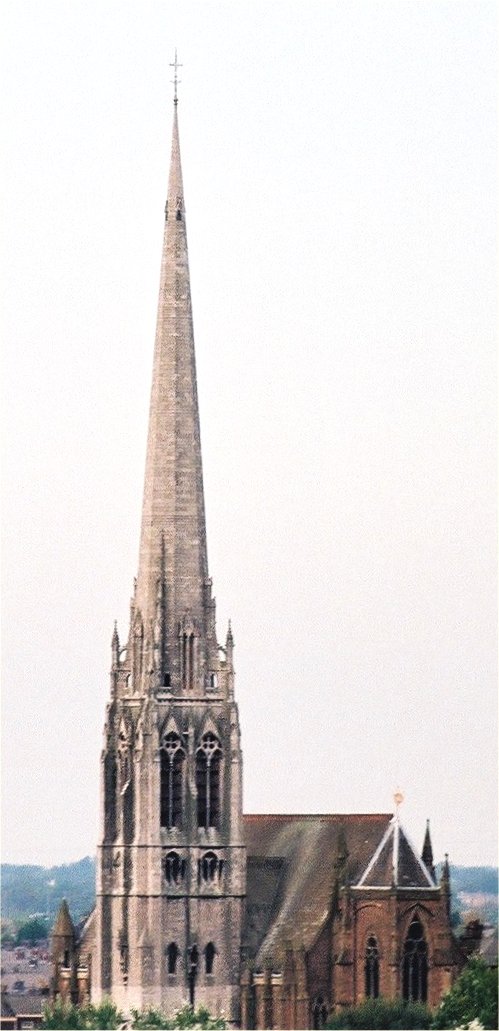
After the establishment of the Institute of Christ the King in New Brighton, Merseyside, where it has been taking care of the Shrine of Sts. Peter and Paul and Philomena, another English diocese welcomes the priests of the Institute to save a church, in Preston, Lancashire: Saint Walburge, the tallest parish church (and tallest of any Catholic church) in the United Kingdom.


The well-loved and iconic Catholic church of St Walburge, Preston has been given a promise of a sustainable future and a new lease-of-life following an announcement on Sunday 6 April 2014 by the Bishop of Lancaster, the Rt Rev Michael G Campbell OSA.

The announcement (in a Pastoral Message) was that Bishop Michael Campbell and Monsignor Gilles Wach, General Prior of the Institute of Christ the King Sovereign Priest, together with Parish Priest Father Simon Hawksworth, have agreed to establish a foundation of the Institute at the Church of St Walburge, Preston in the early autumn. The arrival and presence of the Institute – a society of Apostolic life of Pontifical right – will, according to Bishop Campbell enable the church to be open each day (which it is not at present) so as to become a shrine or centre for Eucharistic devotion and adoration. The shrine will specifically provide for the celebration of Holy Mass and the other Sacraments in the Extraordinary Form.

Father Robert Billing, spokesman for the Diocese said:

“The members of the Institute will work in close collaboration with Parish Priest, Father Simon Hawksworth.”

“Importantly, the announcement of this initiative - following twelve months of negotiations - delivers good news: it will ensure the future sustainability and patrimony of St Walburge’s church; a church so dear to local Catholics and many others in Preston. Thankfully, this announcement means St Walburge’s is secured for the future, will be used each day for prayer and cared for as it continues to bear witness to the faith and mission of the Catholic Church in Preston.” [Source: Diocesan Press Release.]

The Crisis of the Church is a Crisis of Bishops:
Mockery and Scandal in the Cathedral for celebration of Baptism of daughter of "two mothers" in Córdoba, Argentina

The baptism of baby Umma Azul, the daughter of one member of a lesbian "couple" civilly "married" in Argentina took place yesterday in the Cathedral of Córdoba (previous post on the matter here). The President of the Argentine Republic, Mrs. Cristina Fernández de Kirchner, was not present, but sent some gifts by way of a representative.

On the previous day, the Archbishop of Córdoba, Carlos Ñáñez, had said that the ladies finally were not going to be confirmed, but that the baptism would happen since it was "the right of the child," and that this whole problem had been caused by the "manipulation of the media". He also said he had informed Cardinal Cañizares Llovera, Prefect for Divine Worship and the Discipline of the Sacraments, so that the Holy See was kept "informed" of the situation (source: Infocatólica).

Two points: First, as a matter of fact, the media would not even be aware of the baptism if the couple had not gone to all lengths to make this a widely publicized event. Second, it is certainly not simply a reason of being a "right" of the child - otherwise, the Church would have the obligation to baptize all babies, irrespective of any other circumstances, including forcibly, in order to ensure the salvation of the child before the age of reason... Baptism entails grave obligations for Catholics, and is neither a mere social event, nor a... "Pelagian" superstition... The "mothers" themselves told the press that, "we want to have her baptized, but afterwards the baby will be able to do whatever she is inclined to do, and follow her own path." Which is why, as we recalled in the first post, bringing with it the Tradition and Magisterium of the Church, the 1983 Code of Canon Law is quite clear:

Can. 868 §1. For an infant to be baptized licitly:

1/ the parents or at least one of them or the person who legitimately takes their place must consent;

2/ there must be a founded hope that the infant will be brought up in the Catholic religion; if such hope is altogether lacking, the baptism is to be delayed according to the prescripts of particular law after the parents have been advised about the reason.

Is there such "founded hope"? Or was it merely a propaganda piece for the advance of the Catholic recognition of homosexual "marriage", in which the poor baby is used as a mere instrument, a Sacrament is used to make a point, and a Holy Place of Worship is used for homosexual agitprop? You tell us, when you see this iconic image of the event (graphic image, minors please do not click.)

(Source: La Voz del Interior, whole image gallery here.)

Saint Augustine on Passion Sunday: Agnoscite Creatorem...
"Recognize the Creator—discern the creature."

EGO SUM

"Abraham pater vester exsultavit ut videret diem meum: vidit, et gavisus est." Dixerunt ergo Iudæi ad eum: "Quinquaginta annos nondum habes, et Abraham vidisti?" Dixit eis Iesus: "Amen, amen dico vobis, antequam Abraham fieret, ego sum."
(From the Gospel for Passion Sunday, John viii, 56-58: "Abraham your father rejoiced that he might see my day: he saw it, and was glad." The Jews therefore said to him: "Thou art not yet fifty years old, and hast thou seen Abraham?" Jesus said to them: "Amen, amen I say to you, before Abraham was made, I am.")

___________________________

...Abraham's Creator bears a great testimony to Abraham. "Abraham rejoiced," He says, "to see my day." He did not fear, but "rejoiced to see it." For in him there was the love that casts out fear. He says not, rejoiced because he saw; but "rejoiced that he might see." [Non ait: Exsultavit, quia vidit; sed, exsultavit ut videret.] Believing, at all events, he rejoiced in hope to see with the understanding. "And he saw." And what more could the Lord Jesus Christ say, or what more ought He to have said? "And he saw," He says, "and was glad." Who can unfold this joy...? If those rejoiced whose bodily eyes were opened by the Lord, what joy was his who saw with the eyes of his soul the light ineffable, the abiding Word, the brilliance that dazzles the minds of the pious, the unfailing Wisdom, God abiding with the Father, and at some time come in the flesh and yet not to withdraw from the bosom of the Father?

All this did Abraham see. For in saying "my day," it may be uncertain of what He spoke; whether the day of the Lord in time, when He should come the flesh, or that day of the Lord which knows not a dawn, and knows no decline. But for my part I doubt not that father Abraham knew it all. And where shall I find it out? Ought the testimony of our Lord Jesus Christ to satisfy us? Let us suppose that we cannot find it out, for perhaps it is difficult to say in what sense it is clear that Abraham "rejoiced to see the day" of Christ, "and saw it, and was glad."

...

"Before Abraham was made, I am." Weigh the words, and get a knowledge of the mystery. "Before Abraham was made." Understand, that "was made" refers to human formation; but "am" to the Divine essence. "He was made," because Abraham was a creature. He did not say, Before Abraham was, I was; but, "Before Abraham was made," who was not made save by me, "I am." Nor did He say this, Before Abraham was made I was made; for "In the beginning God created the heaven and the earth;" Genesis 1:1 and "in the beginning was the Word." "Before Abraham was made, I am."

Recognize the Creator—discern the creature. [Agnoscite Creatorem, discernite creaturam.] He who spoke was made the seed of Abraham; and that Abraham might be made, He Himself was before Abraham.
Saint Augustine
In Evangelium Ioannis - Tractatus XLIII

Saint Augustine on the Resurrection of Lazarus
"Let none despair, but let none presume in himself"


Ait Iesus: "Tollite lapidem." Dicit ei Martha, soror eius, qui mortuus fuerat: "Domine, iam fœtet, quatriduanus est enim." Dicit ei Iesus: "Nonne dixi tibi quoniam si credideris videbis gloriam Dei?" (From the Gospel for Friday in the Fourth Week of Lent, John xi, 39-40: Jesus saith, "Take away the stone." Martha, the sister of him that was dead, saith to Him, "Lord, by this time he stinketh; for he is now of four days." Jesus saith to her, "Did not I say to thee that if thou believe, thou shalt see the glory of God?")
__________________________

If... the Lord, in the greatness of His grace and mercy, raises our souls to life, that we may not die for ever, we may well understand that those three dead persons whom He raised in the body have some figurative significance of that resurrection of the soul which is effected by faith: [1] He raised up the ruler of the synagogue's daughter, while still lying in the house; [2] He raised up the widow's young son, while being carried outside the gates of the city; [3] and He raised up Lazarus, after four days in the grave. Let each one give heed to his own soul: in sinning he dies: sin is the death of the soul.

Yet sometimes sin is committed only in thought. You have felt delight in what is evil, you have assented to its commission, you have sinned; that assent has slain you: but the death is internal, because the evil thought had not yet ripened into action. The Lord intimated that He would raise such a soul to life, in raising that girl, who had not yet been carried forth to the burial, but was lying dead in the house, as if sin still lay concealed.

If you have not only harbored a feeling of delight in evil, but hast also done the evil thing, you have, so to speak, carried the dead outside the gate: you are already outside and being carried to the tomb. Yet such an one also the Lord raised to life. and restored to his widowed mother. If you have sinned, repent, and the Lord will raise you up, and restore you to your mother Church.

The third example of death is Lazarus. A grievous kind of death it is, and is distinguished as a habit of wickedness. For it is one thing to fall into sin, another to form the habit of sinning. He who falls into sin, and straightway submits to correction, will be speedily restored to life; for he is not yet entangled in the habit, he is not yet laid in the tomb. But he who has become habituated to sin, is buried, and has it properly said of him, "he stinketh;" for his character, like some horrible smell, begins to be of the worst repute. Such are all who are habituated to crime, abandoned in morals. You say to such an one, "do not do so!". But when will you be listened to by one on whom the earth is thus heaped, who is breeding corruption, and pressed down by the weight of habit?

And yet the power of Christ was not unequal to the task of restoring such one to life. We know, we have seen, we see every day men changing the very worst of habits, and adopting a better manner of life than that of those who blamed them. You detested such a man: look at the sister of Lazarus herself (if, indeed, it was she who anointed the Lord's feet with ointment, and wiped with her hair what she had washed with her tears), who had a better resurrection than her brother; she was delivered from the mighty burden of a sinful character. For she was a notorious sinner; and had it said of her,"Her many sins are forgiven her, for she has loved much."

We see many such, we know many: let none despair, but let none presume in himself. Both the one and the other are sinful. Let your unwillingness to despair take such a turn as to lead you to make choice of Him in whom alone you may well presume.
Saint Augustine
In Evangelium Ioannis - Tractatus XLIX

Three young ladies and their fundraising effort

Saint Mary's Academy & College is an educational institution of the Society of Saint Pius X.

Now, you may or may not see eye to eye with the SSPX, but there is no way you will not like the adorable fundraising video sent to us by Miss Maria Helena Moats, Miss Anna Snyder, and Miss Audrey McCarthy. Good luck to these three young ladies in their fundraising effort!


Update: Well, it seems there is a fierce competition at this fundraiser, because we received a second video, below:

Rest in peace, good and faithful servant!


We are saddened to hear the news that Fr. Vladimir Kozina died yesterday. Fr. Kozina -- who wrote the book "Communism as I know it" and whose parents were assassinated by the communists -- kept the Traditional Latin Mass alive in Oakland at St. Margaret Mary Church.
 
The following is some biographical information and quotes from this great priest, courageously compiled by The Catholic Voice:
 
Birthplace: Zapotok, Slovenia
Ordination: May 27, 1945, in Anras, Austria
 
 ***
It seems to me that, because of unnatural sexual behavior against minors committed by some homosexual priests, quite many priests have lost confidence in their sacred mission, perhaps even in the mission of the Church. They live in fear and confusion. 
 
Not only the Church, but the whole world, is “wrapped up in darkness” (Jb 37:19), in a very mysterious darkness! We look for light and all is dark…
 
Yes, all is dark for a priest who, due to the lack of prayer and prudence, has lost the right discernment of his priestly vocation, forgetting the assurance of Jesus Christ given to the apostles, his first priests, on the occasion of the Last Supper: “In the world you will have affliction. But take courage, I have overcome the world” (John 16:33).
 
We priests should not only remind ourselves of Christ’s counsel: “If anyone wants to be a follower of mine, let him renounce himself and take up his cross and follow me” (Mt. 16, 24-25) and be close to Jesus Christ, the Eternal High Priest.
 
We should be close also to His mother and our Mother—Mary, who is the immaculate Mother of God and our shield against this mysterious darkness. In her motherly tenderness and love, Mary, our mother, has given us a most precious gift—her beloved Son who is the Light that “shines in the dark, a light that darkness could not overcome” (John 1:3).
 
May our Lord Jesus Christ, the Light of the World (John 9:5), scatter the darkness of sin and restore peace and courage in our priestly hearts.
 
Let His love, through the intercession of His and our mother, Mary, dispel all fear and confusion and shine brightly in our hearts for the greater glory of God and the salvation of immortal souls.
 
Please, take a moment and pray for the repose of the soul of this faithful priest. Requiescat in pace.

Congratulations to Canadian and Brazilian Catholics!

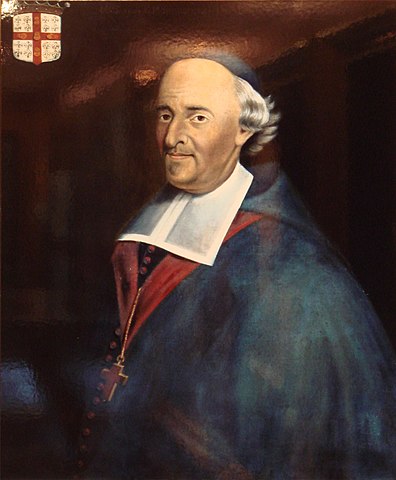
Pope Francis signed earlier today the canonization decrees (by equipollent canonization) of three major figures of the greatest religious enterprise in history, the (old-style) evangelization of the Americas:

- two whose lives were entirely given over to the evangelization of Canada (Québec):


François de Montmorency-Laval, of the illustrious house of Montmorency, first Bishop of Québec and founder of the renowned Séminaire de Québec;

Marie de l'Incarnation (Guyart), born in Tours, founder of the Ursuline convent of Québec.

- one whose life was entirely given over to the evangelization of Brazil:


José de Anchieta, S.J., Spaniard (the Canarian son of a Basque family), called the "Apostle of Brazil" and founder, along with Portuguese Fr. Manuel da Nobrega, S.J., of several cities, including Sao Paulo.

Interview with Roberto de Mattei


Translator's Note:  We hope that our readers in Washington and New York will take advantage of hearing Professor de Mattei speak - more details in this previous post.


Let us start with your expulsion from Radio Maria, justified, in the words of the director, Father Livio Fanzaga, by an increasingly critical attitude towards the pontificate of Pope Francis.  You have been charged with not putting your great cultural qualifications at the service of the Successor of Peter(even if you have written a book on the Pope: The Vicar of Christ, published by Fede&Cultura). In the end your dismissal was justified by an incompatibility with the aims of Radio Maria, which are those of adhesion to the Magisterium of the Church and of support of the pastoral activities of the Pope.  In other words one gets the feeling, in reading the literal words within the rather stern tone, that your were no longer retained by the Director because of a question of whether you affirm the teaching of the Magisterium of the Church, that is, a charge of  “not thinking with the Church”.  In fact these were the same justifications adopted for the expulsion of Alessandro Gnocchi and Mario Palmaro from Radio Maria.  What is your explanation for these measures taken against you?

I worked with Radio Maria for four years, having been invited to do so by Father LIvio. I was in charge of the monthly feature, “Christian Roots”.  More than one time it happened that I was the object of attack on the part of the secular press, but I always had the support of Father Livio.  I never criticized the Pope on my program, and, as you remember, I am the author of a book whose title is The Vicar of Christ: Between the Ordinary and the Exceptional. In this book I express all my devotion without reserve to the institution of the Papacy.  The reasons for my estrangement from Radio Maria, justified by presumed criticisms of the Pope, are still not clear to me.  Perhaps some of my initiatives, such as the gathering of signatures in support of the Franciscans of the Immaculate, were not liked by certain high ecclesiastics, who asked Father Livio for my head, after the heads of Alessandro Gnocchi and Mario Palmaro, judging us as too independent from the new course the Church is taking.  I believe, on the other hand, that, as baptized Christians, we have the duty to express, with the obligatory respect, all of the perplexities, doubts and questions that arise in us concerning certain choices made by the ecclesiastical authorities.  Obedience has its precise limits and is never servile.  It was Pope Francis himself, last July in Saint Martha, who said that if there existed an “identity card” for Christians, certainly freedom would be included in its characteristic features.

It is curious to note that whoever professes himself bound to the Tradition and, consequently, to the safe-guarding of the Tridentine Mass finds that suddenly his right of citizenship in the Catholic world is taken away, as if he were a subversive, a trouble maker, or even a heretic.  Against such a person there is no mercy, and the proof of this, for example, is what happened to a religious order among the most flourishing and growing like that of the Franciscans of the Immaculate, now having fallen into disfavor only because of their desire to orient their spirituality in the direction of the Ritus Antiquior and by this were seen to be critical of the Second Vatican Council.  What do you think about this?

This attitude characterizes the new course of the Church after Vatican II.  On one hand, in the name of mercy and dialogue with separated brethren, they preach the end of the epoch of condemnation and anathema.  On the other hand, they use a fist of iron towards those within the Church who do not want to stray from the unchangeable Tradition of the Church.  The case of the Franciscans of the Immaculate makes one ponder.  In the tragic epoch of the post-Conciliar years the seminaries emptied out, religious houses and convents were put up for sale, vocations plummeted, but no action was taken.  If, instead, a religious institute, living the theology, spirituality and the liturgy of the Tradition grows in the number of its members and houses, it is harshly struck down.  The Congregation for Religious wants the destruction of the Franciscans of the Immaculate, because a religious order that flourishes in following its fidelity to the Tradition is for the progressives a scandal.

With respect to the Second Vatican Council, in spite of the expectations and hopes of so many, the epoch that followed it did not represent a “springtime” for the Church, but rather, as Paul VI himself recognized and his successors, a time of crisis and difficulty.  And yet the post-Conciliar Church considered it as an unattackable dogma, as if the Church were grappling with a new beginning, a new life.  With your book, The Second Vatican Council: An Unwritten Story, (Lindau publisher), you offered a rigorous reconstruction of that event…In a final summary, what is the right way to read what happened in the Church with Vatican II?

The contribution that I wanted to give with the volume, The Second Vatican Council: An Unwritten History, is not that of a theologian but that of an historian.  I wish to say that I am not interested in the hermeneutical debate about Vatican II, and I leave it to the theologians to judge whether the conciliar documents are continuous or discontinuous with the Tradition of the Church.  Whatever judgment is made on the documents of the Council, the problem at its base in not that of interpreting them, but of understanding the nature of an historical event that has marked the twentieth century and ours.  From the point of view of history the Second Vatican Council represents a whole that comprises its spirit and its documents: that which occurred in the halls of the Council, and the cultural and mass media atmosphere in which the discussions took place.  It consists of its roots and its consequences, its intentions and its results.  It is an event.  The Council of the documents cannot be separated from that of its history, and the Council of history cannot be separated from the post-Conciliar period that represents its realization.  The attempt to separate the Council from the post-Conciliar years is just as unsustainable as that of separating the conciliar documents from the pastoral context in which they were produced.

Today there is the tendency to make a “superdogma” out of the Second Vatican Council: the expression is that of the at that time Cardinal Ratzinger.  It is a bit like what happened in the 1970s with the myth of the Resistance.  "The Resistance", wrote Augusto del Noce, "ceases to be an element that is part of history when it becomes the measure of the valuation of history."  What was yesterday, in the political arena, the Resistance, has become the Second Vatican Council: an event that becomes the measure of valuation of the history of the Church.  We have to work to break down this myth.

Today there is the conviction that one can remain a Catholic whatever one thinks or does.  So an objective morality is no longer perceived as a truth that is above and beyond man, but that everything is subjective and relative, where each person, in the end, understands freedom as the power to do what he likes.  For a Catholic who lives immersed in a vision of life like this it is even more difficult to witness to the truth, immersed in a society that seems deaf and which has taken a path that is diametrically opposite to that indicated by the Ten Commandments.  How can one in a concrete way live a life of Christian witness?  What is the task today to which the one who professes himself truly Catholic is called?

The phrase with which the French writer Paul Bourget concludes his novel, Il Demone Meridiano, (translated into Italian by Marco Solfanelli) is of note:  “It is necessary to live as one thinks, if one does not wish to end up thinking as one lives.”  This sentence contains a profound truth.  If life does not conform to thought, it is thought that conforms itself to life.  But to live well, it is necessary first of all to think well.  Life should be consistent with ideas, but the ideas must be in their turn consistent with the great metaphysical and moral principles that regulate human life.  For this reason we must be men of principle, because the world is based on principles, and the principles and laws on which the world is based have their center and foundation in God as the first principle and first cause of everything that exists.  That which is true for each man is true for human society and as well for that human-divine society that is the Church.  In the course of history it has happened that the Christians, in their personal life, have distanced themselves from the truth and the teachings of the Church.  Epochs of decadence need a profound reform, that is, a return to the observance of the principles that had been abandoned.  If this does not happen, there is the temptation to transform immoral ways of living into principles opposed to the Christian faith.  This temptation has penetrated the Church and shows itself in the formula of “pastoral practice”. The recent statements of Cardinal Walter Kasper on conjugal moral issues point to this way of thinking. Because “between the doctrine of the Church on marriage and family and the convictions of many Christians within their lives as lived, there has been created an abyss”, according to the Cardinal the doctrine and discipline of the Church needs to be adapted to the situations in which many Christians in fact live, beginning with the divorced and remarried.  It is the principles that have to be adapted to the behavior of Christians and not their conduct that has to be conformed to the principles.  One must think as one lives, and not live as one thinks.  Christian doctrine is dissolved in praxis.

Our task instead is that of professing the faith and living the truth of the Gospel, loving and observing the law that God has given us. This law is not extrinsic to us, but is incised on our conscience. In the practice and the defense of the divine and natural law our love for God and our neighbor is shown forth, and our life is lived to the fullest.

Unfortunately the value and knowledge of the past (of history) to understand the present is nearly totally undervalued and neglected.  In this way we run the risk of taking as pure gold whatever is proposed or presented to us as true, without bothering to verify its truthfulness.  But without questioning, with the desire to seek the truth, without the labor of investigating and informing oneself, we risk making great blunders.  We run the risk of giving credence to someone who proffers as truth that which is not true.  And this is the case also in the religious sphere.  Do you agree with this analysis?

Catholics must understand why historical studies are so important. Among Catholic thinkers of the nineteenth century there were great theologians, great philosophers, great masters of the spiritual life, but no great historian—great in the sense that unites to the vastness of science and knowledge the fullness of the orthodox faith.  The principal reason for this absence from the cultural ecclesiastic horizon lies, in my view, in the loss of the historical sense, that is the human events, in their causes and in their consequences, from a point of view that is above all supernatural.  At the center of history is not, as for too long has been believed, the “capital production ratio”, nor the geopolitical issues, but rather the free acts of man, under the guidance of Divine Providence.  The Catholic historian knows that nothing is irreversible in history, and, above all, that history does not create values, but history is subject to and judged by values.  Catholic thought of the nineteenth century in fact has instead a Hegelian understanding of history as “Weltgeist”,  an irresistible march of the “spirit of the world”.  History marches forward, and the Church must accompany this march.  She must adapt her language, her teachings, her religious practices to the world.  With respect to the world the Church is behind at least two centuries.  And this is the understanding of history expressed by Cardinal Martini when, in his last interview in Corriere della Sera, he affirmed that the Church “is behind 200 years”, that is, the time that separates the Church from the foundational event of the French Revolution.  This affirmation is typically evolutionist, because it implies a philosophy of history founded on an inevitable social progress that is part of a more vast movement towards the perfection of the universe.


[Source: Corsia dei Servi. Translated by Father Richard G. Cipolla.]