
Showing posts with label Ratzinger. Show all posts
Showing posts with label Ratzinger. Show all posts
Guest article: “The Old Liturgy and the New Despisers of the Council”

“Never before has the Church seen such a malicious treatment of a movement within it”: Christophe Geffroy
A translation of “Les Responsa de Rome: une sévérité insoutenable” from the conservative La Nef, which takes the line of Cardinal Sarah and the “reform of the reform.” It is a good representation of those who take the Ratzinger line, with its strengths and weaknesses.—PAK
The Responsa of Rome: An Unbearable Severity
Christophe Geffroy
La Nef, December 21, 2021
Just a few days before Christmas—what could be more urgent in these times of pandemic and the drama of sexual abuse of minors? On December 18, the Congregation for Divine Worship published Responsa ad dubia (responses to doubts) “on certain provisions” of Traditionis custodes. In line with the Pope’s motu proprio and his accompanying letter to the bishops, the tone is blunt, with no concern to spare the people concerned. And the substance is no less so, which prohibits roughly all the sacraments according to the old rituals, except for the Mass.
“The Pope’s Boundedness to Tradition as a Legislative Limit: Replying to Ultramontanist Apologetics”—Full Text of Dr. Kwasniewski’s Denver Lecture
The following lecture was given at Our Lady of Mount Carmel Church in Littleton, Colorado, on July 31, 2021. The video has been posted at YouTube; however, the text below features extensive endnotes that contain much important material. My goal, especially in the wake of Traditionis Custodes, is to refute the all-too-plentiful Catholic apologists who—proof-texting magisterial documents the way their Protestant counterparts proof-text St. Paul—maintain that the pope has absolute executive, legislative, and judicial power over the liturgy. I argue, in contrast, that papal power exists within an historical, ecclesial context that conditions and limits its legitimate exercise, and therefore also grounds the right of the faithful to resist egregious violations of immemorial custom and venerable tradition. In short, this is a defense of the very foundations of the traditionalist movement in the Catholic Church.

The Pope’s Boundedness to Tradition as a Legislative Limit:
Replying to Ultramontanist Apologetics
Peter A. Kwasniewski
Catholic apologists have done a lot of great work over the decades. They have refuted many a Protestant, Mormon, Jehovah’s Witness, or the like oddity, and have helped Jews, Moslems, atheists, agnostics, neo-pagans, and members of all manner of false religions to find Christ and to enter His Church. For this, we are all grateful, and long may their work in this vein continue.
But the same apologists do not perform so well when they turn their sights to intraecclesial affairs, particularly when it comes to explaining the nature, purpose, and limits of papal infallibility. Even there, the apologists do well when they are justifying wonderful things like Humanae Vitae, for its teaching is in accord with natural and divine law and the tradition of the Church, and the pope’s job is to uphold all that, regardless of pressures against it. Yet when popes make spectacularly bad decisions or teach that which is ambiguous or male sonans (evil-sounding) or materially erroneous, these apologists are caught flat-footed and empty-handed. They are tempted either to ignore the problem as an embarrassing exception or to appeal bravely to an unthinking ultramontanism, as if sheer bluster will somehow paper it over.
We have seen a great deal of the latter problem ever since the release of the motu proprio Traditionis Custodes. Most commentators, it is true, fall into two more obvious categories: the progressives who gloat shamelessly over the defeat of the nasty trads, and nearly everyone else who sees Pope Francis’s move as unwarranted, malicious, inflammatory, bellicose, unworkable, and—the worst sin after Vatican II—thoroughly unpastoral. But there is a coetus of self-styled apologists who have rushed to make podcasts defending the pope’s supposed right to create, abolish, and modify liturgy nearly any way he pleases.
This lecture will not be an extensive critique of Traditionis Custodes—that can be found in many other places at this point.[1] Rather, I want to explain how we reached a point of such absurdity that a Roman Pontiff can dare, with the stroke of a pen, to consign to the margins and to eventual oblivion an unbroken liturgical patrimony of millennia and to claim that the new rites created by committee under Paul VI are the “only” (unica) lex orandi or law of prayer of the Catholic Church—and the even greater absurdity that there are Catholic apologists defending him and his purported “right” to do so.
Skandalon: the drama of the history of the papacy

In the passage from Saint Matthew’s Gospel that we have just heard, Peter makes his own confession of faith in Jesus, acknowledging him as Messiah and Son of God. He does so in the name of the other Apostles too. In reply, the Lord reveals to him the mission that he intends to assign to him, that of being the "rock", the visible foundation on which the entire spiritual edifice of the Church is built (cf. Mt 16:16-19). But in what sense is Peter the rock? How is he to exercise this prerogative, which naturally he did not receive for his own sake? The account given by the evangelist Matthew tells us first of all that the acknowledgment of Jesus’ identity made by Simon in the name of the Twelve did not come "through flesh and blood", that is, through his human capacities, but through a particular revelation from God the Father.
“Beyond Summorum Pontificum: The Work of Retrieving the Tridentine Heritage”: Full Text of Dr. Kwasniewski’s Roman Forum Lecture
The following is the transcript of the lecture I gave at the Roman Forum on July 3. A video of the lecture has been posted at Remnant-TV (link). A synopsis (less than one-third the length) was published at Crisis Magazine on July 7, under the title “Summorum Pontificum at Fourteen: Its Tragic Flaws.” As we near the imminent restriction or suppression of this motu proprio, it is important to step back and look at the bigger picture: What is—or is not—the role of the papacy vis-à-vis the liturgy handed down in tradition? What should our attitude be to abuses of papal authority, particularly in regard to its attempts to “allow” or “forbid” immemorial rites of divine worship? I would draw the reader’s attention to the notes, which contain important supporting material.—PAK
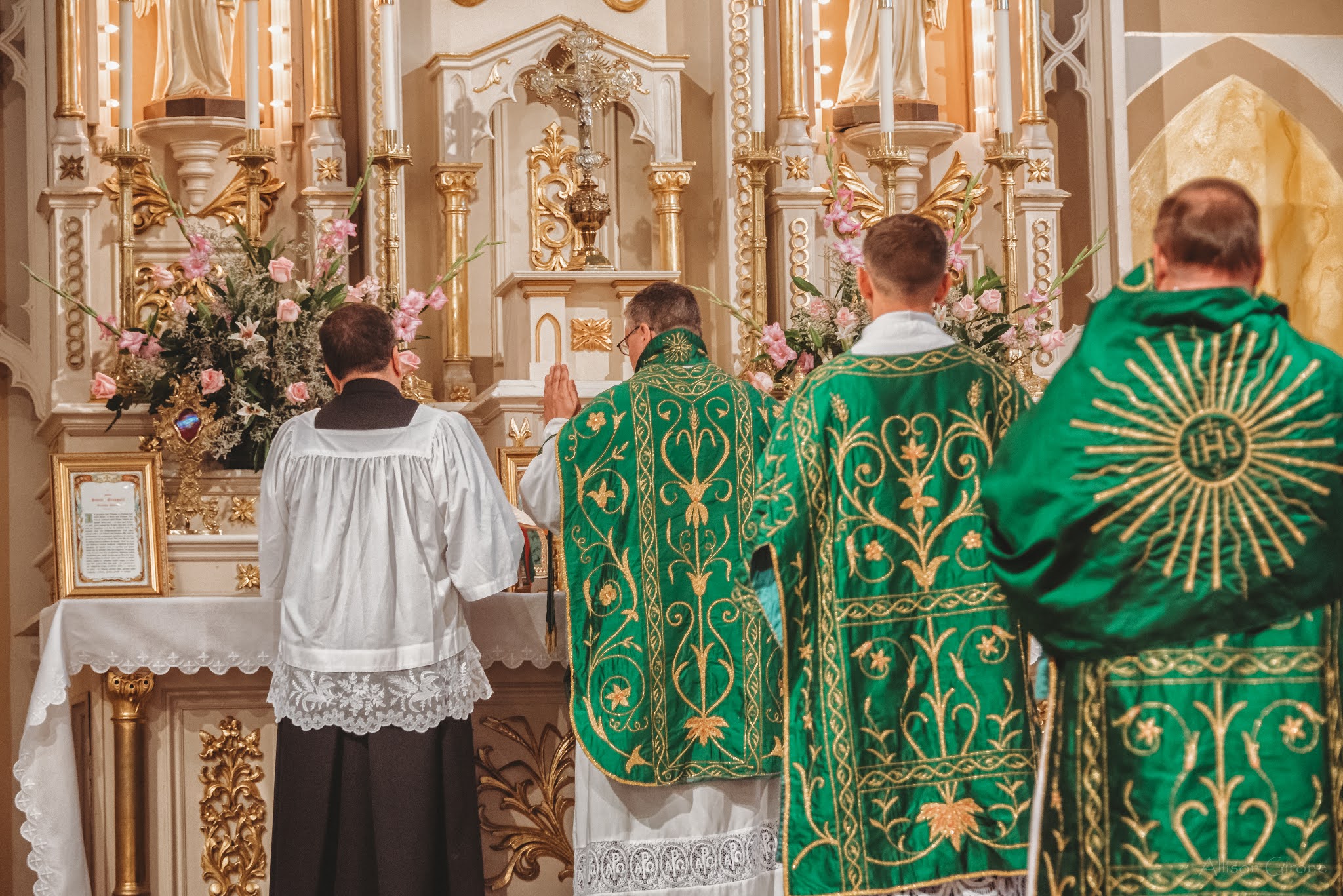
Beyond Summorum Pontificum: The Work of Retrieving the Tridentine Heritage
Peter A. Kwasniewski
As we find out more and more about the sheer corruption of the papal court today, which rivals the record of the Renaissance, it seems (if anything) still more remarkable, bordering on the miraculous, that Summorum Pontificum was ever issued at all. It was a watershed moment, a gesture of fortitude and favor, and a clear factor in multiplying old Masses around the world and weakening the modernist hegemony. We were grateful to have a pope who, instead of throwing a bone to the nostalgics—the so-called “indults” of Paul VI and John Paul II—had the courage to say the truth: that the great liturgy of our tradition had never been abrogated and could never be abrogated. In just a few sentences, central claims of Archbishop Lefebvre, Michael Davies, Count Neri Capponi, and others were vindicated.
I think it is fair to say right from the start that Summorum Pontificum was useful to our movement in the way that an enormous booster rocket is useful for launching a spaceship into orbit: it has a lot of raw power, but it can only do so much, and when it’s empty, it falls away. Summorum Pontificum is destined to be one of the great papal interventions in all of history, but it is no more than damage control; it is not a pillar, much less a foundation, of a permanent structure. And those who lean on it too much will find themselves crushed by its incoherences. My goal in this presentation will be to walk through Summorum Pontificum and identify its principal flaws, the elements in it that act as weights pulling us down, so that we can resolutely go beyond it to retrieve the fullness of the Tridentine heritage that constitutes the authentic Roman rite.
I can imagine what some of you may be thinking: “Rumors are swirling everywhere that Summorum Pontificum is about to be severely curtailed or shelved—and you are complaining about its imperfections? Right now, we’d all be grateful and relieved if we could just hold on to this motu proprio, warts and all.” My response is that unless we understand precisely the weak points of Summorum Pontificum, we will not be able to understand why we are still so vulnerable to the machinations of Francis and his circle, and, more to the point, we will not be able to summon the necessary strength to ignore or to oppose what the Vatican might do to reduce or prevent the celebration of the classical Roman rite. For the motu proprio establishes or reaffirms false principles that are coming back to haunt us, or perhaps have never stopped haunting us. As much as the traditional movement has benefited pragmatically from Summorum (and of that, there is no doubt), we must learn to put our weight fully on our own two feet, so that when the legal crutch or brace is suddenly removed, we do not topple over helplessly.
“Two ‘Forms’ of the Roman Rite: Liturgical Fact or Canonical Fiat?” — Full Text of Dr. Kwasniewski’s Norwalk Lecture
In June 2017, I gave a lecture at St. Mary’s in Norwalk, Connecticut, on the intellectual and historical incoherence of the notion of “two (equal) forms” of the Roman Rite. Given the rapid progress that has been made in liturgical discussions over the past three years, with many more people now attending the traditional Latin Mass and seeing for themselves the truth of Mosebach’s words—“No one who has eyes and ears will be persuaded to ignore what his own senses tell him: these two forms are so different that their theoretical unity appears entirely unreal”—I have decided to make the transcript of the lecture available, and have chosen this date, September 14, for the symbolic reasons one might infer. The text below has been rewritten for its inclusion as a chapter in a forthcoming book with the tentative title: “Pass on Real Gold, Not Counterfeit”: The Immemorial Roman Mass and Fifty Years of Rupture, which I hope will appear from Arouca Press in 2020.

Two “Forms” of the Roman Rite: Liturgical Fact or Canonical Fiat?
Peter A. Kwasniewski
Every Catholic in the world—where he knows it or not—is indebted to Pope Benedict XVI for “liberating” the traditional Latin Mass with the motu proprio Summorum Pontificum. We may grumble about various things Pope Benedict did not do that we feel he ought to have done, but we must never fail to be grateful for the courageous steps he took, in matters in which nearly the entire hierarchy of the Church stood opposed to him. It was deeply against his nature to impose anything that would not be welcomed by at least a large number, and in this act he stood nearly alone. The motu proprio has caused innumerable flowers to flourish, countless fruits to be harvested. In this lecture, I come neither to praise nor to bury Pope Benedict, but rather, to examine an operative assumption in the motu proprio: that Paul VI’s Missale Romanum of 1969 (the “Novus Ordo”) is, or belongs to, the same rite as the Missale Romanum last codified in 1962, or, more plainly, that the Novus Ordo can be called “the Roman rite” of the Mass. This, I shall argue, cannot withstand critical scrutiny. Although I will be referring primarily to the Roman missal and the Mass, my argument would apply, mutatis mutandis, to the rites of the other sacraments, to blessings and rituals, and to the Divine Office and its substitute, the Liturgy of the Hours.
On Submission to Forms: On the Putative Equality of the “Two Forms” of the Roman Rite
Rorate is pleased to publish this guest article by a senior at a Catholic college.

On Submission to Forms: On the Putative Equality of the “Two Forms” of the Roman Rite
Anthony Jones
In recent days, both Bishop Strickland and Bishop Barron have seen fit to address the Liturgical Question, namely, the uneasy coexistence of “Ordinary” and “Extraordinary” forms of the Roman rite. Bishop Strickland praises the traditional Mass, which he learned in order to offer it for the first time on the feast of Corpus Christi, while Bishop Barron seems to say “it’s fine if you like it, but let’s remember that John Paul II and Mother Teresa got holy from the Novus Ordo”—as if to say, it’s not a big deal, like a preference for chocolate over vanilla ice cream.
Anno Domini MMXX - Notes for the Year: Benedict XVI Speaks Up in Defense of Priestly Celibacy - Could this be why Amazon Synod document is late?

One can suspect this with the upcoming publication of a Book jointly written by Benedict XVI and Cardinal Sarah. A scoop revealed by Jean-Marie Guenois, of conservative French daily Le Figaro, as we note below in excerpts from the Associated Press report (book excerpts in bold):
Pope Benedict XVI breaks silence to reaffirm priest celibacyBy NICOLE WINFIELDVATICAN CITY (AP) — Retired Pope Benedict XVI has broken his silence to reaffirm the value of priestly celibacy, co-authoring a bombshell book at the precise moment that Pope Francis is weighing whether to allow married men to be ordained to address the Catholic priest shortage.Benedict wrote the book, “From the Depths of Our Hearts: Priesthood, Celibacy and the Crisis of the Catholic Church,” along with his fellow conservative, Guinean Cardinal Robert Sarah, who heads the Vatican’s liturgy office and has been a quiet critic of Francis.
Why Is the Liturgical Establishment Not Celebrating the 50th Anniversary of the Novus Ordo?

An article published at NLM last Thursday (“Lessons from the Sixties: Selective Synodality and Princely Protests”) begins thus: “It is actually astonishing how little of Paul VI’s liturgical reform, especially his Novus Ordo Missae, which he promulgated fifty years ago, is being commemorated this year.” That has been on my mind, too, for the whole of 2019.
It should strike us as exceedingly odd, at least prima facie, that liturgy committees, Vatican dicasteries, theology departments, chanceries, religious orders, and every other sort of postconciliar bureaucratic apparatus is not engaged in a huge song and dance about the golden anniversary of the new Mass promulgated by Pope Paul VI on April 3, 1969, and effective in most countries on the first Sunday of Advent of that year, November 30. (In the same way, Summorum Pontificum was promulgated on 7/7/07 but did not take effect until the Exaltation of the Holy Cross on September 14).
Certainly, one might think, if there is anything postconciliar that deserves to be toasted, fêted, and proudly clapped on the back, it would be this monumental modern makeover. Yet the number of events, nay, the number of mentions on the part of the Pauline rite’s friends and supporters could be counted on one hand. The total number of events celebrating Summorum Pontificum’s rather modest anniversaries (5 years, 10 years…), in contrast, already go up into double digits. Perhaps the most high-profile piece — and it wasn’t particular high-profile — was an article in L’Osservatore Romano on April 6, 2019, by Fr. Corrado Maggioni, S.M.M., Under-Secretary of the Congregation for Divine Worship and the Discipline of the Sacraments, published in English at PrayTell on April 17. [1]
Can we understand this perplexing silence? I think the answer can be summed up in an alternative title that I considered using for this article: “Memory Hole: On the Destruction of the Knowledge of Tradition.”
What got me thinking along these lines was an interesting exchange at Facebook, of which I will now reproduce the most valuable segments. It began this way:
I have met plenty of people who call themselves Catholic who have never had the slightest idea there ever were any changes, and have no idea what the term “Novus Ordo” even means, the rewriting of history has been so complete.
Another fellow chimed in:
When I was first at University I was vaguely aware that before Vatican II Mass was in Latin, but I thought it meant the liturgy exactly as we had it in the Steubenville chapel, but in Latin. Then I went to a TLM just out of curiosity and discovered just how wrong that idea was.
The first person replied:
I assumed precisely the same thing. The idea that they would simply brazenly concoct something new by committee was something that I had to be forcibly convinced of. It wasn’t until I had put the two texts side by side that I began to realise how we had been utterly swindled all our lives. Then I started reading Michael Davies and it was all over.
A third person chimed in:
I converted from Anglicanism, having read my way to Catholicism. The Novus Ordo (though I didn’t know it was called that at the time or for many years) was a bit of a shock, but I just thought that’s how it was, and I had to get on with it. I never even knew the Latin Mass still existed. I lapsed, came back, and I will always believe it was no coincidence that the weekday Mass I happened to stay for after my confession was a TLM. Usual stuff after that — read Michael Davies, etc., went through the whole anger, “I’ve been cheated” thing — and out the other side. Praise God.
A question was raised: “Why among Catholics is there so much ignorance not just of history in general, but even of our recent history? Fifty years ago isn’t that much time… You’d think that a Church 2,000 years old would want its members to know how great it was that the bad old dusty-musty liturgy was replaced by a shiny new model.” And to it, there came this reply:
The answer to the puzzle is that there is no longer supposed to be any knowledge that the “Novus Ordo,” as such, exists at all. It is supposed only to be “the Mass,” full stop. The fact that there were ever any changes made to the liturgy is supposed to be sliding down the Memory Hole with each passing year. The people who remember the old Mass well, who would have known just how radically different the new is from the old, and who remember how violently the changes were made — these people are dying off. That is, the ones who didn’t simply give up and leave long ago. Catholics who still practice the Faith are not supposed to know there ever was an “old rite” or that there is a “new rite” at all. The entire project of the Revolution at this stage is to deny there ever was such a thing as the Old Faith.
Anyway, all this is why they are as furious as a bag of feral cats that there are still Traditionalists, and that the traddie movement is gaining ground. That lot was supposed to have died out or been driven out, and the fact that there are new ones, people like me who never knew the old rite in the wild, and the families now having twelve kids and going to the Missa Cantata, and all the homeschooling and whatnot... Combine that with the internet’s ability to let everyone know what’s really happening, and plenty of beautiful pictures besides, and it must be making them absolutely apoplectic.

Apoplectic, perhaps; but also strangely silent. How many websites are there that pursue a strongly reformist line? Not that many. Maybe just one: PrayTell. How many websites pursue a strongly traditionalist line? Quite a few. It seems, in short, that the progressives have run out of steam, or run out of confidence, or run out of on-board personnel, or think that talking about it too much risks introducing still further Catholics to the forbidden subjects — and thence, to possible defections.
A reader of OnePeterFive wrote to the editor:
I was already looking for God when I went to school, but the fullness, reality, and beauty of the Church and her Tradition was unknown to me until I discovered 1P5 … I say my encounter with Tradition was a second conversion because my experience immediately following my baptism and confirmation within Francis’ church was segregated from any knowledge that the Church before the 1960’s had been different than it is today.
Exactly. The success of the “transformation of all forms” ultimately depends on as many people in the Church not knowing what came before 1969, or thinking that our worship and our life could, or should, be any different from that which the Vatican, the USCCB, the chancery, or [fill in the blank] would have us think it must be.
At the moment, I am copyediting a manuscript of a translation of a very fine book by Michael Fiedrowicz, Die überlieferte Messe: Geschichte, Gestalt und Theologie des klassischen römischen Ritus, which will be published by Angelico under the title The Traditional Mass: History, Form, and Theology of the Classical Roman Rite. The following paragraph eloquently summarizes the points I have been making:
The celebration of the liturgy in its traditional form thus constitutes an effective counter-weight for all levelings, reductions, dilutions, and banalizations of the Faith. Many who are unfamiliar with the classical liturgy and are acquainted only with the re-created form believe that what they see and hear there is the entirety of the Faith. Scarcely anyone senses that central passages have perhaps been removed from biblical pericopes. Scarcely anyone notices if the Church’s orations no longer expressly attack error, no longer pray for the return of those who have strayed, no longer give the heavenly clear priority over the earthly, make the Saints into mere examples of morality, conceal the gravity of sin, and identify the Eucharist as only a meal. Scarcely anyone even knows what prayers the Church said over the course of centuries in place of the current “preparation of the gifts,” and how these prayers demonstrated the Church’s understanding of the Mass as a sacrifice, offered through the hands of the priest for the living and the dead.
As I discovered the traditional Latin Mass in my late teens and early twenties, I distinctly remember stumbling on important truths of the Faith — truths taught by the Bible, the Church Fathers, the Councils, and, of course, the Tridentine missal — that had become muted, invisible, or even extinct in the Novus Ordo. And subsequent study has only confirmed the extent of that systematic bias. This is why I like to say (admitting it’s a bit of an exaggeration): “my daily missal made me a traditionalist.”
Catholics who do not give themselves trustingly to the 2,000-year tradition of the Church will not be in contact with the whole doctrine and morality of Catholicism. This is hard to hear, but so is much of the teaching of Our Lord: “If any man will come after me, let him deny himself, and take up his cross, and follow me” (Matt. 16, 24). The same is true, in a way, of tradition: we have to deny our modern prejudices, take up the blessed burden of our tradition, and follow it, in order to be integrally Catholic.
Joseph Ratzinger famously and repeatedly said that forgetfulness of God is the major problem of the West. In his Foreword to Dom Alcuin Reid’s The Organic Development of the Liturgy, he wrote:
If the liturgy appears first of all as the workshop for our activity, then what is essential is being forgotten: God. For the liturgy is not about us, but about God. Forgetting about God is the most imminent danger of our age. As against this, the liturgy should be setting up a sign of God’s presence. Yet what is happening, if the habit of forgetting about God makes itself at home in the liturgy itself, and if in the liturgy we are only thinking of ourselves?
The same theologian, as Pope Benedict XVI, wrote in his letter concerning the remission of the excommunications of the four SSPX bishops:
In our days, when in vast areas of the world the faith is in danger of dying out like a flame which no longer has fuel, the overriding priority is to make God present in this world and to show men and women the way to God. Not just any god, but the God who spoke on Sinai; to that God whose face we recognize in a love which presses “to the end” (cf. Jn 13:1) — in Jesus Christ, crucified and risen. The real problem at this moment of our history is that God is disappearing from the human horizon, and, with the dimming of the light which comes from God, humanity is losing its bearings, with increasingly evident destructive effects.
It is still difficult for many in the Church today to realize — either because they are totally ignorant of the past (as the revolutionaries intended), or because, being aware of it, they are afraid to do their homework and connect the dots — that the changes in the liturgy have actually contributed, profoundly and lastingly, to the crisis of our forgetfulness of God, and that the primary cure for this amnesia will be the restoration of the classical Roman rite.
 |
| From the ordination of a priest of the Fraternity of St. Peter in 2017 |
(cross-posted from New Liturgical Movement)
Christus Vincit: Bishop Schneider’s Powerful and Luminous New Book — And Its Presentation in Rome

Word is spreading quickly about Bishop Schneider’s recently released book-length interview Christus Vincit: Christ’s Triumph Over the Darkness of the Age (Angelico Press).
Only professional ostriches of olympic head-burying skill can deny that the Roman Catholic Church is suffering her worst crisis since the Protestant Reformation. We can see it in the escalating conflicts between a Vatican in progressive overdrive and Catholic laity and clergy striving to remain faithful to Scripture, Tradition, and the consistent teaching of the Magisterium; oscillation between anarchy and authoritarianism in governance; multiplying accusations of heresy and schism; and worldwide exposures of clerical abuse implicating bishops all the way up to the pope.
Of those who have dared to call the problems by their name and to seek real remedies, Bishop Schneider stands out for his forthright interventions and the clarity with which he teaches the perennial doctrine of Christ and His Church, encouraging the “little ones,” admonishing the doubtful, and rebuking the relativists, secularists, and modernists who have overrun the barque of Peter.
Christus Vincit one of the most potent books written by any bishop of the Catholic Church, not just in recent years but since the time of the Second Vatican Council. It’s like The Ratzinger Report, raised to the tenth power. No wonder the book features endorsements by an impressive lineup: Cardinal Sarah and Cardinal Burke, eminent theologian Fr. Aidan Nichols, Fr. Gerald Murray of EWTN’s “Papal Posse,” and popular author Scott Hahn.
The Benefits and Beauties of Liturgical Repetition
(Delivered at St. Mary’s parish, Norwalk, Connecticut, on Thursday, February 14, 2019, sponsored by the Society of St. Hugh of Cluny.)
Poets, Lovers, Children, Madmen—and Worshipers:
Why We Repeat Ourselves in the Liturgy
Peter A. Kwasniewski
Repetition in the liturgy is a profound topic, and I am under no illusions that I will be able to offer a comprehensive or definitive account of it. Rather, I would like to suggest some ways of thinking about repetition that may help us to appreciate its positive value, over against the assumptions that stood behind the far-reaching simplification of liturgical rites in the 20th century.
Is the Church Crisis Driving the Faithful to the Latin Mass? An Interview with Dr. Kwasniewski
Recently, Judy Roberts interviewed me for an article she was working on for the National Catholic Register. Parts of the interview appeared at the Register on December 16th, but the full interview is presented exclusively here at Rorate.

Judy Roberts: In your experience, are more Catholics indeed seeking out Mass in the extraordinary form during this time of turmoil in the Church? What are they telling you as to why?
Peter Kwasniewski: Statistics, to the extent that they are available, the creation of new traditional Mass apostolates, and anecdotal evidence shared via social media point to a steadily growing base of faithful who are attending this form of the Roman liturgy.
I’m not sure if it’s growing more owing to the current crisis, but what I have noticed is an interesting trend. The “progressives” or “liberals” are emboldened under this pontificate to show their true colors more and more openly; the “conservatives,” that is, those who would have been classified as “John Paul II Catholics” or “Ratzingerians,” are diminishing; and the “traditionalists,” who once seemed a negligible minority, have not only shown themselves more numerous than hitherto imagined, but are now occupying the intellectual and moral high ground. The serious work of Catholic restoration is happening in large part due to their efforts.
Who are these people? Are they merely older Catholics who grew up with the traditional Mass and are nostalgic for the way things used to be or does this group also include younger people and converts?
Lefebvre & 1988 Consecrations 30 years on: Part III (May-June 1988)

Part I: July 1987 - February 1988
Part II: March 1988 - May 5, 1988
Archbishop Marcel Lefebvre, founder of the Priestly Fraternity of Saint Pius X (FSSPX / SSPX), received in the Fraternity House at Albano Laziale (near Castel Gandolfo) the final text of the Protocol which was sent to him by Cardinal Ratzinger. It was 4:30 PM as the old bishop signed the text. His most extensive biographer, Bishop Tissier de Mallerais (one of the chief negotiators in that afternoon and who would be consecrated on June 30), described the scene:
Part II: March 1988 - May 5, 1988
Archbishop Marcel Lefebvre, founder of the Priestly Fraternity of Saint Pius X (FSSPX / SSPX), received in the Fraternity House at Albano Laziale (near Castel Gandolfo) the final text of the Protocol which was sent to him by Cardinal Ratzinger. It was 4:30 PM as the old bishop signed the text. His most extensive biographer, Bishop Tissier de Mallerais (one of the chief negotiators in that afternoon and who would be consecrated on June 30), described the scene:
His face perfectly expresse[d] the mixed feelings which gripped him: "real satisfaction," as he would write to Ratzinger, and silent mistrust which he spoke of to the sisters in the Cenacolo convent [of the Discepole del Cenacolo, in Velletri, near Albano] at 3 PM: "If Don Putti [Fr. Francesco-Maria Putti, a Traditional Roman priest and spiritual son of Padre Pio, who guided and formed the sisters until his death in 1984] were here, what would he say? 'Your Grace, where are you going? What are you doing?' "
The Archbishop did not sleep during what must have felt like one of the longest nights of his life. The following morning, after Mass and Prime, he sent a letter to Cardinal with an ultimatum of his own: the deadline of June 30, 1988, mentioned in one of his previous letters exchanged in the negotiations was still valid. The text of that letter was:

Yesterday it was with real satisfaction that I put my signature on the Protocol drafted during the preceding days. However, you yourself have witnessed my deep disappointment upon the reading of the letter, which you gave me, bringing the Holy Father's answer concerning the episcopal consecrations.
Practically, to postpone the episcopal consecrations to a later undetermined date would be the fourth time that it would have been postponed. The date of June 30 was clearly indicated in my previous letters as the latest possible.
I have already given you a file concerning the candidates. There are still two months to make the mandate.
Given the particular circumstances of this proposal, the Holy Father can very well shorten the procedure so that the mandate be communicated to us around mid-June.
In case the answer will be negative, I would find myself in conscience obliged to proceed with the consecrations, relying upon the agreement given by the Holy See in the Protocol for the consecration of one bishop, member of the Society.
The reticence expressed on the subject of the episcopal consecration of a member of the Society, either by writing or by word of mouth, gives me reason to fear delays. Everything is now prepared for the ceremony of June 30: hotel reservations, transportation, rental of a huge tent to house the ceremony.
The disappointment of our priests and faithful would be extreme. All of them hope that this consecration will be realized with the agreement of the Holy See; but being already disappointed by previous delays they will not understand that I would accept a further delay. They are aware and desirous above all of having truly Catholic bishops transmitting the true Faith to them, and communicating to them in a way that is certain the graces of salvation to which they aspire for themselves and for their children.
In the hope that this request shall not be an insurmountable obstacle to the reconciliation in process, please, Eminence, accept my respectful and fraternal sentiments in Christo et Maria.
+Marcel Lefebvre
Upon receiving the letter, Cardinal Ratzinger immediately canceled the publication of the communiqué which had been prepared - which explains the scarce report by the secular media of what was taking place. Ratzinger first wrote a note to Lefebvre, asking him to "reconsider his position".
Lefebvre & 1988 Consecrations 30 years on: Part II (March-May 1988)
By the end of March 1988, the rumors regarding a possible reconciliation of the movement led by Archbishop Marcel Lefebvre and Pope John Paul II reached feverish levels in Rome and around the world.
In early April, after nine months of talks, the Pope publicly charged the Prefect of the Congregation for the Doctrine of the Faith, Cardinal Joseph Ratzinger, to negotiate the terms of reconciliation. As The New York Times reported on April 9:

Pope John Paul II today personally stepped into a dispute with one of his severest critics, urging Vatican officials to heal a rift with the ultraconservative Archbishop Marcel Lefebvre of France.
Six months after the Vatican began negotiations aimed at reinstating the rebel Archbishop, John Paul issued an unusual public statement voicing ''my desire that these efforts should continue.'' The statement was in the form of a letter to Joseph Cardinal Ratzinger, who is in charge of the talks.
The letter displayed the public will of the Pope to reach an agreement with Archbishop Lefebvre:

The necessity to distinguish that which authentically "edifies" the Church from what destroys it becomes, in this period [after the Council] a particular need of our service regarding the whole community of the faithful.
The Congregation for the Doctrine of the Faith has, in the field of this ministry, a key role, as the documents on matters of faith and morals which your Dicastery has published in the last few years have been showing. Among the themes of which the Congregation for the Doctrine of the Faith has had to deal in recent times are included the problems related to the "Fraternité of Pius X", founded and guided by Archbishop M. Lefebvre.
Lefebvre and the 1988 Consecrations 30 years on: Reliving the Events of 1988
Part I
The agitation in the Vatican halls had begun in early July, 1987, as reports arrived of the clear words of Archbishop Marcel Lefebvre in his sermon in the Mass of priestly ordinations celebrated in Ecône on July 29, 1987. The first reference was to the Assisi meeting of religious leaders a few months earlier - a historical event which to this day still mesmerizes Traditional Catholics. Lefebvre declared:
Never has history seen the Pope turning himself into some kind of guardian of the pantheon of all religions, as I have brought it to mind, making himself the pontiff of liberalism.
Let anyone tell me whether such a situation has ever existed in the Church. What should we do in the face of such a reality? Weep, without a doubt. Oh, we mourn and our heart is broken and sorrowful. We would give our life, our blood, for the situation to change. But the situation is such, the work which the Good Lord has put into our hands is such, that in face of this darkness of Rome, this stubbornness of the Roman authorities in their error, this refusal to return to the Truth and to Tradition, it seems to me that the Good Lord is asking that the Church continue. This is why it is likely that I should, before rendering an account of my life to the Good Lord, perform some episcopal consecrations.
Secret negotiations ensued. The October 18, 1987 edition of the New York Times included the great piece of Vatican news of the previous day:
Guest article — The Council’s Constitution on the Liturgy: Reform or revolution?
Rorate is happy to make available an English translation of a lecture given in Vienna by Wolfram Schrems on April 2, 2017, at the launch of the German edition of Peter Kwasniewski's Resurgent in the Midst of Crisis. Schrems is a theologian, philosopher, catechist and pro-life activist and a signatory of the Filial Correction. The text below is a thoroughly revised version of the original presentation (a video of which may be found here). The author would like to thank Mr. Stuart Chessman of the Society of St. Hugh of Cluny for the translation into English.

The Council’s Constitution on the Liturgy: Reform or Revolution?
Wolfram Schrems
Vienna, April 2, 2017
Reverend Fathers, Ladies and Gentlemen, and Dearest Friends,
Joseph Ratzinger: "Criticism of papal pronouncements will be possible and even necessary, to the extent that they lack support in Scripture and the Creed"

In 1969, the future Pope Benedict XVI, then Fr. Joseph Ratzinger, wrote that criticizing papal statements was not only possible, but even necessary, to the extent that the pope might deviate from the Deposit of Faith and the Apostolic Tradition. Pope Benedict XVI included these remarks in his 2009 anthology of his writings, Fede, ragione, verità e amore. These remarks, which we now publish below in English translation, are particularly relevant in light of the filial correction of Pope Francis last week:
Guest Op-Ed: Beauty as an essential element of the sacred liturgy
By Veronica A. Arntz
“O Lord, I Have Loved
the Beauty of Thy House”
Beauty as an
Essential Element of the Sacred Liturgy
In Sacramentum
Caritatis, Pope Benedict XVI writes, “Beauty…is not mere decoration but
rather an essential element of the liturgical action, since it is an attribute
of God himself and his revelation” (art. 35). Beauty, therefore, is not merely
an external; rather, beauty is inseparable from the liturgy itself. To say this
in the abstract is one thing, but to understand it in the concrete is much more
difficult. To understand how beauty is an essential element of the liturgy, we
will look to Joseph Ratzinger/Benedict XVI’s writings to elucidate three main
indicators of beauty: liturgy must be Christocentric; situated within the
long-standing, sacred tradition of the Church; and permeated with beautiful
music.
"Reverence Is Not Enough: On the Importance of Tradition" -- Dr. Kwasniewski's Lecture at Strahov Abbey in Prague

In the evening of Friday, October 14, 2016, the official launch of the Czech translation of my book Resurgent in the Midst of Crisis: Sacred Liturgy, the Traditional Latin Mass, and Renewal in the Church was held at historic Strahov Abbey in Prague. His Eminence Raymond Leo Cardinal Burke gave an introduction in which he spoke of the importance of the sacred liturgy in his own life, his experience of the painful years of liturgical reform and experimentation, and his joy that Catholic tradition is being rediscovered today by young people. He then spoke about the book, recommending it to the audience of about 130 people, including journalists and a national Catholic TV station, gathered in the winter refectory of the abbey. Sitting at the same table were the book's Czech translator, Fr. Štěpán Smolen, and one of the members of the publishing team, Mr. Andrej Kutarna, who also translated the lecture below into Czech.
The text of the lecture is reproduced in full.
The Church as communio: Revisiting Joseph Ratzinger's ecclesiology
By Veronica A. Arntz

In Pope Pius XII’s encyclical Mystici Corporis from 1943, we are given
a beautiful description of the Church as Christ’s Mystical Body here on earth,
born out of love from his sufferings on the Cross. Toward the end of the
encyclical, the Pope offers a heartfelt exhortation to love the Church:
Let this be the
supreme law of our love: to love the Spouse of Christ as Christ wished her to
be and as He purchased her with His blood. Hence not only should we cherish the
sacraments with which Holy Mother Church sustains our life, the solemn
ceremonies she offers for our solace and our joy, the sacred chant and liturgy
by which she lifts our souls up to heaven, but the sacramentals too and all
those exercises of piety which she uses to console the hearts of the faithful
and gently to imbue them with the Spirit of Christ (art. 102).
For Pius XII, the Church is
deeply sacramental and liturgical, for, by her very being, she is turned toward
the Lord, anticipating with hope Christ’s second coming. In loving the Church,
we love her liturgies and her sacramental life, for these things are part of
her very being and essence. How much these words are needed for the Church in
our own time! In a time when the sacraments are frequented less and less, piety
is disregarded as being “individualistic,” and, most especially, the liturgy is
viewed as a theatrical act by the priest rather than the eternal sacrifice of
Christ on the Cross, we are in desperate need of a reminder of the true nature
of the Church. In our time, Cardinal Joseph Ratzinger has helped us to
understand the true nature of the Church as Eucharistic and liturgical,
oriented toward communion with God. To understand Ratzinger’s ecclesiological
vision, let us first understand what the Church is not.
Subscribe to:
Posts (Atom)