Rorate Caeli

A remarkable documentary: "The Communists could never win"

Solzhenitsyn's resting place, Donskoy Monastery cemetery, Moscow

4 years ago, Alexander Solzhenitsyn died in his native and beloved Russia. The Russian Orthodox Church reported on Aug. 3 that:

On August 3, 2012, the fourth anniversary of the death of Alexander Solzhenitsyn, the Office for the Dead [Panikhida] was said at his grave in the Donskoy Monastery’s cemetery by his spiritual father, Archpriest Nikolay Chernyshev.

Praying at the commemorative service were Alexander Solzhenitsyn’s relatives and friends and his admirers. Among them were the abbot of the Donskoy Monastery, Father Paramon (Golubka), and Archpriest Nikolay Balashov, vice-chairman of the Department for External Church Relations.

39 years ago, also in the month of August, Elizabeth Voronyanskaya, 66, was detained by the Soviet secret police in the Leningrad Station, Moscow. The aged woman would be put under great ordeal, and forced to hand the typed draft of what many consider the greatest book of the 20th century, The Gulag Archipelago. Days later, Voronyaskaya would be found dead in her house, in what was called a "suicide" by authorities, but under extremely suspicious circumstances.

The small circle of the "Invisibles", that had been assembled by Solzhenitsyn following the great success of his first widely published work, One Day in the Life of Ivan Denisovich, had acted with loyalty and courage. This small group was made of people who died, were arrested, beaten, tortured, and exiled, all to make the truth of Communism known to the world. By the time of Voronyanskaya's death, the work was already safely outside Russia - but her arrest, forced confession and death moved Solzhenitsyn to the extreme measure of asking for the urgent publication of the Russian original and for translations to be made as soon as possible.

A small group was able to do from inside the Soviet empire what the Council could not bring itself to do in Rome a few years earlier. By its shameful silence on the gravest moral matter of its age, the Council condemned itself. Thousands and thousands of words, and the greatest elephant in the room remained unmentioned by name, even though the Church had not refrained from naming it since the 19th century, and even in moments of intense persecution. May the struggle of the victims of Communism live forever through the witness of those who stood up to it when they had the chance - and those who still stand up to it today.

In order to understand exactly how Solzhenitsyn and the "Invisibles" managed to get The Gulag Archipelago published, we recommend this remarkable 50-minute documentary, which has just come to our attention.

Catholic News Service interviews John Rao

Professor John Rao is interviewed by the USCCB Catholic News Service (CNS) about the Church today, Tradition, and the Roman Forum - full playlist below (just play and all parts will load automatically):

Ad orientem
Saint Benedicta: the Cross and the Sacrifice are in the East.


August 9, 1942, the eve of Saint Lawrence, the celebrated martyr of the Church of Rome, is generally considered the last day of Saint Teresa Benedicta of the Cross on this earth. 70 years ago, she and Rosa, her sister, who days earlier had boarded in the transit camp of Westerbork (Netherlands under German occupation) the train destined to the General Government area of occupied Poland, would be killed, along with an unknown number of other prisoners, and all trace of their physical existence would vanish.

The Cross had been her concern and her love even before she chose to enter the Church. Expiation, suffering, surrendering oneself completely, being ravaged by the world: death. Her cross expected her in the East. Hatred, brutality, and evil may have destroyed her body, but her soul was embraced by the Redeemer.

The keepers that go about the city found me: they struck me: and wounded me: the keepers of the walls took away my veil from me. I adjure you, O daughters of Jerusalem, if you find my beloved, that you tell him that I languish with love. What manner of one is thy beloved of the beloved, O thou most beautiful among women? what manner of one is thy beloved of the beloved, that thou hast so adjured us? ... such is my beloved, and he is my friend, O ye daughters of Jerusalem. (Cant. v)

Lord: Thy head is like Carmel: and the hairs of thy head as the purple of the king bound in the channels. (Cant. vii, 5)
_____________________________________

Germany is a beautiful country. And though Germans, for some reason, tend these days to abandon their nation in droves in the warm weeks of August, it hardly looks more majestic than in the summer. A true festival of shades of green, dramatic valleys and forests, and hills that are brighter than ever, reflecting the bright sunlight of the season.

Wrocław (Breslau) in August
Germany was the homeland of Saint Benedicta. It was in the then very German city of Breslau (now in Poland) that Sr. Benedicta had been born, as Edith Stein, in October 1891. For the first time in many years, on August 6-7, 1942, she reentered Germany. Was she allowed to take the only volume of the beloved breviary she still had with her, her major consolation in those days? Was she able to see, in the trains that left the transit camp of Westerbork the green fields and intensely colorful skies and rivers of August? Was she able at least to stay in the same car as her sister Rosa? Were they able to strengthen each other through their last journey? 

From west to east, they crossed their Germany - because it was their Germany, too. They even crossed their Silesia, always going eastwards. Deported to the east: could they guess what their destination would be? Was Sr. Benedicta aware of exactly where she was being sent? Was she aware that the martyred Polish lands under German occupation would witness her own death?

From the "Testament" of Sr. Benedicta:

From this moment, I accept the death that God has prepared for me, fully and joyfully submitting myself to his most holy will. I pray the Lord that he will accept my life and my death, in his honor and glory, for all the intentions of the Most Sacred Hearts of Jesus and Mary, and of the Holy Church; in particular, for the preservation, sanctification, and perfection of our holy Order, above all of the Carmels of Cologne and Echt, in expiation for the unbelief of the Jewish people, and so that the Lord may be welcomed by his own, and that his Kingdom will come in Glory, for the salvation of Germany and for peace in the world, and, at last, for my relatives, living and deceased, and for all those God has given to me: let not one of them be lost.

Friday in the Octave of Corpus Christi, June 9, 1939, seventh day of my spiritual exercises.

In nomine Patris et Filii et Spiritus Sancti.

Sr. Teresa Benedicta a Cruce O.C.D.
_____________________________________

Of one thing we can be certain: she had already accepted the death that one day we will all face. She accepted it, because she knew Redemption was at hand: for Catholics, "hope springs eternal" (Pope) because hope comes from the Cross.

Written soon after the beginning of the war (usually published among her autobiographical writings):

The world is on fire; the struggle between Christ and the Antichrist is now fully in place. If you decide [to fight] for Christ, this may cost you your life; therefore, consider your promises very well. ...


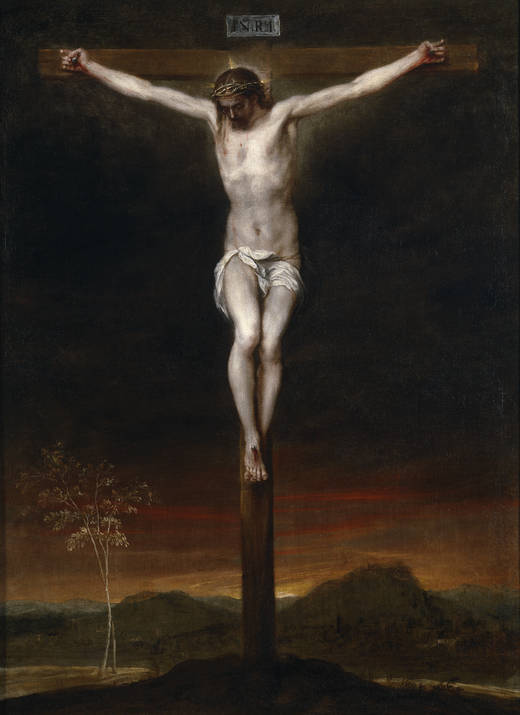
The Savior hangs from the Cross, right before you, for his obedience unto death, and death on the Cross. He came to the world not to do his will, but the will of the Father. ...

Your Savior hangs before you with a wounded heart. He gave the Blood of his own heart in order to have your heart. If you wish to follow him in holy purity, then your heart has to be free from all earthly desire, and Jesus, the Crucified, must be the only object of your wishes, of your desires, and of your thoughts. ... The arms of the Crucified one are open to attract you towards his heart. He wants to take your life in order to offer you his life. Ave Crux, spes unica!

The world is on fire. The fire can also affect our own house; but high above us, above all flames, the Cross will stand upright. The flames cannot destroy it. It is the path from earth to heaven, and whoever embraces it, believing, loving, hoping, moves upward towards the very bosom of the Trinity.

[W]ith the strength of the Cross, you can be in all fronts, in all places where there is affliction. Your merciful love, the love of the divine heart, will take you to all places in which his precious blood flows, soothing, sanctifying, saving.

The eyes of the Crucified stare at you, pensive, questioning. Do you wish to once again establish your covenant with the Crucified one? What will you say to him? 'Lord, to whom shall we go? Thou only hast the words of eternal life.'

Ave Crux, spes unica!!

September 14, 1939


Saint Benedicta, Co-patroness of Europe, pray for us.

Prayers for the Philippines

Please, remember in your prayers or Mass intentions the victims of severe floods affecting the most populated areas of the Philippines. A great portion of the nation's capital is under water and at least 23 deaths have already been recorded, with thousands of refugees and millions affected. (Several news sources.)

Norcia monks present their newly produced beer to the Pope


In today's General Audience. Thanks to Dom Benedict, OSB, the subprior, who sent us the link to the image (by Fotografia Felici).

The Benedictine Monks of Nursia (Norcia, Italy) are responsible for one of the best websites of traditional-minded Catholic groups, posting their Lauds and Vespers daily (see our sidebar). May this new venture (Birra Nursia is the name of the product) be a fruitful enterprise for the community.

On the Feast of Saint John Mary Vianney:
Thank you, dear Priests


We ought also to fast and to abstain from vices and sins and from superfluity of food and drink, and be Catholic. We ought also to visit Churches frequently and to reverence clerics not for themselves, if they be sinners, but on account of their office and administration of the most holy Body and Blood of our Lord Jesus Christ, which they sacrifice on the altar and receive and administer to others.

And let us all know for certain that no one can be saved except by the Blood of our Lord Jesus Christ and by the holy words of the Lord which clerics say and announce and distribute and they alone administer, and not others.

Saint Francis of Assisi
Epistola ad Fideles II (Letter to the Faithful II)


[Reposted: thank you, dear Priests!]

Müller: Yes, I do believe in those things


Vatican City, Aug 6, 2012 - The new head of the Vatican’s Congregation for the Doctrine of the Faith says he wants the department to play a positive role in the New Evangelization, rather than simply responding to doctrinal problems as they arise.

“The task of this congregation is not only to defend the Catholic faith but to promote it, to give the positive aspects and possibilities of the whole richness of the Catholic faith,” Archbishop Gerhard Ludwig Muller told EWTN News in a July 20 interview.

“We must speak about God the Father, the Lord Jesus Christ, the Holy Spirit, and also about Holy Scripture, the great Tradition of the Church, our Creed and our belief. In this way our hearts will be more open and our thinking more profound,” he said. ...

Archbishop Muller’s latest appointment, however, has been met with a degree of criticism from some who allege he holds unorthodox views on a range of issues – from the perpetual virginity of Our Lady, to the real presence of Jesus Christ in the Eucharist, to the relationship of non-Catholic Christians to the Church.

“These are not criticisms, they are provocations. And not very intelligent provocations at that,” he said. “Either they have not read what I have written or they have not understood it.”

“Our Catholic faith is very clear,” he explained,“that at the consecration during Mass a change occurs so that the whole substance of the bread and wine is changed into the whole substance body and blood of Jesus Christ, and that this change is rightly called transubstantiation. And we have refused to accept all the other interpretations, consubstantiation, transignification, transfinalisation and so on.”

The Church is also equally clear on the “virginity of Mary, mother of Jesus, mother of God, before, during and after the birth of Christ,” Archbishop Muller stated.

It seems we are done with this matter, right? Thank you.

[Tip: reader]

De Mattei: "Religious Liberty - or liberty for Christians?"


Among the slogans of “politically correct” language there is the term “religious liberty”, which is used incorrectly at times by Catholics as a synonym for freedom for the Church or freedom for Christians.  In reality the terms and concepts are different and it is necessary to clarify them. The ambiguity present in the Conciliar declaration Dignitatis humanae (1965) arose from the lack of distinction between the internal forum, which is in the sphere of personal conscience, and the public space, which is in the sphere of the community, or rather the profession and propagation of one’s personal religious convictions. 

The Church, with Pope Gregory XVI in Mirari Vos (1836), with Pope Pius IX in the Syllabus and in Quanta Cura (1864), but also with Pope Leo XIII in Immortale Dei (1885) and in Libertas (1888) teaches that:


  • 1. No one can be constricted to believe in the private forum, because faith is a personal choice formed in the conscience of  man.
  • 2. Man has no right to religious freedom  in the public space, or rather freedom to profess whatever religion, because only the true and the good have rights and not what is error and is evil.
  • 3. Public worship of false religions may be, in cases, tolerated by the civil authorities, with the view of obtaining a greater good or avoiding a greater evil, but, in essence, it may be repressed even by force if necessary. But the right to tolerance is a contradiction, because, as is evident even from the term, whatever is tolerated is never a good thing, rather, it is always a purely bad thing. In the social life of nations, error may be tolerated as a reality, but never allowed as a right.  Error “has no right to exist objectively nor to propaganda, nor action” (Pius XII Speech Ci Riesce 1953)


Further, the right of being immune to coercion, or rather the fact that the Church does not impose the Catholic Faith on anyone, but requires the freedom of the act of faith, does not arise from a presumed natural right to religious freedom or a presumed natural right to believe in any religion whatever, but it is founded on the fact that the Catholic Religion, the only true one, must be embraced in complete freedom without any constraints. The liberty of the believer is based on the truth believed and not on the self-determination of the individual. The Catholic and only the Catholic has the natural right to profess and practice his religion and he has it because his religion is the true one. Which means that no other believer apart from the Catholic has the natural right to profess his religion. The verification of this is in the fact that rights do not exist without responsibilities and duties and vice versa. The natural law, summed up in the ten commandments, is expressed in a prescriptive manner, that is, it imposes duties and responsibilities from which rights arise. For example, in the Commandment “Do not kill the innocent” the right of the innocent to life arises. The rejection of abortion is a prescription of natural rights which is separated from religion and whoever conforms to it. And this is the same for the seven Commandments of the Second Table. Comparing the right to religious liberty to the right to life, considering them both as natural rights, is however, nonsense.

The first three commandments of the Decalogue in fact do not refer to all and sundry divinities, but only to the God of the Old and the New Testaments. From the First Commandment, which imposes adoration of the Only True God, arises the right and the duty to profess not any religion but the only true one. This counts for both the individual and the State. The State, like each individual, has the duty to profess the true religion, also because the aims of the State are no different from those of the individual.

The reason the State cannot constrain anyone to believe does not arise from the religious neutrality of the State, but from the fact that adhering to the truth must be completely free. If the individual had the right to preach and profess publically any religion whatever, the State would have the obligation of religious neutrality. This has been repeatedly condemned by the Church.
  
For this reason we say that man has the right to profess, not any religion, but to profess the only true one.  Only if religious liberty is intended as Christian liberty, will it be possible to speak of the right to it.

There are those who sustain that we live actually in a pluralistic and secularized society, that the Catholic States have disappeared and that Europe is a continent that has turned its back on Christianity.  Therefore, the real problem is that of Christians persecuted in the world, and not that of a Catholic State. Nobody denies this, but the verification of a reality is not equivalent to the affirmation of a principle. The Catholic must desire a Catholic society and State with all his heart, where Christ reigns, as Pope Pius XI in the encyclical Quas Primas (1925) explains. 

The distinction between the “thesis” (the principle) and the “hypothesis”(the concrete situation) is noted. The more that we are obliged to suffer under the hypothesis, the more we have to try to make the thesis known.  Hence, we do not renounce the doctrine of the Social Kingship of Christ: let us speak of the rights of Jesus Christ to reign over entire societies as the only solution to modern evils. So, instead of fighting for religious liberty, which is the equalizing of the true religion with the false ones, let us fight in defense of liberty for Christians, today persecuted by Islam in the East and by the dictatorship of relativism in the West.

Roberto de Mattei 

[From: Corrispondenza Romana - July 19, 2012. Contribution and Translation: Contributor Francesca Romana. As always, posted articles reflect the views of their authors: we ask for a healthy debate in the comments.]

To be Catholic is to be happy!


At the end of this "Bavarian hour" I can only say "May God reward you" (Vergelt's Gott) from my heart. It has been nice to be here at the center of Lazio, in Castel Gandolfo, and at the same time in Bavaria. I have just been "Dahoam" (at home), and I have to congratulate Cardinal Marx, for being able to pronounce that word so well!

We have been able to perceive that the Bavarian culture is a cheerful one: it is not a rude demonstration, it is not "Raudi" [rowdy], but cheerful, imbued with joy, born from an inner acceptance of the world, from an inner yes to life that is a yes to joy. It is based on the fact that we are in harmony with the Creation, in harmony with the Creator himself and this is why we know it is good to be Man.

It is true, we have to admit that God has made this easy for us in Bavaria: he has given us a world, a land so beautiful, that it is easy to recognize that God is good and be happy. At the same time, however, He has also enabled the men who live in this land – through their "yes" - to give it its full beauty, through the culture of the people, through their faith, their joy , songs, music and art it has become as beautiful as the Creator wanted, but could not have realized alone, only with the help of men.

Now, some might say, is it right to be so happy, while the world is so full of suffering, when there is so much darkness and so much pain? Is it legitimate to be so defiantly joyful? The answer can only be a yes! Because saying 'no' to this joy benefits nobody, but only makes the world darker. And those who do not love themselves cannot give to love their fellow man, can not help them, can not be a messenger of peace. We know this from our faith, and we see it every day: the world is beautiful and God is good and He became man and entered into us, suffers and lives with us, we know this definitely and concretely : yes, God is good and it is good to be Man. We live in this joy, and try to bring this joy to others, to reject evil and to be servants of peace and reconciliation.
Benedict XVI 
August 3, 2012

[Translation: Radio Vaticana. We wish our readers a very joyful August, and, if possible, days of leisure and rest.]

Little Actions, Big Help for Poor Souls


Below, please find the sixtieth posting of enrolled souls of the Rorate Caeli Purgatorial Society.

While we give you specific prayers to say for the souls and the priests who are praying for them, there's other ways you can help the souls as well. For example, I would hope that most traditional Catholics have been properly enrolled in the Brown Scapular.

With that enrollment and adherence to the daily Little Office or Rosary, comes the Sabbatine Privilege. Remember that merely wearing the Scapular grants partial indulgences, that can be applied to the souls.

How to enroll souls: please email me at athanasiuscatholic@yahoo.com and submit as follows: "Name, State, Country." If you want to enroll entire families, simply write in the email: "The Jones family, Ohio, USA". Individual names are preferred. Be greedy -- send in as many as you wish and forward this posting to friends as well.

Please consider forwarding this Society to your family and friends, announcing from the pulpit during Holy Mass or listing in your church bulletin. We need to spread the word and relieve more suffering souls.

Please pray for the enrolled souls and the 17 holy priests saying Traditional Masses for the Society:

Echt, August 2, 1942 - Sr. Benedicta is arrested with her sister
Her last letter: "Send me the next volume of the Breviary"

70 years ago, the crackdown on Jewish-born Catholic converts reached deep inside the silent walls of the Carmel of Echt (Limburg, Netherlands under German occupation). The new wave of persecution had been the swift response of the occupying forces to the public reading of the Pastoral Letter of the Dutch Episcopate (see previous post). 

Teresa Benedicta of the Cross, O.C.D., (known simply as Sr. Benedicta in her Carmel) had been trying, in a brave and Christian way, to protect herself and her sister, who had joined her in Echt, from what seemed inevitable - she had already managed to secure them places in Carmelite houses in Switzerland. But the order of events overwhelmed her plans.

From the biography provided by the General House of the Discalced Carmelites:


The Cross was at the centre of Edith's whole spiritual life. But particularly as the persecution of the Jews grew daily in intensity, at the Carmel of Echt she placed herself unconditionally at the foot of the Cross. On Passion Sunday 1939 she sought permission to offer herself "to the Sacred Heart as a victim of expiation for true peace". On June 9 she wrote her Last Testament, ending with the words: "From now on I accept the death God has reserved for me, joyfully and with perfect submission to his most holy Will. I pray the Lord to accept my life and death to his honour and praise.... as expiation for the unbelief of the Jewish people". ...

What caused the sudden explosion of hate, and the plan to exterminate the Dutch Jews, was the Pastoral Letter of Archbishop Jong of Utrecht, read in all the churches of Holland on July 26, 1942. It voiced the Church's protest against the deportation of Jews. The reaction of the SS. was immediate. All baptised Jews, priests and religious sisters of Jewish origin, were arrested and sent to the concentration camp. Among them were Edith and Rosa. Two SS officials arrived at the monastery of Echt, giving Sister Benedicta only five minutes to get ready. ...

In the night of August 2-3, the sisters arrived at Amersfort dispersal camp. Then during the night of August 3-4 the Jewish prisoners with many others were moved to Westerbork camp, set in a district completely uninhabited in the north of Holland. From here Edith was able to send a note to the Prioress of Echt Carmel, through the mother of a religious sister who had arrived at the camp with luggage for her daughter. Dated August 6, the note was a brief request for woollen stocking and two blankets, and some woollen clothes for Rose. Particularly relevant was the final sentence, "Tomorrow a convoy is to leave for Silesia or Czechoslovakia??"


The last letters written by Sr. Benedicta show her concerns during the last weeks of her life, including in her days of confinement in deportation camps in the Netherlands.

NLM: "The Potentialities of the English Missal for the Ordinariate and the Roman Rite"

The Ordinariates for former Anglicans established by Anglicanorum coetibus can be something mediocre and tame - but they can also be something truly great for the whole Church. The name of the game-changer is "The English Missal" (the Anglo-Catholic translation of the traditional Roman Missal in Early Modern English), not as the sole rite, but as a possibility open to all their priests - and our friend Shawn Tribe, of The New Liturgical Movement, explains why.

It all depends on the will and determination of the leadership in the Ordinariates. They can give this great gift to the universal Church, or they can just remain as a mostly uninteresting  and uninspiring ghetto. It is their choice.

Some recent events put my mind once again to the matter of the English Missal.

The English Missal, as many of you know, is essentially a hieratic English translation of the pre-conciliar Missale Romanum. It was a missal which had been used by various Anglican Catholics, or Anglo-Catholics, in the 20th century.

Fr. John Hunwicke, who himself described the English Missal as "the finest vernacular liturgical book ever produced," summarizes its contents and its use accordingly:

For most of the 20th Century, Anglican Catholic worship meant a volume called "The English Missal". It contained the whole Missale Romanum translated into English; into an English based on the style of Thomas Cranmer's liturgical dialect in the Book of Common Prayer. The "EM" took everything biblical from the translation known as the King James Bible or Authorised Version.

I have often commented on my own hope -- one which I know is shared by many others -- that we would see the English Missal (or something closely akin to it) form one of the liturgical options made available within the context of the Ordinariate. Now it will no doubt be quickly pointed out that the use of the English Missal was by no means universal even amongst Anglo-Catholics and would be generally unfamiliar to many other Anglicans; from what I have gathered from others far more familiar with the situation within Anglicanism, this is certainly true. In light of that, it perhaps would not be the right choice to make it the sole liturgical book of the Ordinariate (which should presumably include a liturgical book which is much closer to something like the Book of Common Prayer) but it surely could be made available as an additional option, a kind of "Extraordinary Form" if you will -- the analogy here is imperfect but I think it gets the basic idea across.

The benefit, from my perspective, is that this liturgical book combines some of the very things which form an important and identifiable part of the Anglican patrimony -- namely, beautiful hieratic liturgical English with correspondingly beautiful English liturgical chant and options for the use of English sacred polyphony -- with the familiar Catholic texts and ceremonies of the Roman liturgical books. In that regard, my own feeling is that it provides a very worthy synthesis which could be well suited to the Ordinariate and its mission -- taken alongside another liturgical book more akin to the BCP. [Read the whole article at The New Liturgical Movement.]

New volume of "Jesus of Nazareth" and possible encyclical

The Holy See Press Office made public today the news that the Pope has concluded the third and final volume of his "Jesus of Nazareth" - focused on the childhood of the Lord -, that is now being translated in major languages for publication. ]

Vatican Insider reports today that the "great gift" the Pope prepares for the "Year of Faith" could be, according to Cardinal Bertone, a new encyclical, "on Faith".

International Summorum Pontificum Pilgrimage to Rome
November 2012


Rorate Caeli has received the following press release.


On the Feast of All Saints (1st November), an international 'Summorum Pontificum' pilgrimage to Rome

The Coetus Internationalis pro Summorum Pontificum has just been constituted in Rome by representatives of several associations of faithful, including the International Federation Una Voce and the Italian Coordinamento Summorum Pontificum in order to organize an international pilgrimage of associations, groups and movements supporting 'Summorum Pontificum' and His Holiness Benedict XVI to mark the Year of Faith.  The pilgrimage will conclude on Saturday, November 3, 2012, with a Mass in St. Peter' Basilica. An official presentation of the event will take place on September 10 in Rome.


Photo: Fr. Josef Bisig FSSP and other Traditional Catholic clerics and pilgrims during the October 1998 pilgrimage of Traditional Catholics to Rome marking the tenth anniversary of Ecclesia Dei. Source: FSSP website. 

The way things were

From the wonderful Polish blog Cæremoniale Romanum (in our sidebar), a detailed list of links to videos filmed by Italian State film production company Istituto Luce (currently part of the Cinecittà Luce S.p.A. public corporation) on various ecclesial occasions, from 1928 to 1964:


1928

A Roma domenica delle Palme in piazza San Pietro (Palm Sunday, St. Peter's square)
- Processione del Corpus Domini a Roma (Corpus Christi, Rome)

1929

- A Roma il Papa beatifica Don Bosco (Beatification of the Ven. John Bosco)

1930


1932

- La domenica delle Palme in piazza S. Pietro  (Palm Sunday, St. Peter's square)

1933


1934

- S. S. Pio XI benedice la folla adunata in Piazza San Pietro in occasione delle canonizzazione di Don Bosco [1] (Pius XI blesses the crowds gathered for the canonization of Bl. John Bosco - 1)
- S. S. Pio XI benedice la folla adunata in Piazza San Pietro in occasione delle canonizzazione di Don Bosco [2]  (Pius XI blesses the crowds gathered for the canonization of Bl. John Bosco - 2)

1935


1938

- Urbi et orbi in occasione della Pasqua (Urbi et Orbi - Easter)

1942

- La Benedizione del Sommo Pontefice a Rome e al mondo in occasione della Festa dell'Immacolata (Blessing of the Supreme Pontiff on the Feast of the Immaculate)

1947

- Cronache vaticane - canonizzazione di Nicolò de Flue (Canonization of Bl. Nicholas of Flüe)

1949

- Numero unico dedicato all'apertura dell'Anno Santo (Special video for the jubilee)

1950

- Beatificazione di Domenico Savio (Beatification of Ven. Dominic Savio)
- Cerimonia di canonizzazione di Maria Goretti (Canonization of Bl. Maria Goretti)
- Proclamazione del Dogma dell'Assunzione (Proclamation of the Dogma of the Assumption) 

1951

- Pio X nella gloria dei beati (Beatification of Ven. Pius X)

1953

- Benedizione pasquale di Pio XII (Easter blessing)
- Il Concistoro (Consistory)

1954

- La Pasqua romana (Roman Easter)
- Pio X alle glorie dell'Altare (Canonization of Bl. Pius X)

1956

- Il solenne pontificale (Solemn Pontifical)

1958


1960

- Benedizione natalizia del papa (Christmas blessing)
- La cerimonia di consacrazione di 8 nuovi vescovi a Roma (8 new bishops consecrated in Rome)

1961

- Il pontefice prega (The Pontiff prays)
- Italia - Il genetliaco di Giovanni XXIII (John XXIII turns 80)

1962

- Benedizione urbe et orbi per la Pasqua (Easter Urbi et Orbi)
- Festa del Corpus Domini in San Pietro (Corpus Christi at St. Peter's)
- Solenne rito a san Pietro (Solemnity at St. Peter's)

1963

- La cerimonia di incoronazione di Paolo VI (Coronation of Paul VI)

1964


You report: First TLM in Rostov-on-Don, Russia since Soviet times

July 22, 2012: TLM in Rostov-on-Don


From Mr. Oleg-Michael Martynov of Una Voce Russia:

Traditional Latin Mass was celebrated in the Russian city of Rostov-on-Don, perhaps for the first time since 1952 when the city's only Roman Catholic parish was “liquidated” by the Communist authorities. Its church was blown up. 

Forty years later, after the Soviet regime collapsed, the parish of the Last Supper was given a new birth by a young missionary priest from Poland, Fr. Jaroslaw Wisniewski who now serves in the Central Asian republic
of Uzbekistan. A somewhat unusual, but very inspiring church was erected in a nice park area, together with magnificent parish facilities. 

Fr. Wladislaw Kloc, SDB, another Pole who has spent many years as a missionary in Zambia and then in Russia, celebrated on Sunday, July 22, his first usus antiquior Mass. Much assistance was rendered by Una Voce Russia, both its local members and those who have traveled some 1100 kilometers (more than 650 miles) from Moscow to provide help and council. 

Rostov-on-Don is soon supposed to become Russia's third place, after Moscow and St. Petersburg, and first one in the Diocese of Saint Clement in Saratov, to have regularly scheduled Masses celebrated according to the norms of Summorum Pontificum.

Plenary indulgence reminder: Portiuncula


On August 2, the "Portiuncula indulgence": under the usual conditions, recite the Credo and the Pater in any Minor Basilica (33, § 2, c), Cathedral (33, § 3, e), or Parish Church (33, § 5, b). (Enchiridion Indulgentiarum, 4th edition, al. concessiones.)

According to the usual allowance concerning indulgences linked to specific days, local Ordinaries may define if the indulgence is equally applicable on another day, or on the preceding, or (usually the case) on the following Sunday (Enchiridion, Normae, n.15)