Rorate Caeli
Showing posts with label ess jay news. Show all posts

Superior-General of the Society of Jesus: The "devil" doesn't exist, just a mental construction to symbolize "evil"

We invent names to represent evil, malice, or idiocy. Such as "devil". Or "Jesuit Superior General".

From Spanish daily El Mundo, via the Catholic Herald:

In an interview with Spanish newspaper El Mundo, Fr Arturo Sosa said: “Christians believe that we are made in the image and likeness of God, and God is free, but He always chooses to do good because He is all goodness.

“We have formed symbolic figures such as the devil to express evil. Social conditioning can also represent this figure, since there are people who act [in an evil way] because they are in an environment where it is difficult to act to the contrary.”

How long till the Society of Jesus change their name to "Society of Satan"? Far better to use the name of a merely "symbolic" figure than to continuously offend the Most Holy Name of God Incarnate, right?...

EXCLUSIVE - The Marxist Revolutionary: New Jesuit Superior-General revealed by those who knew him in Venezuela

Hours after Cardinal Bergoglio was elected Pope, Rorate was the first to bring you inside information from Argentina on what to expect (The Horror: A Buenos Aires Journalist describes Bergoglio).

Now, Rorate, surrounded by friends around the globe, has been contacted by a Venezuelan source, eager to tell the world what exactly to expect of the new Superior-General of the Society of Jesus (the Pope's own religious society), Fr. Arturo Sosa Abascal, based on his experience in his native land, now wrecked by the Socialism brought on, in great measure, by Marxist "Catholics".

In reality, the current situation in Venezuela, of widespread hunger and desperation, is exactly what Liberation Theology looks in practice. And Sosa was a big part of this.

Now to our guest-piece.


A brief note on Father Arturo Sosa

Antonio Francés (nom-de-plume)

Dear friend,

I have known Father Arturo Sosa Abascal for a long time. Unfortunately, what I have seen in him is not in line with the teaching of Christ.

The "punishment" of Fr. Costadoat: a slap on the wrist?
An important clarification from Chile

At the beginning of Holy Week, Rorate posted about the action of Cardinal Ricardo Ezzati SDB in refusing to renew the mandatum of the liberal Jesuit theologian Jorge Costadoat SJ: For the record: Cardinal Ezzati's letter announcing the removal of a dissident Jesuit theologian from the Pontifical Catholic University of Chile.

Shortly afterwards, Rorate received the following clarification from an academic in the Pontifical University of Chile. For prudential reasons we can neither reveal his name nor his teaching position in the University. The clarification has also been slightly edited for this posting.

The situation regarding Jorge Costadoat is far more complicated than it appears. The academic authorities have declared that Costadoat is and will continue to be a member of the PUC of Chile, as researcher and in other academic capacities (including the so-called "extension", which are the activities in which we give lectures, seminars, etc., to the general public), but simply will not teach theology; and that his name can be proposed for the mandatum "in the future" (according to the Dean of Theology) or "within a year" (according to the Rector). So he has not been removed or dismissed. And this has been confirmed by the Cardinal.

For the record: Cardinal Ezzati's letter announcing the removal of a dissident Jesuit theologian from the Pontifical Catholic University of Chile

{UPDATE 04/11/15: The "punishment" of Fr. Costadoat: a slap on the wrist? An important clarification from Chile}


The Salesian Archbishop of Santiago de Chile, Cardinal Ricardo Ezzati, made waves last week in the Hispanic Catholic world when he refused to renew the mandatum of one of South America's most high-profile and liberal theological dissidents, Fr. Jorge Costadoat SJ - yes, a Jesuit, like the Pope. The decision effectively bars the Jesuit from continuing to teach theology in the Pontifical Catholic University of Chile, of which Cardinal Ezzati is also the Grand Chancellor. The Cardinal communicated his reasons for taking action against Costodoat in a letter to the University's Superior Council:

Pontifical Catholic University of Chile
Office of the Grand Chancellor


Santiago, March 24, 2015
VGC-61-2015

Esteemed members of the Honorable Superior Council,

The Faculty of Theology has a central role within the Pontifical Catholic University of Chile (cf. ECE [Statutes] 19), placed under the foremost and direct guardianship of the Grand Chancellor -- as is the case in the other schools of Catholic theology in the world --, among other reasons because the future consecrated persons are formed in it and because it carries out a fundamental task at the service of the entire academic community. The right to confer the canonical mandatum belongs exclusively to the Grand Chancellor and is an indispensable requirement for the teaching of theology in our Faculty.

Continuing Madness:
1) Some in the Curia wanted Burke out of the College of Cardinals
2) More German Catholic weakness on homosexuality and "remarried" divorcees

1) Rome-based journalist and vaticanista Andrés Beltramo Álvarez (a native of Argentina who writes for Mexican newspapers, and also for the Spanish version of La Stampa's "Vatican Insider"), who used to be very level-headed and even conservative in previous pontificates, albeit always giving neutral coverage, is one of those who have chosen to become unofficial spokesmen of the current pontificate. Interestingly in a blog post last week  featuring an extended critique of Cardinal Burke, we can find this pearl:

Does Islam need the "Enlightenment"? Op-Ed

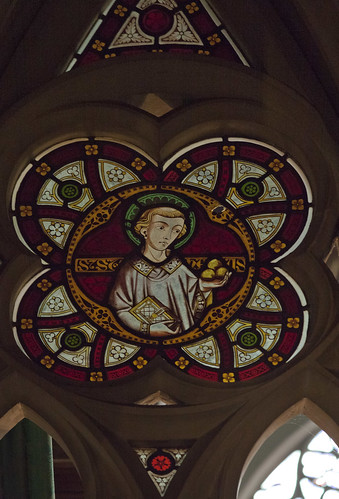
IMG_9206
St Stephen
It is natural to progressives in the West to say that the problem with Islam is not that it is a false religion based on a fraudulent revelation - the distinction between a true and a false religion is impossible for them to make - but that it is simply 'backward'. It needs to go through the process which Christianity went through to make Christianity harmless. That, at any rate, is the view taken by the subeditor on the UCANews site.

The article, by Fr Michael Kelly SJ, is given the hopeful headline and subheading:

Waiting for an Islamic reformation
Will the Muslim world follow the same historical arc as the West?

Fr Kelly seems to get cold feet about this idea as soon as he starts to write. He concedes, first, that the Reformation (by which he and the headline writer mean not the Catholic Reformation but the Protestant Revolt) in Europe was not the end, but the start, of the dreadful wars of religion; second, that the later history of Europe hasn't exactly been a picnic; and third, that Islam had its own 'Reformation' with the split between the Sunnis and Shias, which created the potential for internecine carnage, just as the European one did.

But he wants to salvage something from the Whig view of increasing light and decreasing superstition and violence, so he comes up with this.

Islam had its reformation very soon after the prophet's death when the basic division between Shias and Sunnis occurred. But there has never been any equivalent of the Enlightenment, the French Revolution or the US Declaration of Independence that shaped what rationally operating Western political states inherited.

It is nice that he understands the French Revolution as the practical political manifestation of the Enlightenment. Was this, then, the start of a new era of peace and stability? An era in which

Europe and the US became civilized, started to develop and respect the rule of law and saw better ways of resolving disputes than killing opponents the hard way.
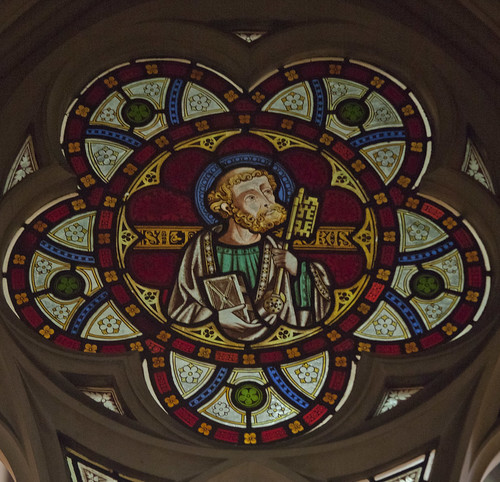
IMG_9207
St Peter
Or was it not, rather, the beginning of a bloodbath that, first, martyrized the Church in France and which afterwards engulfed the whole of Europe, and indeed many countries beyond, for a generation? Wikipedia estimates 3.5 million people died in the Napoleonic Wars, after perhaps 56,000 had died in the Terror and up to a quarter of a million in the War in the Vendee (here).

What do they teach in history lessons in those Jesuit seminaries?

It is indeed interesting to compare the effects of Enlightenment ideas with those of Catholicism, when it comes to living in harmony with others. The key idea of the former, in its revolutionary incarnation, was formulated by Jean-Jacques Rousseau. He thought that we could all be self-governing, by the simple expedient of agreeing heartily with the state's every law and policy, and wanting to do exactly what we were being told to do. He declared that political disagreement can never be legitimate, a matter of reasonable people taking different views; no, disagreement was always the result of people being irrational, ignorant, or selfish, and the role of the state is to 'force men to be free'. This is the basis not only of the French Revolution, but of the theory of re-education found in Communism, and still lurking beneath the surface in progressive thinking in the West today.


500-590 Catholics, including many children, were killed by Revolutionary Forces in the Massacre
of Lucs-sur-Boulogne (Feb. 28, 1794)  during the Vendée War- (Windows at the Petit-Luc Chapel)

Jesuit General to resign in 2016 due to advanced age.
And the Society of Jesus? Still aging, and still shrinking.

Today's announcement by the Jesuit Curia that the General of their Order, Fr. Adolfo Nicolas SJ, will be resigning in late 2016 due to "advanced age" naturally raises the question: how are the Jesuits doing? How many Jesuits are there, after 49 years of aggiornamento and of the post-Conciliar "springtime"?

As of January 1, 2014, according to a report published on March 25 in Populi (citing statistics published on that same day by the Society of Jesus), there were 16,986 Jesuits worldwide: 12,107 priests, 1,331 lay brothers, 2,842 scholastics and 706 novices: a decrease of 268 members over the previous year. The report itself is deceptively titled "Gesuiti, aumentano le vocazioni" -- "Jesuits, an increase of vocations" -- due to there being 706 Jesuit novices as of Jan. 1, 2014 as compared to 699 in 2012. (The source for the figure of 699 novices is not given.)

Unfortunately even that little statistic does not seem to be accurate, insofar as pre-2014 figures are concerned. A complete set of statistics from 1974 to 2013 on the website of the Jesuit Curia, published on April 10, 2013 gives a slightly different picture: As of Jan. 1, 2013, there were a total of 17,287 Jesuits: 12,298 priests, 1,400 lay brothers, 2,878 scholastics and 711 novices. 

If the Populi statistics for Jan. 1, 2014 are accurate, then the real decrease of Jesuits since Jan. 1, 2013 has been by 301 members (and not 268), and there has been a decrease of 5 novices rather than an increase of 7 novices. Priests, lay brothers, and scholastics also saw a diminution of their numbers

And how many Jesuits were there in 1966? There were 36,038, of whom 20,301 were priests. (Source.) 

Pius XII addresses the Jesuits:
“Let what is certain and firm be distinguished from what is offered as conjecture.”


On September 17, 1946, Pope Pius XII spoke to the electors of the Society of Jesus at their General Congregation called to elect a new Superior General.  Because of the terrible devastation of Europe in World War II, there had been no Superior General of the Order from 1942-1946.  They elected the Belgian, John-Baptiste Janssens, who led the Society of Jesus until 1964.  His successor was Pedro Arrupe.

This address was available on the Vatican site only in Latin.  An Italian translation appeared on January 24, 2014 on Chiesa e post Concilio.  This English translation of the main body of the text is offered not only as a vignette of relatively recent Church history but also as part of the prelude to the tempest within the Church whose origins are in the post-war years but whose winds reached storm force in the wake of the Second Vatican Council. In some ways the address seems quaint, made so in part by Pope Pius’ formal style and by his exhortation to follow the tried and true way of St Thomas and of the Catholic way of doing theology.   But in order to understand the roots of the serious problems of the Church today, one must understand the atmosphere in which they were hatched.  And this is especially true in our time when a Jesuit sits on the Throne of Peter.

In the first few paragraphs of the address, Pius XII thanks the Jesuits for their faithfulness and courage during the war.  He speaks about the Jesuits who were killed in battle, who suffered in concentration camps, and those who did their best to keep their seminaries open.  The main part of the address  is concerned with the future and the role of the Jesuits in the coming years, years, according to the Pope, that would be marked with grave difficulties, especially in matters of Church doctrine.  The following are the words of Pius XII in his address to the General Congregation in an exclusive English translation.

________________________

Address "Quamvis inquieti"
of Pope Pius XII
to the Fathers of the Society of Jesus
Delegates in General Congregation XXIX

Now there is nothing that calls us more urgently and pressingly than to restore the authority of religion and Christian moral discipline with due honor and vigor.  Alas, into what times we have fallen because of the negligence of those immortal goods given to us by God.!  Wherever one looks one sees those who are totally ignorant of the Catholic faith, even the rudiments of religion itself.  We see those who see nothing impious in crimes and license, those who disregard even the most elementary norms of morality and justice.  There are those who rage against sacred things, and there are those who neglect them out of laziness.  In whole regions and nations the social order is distorted.  These are wicked times because of wicked men. Men must become good in order for the times to become good.

The Church is aware and understands that it is above all up to her to resist whatever is full of evil and to cure those people who are sick.   And she undertakes this work, trusting above all in the help and the grace of God.  For one can apply usefully even in our times that which the Doctor of the Gentiles said:  “But where sin increased, grace abounded all the more”. (Romans 5, 20) Even in our times the Sun of salvation shines forth, seeing that Christ invites us as well to apostolic labor with those words:  “Lift up your eyes, and see how the fields are already white for harvest.” (John 4, 35).  These words of the Divine Redeemer avail above all for the Sacred Missions and bring an extraordinary comfort.  But they are of great worth also for the nations and for Christians and Catholics of every time.  In fact everywhere the religious fervor of Christians grows and is inflamed by new incentives. Everywhere the eyes and minds of men are turning to the Church,  looking to her for that safety that is salvation, looking to her more than to anyone else.  Everywhere there are so very many who have indeed a “hunger and thirst for righteousness” (Matthew 5,6) and burn with desire for light and for divine Grace.

This is the great work to which the Church has to commit herself!  In carrying out this work she trusts also in you, trusting in your zeal and self-dedication, trusting above all in your religious profession and in your erudition.  Will our hope be in vain?  Absolutely not. We know from experience by what zeal you are moved and how your will burns to be part of what has to be done.  You act for Jesus; and the Society of Jesus will contribute in an important way to the preparation for such holy triumph, and you are imparting your enthusiasm to many others by your example.

But you should be aware of some conditions that must be met, so that what we put forth as what should happen may turn out well, and so that you may fulfill our expectations.  The most important is that you need to be firmly faithful to your Constitutions and to all of their prescriptions.  The rules of your Order, if it seems opportune, may be here and there adjusted to the new ideas of today’s world.  The essential things, however, may not be in any way touched and they must remain always.  For example:  “Tertianship” must be preserved, which other religious families have adopted in imitation of you, and thanks to that third year before Solemn Profession, the vein of intimate spiritual life grows among you with greater abundance.  Other important things are your customs of meditation and silence, and especially the traditional precepts with respect to teaching students.  This way of instruction has lasted a long time, and for this reason it is alive and efficacious.  Just as it takes a long time for a strong oak to grow, so does it take great patience to form a man of God.   Therefore one should temper the generous boldness of youth that makes them tend to act prematurely.  Something done in too much haste has a scattering effect rather than building something up, and it hurts the one who acts in this way as well as the apostolic work.

If you wish to be true and intrepid apostles, strengthen yourselves assiduously, formed by soaking up the spirit of the Exercises of your Holy Father Ignatius (cf. Epist. Insti. S.J. n 174, 2) and thereby will you acquire solid supernatural virtues to enable you carry out your service to Christ with an ardent faith.  As living members of the mystical Body of Christ, strive to gain in this way the means of heavenly grace.  Moved by love for the Divine Redeemer, put behind you that perverse love of self, humble yourselves, keeping in check and controlling your emotions, and with the discipline of this assistance, you will render yourselves fit and ready to carry out all that is asked of you, in support of all difficulties.


From this it will follow that the virtue of obedience will never rest on an unstable foundation.  Your motto, your honor, your strength is obedience, which demands that  above all that you be completely flexible to the will of your directors, without complaint, without murmuring, without blameworthy criticism which, as a disease of our epoch, dissipates strength and renders the initiatives of  apostolic work feeble and unfruitful. The weighty matters that impose austere obedience will become light for you, if you emanate love.  And where there is love there is God himself, because “God is love”.  Let there be in you “the charity that rises from a pure heart, from a good conscience and from a sincere faith. (I Timothy 1, 5)….

Your duty is to be in name and deed not only truly religious men, but also men of great learning.  Carry out the task of teaching theology in word and in writing, biblical and other sacred texts,  the other ecclesiastical disciplines, and philosophy as well.  This high honor belongs to you, a noble undertaking but also the noble reason for which you have assumed this ministry.  For all and for each of those to whom this task has been assigned resounds the cry of the Apostle:  “O, Timothy, guard what has been entrusted to you. Avoid the godless chatter and contradictions of what is falsely called knowledge.” (I Timothy 6,20)

Therefore, to respond faithfully to such a hope, may the Society of Jesus be true to her precepts that prescribe them to follow the doctrine of St. Thomas, “as the most solid, the most sure, the most in agreement with and conforming to the Constitutions” (cf. Epitom. Nn. 315-318), and may they stand with the Magisterium of the Church with that tireless constancy that is associated with your ranks, having, in the words of the Holy Founder himself of your Society, the spirit prepared and ready to obey in everything the true Bride of Christ our Lord, which is our holy Mother, the hierarchical Church”, and “believing that between Christ our Lord, the Spouse, and the Church, his Bride, there is the Spirit himself who governs and rules us for the salvation of our souls; Because by the same Spirit and our Lord who gave the Ten Commandments, our holy Mother the Church is directed and governed.” (Spiritual Exercises, Rules for having the true Sentiment with the Church, 1a and 13a).

And if they ought to cultivate faith above all, they must also secure a careful and accomplished learning, and, following the path of your Rule, pursue advances in thought, as much and however they are able, being convinced that they are able to contribute a great deal by this path, as difficult as it is, to the greater glory of God and to the building up of the Church.  In addition they must speak to men of their own time, as much by speaking as by the written word, in such a way that they are listened to with understanding and with a willing disposition.  It follows that in putting forth and talking about matters in question, in how they frame their arguments and the style of speaking they choose, they need to adapt in a wise manner their discourses to the character and disposition of the time in which they live.  But that which is immutable, let no one disturb it or change it.  Much has been said, but not enough after due consideration, about the “Nouvelle Théologie”, which, because of its characteristic of moving along with everything in a state of perpetual motion, will always be on the road to somewhere but will never arrive anywhere.  If one thought that one had to agree with an idea like that, what would become of Catholic dogmas, which must never change?  What would happen to the unity and stability of faith?

As you consider the veneration of indefectible Truth as something holy and solemn, apply yourselves to examine and work out with zeal those problems that cause people of today to vacillate in their beliefs, above all if those problems are able to generate obstacles and difficulties for Christian scholars.  By shedding light on these difficulties and transforming by your effort what seemed to be an obstacle, strengthen their faith in this way.  But when new or bold questions are examined, let the principles of Catholic doctrine shine forth in splendor before the mind.  Let what rings with the sound of something totally new in theology be carefully weighed with a watchful prudence.  Let what is certain and firm be distinguished from what is offered as conjecture, from those things that a transitory and not always praiseworthy way of thinking is able to introduce and insert even into theology and philosophy.  To the one who is in error, let a friendly hand be extended.  But there must be no indulgence at all given to the errors contained in their opinions. 

 Having given you this exhortation, dearest friends, we now impart to you with love the Apostolic Blessing, and we invoke upon you with many prayers the assistance of God, without which we can do nothing and with which we can do everything, so that you may consecrate yourselves and your resources in the way of your forefathers and with new zeal for the most holy cause of the Gospel.  Be strong, perform feats of strength. “Grow in the grace and knowledge of our Lord and Savior, Jesus Christ.  To him be the glory, now and forever. Amen.” (2 Peter 3,18)


Translated by Fr. Richard G. Cipolla

In the Gesù in Rome, in "the church of Francis": the triumph of "transgender" identity

Some news outlets (Huffington Post, for instance, and NCR) have reported on the December 27 funeral in the Church of Il Gesù, the central church of the Society of Jesus in Rome, for Andrea Quintero, a homeless "transgender" man who left his family in Colombia a few years back. He then drifted to Rome, where he lived on the streets, struggled with addiction and became something of a fixture around the Termini train station. He died in July, the victim of a beating. His family made no move to claim his body. As NCR reports:

Eventually the Jesuit-run Centro Astalli, dedicated to aiding refugees, in combination with the local branch of Caritas and civic officials, stepped in to organize a funeral service.

Among other dignitaries expected to be on hand is Cécile Kyenge, a Congo-born politician and ophthalmologist who serves as Italy’s Minister for Integration, making her the first person of color to serve in an Italian cabinet.

Jesuit Fr. Giovanni La Manna, director of the Centro Astalli, said the funeral is intended not only to mourn Quintero’s death, but to offer “a signal for the entire Roman community that’s distracted in the face so many people who face discrimination, and who live their difficulties to the indifference of our city.”

In a Tweet about the funeral, the Vatican writer for Corriere della Sera, Gian Guido Vecchi, referred to it taking place in “the church of Francis,” presumably a reference to the fact that it’s happening at the mother church of his Jesuit order.

Certainly we have no objections to burying the dead, which is one of the corporal works of mercy -- but it is one thing to have buried Mr. Quintero respectfully but quietly, and another to give him a prominent Church funeral in the full glare of publicity, in the presence of civil dignitaries and in the main church of the Order to which the reigning Pope belongs, with the intention of doing so to make a point against "discrimination."

And it is still another thing yet that, as ANSA reports, during the funeral, the main celebrant (Msgr. Enrico Feroci, the Director of Caritas for the Diocese of Rome) referred to Mr. Quintero as "she" throughout the religious service. 

"Schismatic sect" update


It truly is amazing that ecumenical niceties suddenly disappear when a certain "schismatic" "sect" is involved. From the official publication of the Diocese of Richmond, Virginia (tip C.P.):

The St. Thomas Aquinas Seminary in a rural area of Buckingham County is operated by the Society of St. Pius X, a schismatic sect which is not in communion with the Holy See.

Catholics who attend Sunday liturgy there do not fulfill their Sunday obligation and the sacraments offered are not valid in accordance with the Vatican.

There is an element of confusion among some Catholics about the validity of the liturgy and the sacraments at the seminary which opened a year ago.

Father Anthony Morris, pastor of St. Theresa Parish in Farmville, says that his church office frequently gets calls from people, some of whom express excitement, and want to know if the seminary Mass is an alternative to the regular Sunday Mass at a Catholic parish. It is not.

“I have announced it from the pulpit to our parishioners,” Father Morris told The Catholic Virginian.

In addition to St. Theresa’s in Farmville, Father Morris is pastor of the adjacent parishes of Immaculate Heart of Mary in Blackstone, Sacred Heart in Meherrin, and Nativity in Buckingham.

The seminary in Buckingham is affiliated with the Society of St. Pius X, an international sect founded in 1970 by the late French Archbishop Marcel Lefebvre.

Pope Benedict XVI has declared that, for doctrinal rather than disciplinary reasons, the Society of St. Pius X has no canonical status within the Roman Catholic Church and the ministries exercised by its ministers are not legitimate.

Fine, the largest Catholic seminary being built in America is the work of a "schismatic" "sect" not in communion for "doctrinal" reasons - like the Eastern Orthodox, then. Can we at least grant them the same treatment? From the Decree on Ecumenism of the Second Vatican Council, Unitatis Redintegratio:

There can be no ecumenism worthy of the name without a change of heart. For it is from renewal of the inner life of our minds, from self-denial and an unstinted love that desires of unity take their rise and develop in a mature way. We should therefore pray to the Holy Spirit for the grace to be genuinely self-denying, humble, gentle in the service of others, and to have an attitude of brotherly generosity towards them. St. Paul says: "I, therefore, a prisoner for the Lord, beg you to lead a life worthy of the calling to which you have been called, with all humility and meekness, with patience, forbearing one another in love, eager to maintain the unity of the spirit in the bond of peace". This exhortation is directed especially to those raised to sacred Orders precisely that the work of Christ may be continued. He came among us "not to be served but to serve".

The words of St. John hold good about sins against unity: "If we say we have not sinned, we make him a liar, and his word is not in us". So we humbly beg pardon of God and of our separated brethren, just as we forgive them that trespass against us.
___________________________________

Well, if those in Buckingham Co., Virginia, wish to find a real Catholic church, they can always travel across the country and visit the Jesuit parish of San Francisco, St. Ignatius:

On Wednesday, June 27, the United States Supreme Court handed down two decisions—on Proposition 8 and the Defense of Marriage Amendment –that eviscerated legal marriage in the United States. The following Sunday thus offered Catholic priests a matchless opportunity to articulate the Church’s definition of what marriage is, and what it is not. Indeed, since the decisions had such civilizational import, such articulation was less an opportunity than an absolute obligation.

One priest did choose to address the issue. At San Francisco’s St. Ignatius Church, the 9:30 AM Mass on Sunday, June 30 was celebrated by the church’s pastor, Fr. Gregory R. Bonfiglio, SJ. But rather than presenting Church teaching to his audience, rather than, for instance, stating the simple truth that properly ordered sexuality leads to the creation of new life, while sodomitical relations lead, as San Franciscans know all too well, to physical death and to spiritual death, Fr. Bonfiglio chose to read a letter written by Fr. John D. Whitney, SJ, of St. Joseph’s Church in Seattle. In the letter, which is titled “Why Am I In The Parade?” and which runs to 1,098 words, Fr. Whitney justified his presence in Seattle’s “Gay Pride” parade. The letter was published in St. Joseph’s June 23, 2013 parish bulletin. Given the content of the letter (Fr. Whitney absurdly equated Church teaching on homosexuality with Old Testament dietary restrictions, and ignorantly repeats the long-debunked assertion that the word “faggot” derives from “faggots” of wood), and the timing of Fr. Bonfiglio’s homily, the Sunday immediately after the legalization of counterfeit “marriage,” the homily can be seen as nothing less than support of homosexual “marriage.”

During Fr. Bonfiglio’s reading of the letter, the Church was eerily quiet. At least one parishioner was seen leaving the church in tears. When queried she said “It’s not his church! It’s the Catholic church! I should be able to just go to Church! I want to go to a Catholic Church!” (Source: California Catholic Daily, via The Curt Jester)

Jesuit-educated, creating a "thinking" Church

While Sister Gramick's former order and the Vatican have tried to silence her, it appears this church will give her the spotlight she desires. At least they had the good sense not to hold this discussion in a Catholic facility. H/T @rzollAP:


Father Bergoglio, in disgrace for years for disagreements with the Society's leadership?...
Update: Panorama reports, Il Sismografo denies

Ultra-"progressive" Italian Jesuit Fr. Felice Scalia wrote an article of what the new papacy means for Jesuits for Adista (the "progressive" news agency whose symbol is a saint hugging a devil). Well, for Jesuits like him. One of the main points, after disowning the legacy of Pope John Paul II, is the following:

[N]ow it will be possible to review the history of Fr. Pedro Arrupe, the great victim of the misunderstandings between the Holy See of Pope Wojtyla and the Society of Jesus ... . In heaven, Fr. Pedro will joyfully exult with us.

Maybe. Now, this is curious because Fr. Jorge Mario Bergoglio, provincial of Argentina, seemed to have been himself, at least in a second stage of his provincial leadership, and then for 15 years after that, more a victim than a supporter of Society leadership (maybe including Arrupe, or just in the Kolvenbach years?...). Ignazio Ingrao reports for Italian weekly Panorama:

With a letter, the Superior General of the Society blocked Bergoglio from being received

Marginalized by his own Jesuit brothers, forced for six years to be a confessor in a church in Cordoba, more than 700 km from Buenos Aires, and even forbidden from visiting other Jesuit communities. The story of the relationship between Jorge Mario Bergoglio and the Society founded by Saint Ignatius of Loyola is very painful. There is even a letter of the Superior General of the Society, Dutchman Peter Hans Kolvenbach, that establishes an express prohibition to other houses and communities to receive Bergoglio, at any moment he might have wished to leave the church assigned to him in Cordoba. A true a proper ostracism, that takes place within the most difficult and troubles years of the Society, guided first by Spanish Father Pedro Arrupe, then intervened by John Paul II through Father Paolo Dezza, then returned to the hands of Father Kolvenbach.

His sister Marta and his brother-in-law Enrico Narvaja were direct witnesses of those difficult years for Father Bergoglio: the enfant prodige, chosen Provincial superior of Argentina at 37, destined to a brilliant career, seemed to have been definitely set apart up to when he was 50.

Guarding the Kolvenbach letter and the memory of these painful family events today is Pope Francis's nephew, Father José Luis Narvaja, also a Jesuit, director of the Thomas Falkner institute for the study of sources, professor of theology and patristics in Salvador [Universidad del Salvador, Buenos Aires], in Frankfurt and at the Gregorian University in Rome.

The "sin" of Bergoglio was that to have first sided with Arrupe, than turning decisively against him, so far as to leave the leadership of the Province in 1979. [Rorate note: note, however, that this came at the end of the usual 6-year term for Jesuit provincials.] But the strongly identitarian [Jesuit] position and the deep disagreement with Liberation Theology by Bergoglio ended up being in full agreement with John Paul II and the Prefect for the Doctrine of the Faith, Joseph Ratzinger. For this reason, Karol Wojtyla lifts Bergoglio from oblivion and, at 56, names him auxiliary bishop of Buenos Aires, at the suggestion of Cardinal Antonio Quarracino. A new life begins for the Argentine Jesuit that will lead him up to the throne of Peter. The long audience, soon after his election, with the current Superior General of the Jesuits, Adolfo Nicolas, fails nevertheless to completely conceal the embarrassment with which some old adversaries of Bergoglio in the Society have received his election. ...

[Update - Il Sismografo posted the following: "In an article published in Panorama on April 3, by Ignazio Ingrao, titled 'When the Jesuits marginalized him', and anticipated in the blog of the same author, a supposed letter sent by the previous Father General of the Jesuits, Peter Hans Kolvenbach, is mentioned, with the prohibition for the houses of Argentine Jesuits 'to receive Father Bergoglio when he wished to leave the church assigned to him in Cordoba.' The affirmation is not only completely implausible, but it is absolutely false, because such a letter has never existed. Both the Jesuit Curia, where the [record of the] sending of such a letter is not found, and Father José Luis Narvaja, mentioned by 'Panorama' as the custodian of such letter, and that denied ever having made declarations to 'Panorama', deny this. The official in charge of the Press Office of the Jesuit Curia, Father Giuseppe Bellucci, also notes that the permanence in Cordoba of then-Father Bergoglio was not of six years, as mentioned in the article, but two."

_______________________

In other news: the first Bergoglio appointment to a curial position was made today, as he named the Minister General of the Friars Minor, Spaniard José Rodríguez Carballo, OFM, Secretary of the Congregation for Religious (Institutes of Consecrated Life and Societies of Apostolic Life).

After 40 years, Woodstock's show is over

The Reverend Father Thomas Reese, S.J., is a mainstream reporter's delight, as he is seemingly always available to speak to the press from a liberal priest's perspective on whatever the Catholic news of the day may be. As a result, he is quoted in nearly every major article on Catholic issues and appears on several TV news programs.

In 2005, Father Reese resigned as editor of the Jesuit's magazine, America, after years of verbal warfare with Joseph Cardinal Ratzinger.  The spokesman for the Jesuits explained at the time: "With Cardinal Ratzinger elected pope, I think (Father Reese) thought it would be very difficult to continue his line of openness, without creating more problems."

Now, Father Reese's current office announced it is closing up shop after 40 years.  Catholic News Service reports:

Fr. Dariusz Oko's major article:
"With the Pope against the Homoheresy"

In June 2012, Polish magazine Fronda published an extensive, incisive, and influential article on the papacy and what it calls the "Homoheresy" and the great powers of the group it calls the "Homomafia" in all levels of the Church hierarchy, going all the way to the Roman Curia - and on how Benedict XVI has tried to curtail the great influence of this underground network of deviation. The Rev. Dr. Dariusz Oko, the author, is a Professor of Theology at the Pontifical Academy of Theology (Pontifical University John Paul II), in Krakow. The article was published in German as well (D. Oko, Mit dem Papst gegen Homohäresie, "Theologisches" 9/10 [2012] pp. 403-426), but it has been sparsely available in English.

In the days following the announcement of his resignation, we have been hearing the repeated warnings of Pope Benedict against the divisions in the Church. They recall one of the most somber declarations made by His Holiness, when, en route to Portugal, he said:

As for the new things which we can find in this [Fatima] message today, there is also the fact that attacks on the Pope and the Church come not only from without, but the sufferings of the Church come precisely from within the Church, from the sin existing within the Church. This too is something that we have always known, but today we are seeing it in a really terrifying way: that the greatest persecution of the Church comes not from her enemies without, but arises from sin within the Church, and that the Church thus has a deep need to relearn penance, to accept purification, to learn forgiveness on the one hand, but also the need for justice. (Interview, May 11, 2010)

Considering the dark influences that will try to reach even into the most secret places in the upcoming weeks of grave decisions for the Church, we thought, after having received the translated text from several Polish readers, that this is the right time to make it known to a larger audience among English speakers. We ask our readers to make this text as widely known as possible.


___________________________________________

   
WITH THE POPE AGAINST THE HOMOHERESY

Fr. Dariusz Oko, Ph.D.

         
          For several weeks now Poland has witnessed a heated discussion on the “huge homosexual underground in the Church”, provoked by the most recent book by Fr. Tadeusz Isakowicz-Zaleski entitled Chodzi mi tylko o prawdę[1](Truth Is All That Matters). Some deny any such underground exists, and put forward theses profoundly inconsistent with the teaching of the Church, both being at odds with truth[2]. The problem is serious to the extent I feel I must join in the discussion as well, because I also care about truth, and first of all about good, the fundamental well-being of man and of the Church – the basic community in which he lives.
          Any discussion should have as its starting point the basic, axiomatic assumption that any one of us can know with certainty only a part, and that part is likely to be partially wrong. That should result in any opinions being presented with humility, and the arguments of partners or opponents being listened to with attention. That way we may best benefit from the parts of knowledge each of us has, and correct them. They will always remain only parts, but they will be bigger and purified from errors to a greater extent. That is the blessing of an honest dialogue, and it is in this spirit that I want to proceed.
          My feeling of duty to take a stance results from my involvement in the philosophical criticism of homosexual ideology and homosexual propaganda (abbreviated to homoideology and homopropaganda), which I have dealt with for several years now to the order and with encouragement from many cardinals and bishops.[3] In doing that, I have accumulated what is probably the biggest Polish collection of writings on the topic, one of the largest collections of data. This has been accomplished with the help of many friends and allies, both lay people and clergymen, university professors and practicing physicians, as well as a large number of people I had not known before, but who, encouraged by the opinions I have expressed and having read my articles, wished to add to and correct my knowledge. Thus, I have received news, results of scientific studies, and official documents from both around Poland and various regions of the world, particularly the United States, Great Britain, Ireland, Germany, Austria, Holland and Italy, and, first of all, from the Holy See. I began my work as a struggle against a deadly, external threat to Christianity, but then gradually discovered that the division is not that simple. The enemy is not only outside the Church, but within it as well, sometimes perfectly camouflaged, like the Trojan Horse. We are dealing not only with the problem of a homoideology and a homolobby outside the Church, but with an analogous problem within it as well, where homoideology takes the form of a homoheresy. One does not even need to study the archives of the Institute of National Remembrance, which is only one of many sources. These facts are self-evident also in those countries which have not heard of any such Institute at all. It is enough to collect reliable information from lay and Catholic media concerning the recent years, and add to it the knowledge of human nature, some logical thinking, put two and two together and study documents which present the Church’s response to these facts.


A GLOBAL PHENOMENON

We should first expose the common lie presented by the media. They keep talking about paedophilia among clergymen, while it is most often the case that the problem is ephebophilia, which is a perversion consisting in adult homosexual men being attracted not to children, but to pubescent and adolescent boys. It is a typical deviation related to homosexuality. Basic knowledge about that reality includes the fact that more than 80 percent of cases involving sexual abuse by clergymen reported in the U.S.A. were cases of ephebophilia, not paedophilia[4]! That fact has been carefully hidden and ignored, as it reveals particularly well the hypocrisy of the homolobby in both the world and the Church. It is all the more important that it be exposed.
In other countries, the situation is similar, it is therefore important to note that scandals involving sexual abuse which have shaken the global Church were mostly the work of homosexual clergymen. The Church has paid a very painful price for the tremendous offences which have been exposed, losing much of its credibility. This has caused dramatic difficulties both in spiritual and material terms in many dioceses, monasteries and seminaries, with churches becoming empty in entire provinces of the Church.[5] It is estimated that the Church in the U.S.A. has had to pay more than one and a half billion dollars in damages so far[6]. None of that would have been possible without the existence of a significant underground, of which prosecutors usually reveal only a small part, the tip of the iceberg.
The scandals have also involved those holding the highest offices. In Poland, for instance, Archbishop Juliusz Paetz was dismissed from his office as Bishop of Poznań in 2002. In Ireland, so similar to Poland in spiritual and historical terms, so Catholic, several bishops have been removed from office in the recent years, including John Magee, Bishop of the Diocese of Cloyne, dismissed in 2010 on the grounds of  covering up the offences of paedophilia and ephebophilia committed by 19 priests in his diocese. Before that, Fathers Paetz and Magee had worked together in Vatican for many years as part of the closest, most influential associates of the last three Popes.

The lengths to which militant homosexuals in cassocks can go can be observed in the behaviour of the particularly “liberal” and “open-minded” Archbishop Rembert Weakland, who ruled the diocese of Milwaukee, U.S.A., in the years 1977-2002. He openly admitted to being gay and to having had many partners in life. Throughout the term of his office – for 25 years – he continuously opposed the Pope and the Holy See on many issues, particularly criticizing and rejecting the teaching of the Magisterium on homosexuality. He supported and protected active gays in his diocese, helping them avoid liability for sexual offences they repeatedly committed. At leaving his office, he defrauded about a half million dollars to support his ex-partner.
One of the most influential people in the Church of his time, Marcial Maciel Degollado, founder of the Legion of Christ, turned out to be bisexual and to have perpetrated serious sexual offences against many members and underage students in his own congregation, including even his own son...
All four went entirely unpunished for a long time, despite many complaints and charges against them sent to Rome for years. Only direct contact with the Pope or publications in the media finally helped. Otherwise, everything was blocked at lower levels of local or by the Vatican hierarchy. It was similar in many other cases. For instance, several years passed before Bishops Patrick Ziemann of Santa Rosa in California (1999), Juan Carlos Maccarone of Santiago del Estero in Argentina (2005), Georg Müller of Trondheim and Oslo in Norway (2009), Raymond John Lahey of Antigonish in Canada (2009), Roger Vangheluw of Bruges, in Belgium (2010), John C. Favalora of Miami (2010) and Anthony J. O'Connell of Palm Beach in Florida (2010) were removed from office for active engagement in[, or cover-up of,] homosexual paedophilia or ephebophilia. Similar steps had to be taken with respect to many other bishops who concealed or covered up such offences. The same applied to many, sometimes very influential priests. Not only the number of serious sexual offences proves the power of that underground, but also – to an ever greater extent – the degree to which the process of selecting candidate bishops has been disturbed, who were allowed to make a great “career” in the Church despite their having perpetrated such offences, despite leading a double life. This is further confirmed by the efficiency with which such cases were covered up and concealed, the often insurmountable blockade of all attempts made within the Church to protect the wronged, to strive for elementary truth and justice. It has been so difficult at times to take appropriate, self-evident measures against homosexuals, so many strange difficulties have arisen, and even any success in that area is limited, partial and temporary. We witness a terrible phenomenon – it turns out the comfort of homosexual offenders is more important than the fate of children and youth, the fate of the whole Church. If that was done deliberately, that would be high treason, the Church would be guilty of betraying the youth!

First came the Flying Nun ...

Now, the Dancing Jesuit.


In all honesty, this Jesuit (Fr. Dr. Saju George, S.J.) has been around for many years, so there's nothing new here - though this is a recent presentation, in the church of the Daughters of Charity of Saint Vincent de Paul, in Untermarchtal (Baden-Württemberg, Germany). But with all the other problems in the Church today, a little levity could go a long way. 

NB: This should bring great comfort to certain rogue Catholics. If this Jesuit isn't excommunicated, there's still hope for you yet!

[Source: Pius.info]

Spain: Religious Orders prepare for the end

(Note: Some minor corrections have been made to the entry for the Franciscans (OFM) as of 1750H GMT of Jan. 11, 2013.)

A reader has brought to our attention an article in Spanish, published on October 2012, summarizing the "restructuring" of some of the major religious orders in Spain (due to the drastic decline in their numbers and vocations) as follows:


Society of Jesus : Its five Spanish provinces (Aragon, Andalusia or Betica, Castile, Loyola and Tarragona, see picture to the left) will be consolidated into a single province, the "Province of Spain", in 2014. (Photo source.)


Order of Friars Minor Capuchin (OFM Cap) : In 2011 the four provinces of Andalusia, Castile, Navarra-Cantabria-Aragon and Valencia were unified into a single province.

To the right: Spanish Capuchins during the assembly that unified their provinces in 2010. (Source)
Discalced Carmelites : In 2014 the seven provinces of Navarre, Burgos, Castile, Andalusia, Aragon, Valencia, Catalonia and Portugal will be unified into one.


In 2010, there were 433 Discalced Carmelites in Spain; 230 were above 60 years of age (92 were more than 80 years old), and 203 were below 60 years of age (only 25 were below 40 years old).


Above: Discalced Carmelite Capitulars of the Province of Aragon praying together in 2010. (Photo and statistics source)


Order of Friars Preachers (Dominicans): In 2016, the 800th anniversary of the founding of the Friars Preachers, the Dominicans will unify the Provinces of Spain, Aragon, Andalusia, Portugal and the Vicariate of the Holy Rosary into one. 

Meeting in 2012 of  Spanish Dominican superiors. Photo source


Order of Friars Minor (OFM) : In 2015 the Provinces of 1) Castile, 2) Andalusia, 3) Granada, 4) Valencia-Aragon, 5) Catalonia, 6) Cartagena-Murcia and 7) the Custody of San Francisco Solano will be consolidated into a single entity. The Provinces of Aránzazu and Santiago will remain as they are. 

Meeting of Spanish Franciscan Provincial Definitors in Sept. 2012. Photo source

Franciscans of the Province of Valencia, and some Franciscan sisters, attending a conference in 2009. Photo source

Two forms of "Youth Mass"

Two Masses, two sides of the battle over the minds and hearts of young Catholics.

1) This is a promotional poster for the "Messe qui prend son temps", the "Mass that takes its time", that is regularly celebrated by the French Jesuits in the Eglise Saint-Ignace in Paris, expressly for students and young professionals. The poster is currently on the main page of the website of the Jesuit Province of France. Versions of this Mass are also celebrated in a few other cities in France. 


And here are some glimpses of what the French Jesuit "Mass that takes its time" is like:

The "Spirit of the Council" nightmare that never ends:
Teilhard de Chardin is what passes for "New Evangelization" in top Roman university

(Please see additional note at the bottom of this article)

Certain events are by themselves highly symbolic... The "cosmic nightmare" of one of the most bizarre pseudo-theologians of the 20th century, and its most dated religious thinker, Pierre Teilhard de Chardin, was celebrated with a major conference, on November 9-10, in the Society of Jesus's own Pontifical Gregorian University, dedicated to finding a role for him and his ideas in the "new evangelization".

Italian journalist and commentator Francesco Agnoli could not believe his eyes either, and so he wrote the following in opinion  daily Il Foglio on November 8.


TEILHARD DE CHARDIN: THEOLOGY-FICTION

On November 9-10, at the Pontifical Gregorian University, a large conference will be held, with the title “Today’s Anthropological Challenges – a reading of Teilhard de Chardin for a renewed evangelization, 50 years after the Second Vatican Council.” [Full program for the conference here.]

You report: Happy news from the... Society of Jesus!


A reader sends us the following report and images:

Fr. William V. Blazek, S.J., newly ordained for the Jesuit Chicago-Detroit province, celebrated his first Solemn High Mass (Traditional Mass) on June 24 (Nativity of St. John the Baptist) at Mary Immaculate of Lourdes in Newton, MA.  Serving as deacon was Fr. Charles J. Higgins of the Archdiocese of Boston and pastor of Mary Immaculate of Lourdes.  Serving as sub-deacon was Fr. John Rizzo, FSSP, visiting from his assignment in Australia.

The music for the Mass included Mozart's Missa Brevis in C KV 220 ("Spatzenmesse") and full Gregorian chant propers.
The parish of Mary Immaculate has been blessed with then Deacon Blazek's service since last fall and now Fr. Blazek's service until he embarks for a longer-term assignment in the coming fall. The Traditional Mass is celebrated daily at Mary Immaculate of Lourdes, including a Solemn High Mass every Sunday at 10:30am.

More images here.


_____

Personal recess for several weeks continues. Contact newcatholic AT gmail DOT com for urgent news items only, including the word URGENT in the message subject. Thank you.

Wait! Does that promote active participation?


Jesuit wants films at mass

Pat Connolly SJ is the Associate Professor of Film and Television at Loyola Marymount University in Los Angeles. He speaks of film as the historic development of 'a third language', speech and written text being the other two. And he firmly believes that film should be part of our liturgies, particularly the mass.

Obviously of Irish descent, on a recent trip to visit family and Jesuit friends in Dublin he spoke to Pat Coyle of the Jesuit Communication Centre about his love of the language through symbols that is film, and gave examples of films he has made and how they have been used in liturgies in certain Churches in the US. He calls his short religious-themed films 'animated stain glass windows'

He also spoke of the importance of symbols in liturgy and in film as a means of evoking their multiple meanings in the memory and heart of those who see them. Listen here to his interview.

What Fr. Connolly says (approvingly) in the interview about Catholics following Protestant examples rings true, sadly enough.